‘The Shakers – A World in the Making’ exhibition at Vitra Design Museum – Photos by Bernhard Strauss, © Vitra Design Museum.
Design. Until September 28, the Vitra Design Museum in Weil am Rhein in southern Germany [Map], invites visitors to discover The Shakers: A World in the Making, a quietly powerful exhibition exploring how an 18th-century American religious community left an indelible mark on modern design and still remains deeply relevant today.
- RELATED STORIES: Find out more about Shakers’ design and their legacy on Archipanic.

The Shakers weren’t designers in the conventional sense. They were a late 18th-century American deeply spiritual group who believed that design should serve purpose—and that purpose, in turn, should reflect values of community, equality, and devotion. Today, only two elderly Shakers remain active in the world. Their furniture, architecture, and domestic objects are known for their stripped-back elegance and functionality, anticipating modernist ideals long before they became mainstream. Serial production? Standardisation? The Shakers were already there, doing it with a spiritual backbone.

Designed by Milan-based studio Formafantasma, the exhibition brings together over 150 original pieces—most on loan from the renowned Shaker Museum in Chatham, New York—presented across four thematic sections, each titled after quotes from Shaker community members. Alongside the historic works are new commissions and research from seven international contemporary designers and artists, reflecting on the ongoing relevance of Shaker values through lenses like gender, inclusion, and sustainability.

The journey begins with The Place Just Right, offering a glimpse into daily Shaker life through architecture and everyday items—such as a graceful wooden staircase and a four-meter-long bench. These objects speak to a celibate, sex-segregated lifestyle that was, at its core, deeply communal.

A radio from the Canterbury Shaker community hints at their openness to innovation, while a metronome, piano-violin, and hymn book explore the expressive power of Shaker music and dance. Reggie Wilson’s video work POWER draws a moving connection between Shaker movement and African-American spiritual traditions—the source of the group’s famously “groovy” nickname.
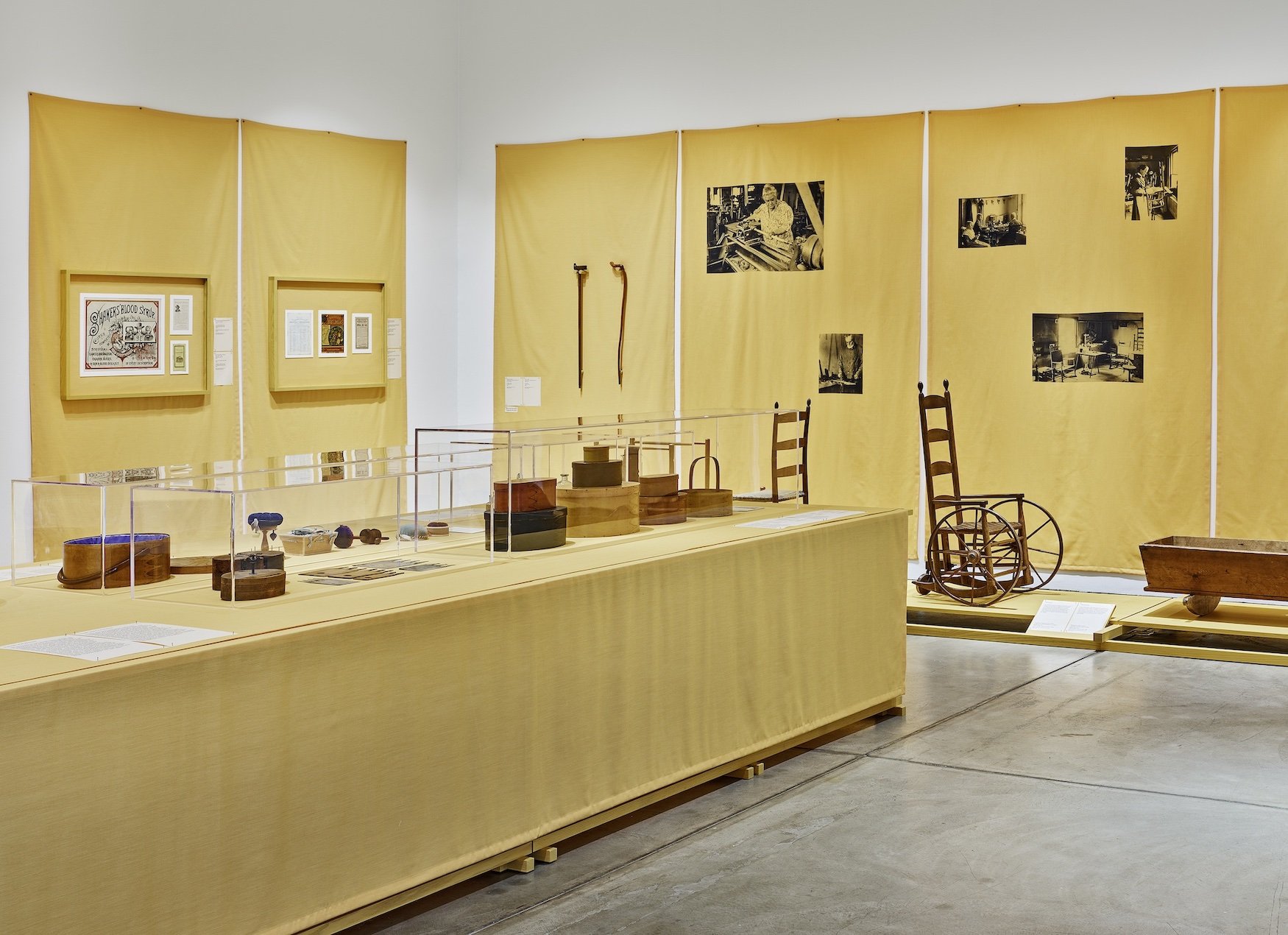
Next up, When We Find a Good Thing, We Stick To It delves into the Shakers’ material culture. Beautifully crafted garments, chests, and sewing desks demonstrate how their beliefs translated into a design language of clarity, order, and utility. Their iconic chairs, known for their modularity and functionality, illustrate their innovative approach to form and function.

In Every Force Evolves a Form, the third section, we see how the Shakers married inward reflection and outward innovation. They crafted and sold everything from oval boxes to rudimentary tools—not just to survive, but to share their values through objects. Contemporary works respond to this spirit: Christien Meindertsma presents a biodegradable coffin woven from willow and inspired by Shaker basketry; Finnegan Shannon explores accessibility in design; and David Hartt reflects on Shaker spirituality through a poetic film installation.

The final section, I Don’t Want to be Remembered as a Chair, looks to the Shakers’ legacy. Intricate “gift drawings” made by Shaker Sisters in the 1800s reveal the depth of their spiritual visions. Chris Halstrøm honours the Shaker principle of labour-as-prayer through a large-scale embroidered work, where each stitch becomes a devotional act. At the centre of the space is Meetinghouse 2, an immersive structure by artist Amie Cunat that invites visitors to pause and reflect on community, spirituality, and collective creativity, just as the Shakers once did in their communal places of worship.

Christien Meindertsma’s Burial Basket-Material Research.
Throughout the exhibition, fabric plays a quiet but vital role. Draped on walls and suspended in space, it evokes the presence of flexible, functional, and intimate linens and domestic textiles. Traditionally seen as women’s work, textiles become a symbol of care and craft, highlighting the Shakers’ radical respect for women’s roles in shaping not just homes, but communities. Founded by a woman, the Shaker movement placed female labour—material, spiritual, and organisational—at its heart.

Amie Cunat’s 2nd Meetinghouse.
Using only wood, fabric, nails, and thread, the exhibition creates a serene, tactile environment built from gestures of care and repetition—echoing the Shakers’ timeless philosophy that simplicity and purpose can be profoundly poetic.

Chris Liljenberg Halstrøm’s My Work Station -My Prayer Room.
Photos by Bernhard Strauss, © Vitra Design Museum.

Finnegan Shannon’s I Want to Believe.

‘The Shakers – A World in the Making’ exhibition at Vitra Design Museum.