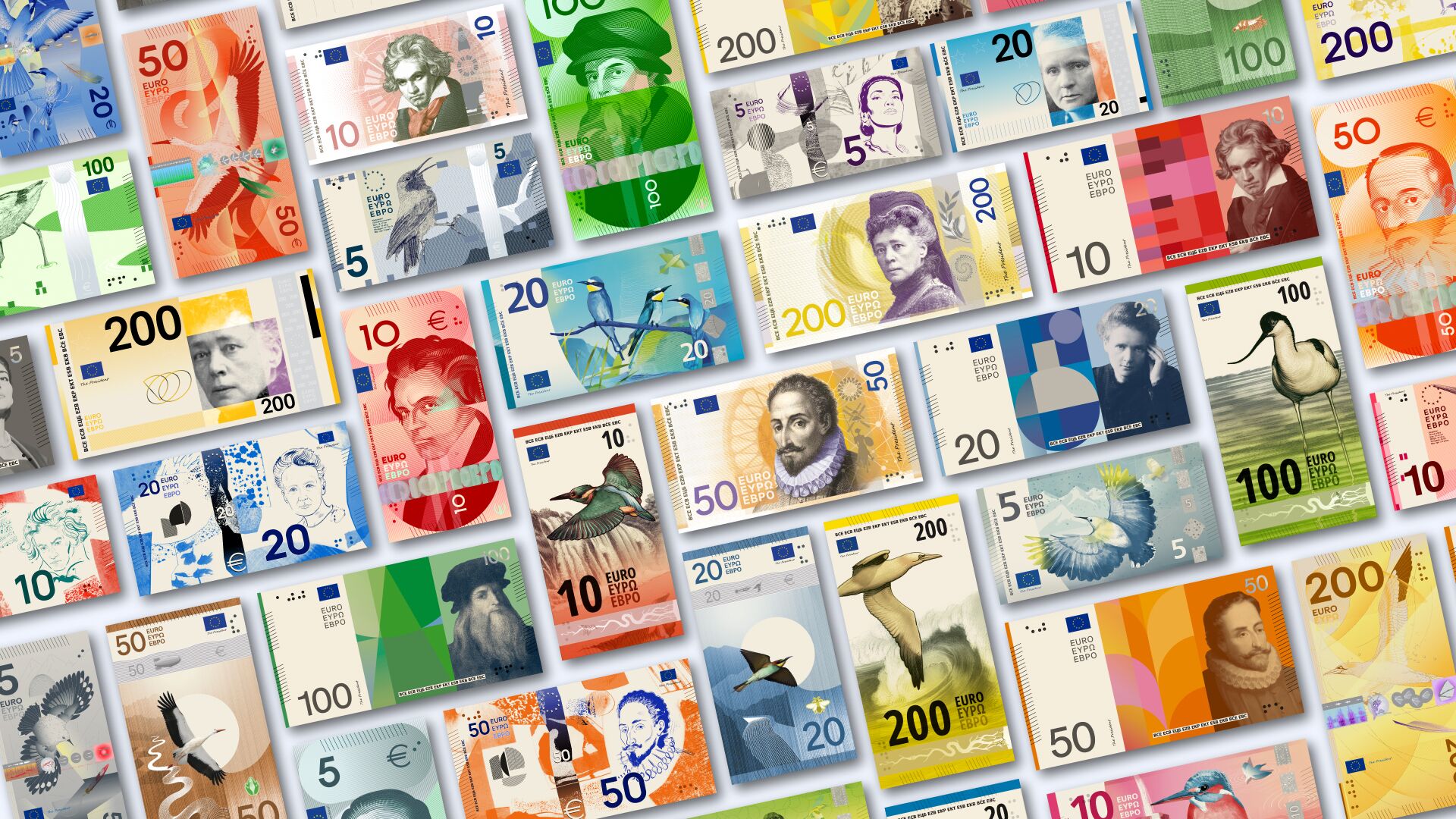
Euro banknotes redesign – Copyright of The ECB.
Graphic Design. Leonardo da Vinci, Cervantes and Ludwig van Beethoven — or white storks and bee-eaters? Until 21 September, EU citizens get to vote on the design of the new Euro banknotes. Ten shortlisted proposals bring together European greats in art, science and history alongside birds in flight — a fitting echo of the free movement of people, ideas and culture that the currency itself was built to carry.
- RELATED STORIES: Snøhetta redesigned Norway’s banknotes, honouring the country’s coastal landscapes pixel by pixel.

Maria Callas on the 5 Euro note by Rubio & del Amo and Cruz más Cruz – Design G.
The redesign has practical roots — outsmarting counterfeiters, improving accessibility for people with visual impairments, trimming the environmental footprint — but there’s ambition here too. The ECB is treating this as a chance to give Euro banknotes a proper identity, retiring the imaginary bridges and neutral facades that have quietly defined them so far.
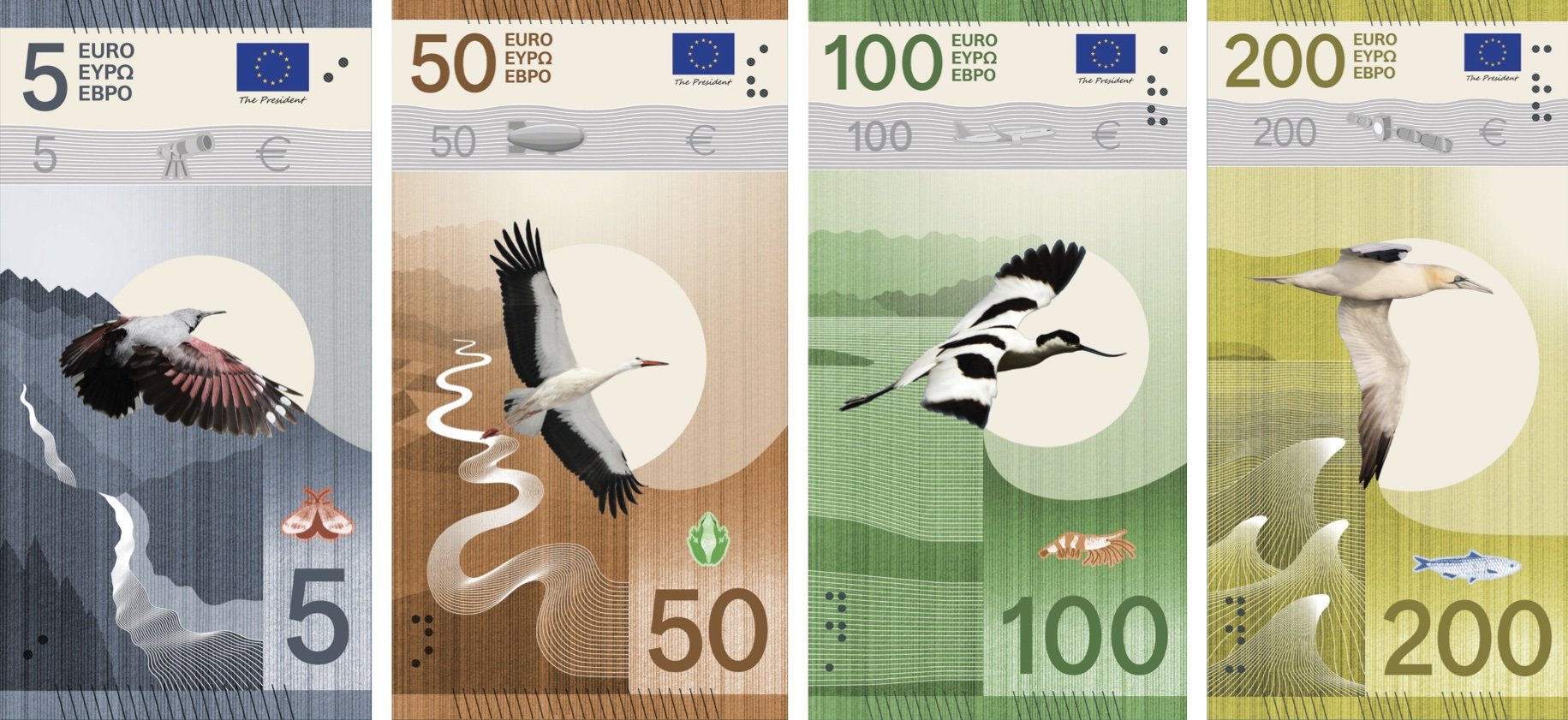
Euro notes by Isabelle Daëron – Design I.
“Euro banknotes are more than a means of payment – they are one of the most tangible expressions of Europe,” said Christine Lagarde, President of the European Central Bank. “Through designs that combine beauty and meaning, they will reinforce our shared identity.”
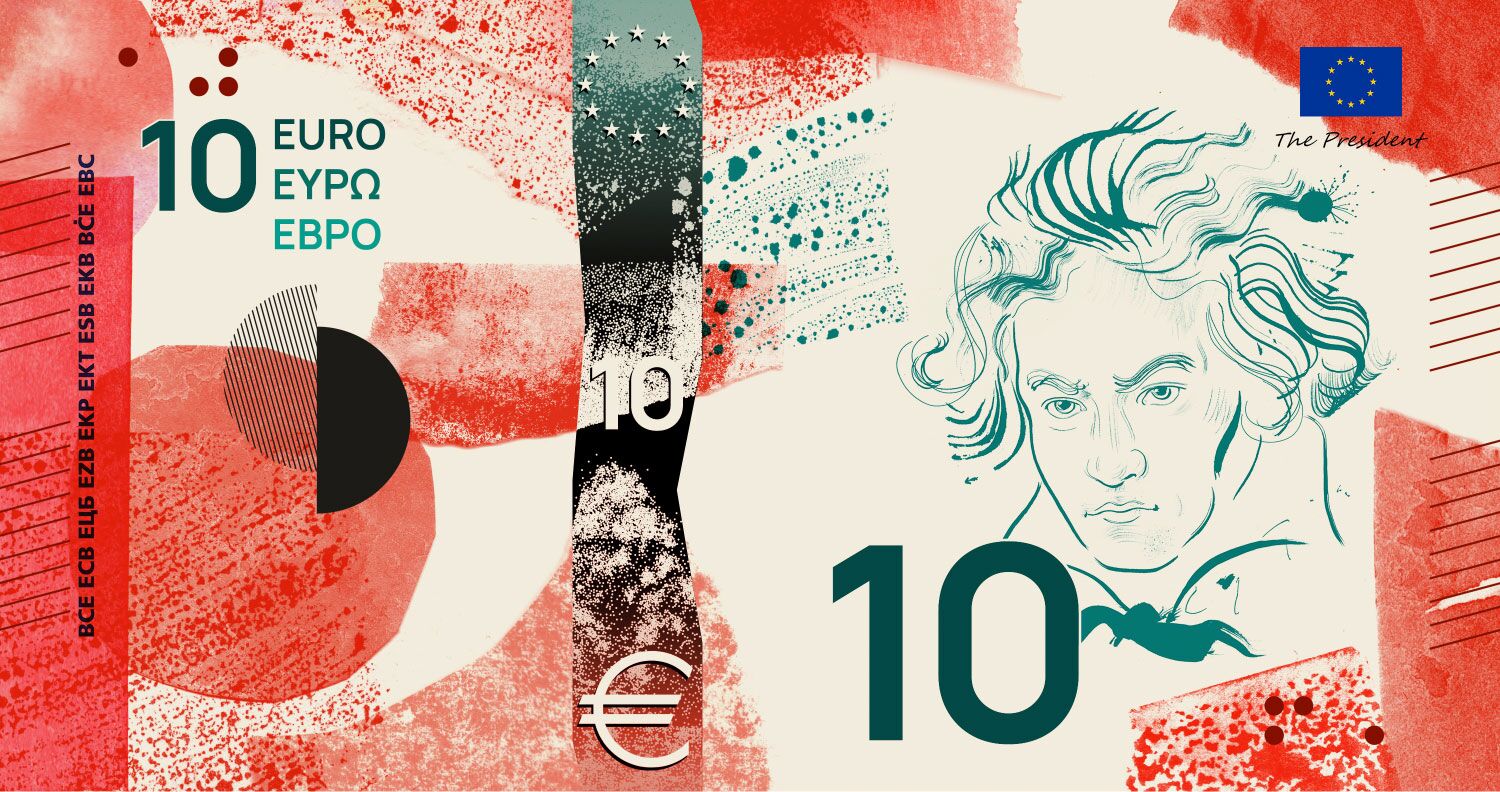
Ludwig Van Beethoven on the 10 Euro note by Jan Robert Dünnweller – Design F.
A jury spanning graphic design, neuroscience and history narrowed over 1,200 entries down to ten. The palette and motifs for the €5 through €200 notes, though, were locked in by the ECB before a single pencil hit paper.
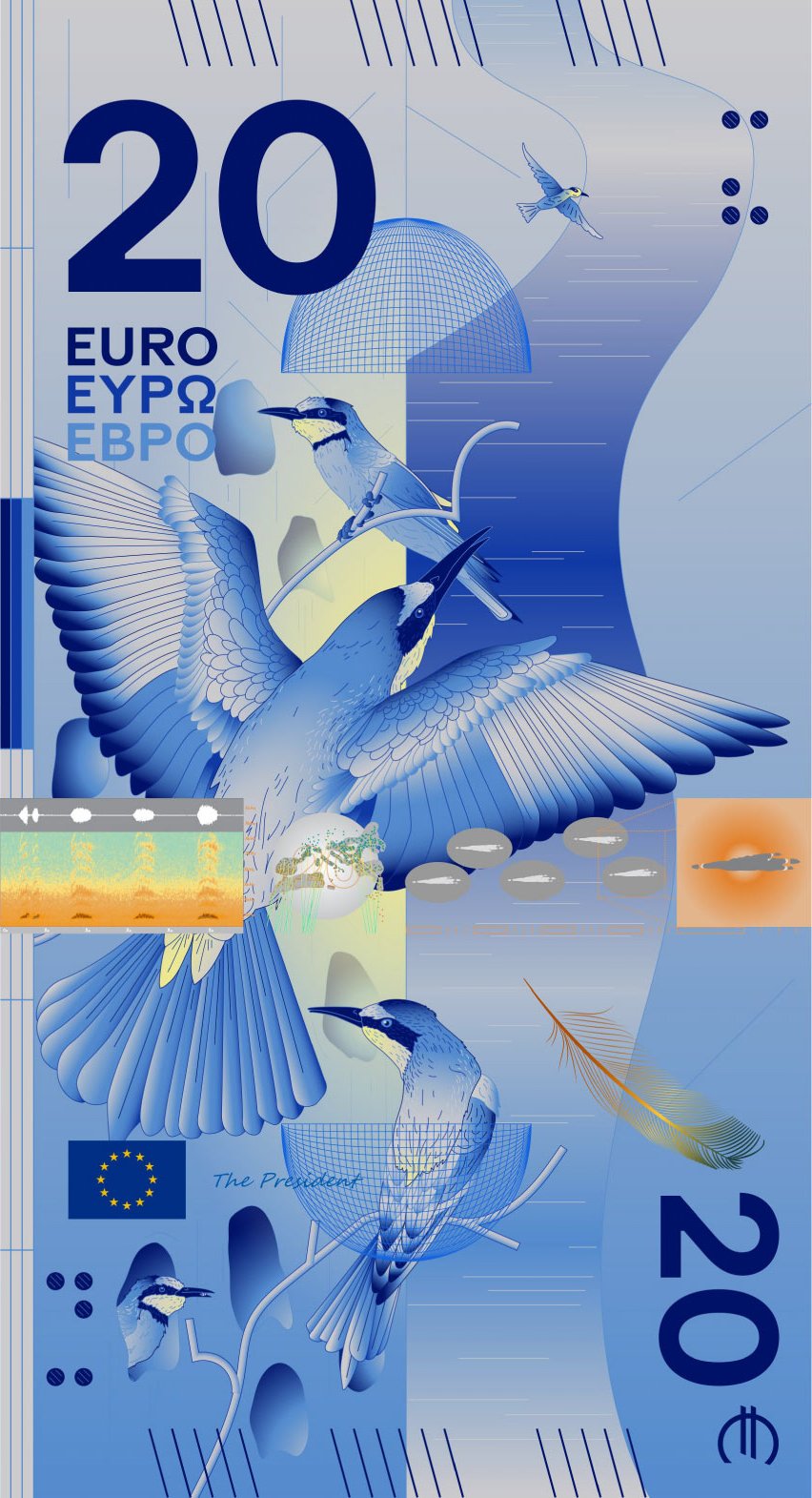
20 Euro note by Rudy Guedj and François Girard-Meunier – Design D.
Portraits or plumage? Five designs celebrate Europe’s cultural canon. Greek-American soprano Maria Callas takes the five-euro note; German composer Beethoven, Europe’s most universal musical voice, the ten. Polish-French physicist and chemist Marie Curie — winner of two Nobel Prizes — lands on the twenty.
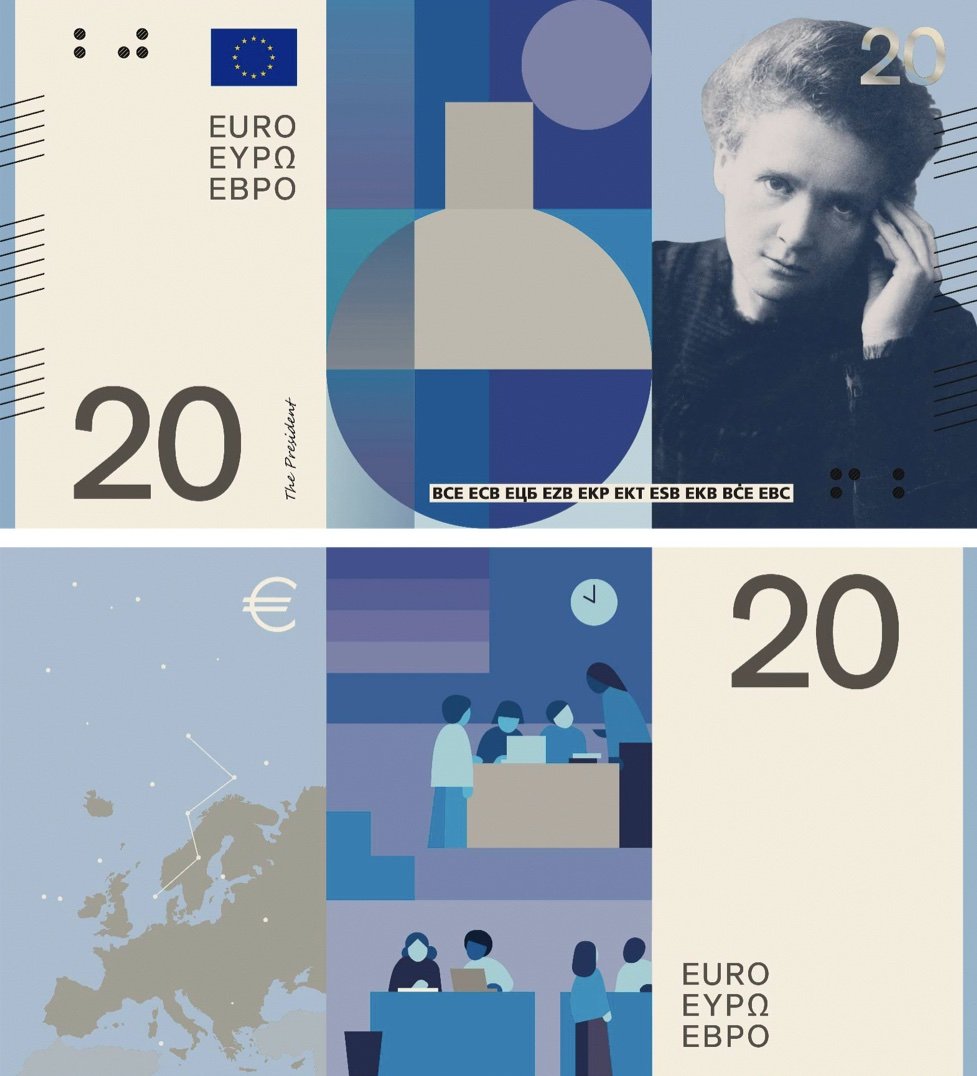
Marie Curie on the 20-Euro note by Neue Gestaltung GmbH – Design C .
Spanish author Cervantes represents literature on the fifty, and Italian polymath Leonardo da Vinci’s boundless genius fronts the hundred. The boldest call is Austrian pacifist Bertha von Suttner on the two-hundred: the first woman awarded the Nobel Peace Prize, chosen on the eve of a war she’d spent her life warning against.
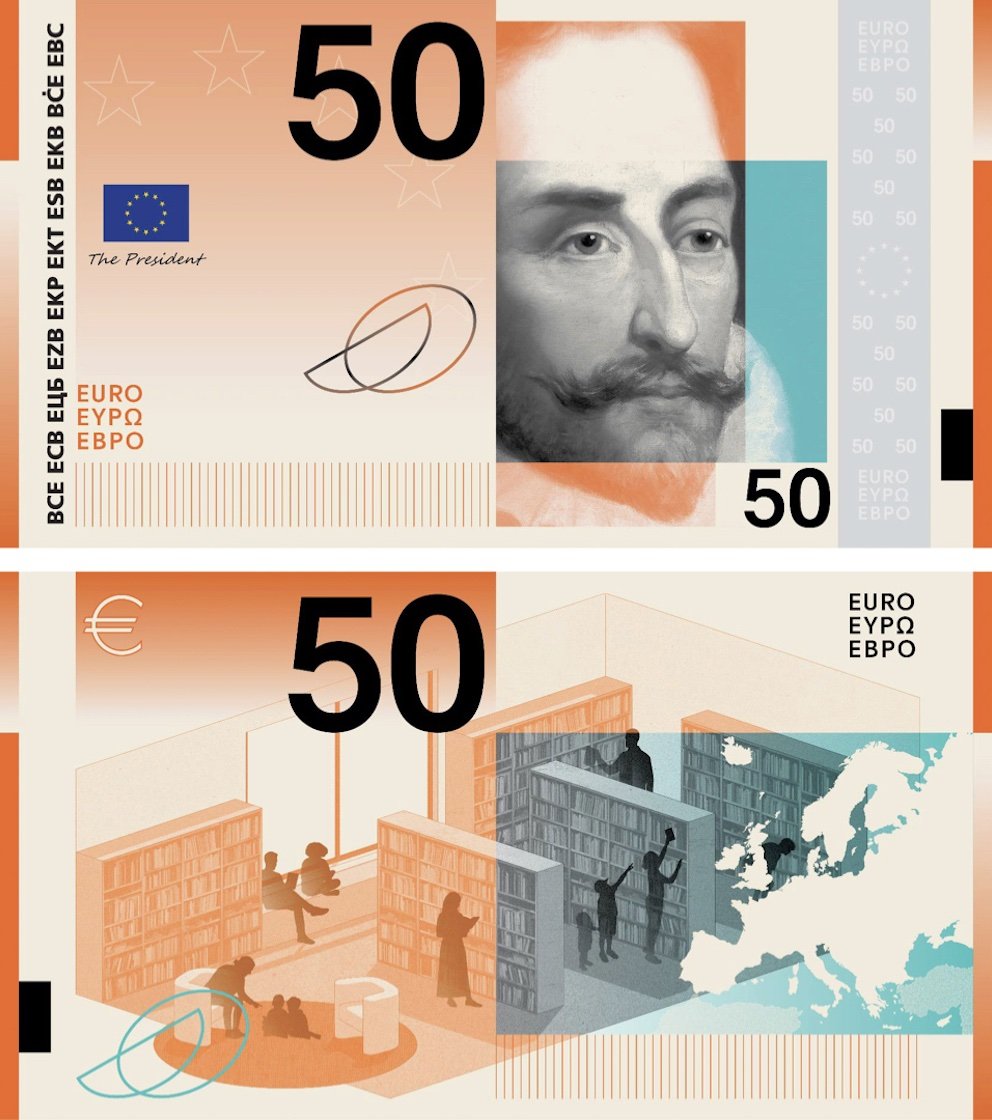
Cervantes on the 50 Euro note by Studio Joost Grootens – Design A.
The other five proposals take flight, quite literally: wallcreeper, kingfisher, bee-eater, white stork, avocet and northern gannet, each pictured soaring over landscapes typical of the continent. Flip these Euro banknotes over, and you’d find the EU’s institutional buildings in Brussels, Strasbourg, Luxembourg and Frankfurt.
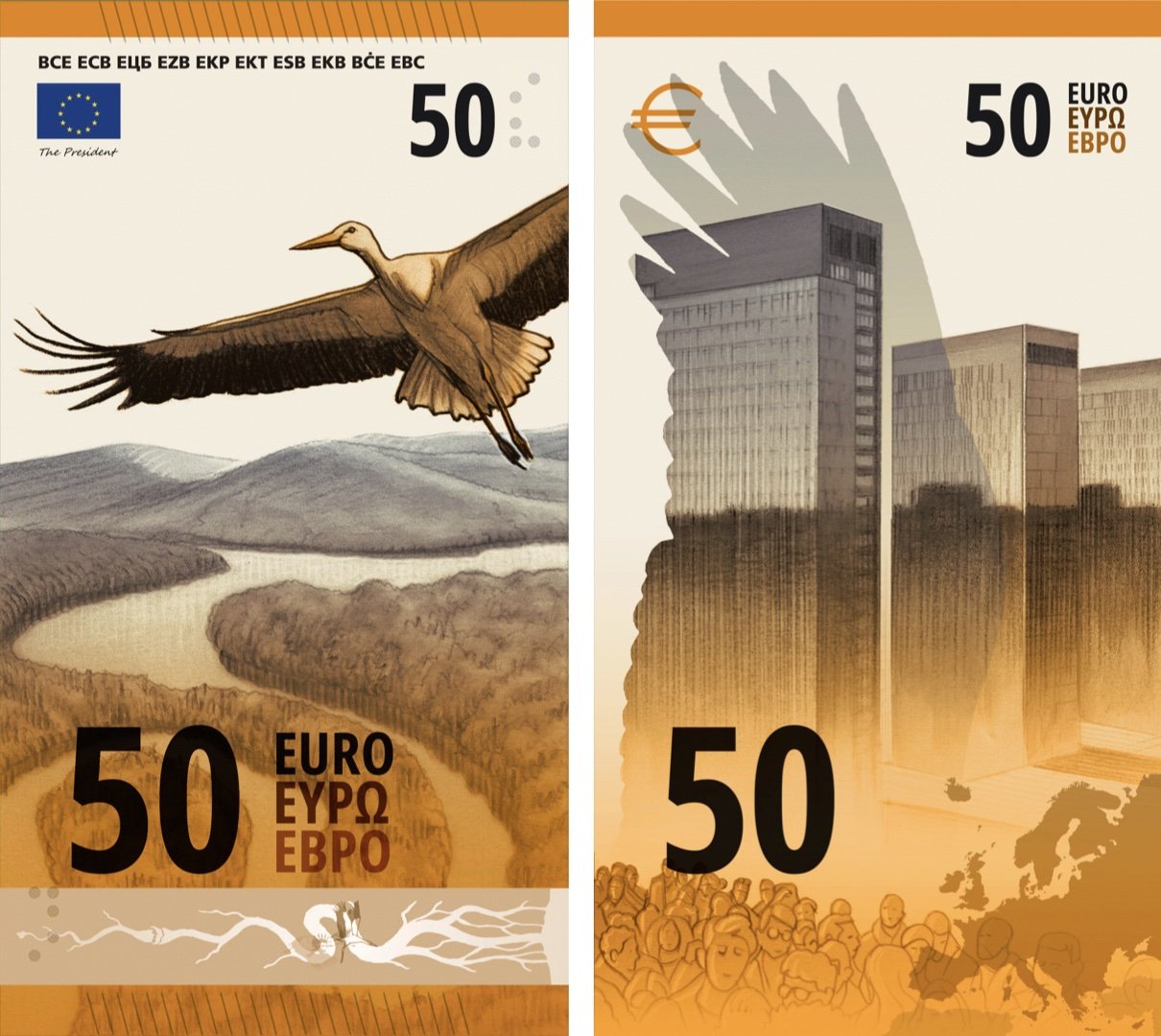
50 Euro note by Ville Tietäväinen – Design B.
Dutch book designer Joost Grootens cropped each portrait tightly around their sightline — a choice that foregrounds the cultural figures’ vision, their way of seeing the world, rather than trading on their status as icons. German illustrator Robert Dünnweller went for a hand-drawn, graphic-novel style; Spanish studios Rubio & del Amo and Cruz más Cruz ditched the horizontal format entirely in favour of vertical compositions.
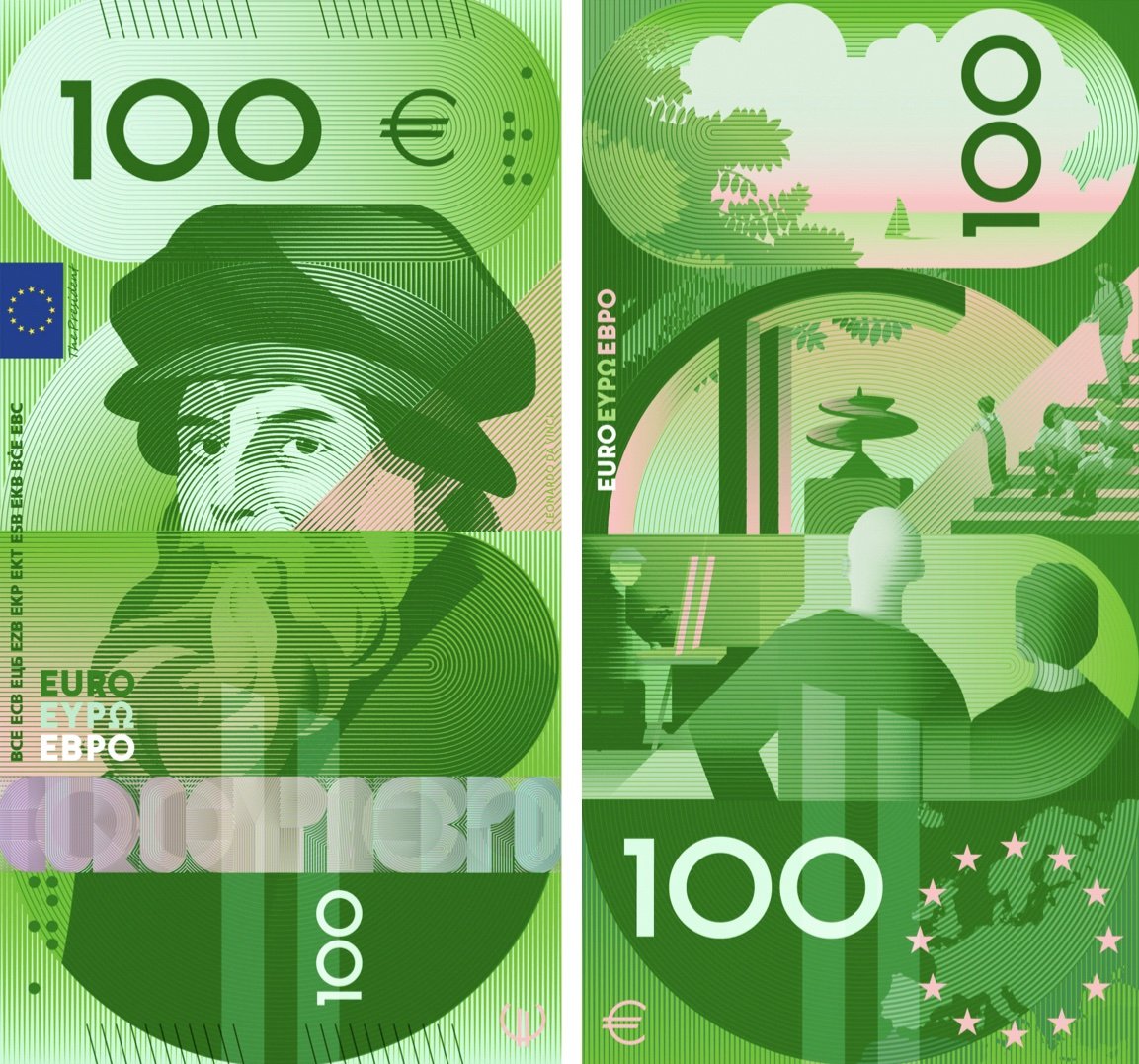
Leonardo da Vinci on the 100 Euro note by Rubio & del Amo and Cruz más Cruz – Design G.
For French artist Isabelle Daëron and Finnish graphic designer Ville Tietäväinen, also working vertically, the birds carry a message: interdependence, dialogue, a continent and its nature refusing to be separated.
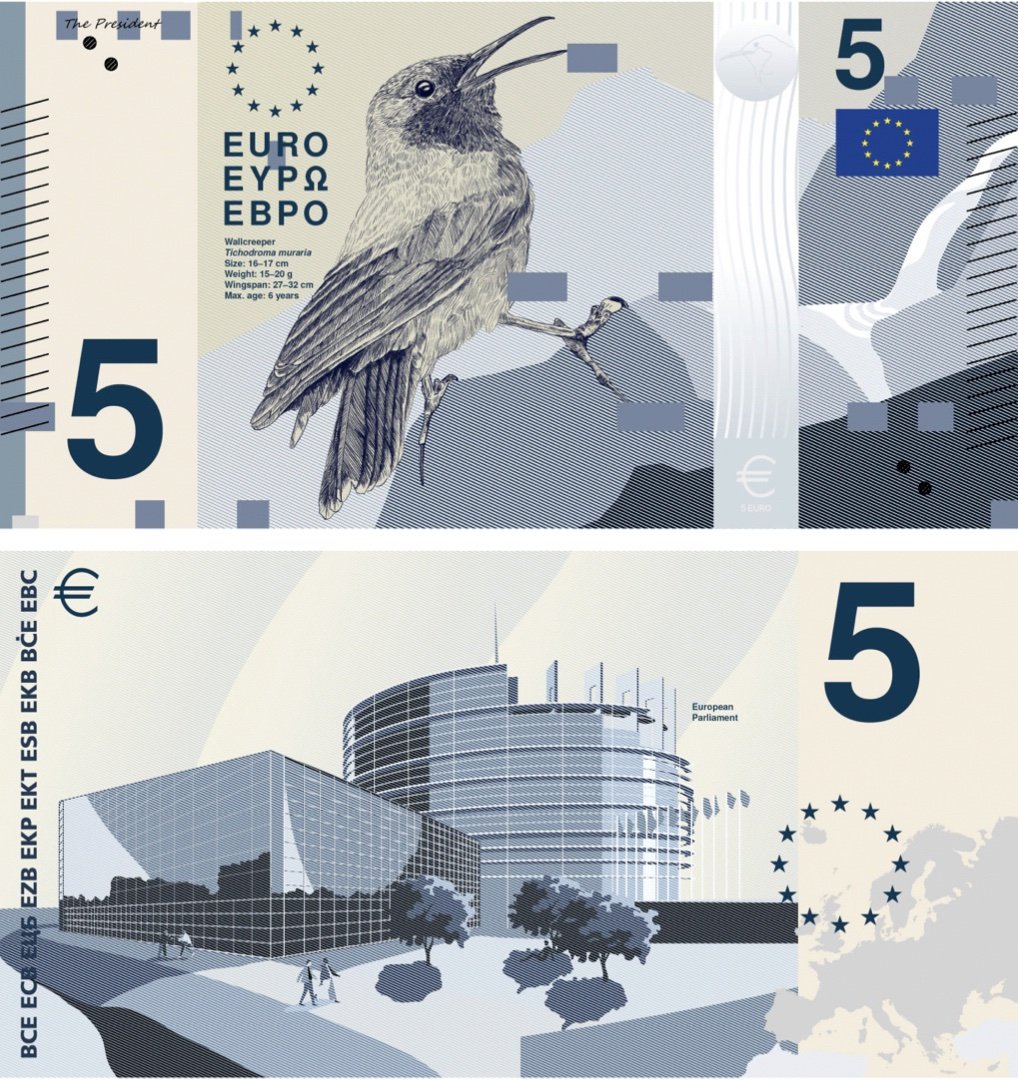
5 Euro banknote by PunktFormStrich – Design B.
A separate jury of designers has the final say. Don’t hold your breath, though — these Euro banknotes won’t reach your wallet before 2030 or 2031.
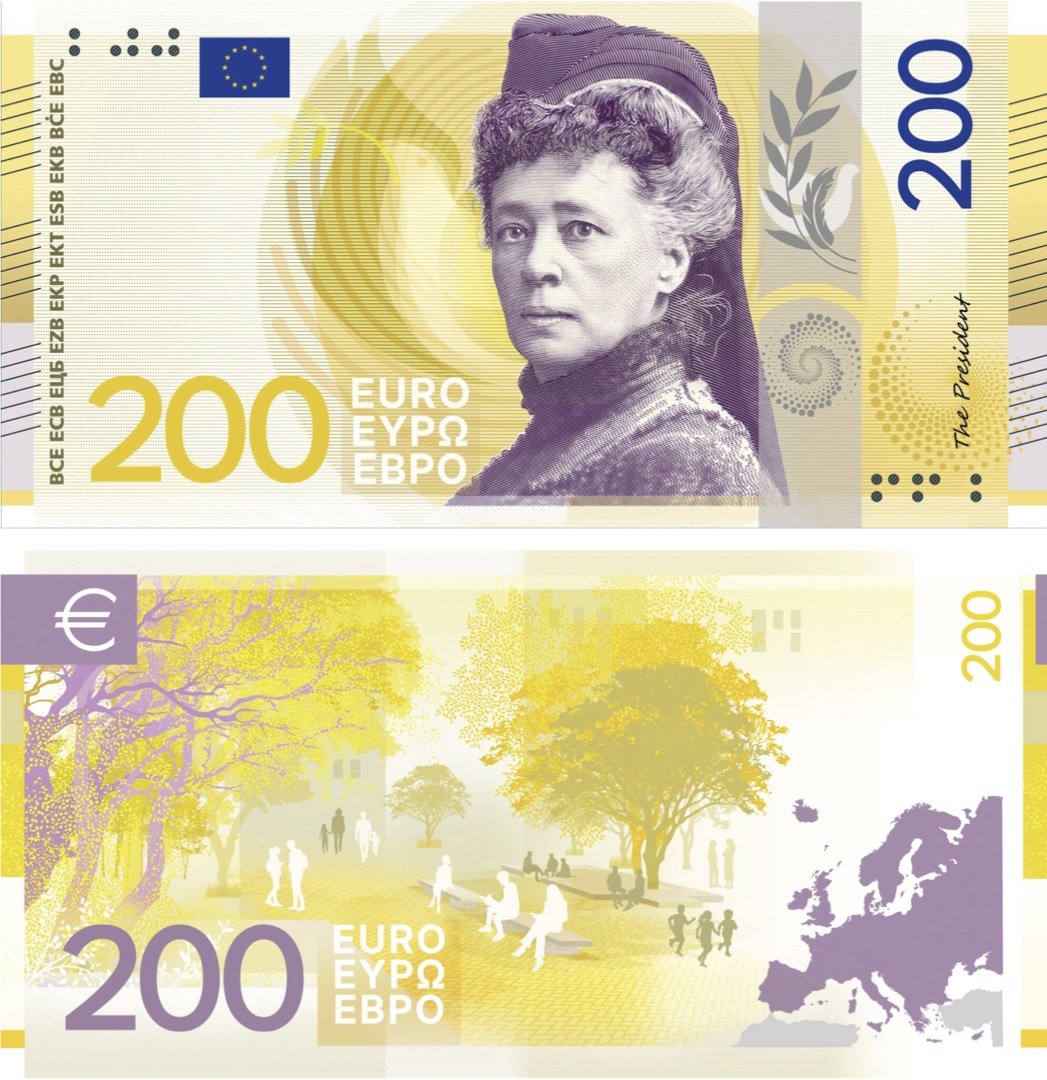
Bertha von Suttner on the 200 Euro note by Myrsini Vardopoulou – Design E.
All images are courtesy of the European Central Bank.
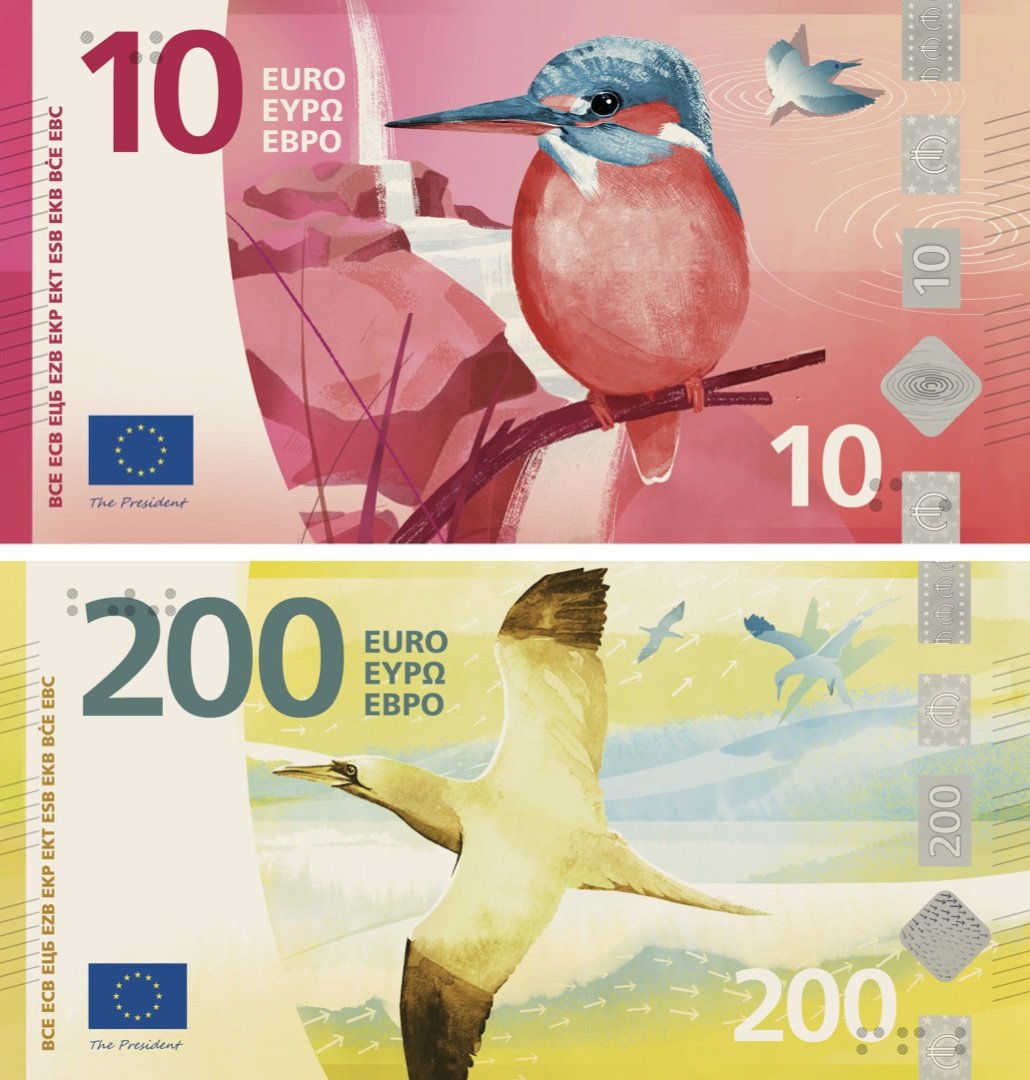
10 and 200 Euro notes by Atelier Goppel-Toperngpong, Design H.