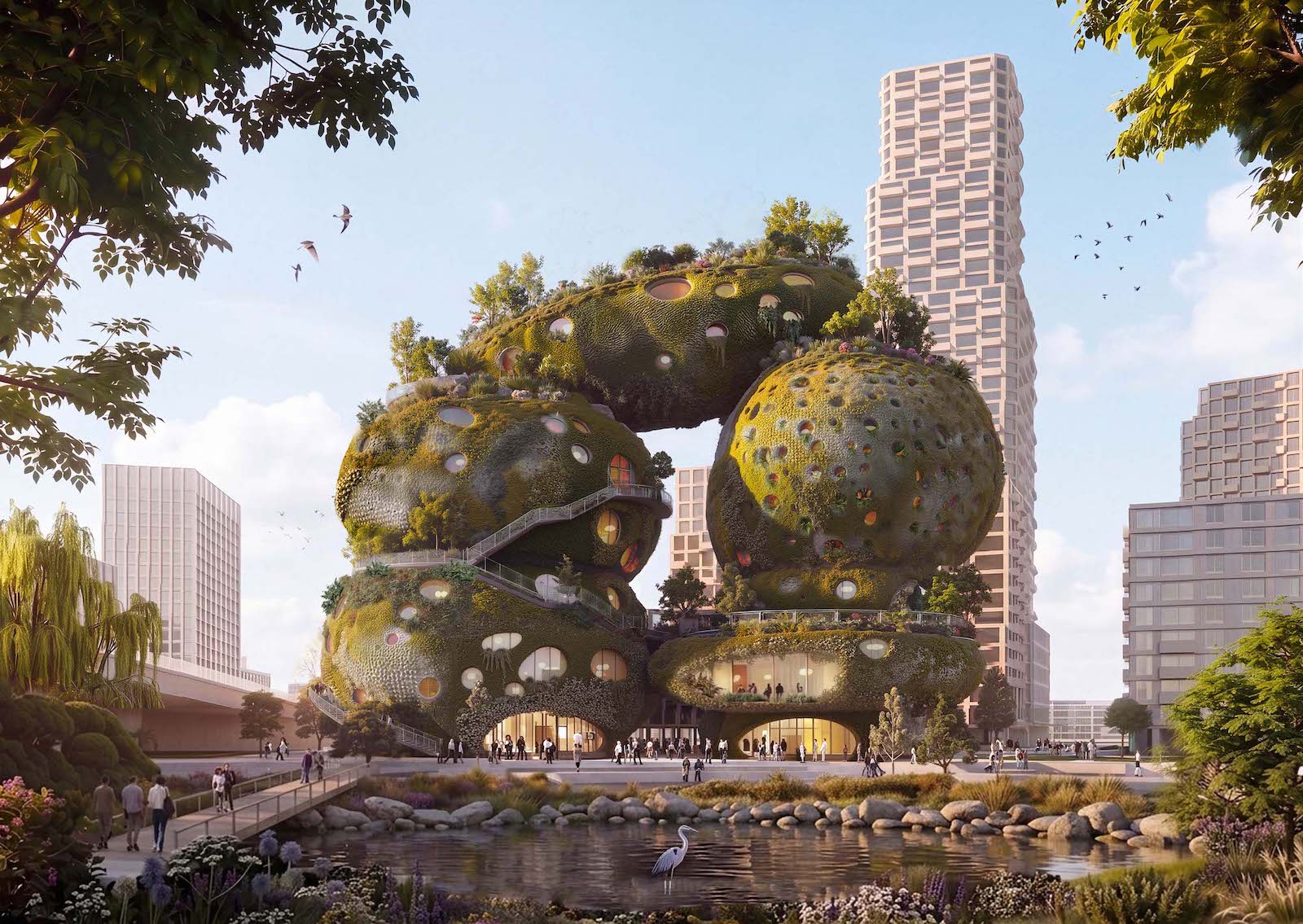
Rotterdam Rocks by MVRDV – Visuals by MVRDV.
Architecture. Rotterdam has never been shy about architectural risk-taking, and MVRDV‘s latest proposal might be its boldest move yet. Rotterdam Rocks — a 30,000-square-metre cluster of seven stacked boulders — has just won social enterprise Shift’s competition for a new landmark on the south bank of the River Maas.
- RELATED STORIES: Find out more about Rotterdam architecture and design on Archipanic.
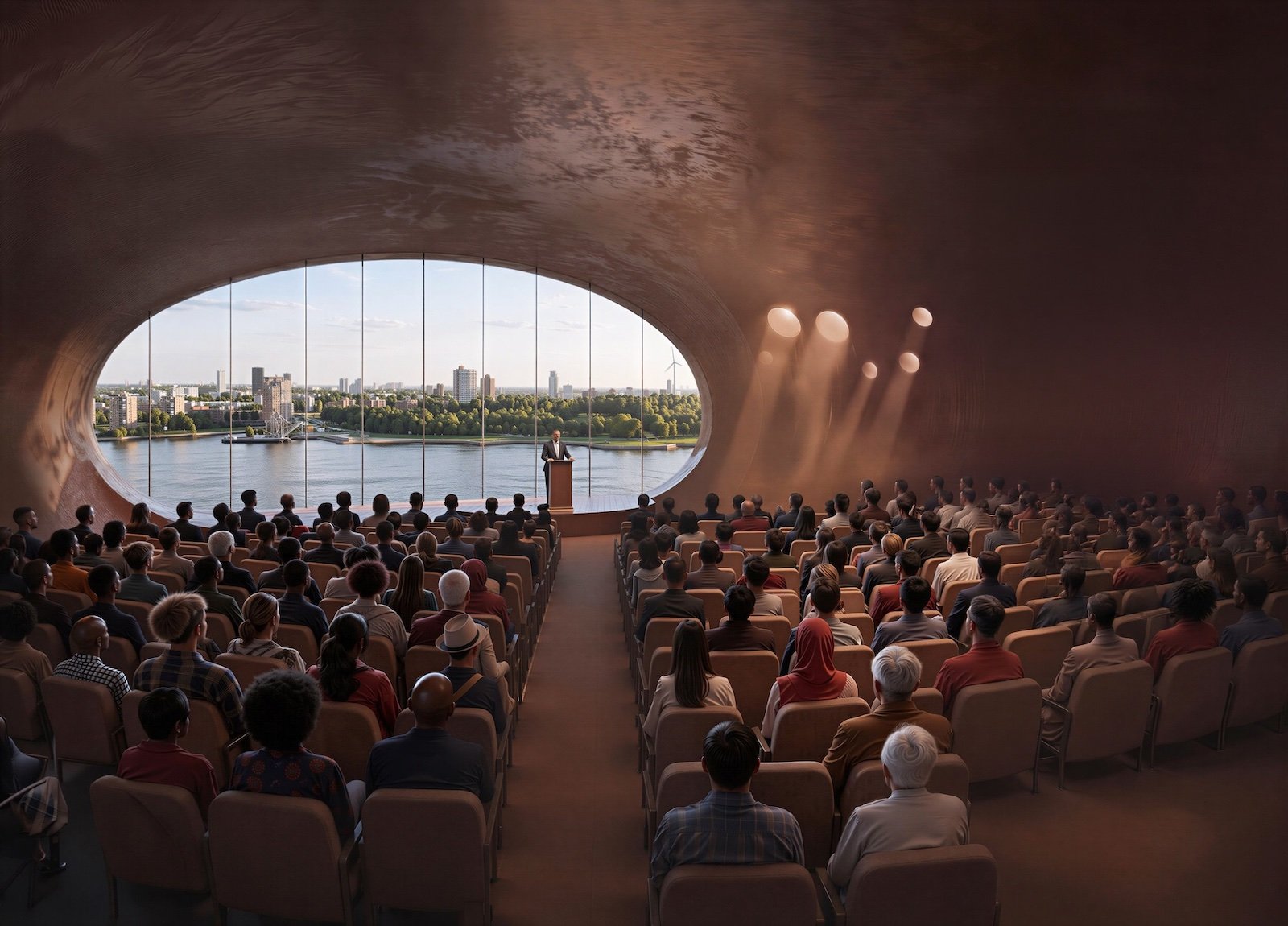
The ambition behind Rotterdam Rocks is refreshingly direct. As MVRDV co-founder Winy Maas puts it, the goal is “to make sustainability visible, tangible, and actionable for a broad public.” No small brief. The scheme knits together an immersive exhibition, hospitality, conference space, planted terrain and research, all wrapped around the pressing questions of climate, resources, water, energy and biodiversity.
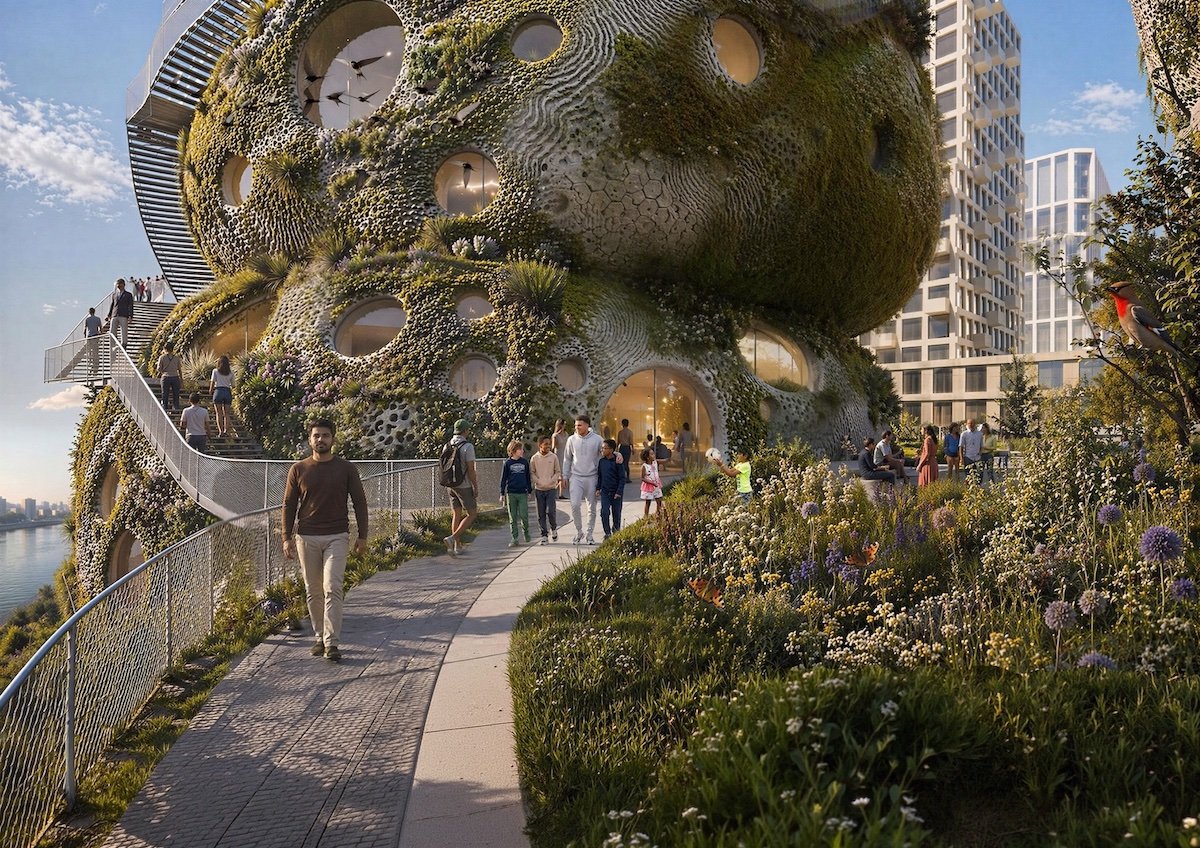
Shift launched its international competition to land a cultural destination punchy enough to shift public attitudes towards the climate and biodiversity crisis — hence the name. The jury, which included Zaha Hadid Foundation director Aric Chen and UNS founder Ben van Berkel, didn’t hold back its enthusiasm: “MVRDV’s proposal is a remarkably bold, powerful statement that we expect will capture visitors’ imagination.”
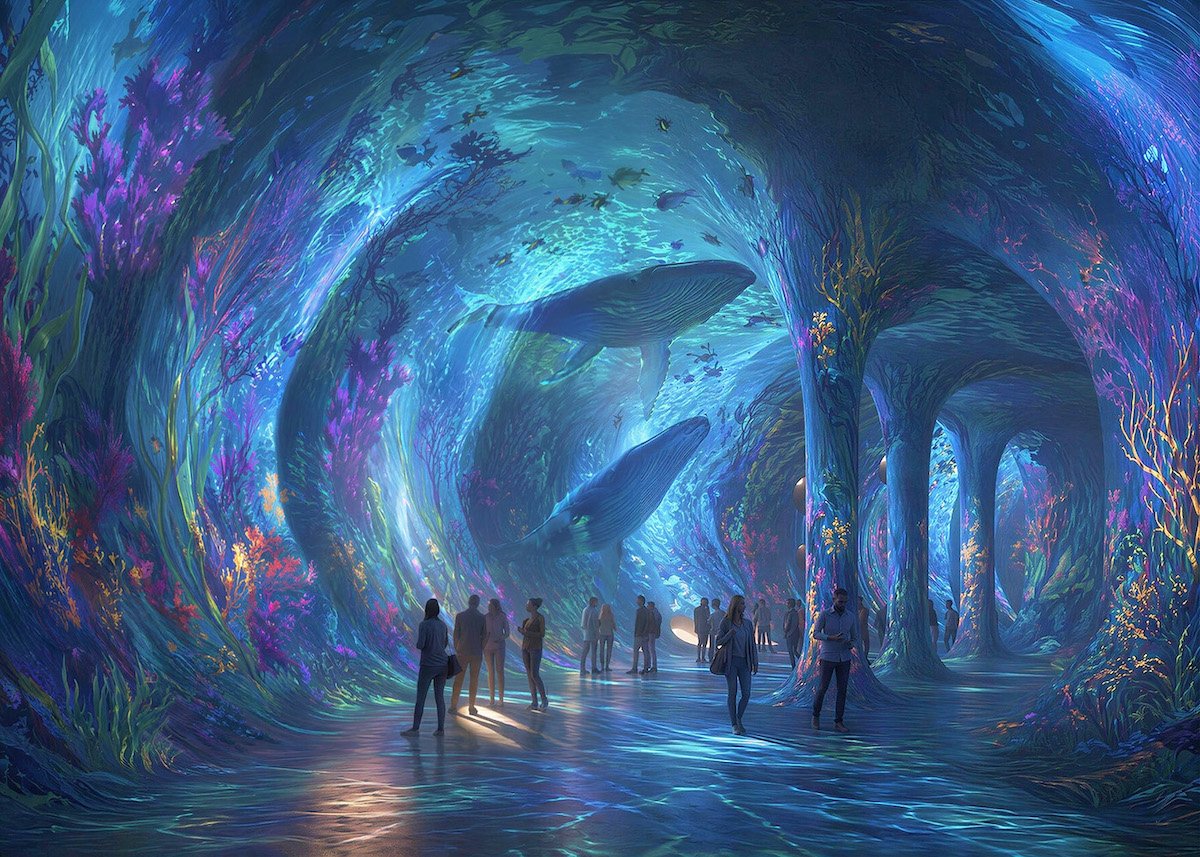
The Elysium.
At the heart of the scheme is a 5,000-square-metre immersive experience called The Elysium. Rather than lecturing visitors about the future, it leans on storytelling and practical pathways for action.
Rotterdam Rocks also includes a 200-room hotel, educational spaces, business event facilities, community gathering spots, a food court, a restaurant, and an observation deck — a proper mixed-use proposition dressed up as a boulder field.
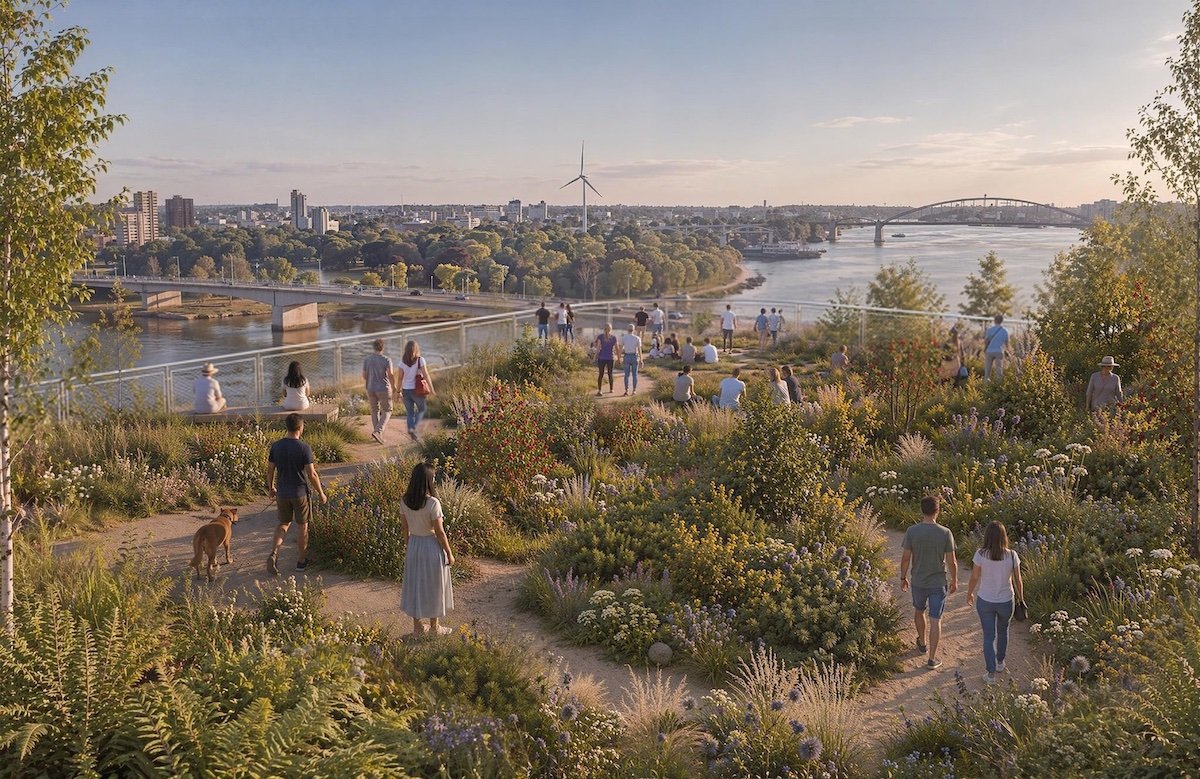
The observation deck.
Structurally, the seven rocks are threaded by two internal routes: one carrying the exhibition experience, the other serving the hospitality side. A third route climbs the exterior, delivering visitors to a publicly accessible viewing terrace, while the summit hosts a rooftop terrace reserved for Elysium guests.
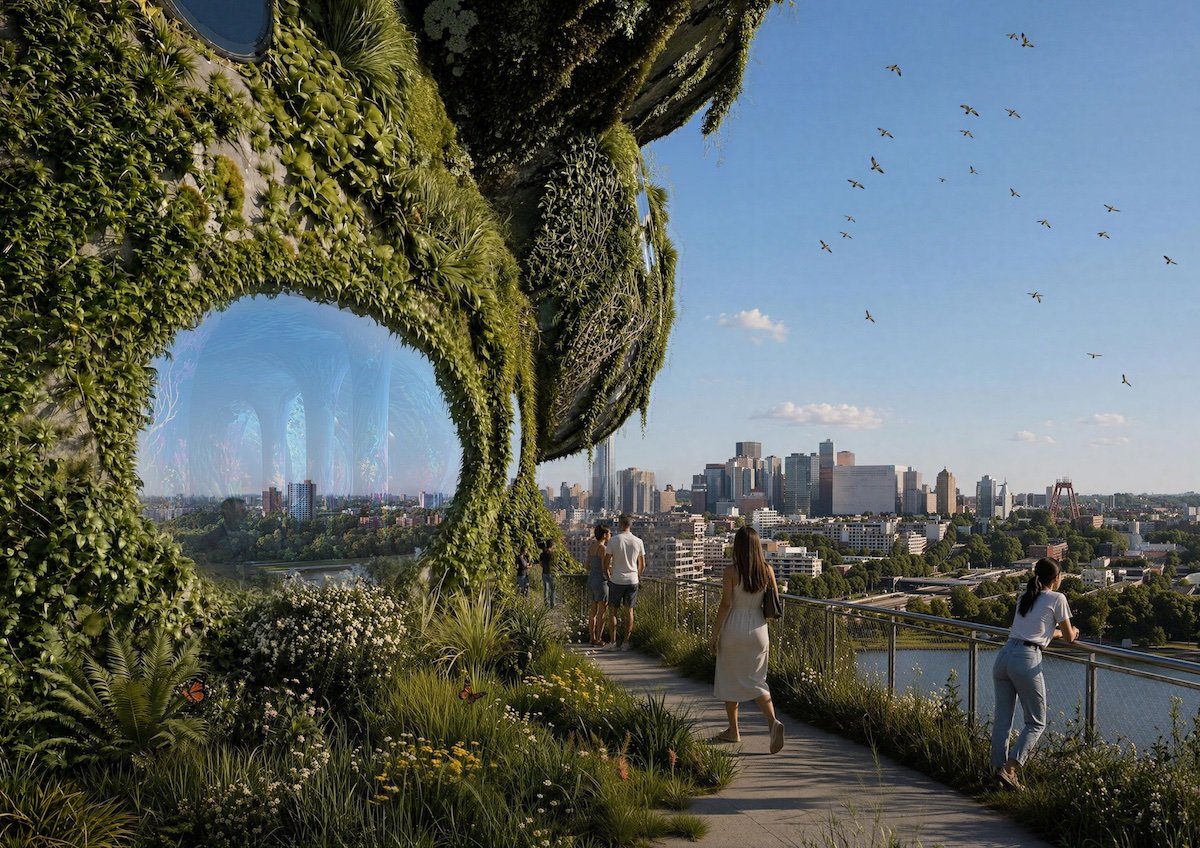
The public route.
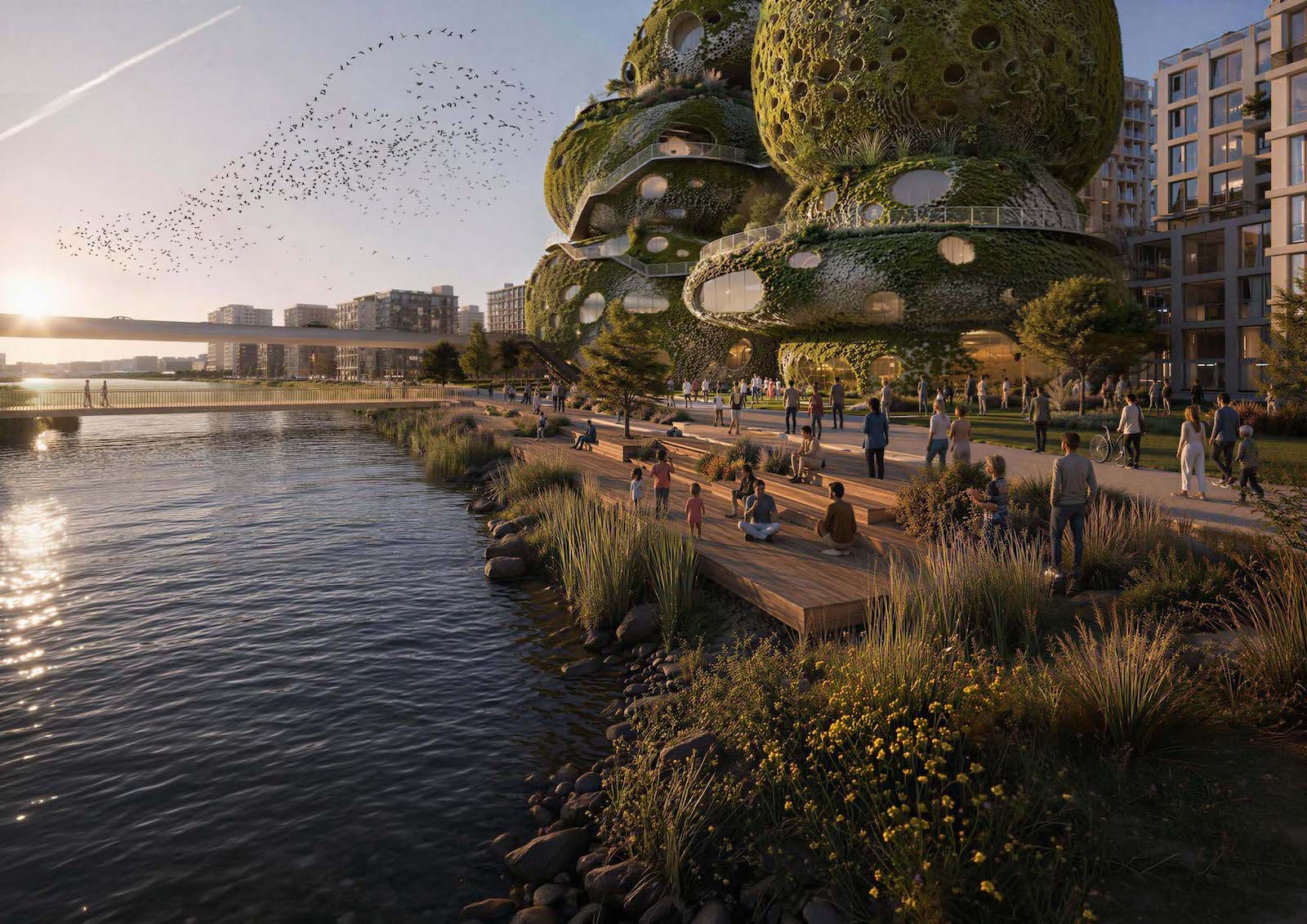
These terraces essentially stretch the riverside tidal park upwards, wrapping visitors in greenery while handing them sweeping views across Rotterdam. To pull this off, the building’s skin is pitted with pockmarks and niches designed to hold soil, water, plants and, eventually, wildlife — turning the façade itself into habitat.
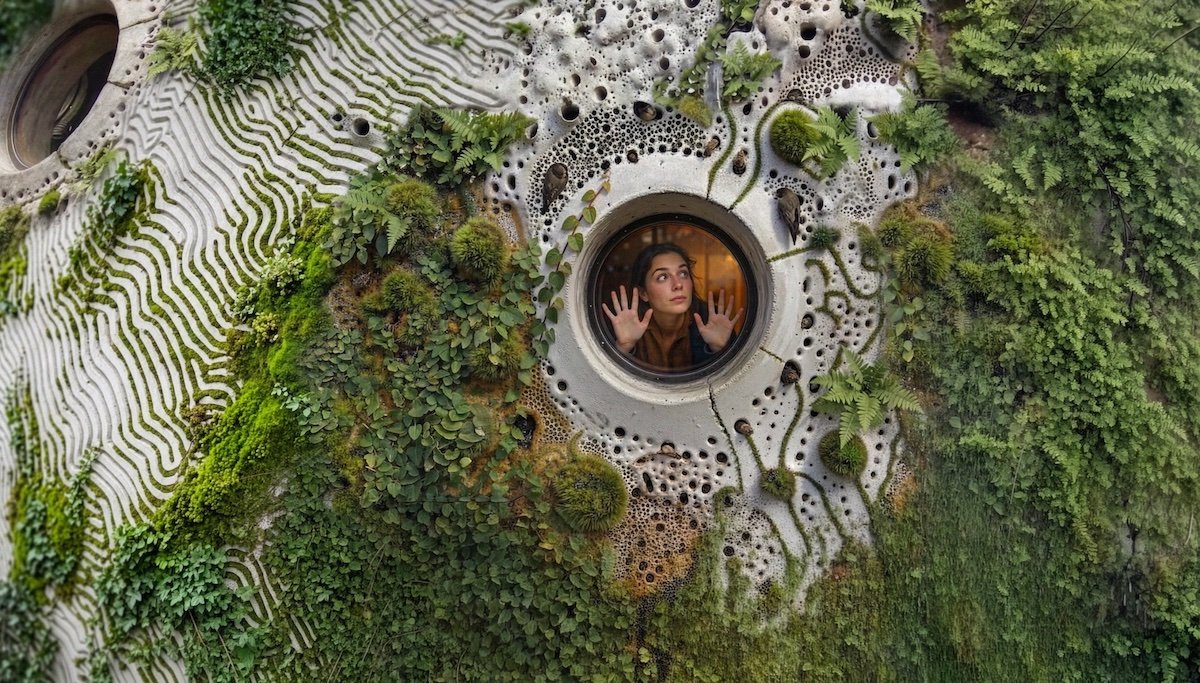
The building’s living skin.
Sustainability isn’t just a talking point here; it’s baked into the build process. Construction of the Shift Embassy will double as a public experiment, openly documenting which low-carbon strategies work and which fall flat. “The project will serve as a scale-up lab to test and showcase the latest innovations in low-carbon construction, helping to advance sustainable building practices across the industry.”
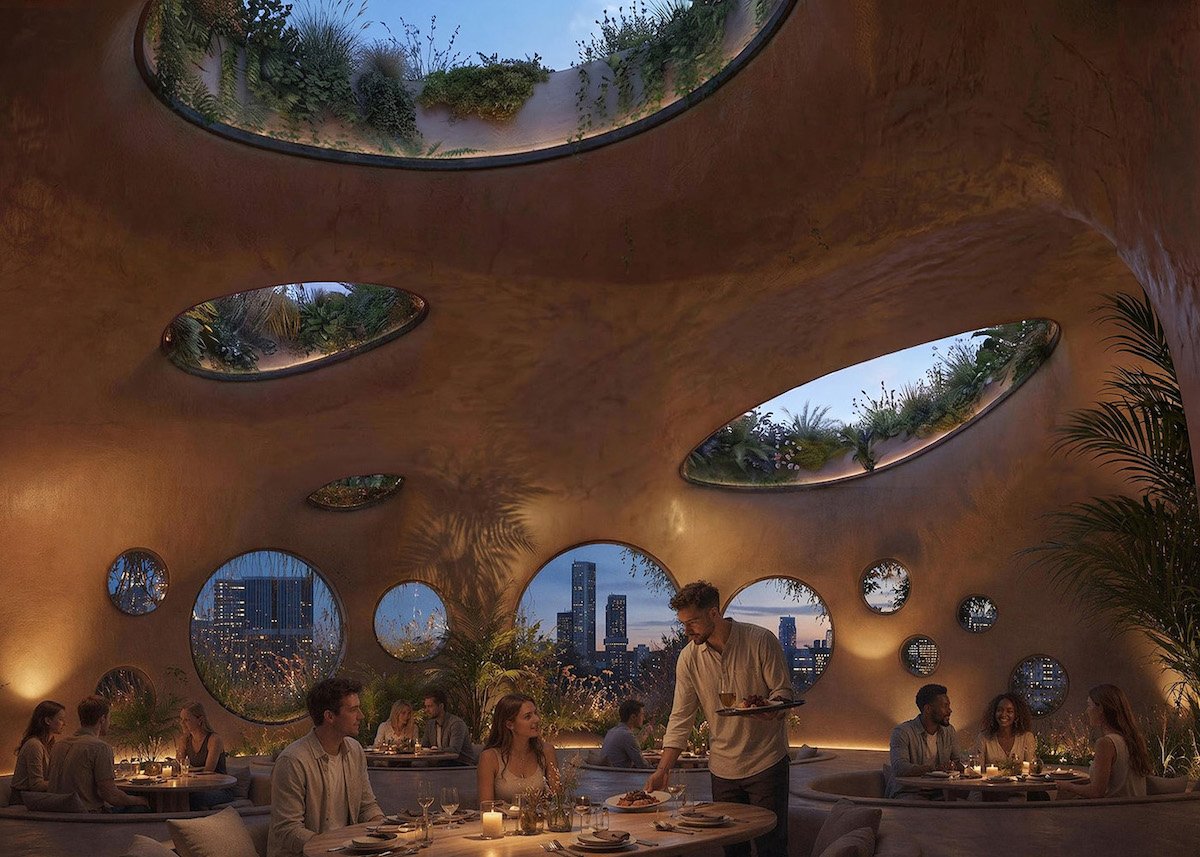
Rotterdam Rocks will rise as part of Waterkant, the emerging district taking shape on the Maas’s south bank, which is set to deliver 3,750 new homes, schools, maker spaces, an urban sports campus, a new train station, offices, restaurants and cultural venues.
All images are by MVRDV.
- RELATED STORIES: Read more about MVRDV on Archipanic.
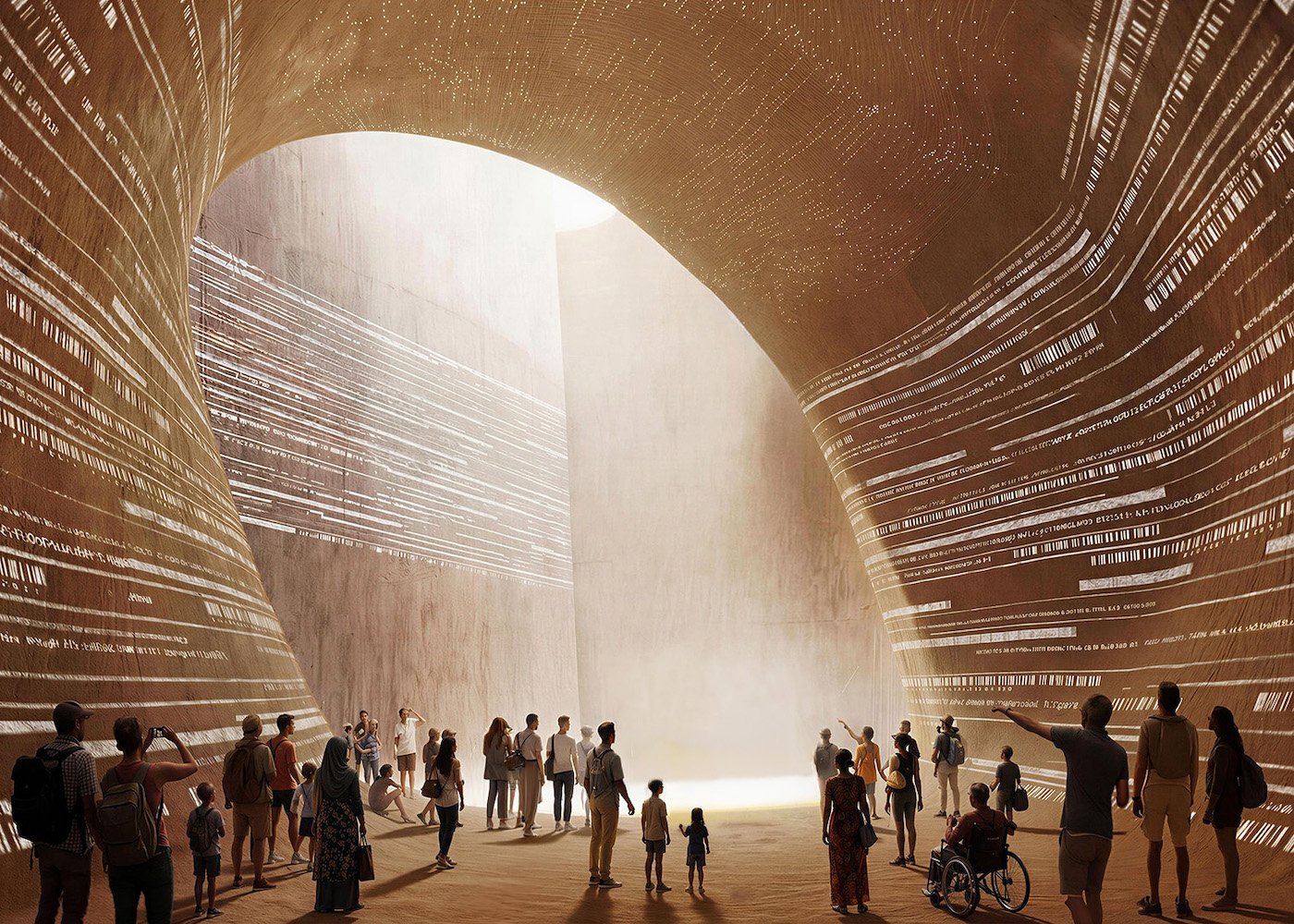
Entering the caves of the Elysium.
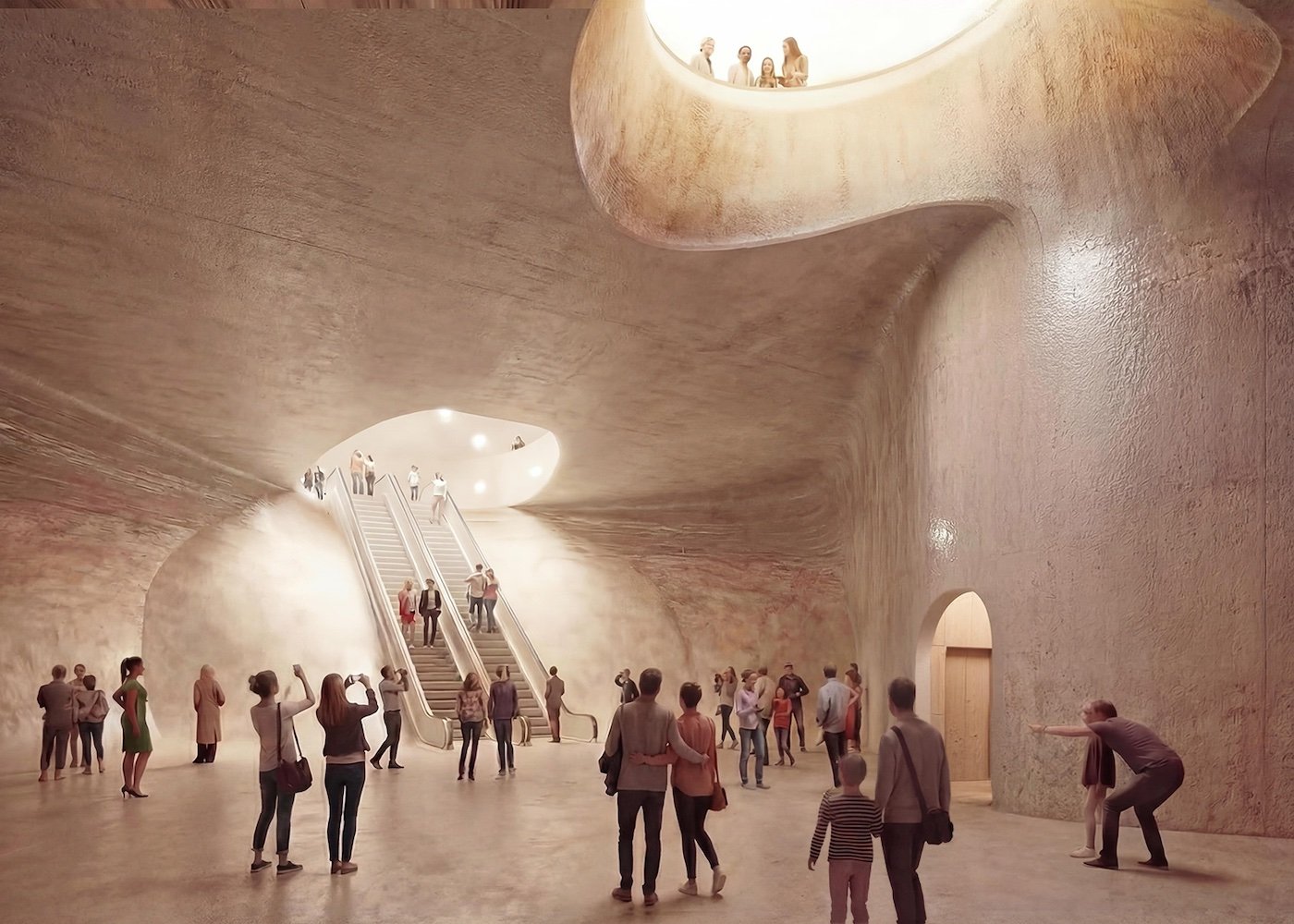
Entering the central hall – Visual by MVRDV.