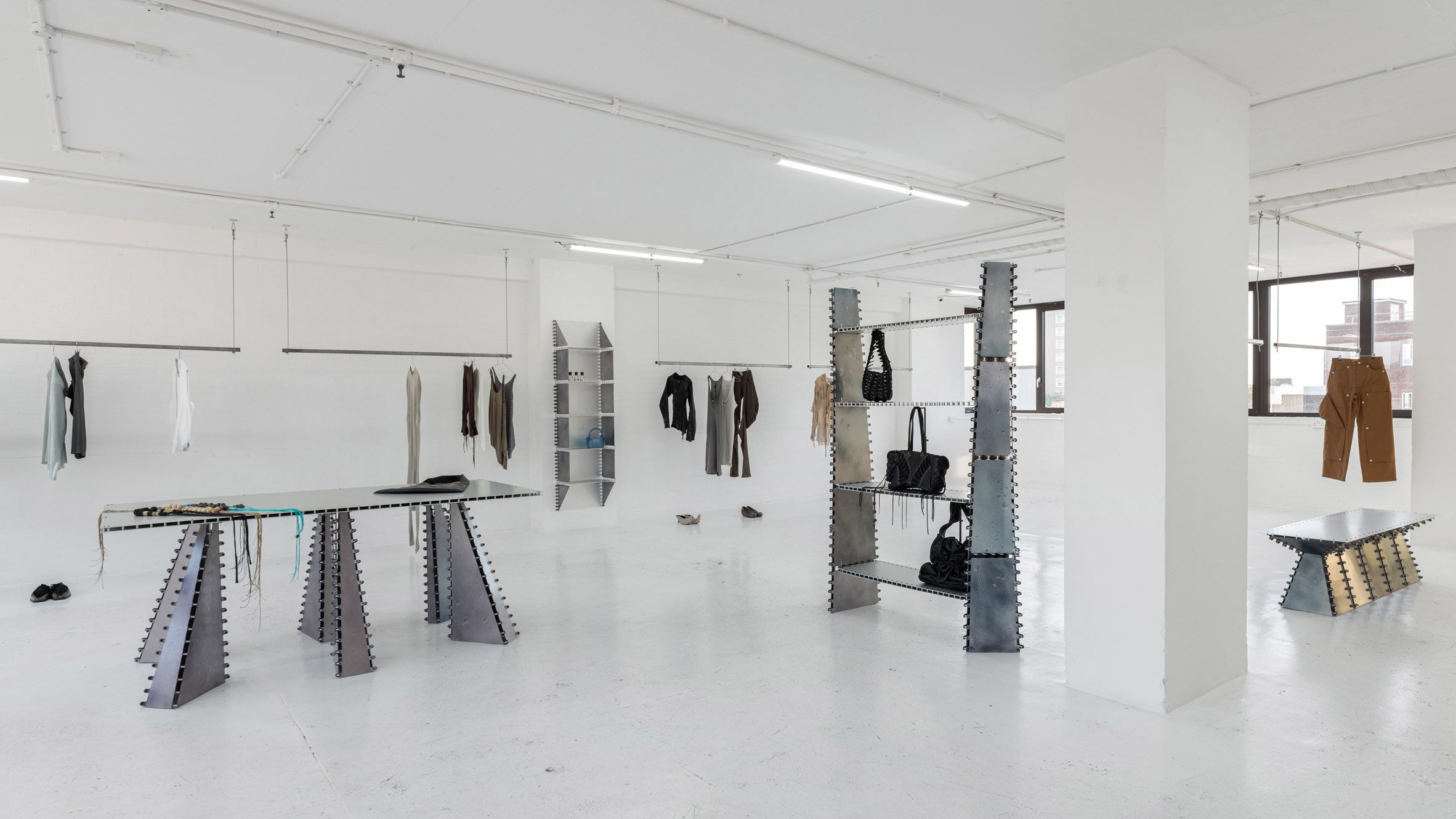
Tom Pearson’s 10,000 Rivets collection at the APOC Store gallery during the London Design Festival 2026 – Photo by Studio Adamson.
Design. Orphaned by major anchoring fairs, London Design Festival thrived — carried instead by group exhibitions, design districts, galleries and a run of standout solo showcases scattered across the city. Archipanic’s founder and Editor-in-Chief, Enrico Zilli, picked out seven furniture and lighting collections worth your attention, ranging from a lighting series steeped in 1970s glamour to a shelf that blends cane and rattan craft with parametric design.
- RELATED STORIES: Read more about London Design Festival 2026 on Archipanic.
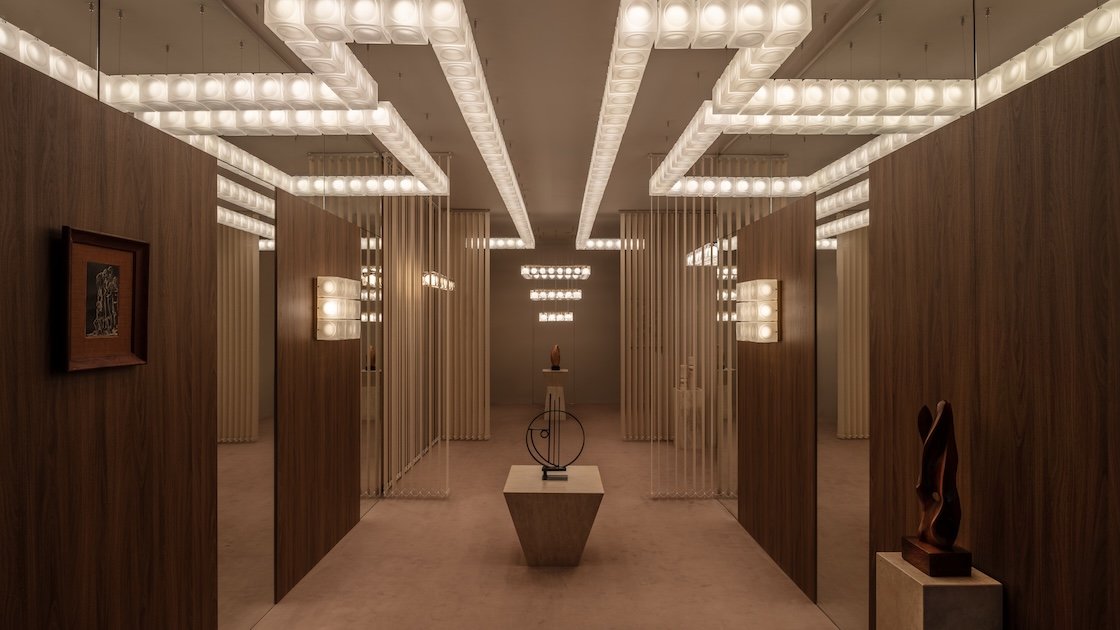
Lee Broom’s The Chant Chambers installation – Photo by Luke Hayes.
At the entrance of Materials Matter, the platform championing sustainable material innovation, Polish designer Oskar Zięta of Zieta Studios unveiled the Whispers Bench, formed with the studio’s FiDU technology, which inflates flat steel into volumetric shapes using compressed air. “The steel bends, stretches, and grows — transforming from a two-dimensional object into a three-dimensional form. What emerges is not imposed from the outside, but generated from within,” Zięta explains — a fitting start to a London design story built on experimentation.
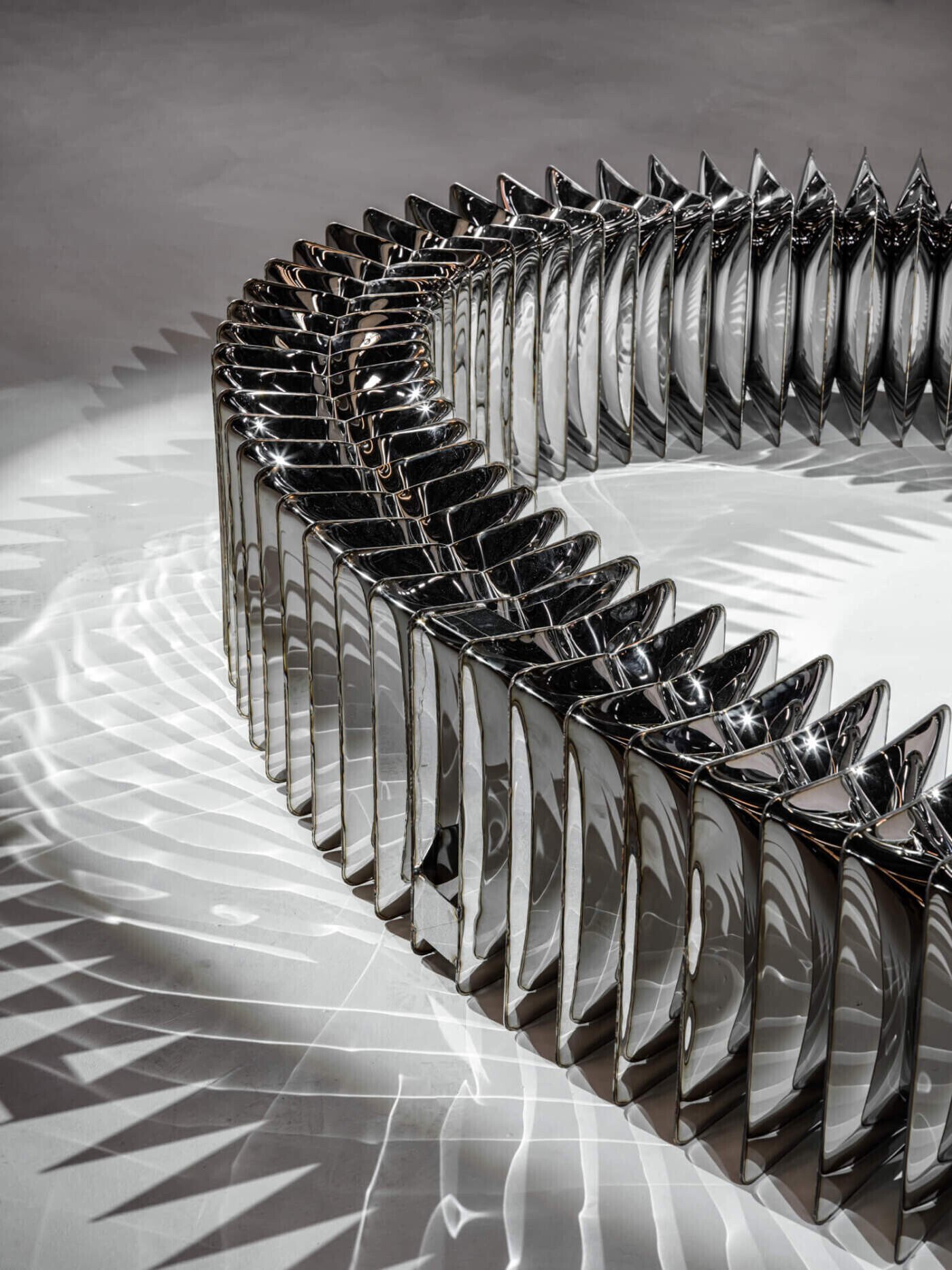
Whisper Bench by Zieta Studios – Photo by Piet Albert Goethals.
At the APOC Store gallery, Tom Pearson debuted the 10,000 Rivets collection of aluminium furniture, including a standing shelf, stool, table, and cabinet. The designer used industrial rivets and tubular spacers to create the illusion of floating aluminium panels. Here, the rivets become part of the design rather than simply serving a functional purpose. For the finish, Pearson developed an experimental anodising technique that creates a subtle effect reminiscent of water droplets across the aluminium surface.
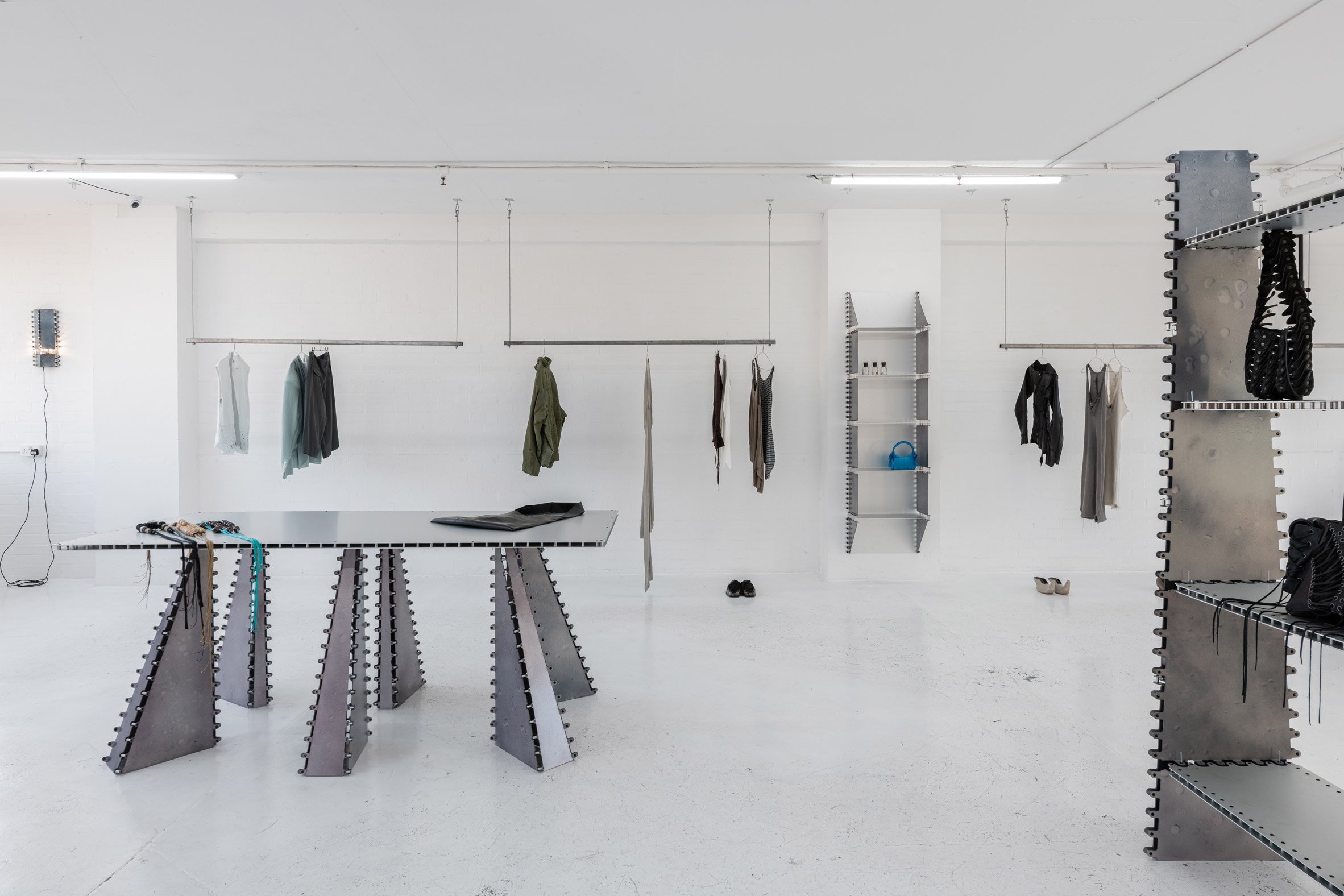
Tom Pearson’s 10,000 Rivets – Photo by Studio Adamson.
Lee Broom‘s The Chant Chambers installation showcased the continuing evolution of Chant, one of the designer’s most celebrated lighting pieces. “Chant has evolved from a singular lighting design into an architectural lighting system,” the designer explained. A series of distinct chambers at his Shoreditch showroom revealed different interpretations. The smoked finish added a 1970s early ‘80s twist. New additions include expansive square formations that can create large-scale illuminated planes as well as linear compositions.
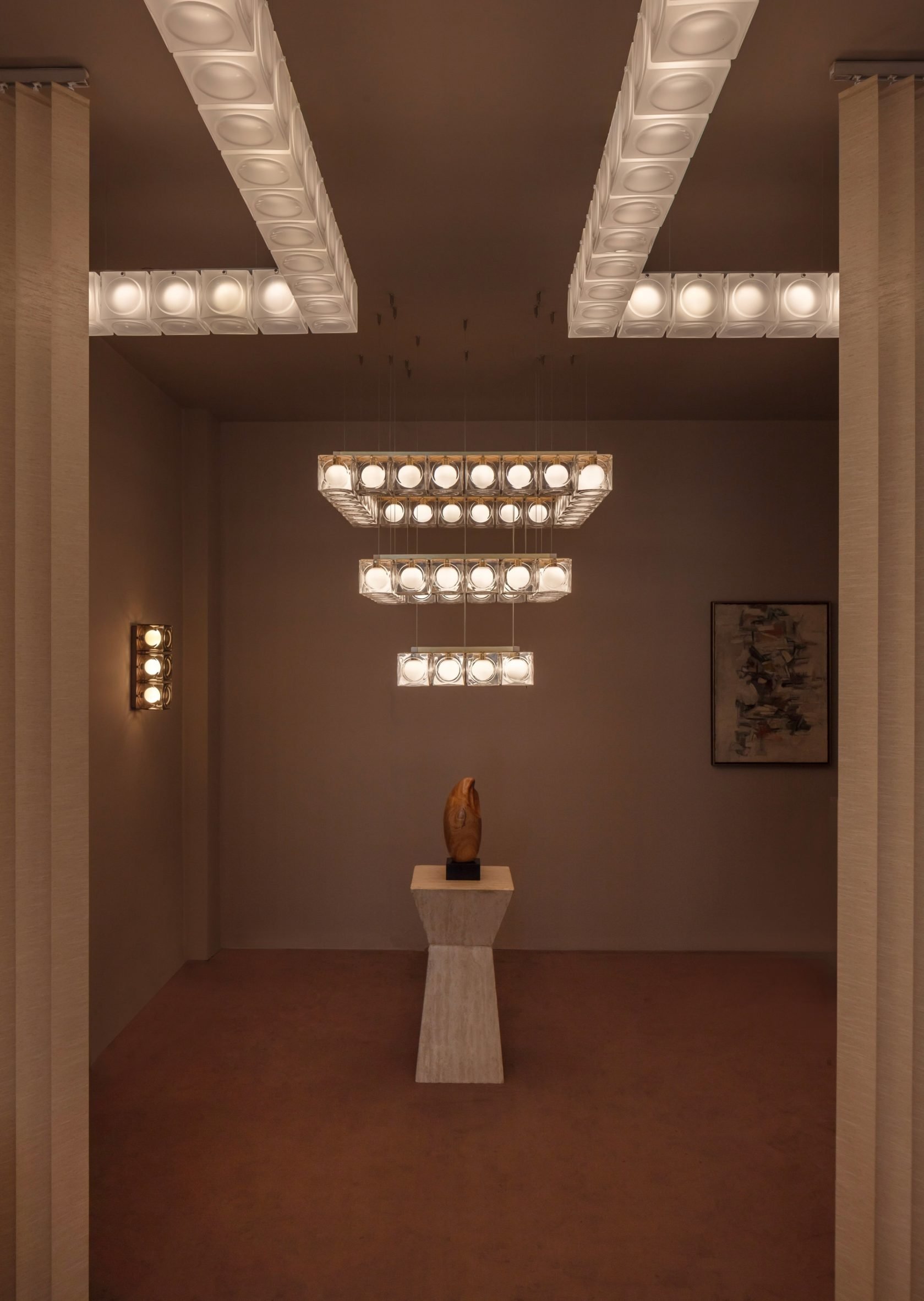
Lee Broom’s The Chant Chambers installation – Photo by Luke Hayes.
Raw-Edges Design Studio expanded its Light Mass collection with a table lamp series featuring sculptural mesh shapes inspired by the elegant frameworks of Victorian greenhouses and bridge engineering. The collection features voluminous yet ultra-light structures with minimal form, weight, and environmental impact. The pattern is digitally designed in one continuous movement. “Even though LEDs no longer require shades, there remains a need to furnish space with visual elements that can still shape the environment,” explain the studio founders Yael Mer and Shay Alkalay.
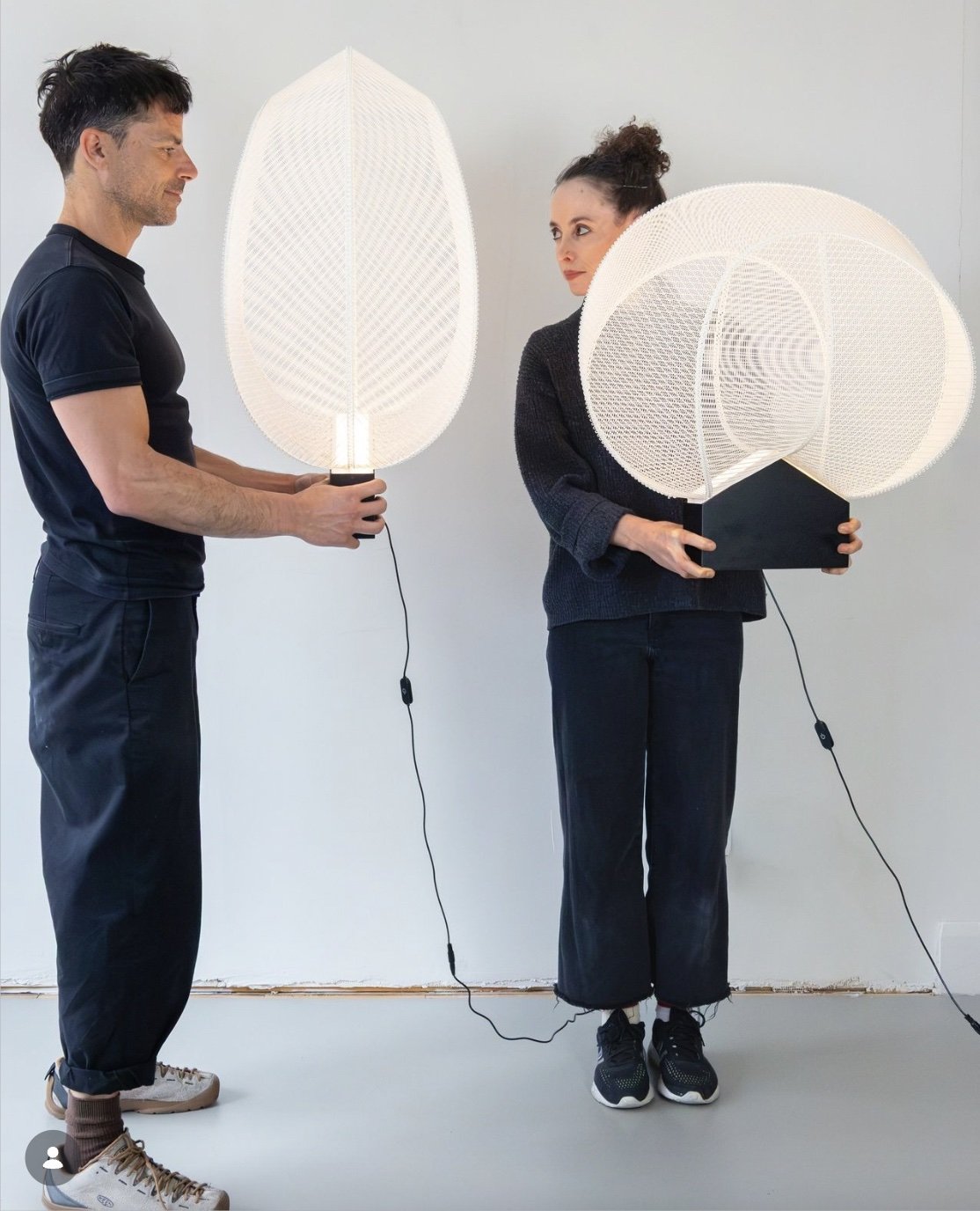
Light Mass table lamp by Raw Edges Design Studio – Photo via IG, follow @rawedgesdesignstudio.
India- and UK-based design platform Raw Collaborative made its first major international debut at London Design Festival with the Design Intelligentsia exhibition at Shoreditch Town Hall, showcasing works able to blend South Asian heritage craft with digital innovation. Architect Priyanka Narula presented a sinuous shelf merging cane and rattan traditional techniques with parametric design. Natural materials transform and update to a contemporary design language.
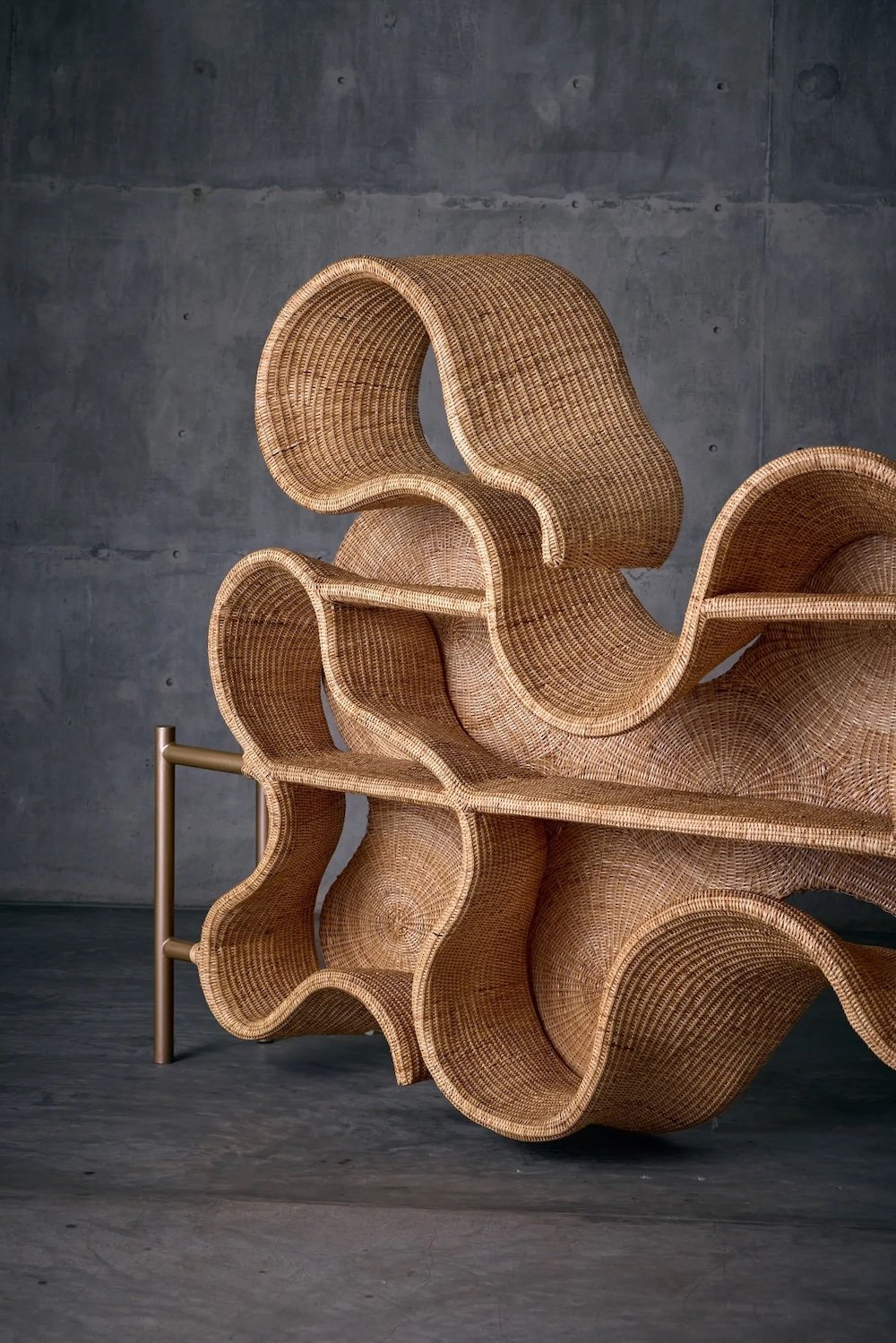
Priyanka Narula’s shelf x Raw Collective – Photo by Wicked Story.
In Mayfair, Sarah Myerscough Gallery opened BADLANDS, an exhibition by Christopher Kurtz running until 7 November. Kurtz filled the space with 4,000 wooden skipping stones, cut from two decades of off-cuts salvaged from his studio in South Dakota, forming an immersive terrain visitors can walk straight through, while the upper gallery presents his furniture archetypes. The title nods to the prehistoric badlands of South Dakota, a place embedded in Kurtz’s own history and central to his thinking on resistance, repetition and persistence.
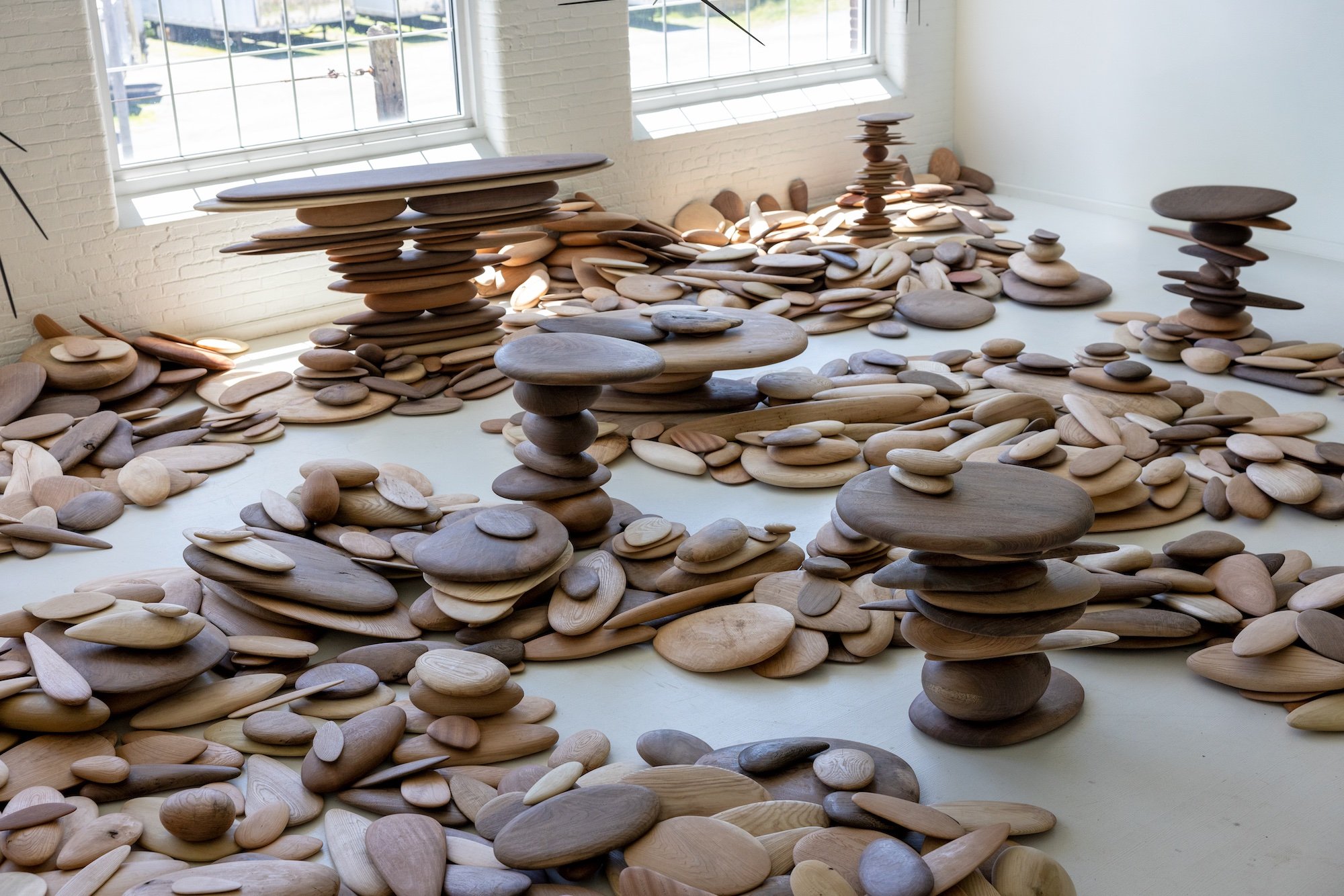
Badlands, Christopher Kurtz’ installation at Sarah Myerscough Gallery – Courtesy of the Mayfair Design District.
At his Coal Drops Yard flagship, Tom Dixon presented his ultimate collections at the ‘Have you seen the light?’ exhibition. Whirl is a copper light with a spiralling design which “creates mesmerising play of light, mirrored reflections and infinitely repeating abstract patterns.” Inspired by the op-art movement, the piece uses high-tech manufacturing, following the same process of injection blow moulding and precise metallisation.
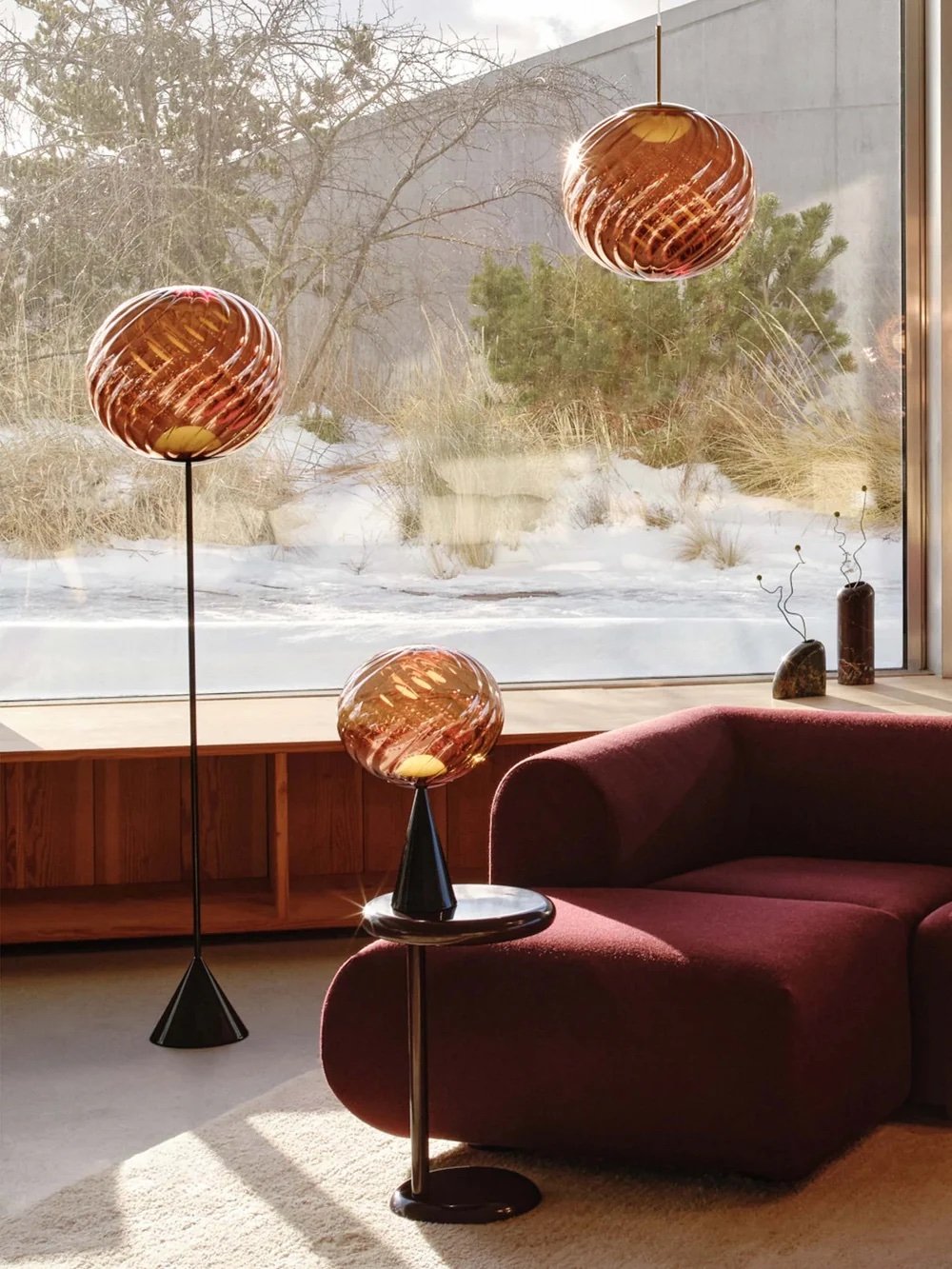
Photo by Tom Dixon.