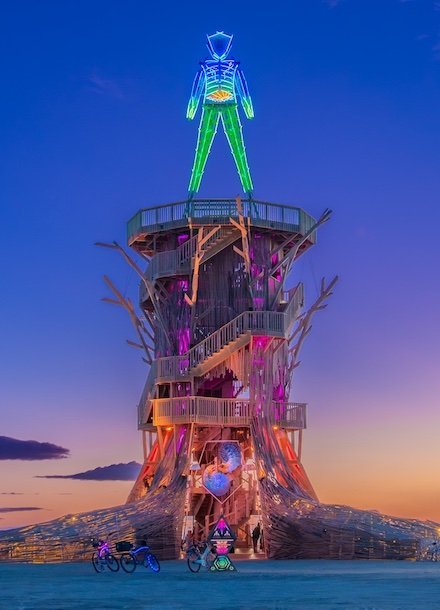
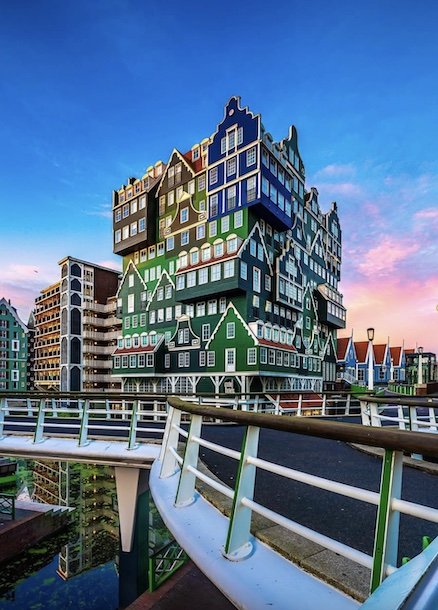
R&R Studios at the Chicago Architecture Biennial 2025 – Photo by Bob, Robert Heishman.
Architecture. Chicago has always been a city of bold architecture, but this fall the skyline feels different. Not because of a new tower or a shimmering glass façade, but because the entire city has become a stage for ideas. The Chicago Architecture Biennial 2025 has opened its doors—and its streets, parks, and cultural landmarks—inviting everyone to imagine what architecture can mean in a world marked by change. Curated by Artistic Director Florencia Rodriguez, this sixth edition carries the theme SHIFT: Architecture in Times of Radical Change. It is less about static objects than about movement, adaptation, and possibility.
- RELATED STORIES: Read more about the Chicago Architecture Biennial on Archiopanic.

LA DALLMAN at CAB 2025 – Photo by Bob, Robert Heishman.
Until February 28, 2026, more than 70 participants from across the globe respond to the uncertainties of our time with visions that embrace resilience, creativity, and community. Housing, ecology, and materials anchor the conversations, but the underlying story is how architecture can remain humane, imaginative, and responsive when everything around us seems in flux.

Objects of Common Interest at CAB 2025 – Photo by Bob, Robert Heishman.
What makes the Chicago Architecture Biennial 2025 special is the way it spills into the city. The Chicago Cultural Center, the Graham Foundation, the Stony Island Arts Bank, and the grounds of the Gryphon Museum of Science and Industry serve as main hubs, but more than 60 partner sites extend the experience across Chicagoland. Walking from one venue to another feels like threading a citywide narrative, with each stop offering a different reflection on how we live, gather, and remember.
Chicago Cultural Centre
78 E. 78E.Washington, Map.

Iman S Fayyad and Project If at CAB 2025 – Photo by Iman S Fayad.
At the Chicago Cultural Center, visitors find a general introduction to SHIFT, as well as two of the Biennial’s central capsule exhibitions. Inhabit, Outhabit showcases collective housing projects that stretch from refugee camps to experimental urban compounds.
In one alcove, plywood sheets—humble and everyday—are bent and strapped into a communal space by Iman S Fayyad and Project If. Nearby, Tosin Oshinowo‘s Homes for Ngarannam reconnects displaced Nigerian families with ancestral lands, proving that housing can be both a lifeline and a cultural thread. SO-IL‘s 450 Warren proposes a future of layered thresholds and shared outdoor rooms, while R&R Studios’ fantastical billboard Beauty for All declares that cities must also be built with joy. LA DALLMAN demonstrates the potential of transforming abandoned buildings with a timber pavilion showcasing the transformation of their Door County Granary project in Wisconsin.

Objects of Common Interest at CAB 2025 – Photo via IG, follow @objects_of_common_interest.
The Ordinary–EXTRA capsule exhibition turns the spotlight on imagination in everyday spaces. Jacqueline Kiyomi Gork’s soft, breathing architecture swells to a musical rhythm, while Objects of Common Interest invite visitors into an inflatable dome that shifts with each human interaction. The ordinary, these projects suggest, is never as ordinary as it seems.
Graham Foundation for Advanced Studies in the Fine Arts
4W.BurtonPlace, Map.

Hard Sun Interstate by Sam Chermayeff Office and Hard Sun at CAB 2025 – Photo by Bob, Robert Heishman.
Moving to the Graham Foundation, the exhibition Fragmented Manifestos revisits architectural responses to past radical transformations. Here, architecture collides with politics, technology, and culture in inventive ways.

Sergio Prego at CAB 2025 – Photo by Bob, Robert Heishman.
MOS and Tony Cokes invite people to sit on benches inscribed with words, creating a chance to pause and reflect. Diller Scofidio + Renfro examines domestic rituals, such as ironing, through the lens of efficiency and the body. Sergio Prego fills the space with an inflatable sculpture that hums with air, bodies, and architecture in dialogue. Other highlights include Sam Chermayeff Office and Hard Sun’s exploration of infrastructure in Hard Sun Interstate.
By Gryphon Museum of Science and Industry
5 S. DuSable Lake Shore Drive, Map.

Photo via IG by @marcosguiponi, follow @balsa.crosetto.piazzi.
On the historic grounds of Jackson Park—once the site of the 1893 Chicago World’s Fair—architects BALSA CROSETTO PIAZZI and GIORGIS ORTIZ present TRACES. This site-specific installation uses 10,000 dry-stacked bricks to outline the footprint of the Fair’s Great Buildings. The piece evokes the scale and drama of the Fair’s architecture while embracing impermanence: after the Biennial, every brick will be reused, leaving behind only memory.
Stony Island Arts Bank
6760S.Stony Island Ave, Map.

Studio Jacob at the CAB 2025 – Photo by Markus Pilhofer.
At Theaster Gates’ Stony Island Arts Bank [read more], Melting Solids asks what happens when architecture sheds its monumentality to become impermanent, adaptive, and rooted in cultural memory. Abigail Chang turns condensation into presence, catching vapour on glass. Dominic Kießling’s Giant Blob makes a wave from nothing but air and plastic foil. Studio Jacob reinterprets the megalithic dolmen in an inflatable form, transforming heaviness into lightness and permanence into ephemerality. These works whisper that architecture can be temporary, soft, and playful—and still meaningful.

Jacqueline Kiyomi Gork at CAB 2025 – Photo by Bob, Robert Heishman.
What lingers after moving through the Biennial’s sites is not a single building or object, but a mood: that architecture is alive, fluid, and deeply human. It absorbs the conditions of its time and offers back new possibilities for how we might live together. In that sense, the Chicago Architecture Biennial 2025 is less an exhibition than an invitation—an open-ended conversation about resilience, memory, and joy. The city itself becomes the gallery, the streets the connecting corridors, and the future the work-in-progress.

MOS and Tony Cokes at CAB 2025 – Photo by Bob, Robert Heishman.
All photos are courtesy of the Chicago Architecture Biennial 2025, unless stated otherwise.