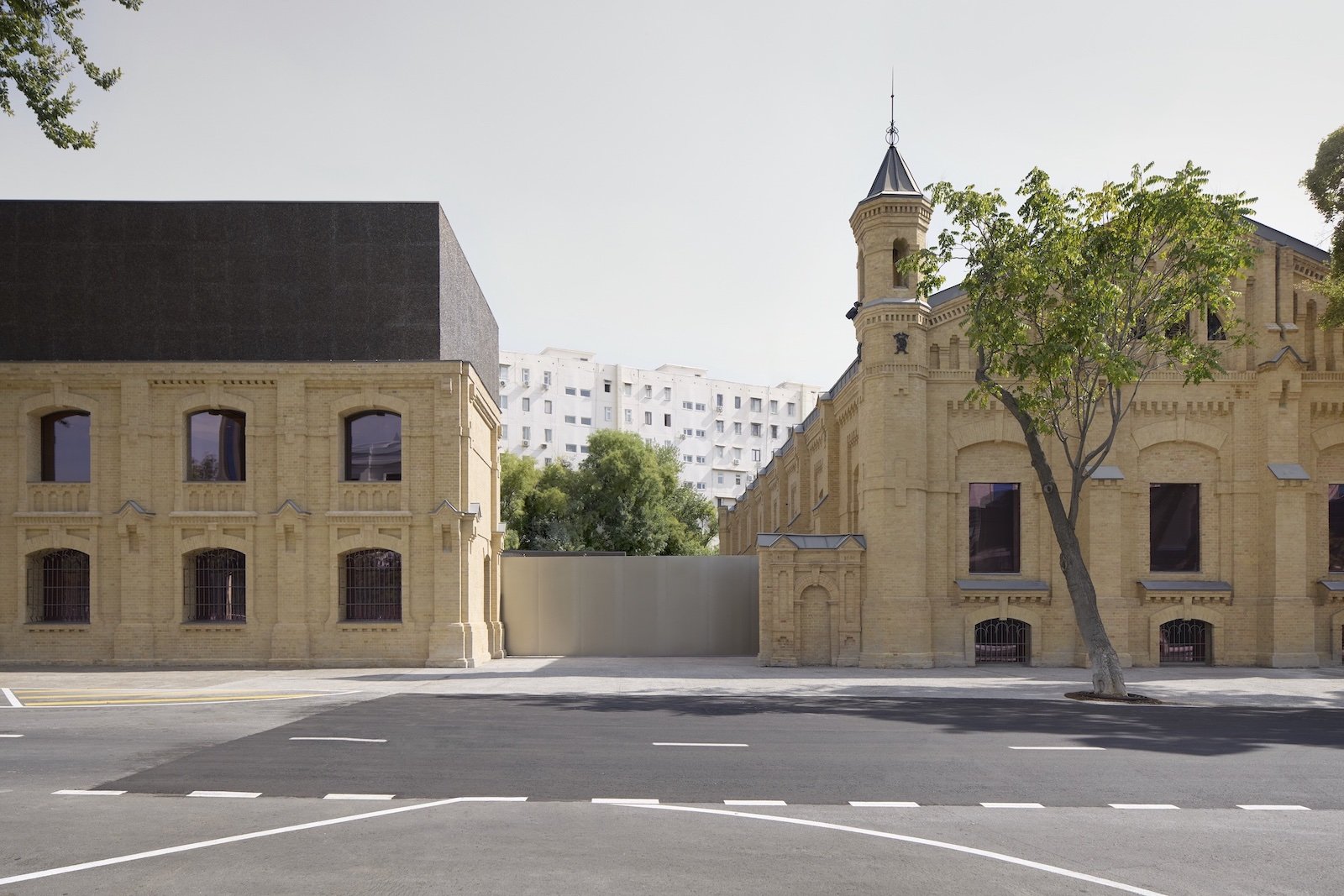
CCA Tashkent, Uzbekistan’s fist centre for conetmporary art by Studio KO – Courtesy of Studio KO and Dan Glasser.
Architecture. Paris-based Studio KO has unveiled the Centre for Contemporary Arts Tashkent, Uzbekistan’s first cultural destination of its kind. The renovation project turns a former diesel station and tram depot — built for the capital’s first tramline — into a 3,200 sqm hub anchored by a soaring industrial hall for major exhibitions. CCA Tashkent comprises a lobby, gift shop, library, offices and an underground tunnel that stitches the site’s two main buildings together.
- RELATED STORIES: Discover more Uzbek architecture and design on Archipanic.
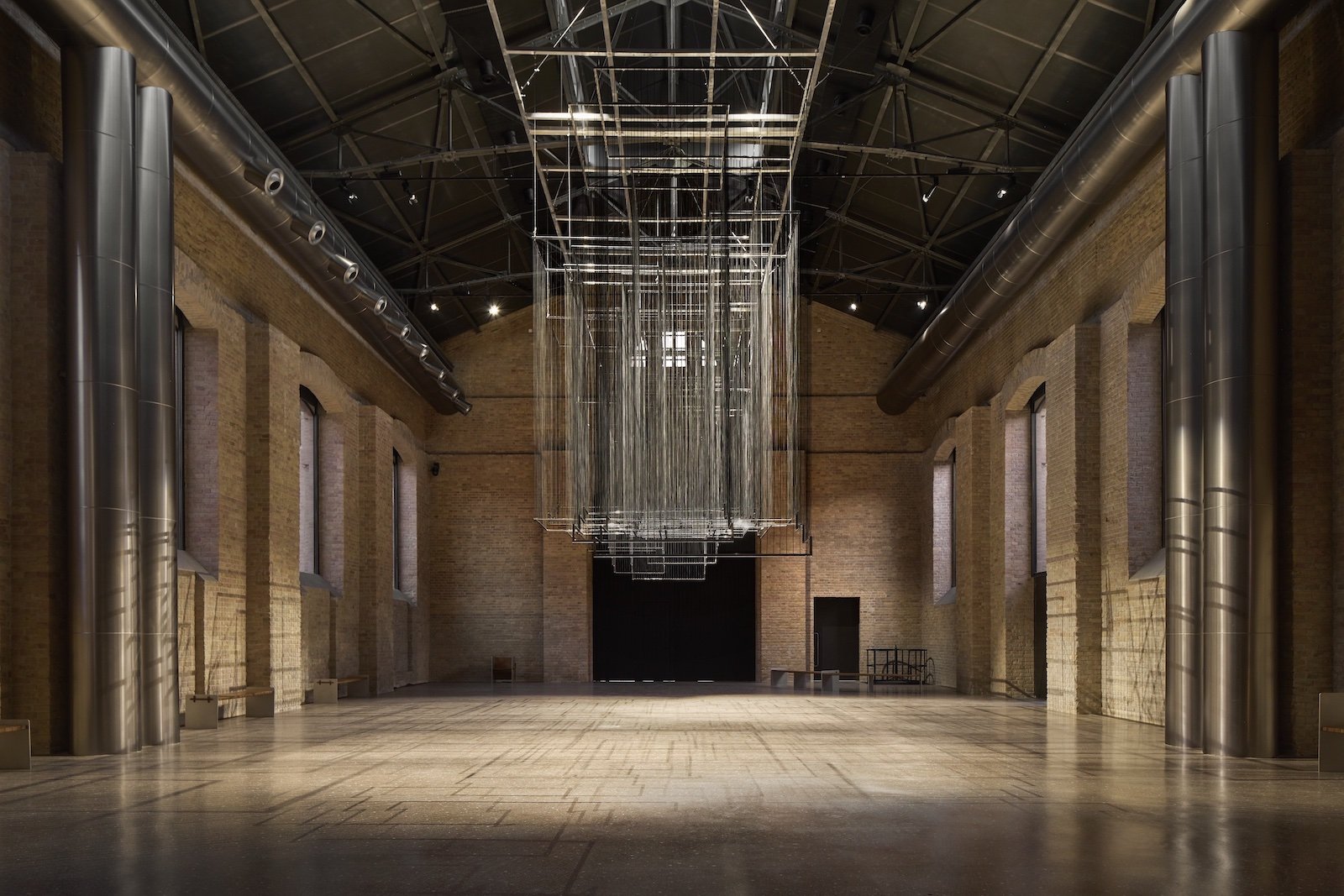
Diesel station exhibition space – Courtesy of Studio KO and Dan Glasser.
“We sought to honour the memory of a powerful industrial building while giving it a new poetic life,” say Studio KO architects Karl Fournier and Olivier Marty. Designed by architect Wilhelm Heizelmann in 1912, the structures are a rare and quietly commanding Tsarist-era presence within the Uzbek capital’s urban fabric.
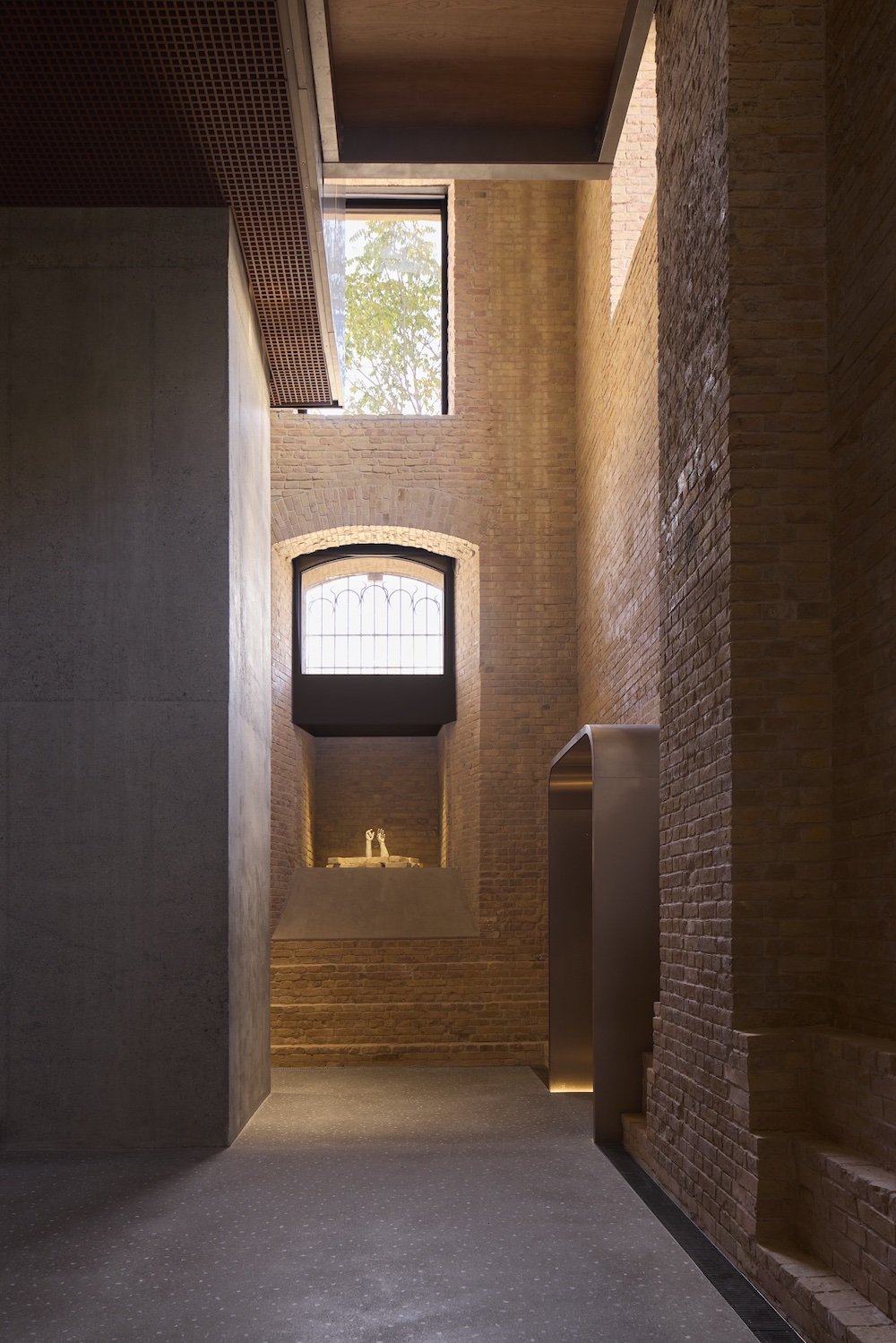
Diesel station exhibition space – Courtesy of Studio KO and Dan Glasser.
“Our work with traditional Uzbek materials and light-filtering motifs allowed us to create a space that is both contemplative and open.” The architects followed a careful and deliberate philosophy of intervention, respecting the utilitarian yet ornate beauty of the existing site while adding layers that speak to CCTA Tashkent’s mission – A fitting balancing act for what is, in effect, Uzbekistan’s first permanent platform for contemporary art, research and international exchange.
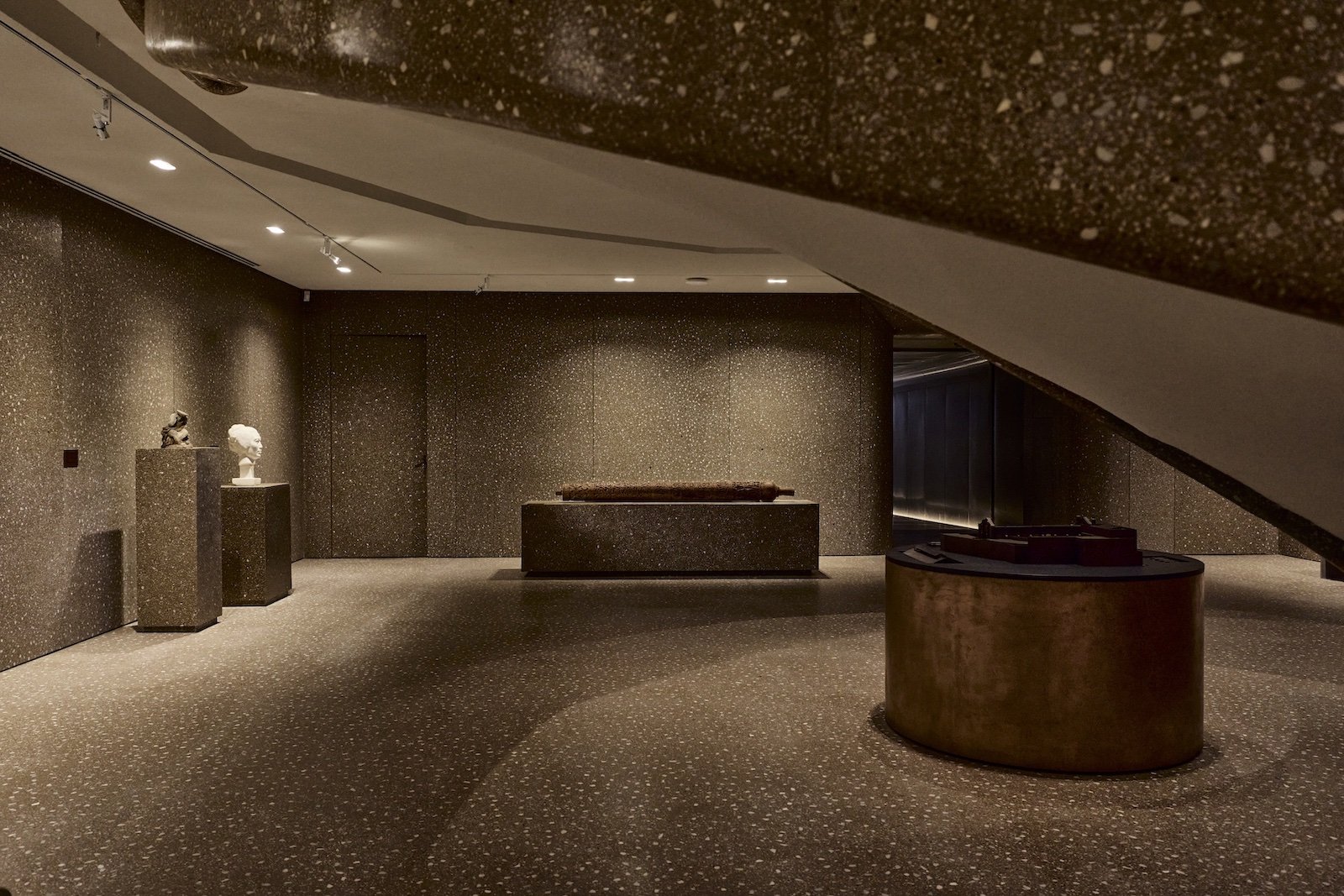
Hikmah inaugural exhibition – Courtesy of the Uzbekistan Art and Culture Development Foundation (ACDF) )and Andrey Arakelyan.
Visitors enter through the former administration building, now reception, shop and staff offices. Upstairs, a library and a snug listening room sit beneath a skylight alongside further workspace. A new self-supporting volume punches through one corner of the old brickwork, its geometric surfaces cast in locally sourced concrete aggregate and finished with a glossy varnish.
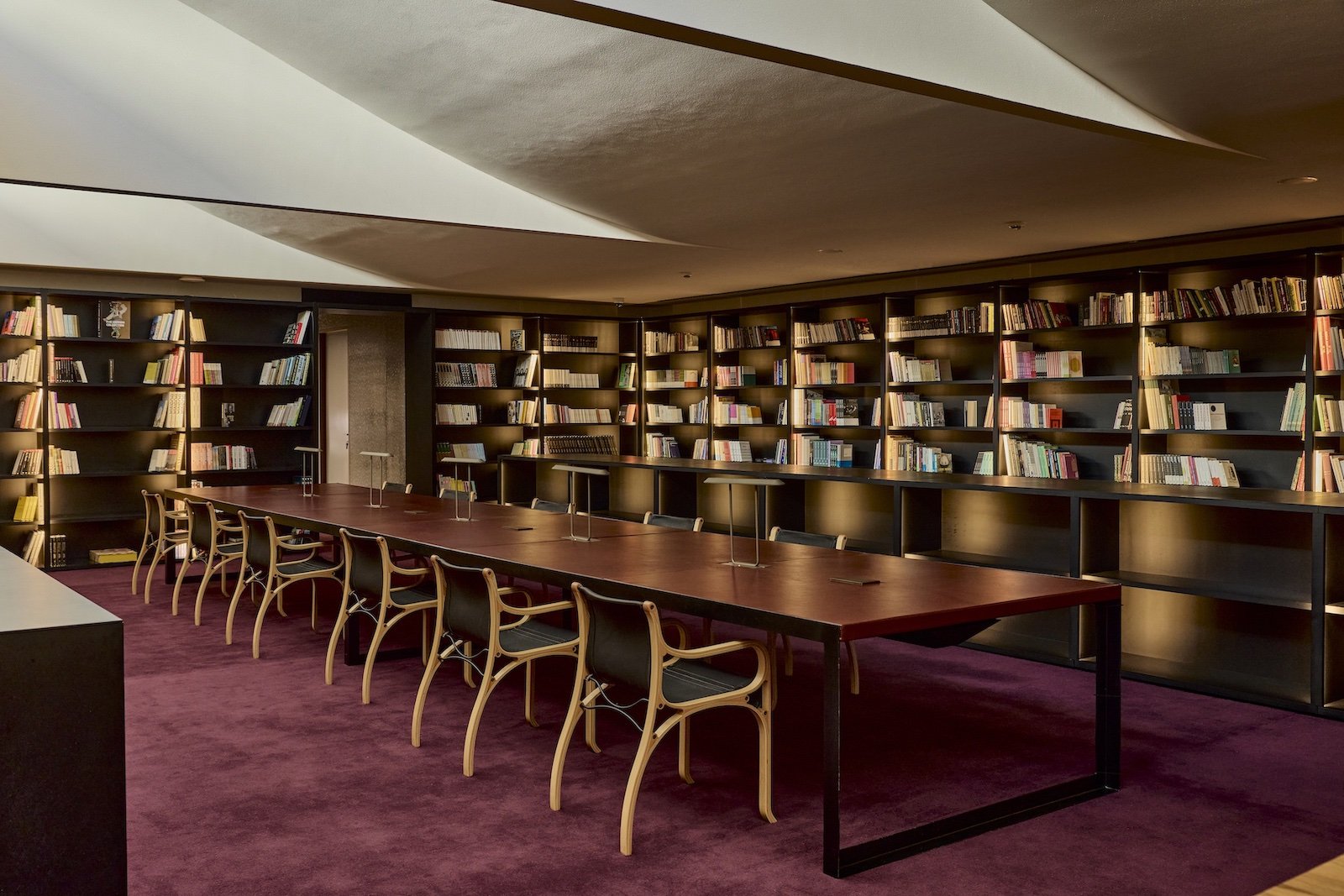
Library – Courtesy of the Uzbekistan ACDF and Andrey Arakelyan.
A helical staircase spirals down to the first underground gallery, where a dark, metal-clad corridor pulls visitors towards the old diesel station in the other building. Here, the main hall has been kept largely untouched, its early twentieth-century Imperial brickwork and generous daylight intact. Stepped seating runs along one side, tucked beneath a cubic auditorium suspended overhead.
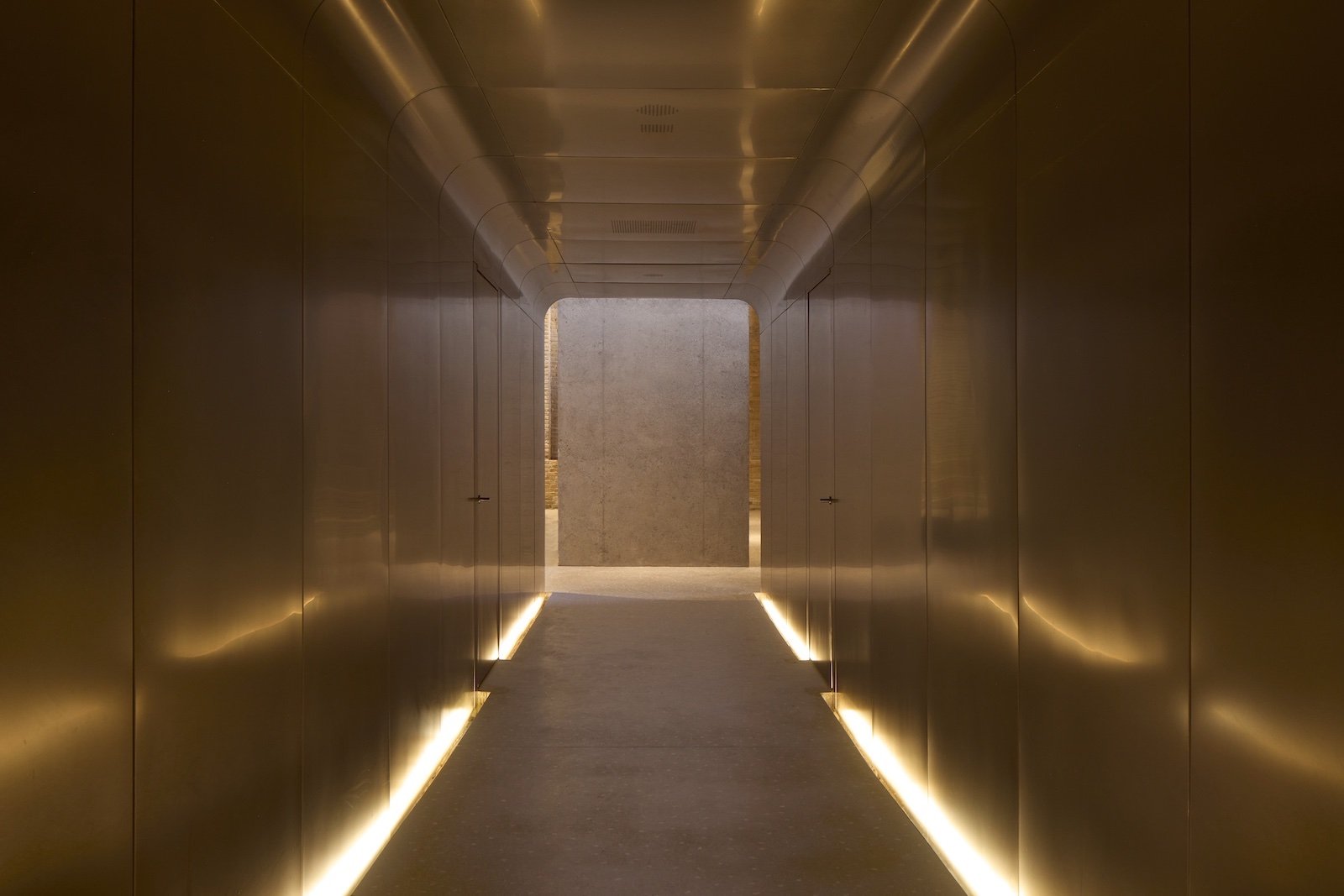
Underground gallery passage – Courtesy of Studio KO and Dan Glasser.
The route closes at a raw concrete courtyard built for gathering, workshops and public programmes, including an outdoor cinema with regular screenings. None of it happened without serious craft: a bespoke concrete mix developed from Uzbek materials, and tiles commissioned from the Rakhimov family’s ceramics studio in Tashkent.
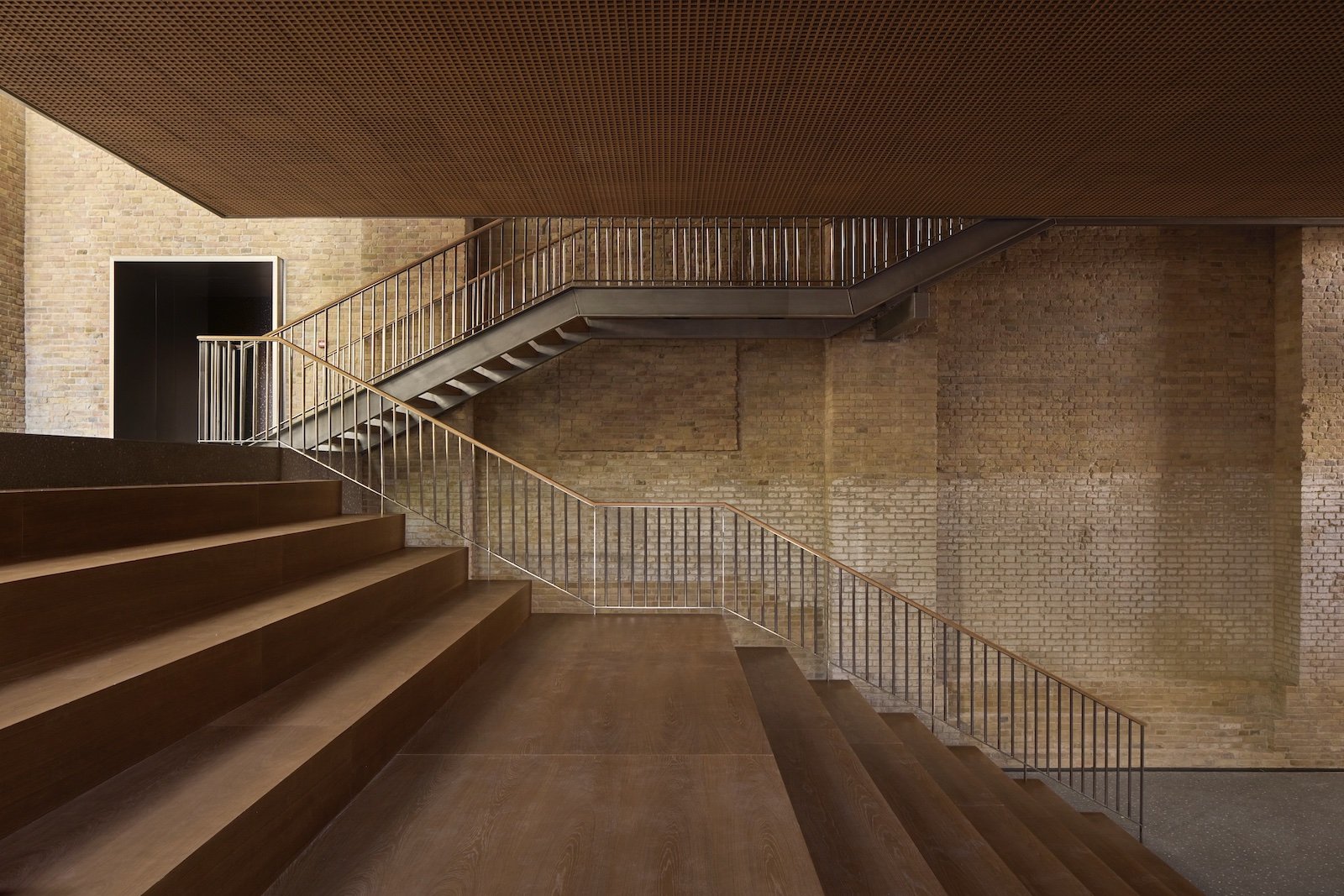
Lecture seating area at the Diesel station – Courtesy of Studio KO and Dan Glasser.
The centre is led by the country’s Art and Culture Development Foundation (ACDF), chaired by Gayane Umerova. Its inaugural show, Hikmah, curated by Dr Sara Raza, anchors the 2026 programme. The exhibition brings together newly commissioned works and recent installations by ten contemporary Uzbek and international artists that explore the concept of hikmah (wisdom) and respond to the building’s architecture and the country’s wider cultural histories.
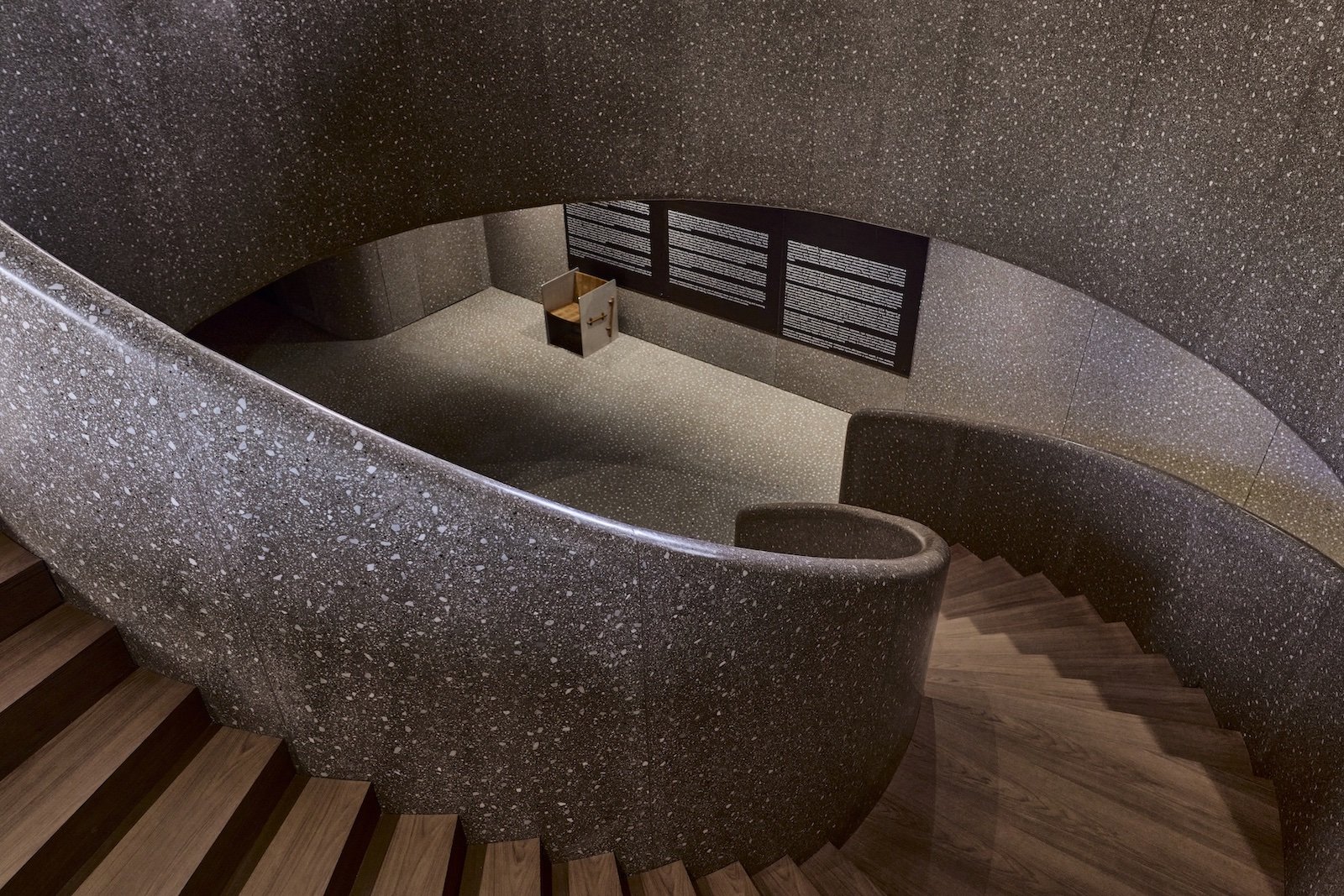
Spiralling staircase – Courtesy of the Uzbekistan ACDF and Andrey Arakelyan.
Photography is by Dan Glasser and Andrey Arakelya.
- RELATED STORIES: Discover more eclectic museums on Archipanic.
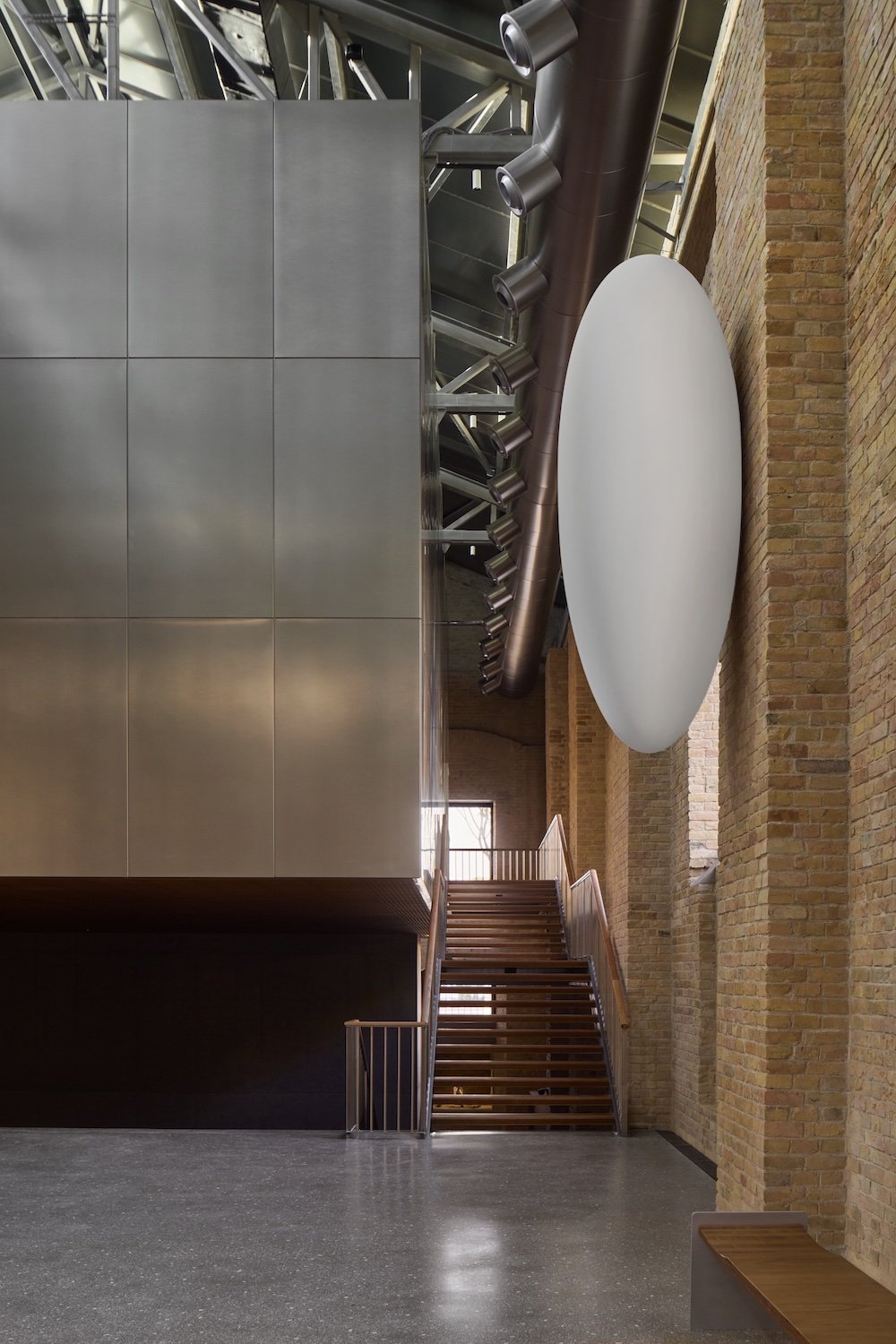
Diesel station exhibition space – Courtesy of Studio KO and Dan Glasser.
Hikmah inaugural exhibition – Courtesy of the Uzbekistan ACDF and Andrey Arakelyan.
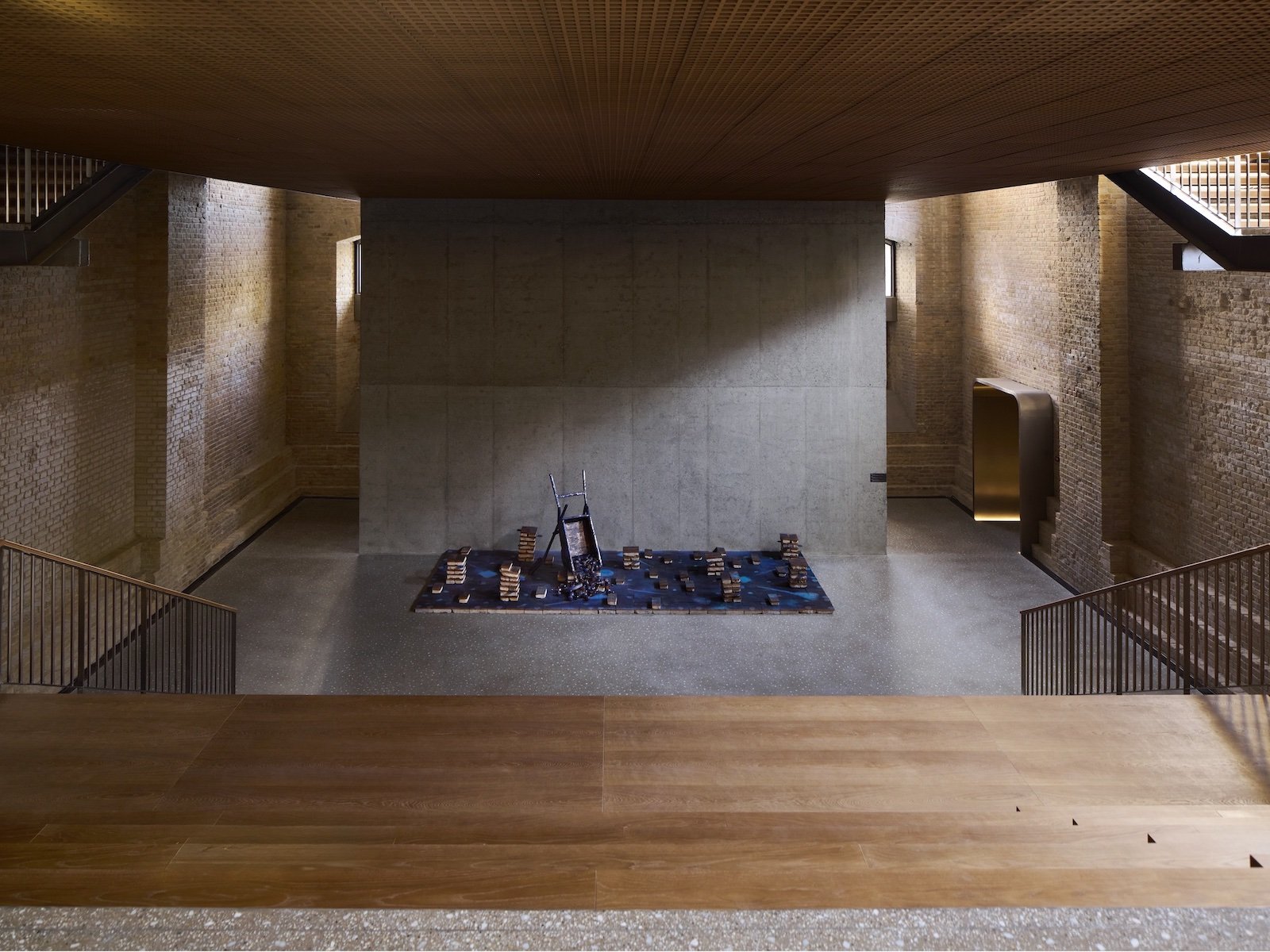
Lower view of the Diesel station exhibition space – Courtesy of Studio KO and Dan Glasser.