We Design Beirut 2025 at the Roman Baths – Photo by Walid Rashid.
Design. We Design Beirut 2025 turned the Lebanese capital into a vibrant stage for creative dialogue — from Roman baths to Ottoman villas and brutalist skyscrapers. With themes of legacy, revival, and continuity, the design week resonated deeply as the country marked fifty years since the onset of the Civil War, confronting its layered history while celebrating an ever-evolving creative spirit.
- RELATED STORIES: Read more about We Design Beirut on Archipanic.
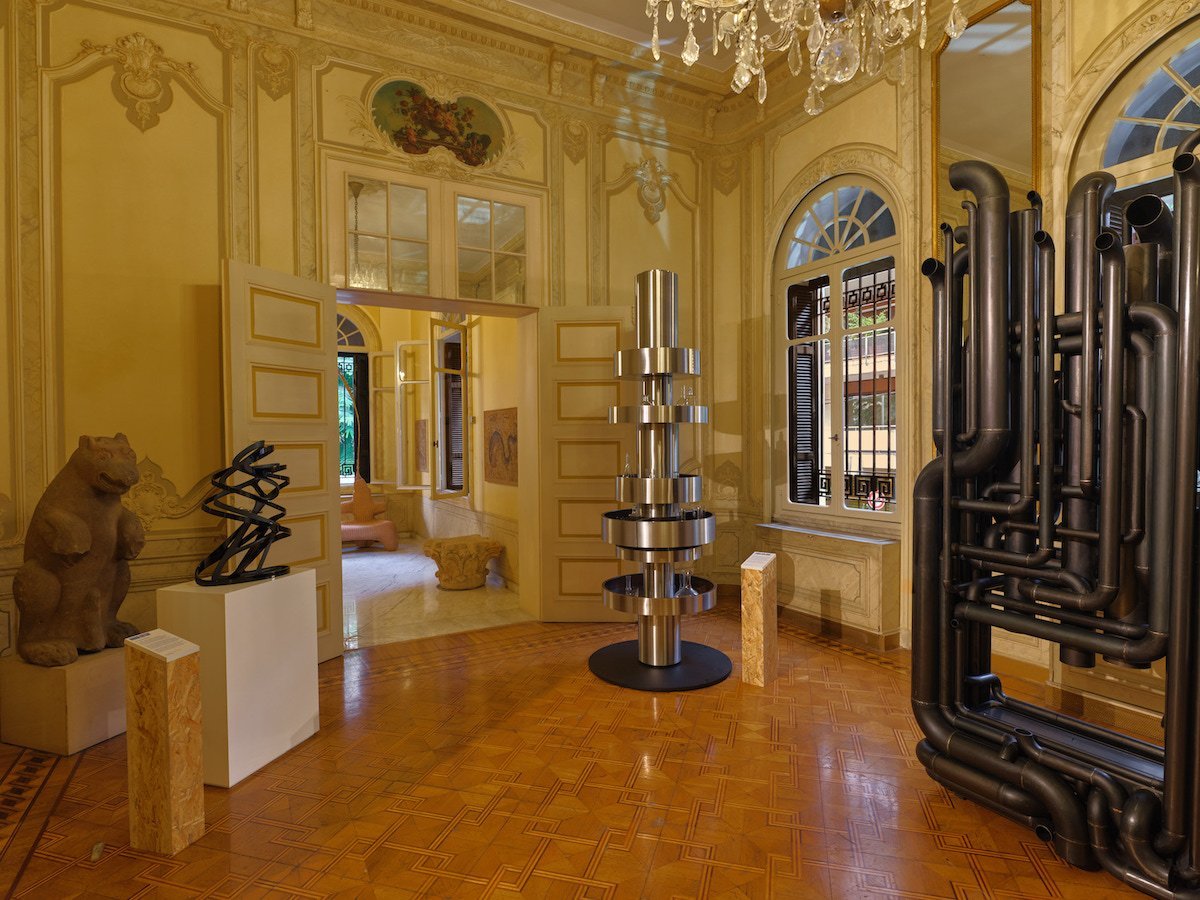
We Design Beirut 2025 at Villa Audi – Photo by Dia Mrad.
The event wove together exhibitions, installations, open studios, talks, and workshops — all set within Beirut’s most architecturally significant landmarks. Designers, artisans, architects, educators, and students converged in a shared act of creation and renewal. “Collaboration can rebuild what was once broken, not only physically, but also emotionally and socially,” said founder Mariana Wehbe [Read the interview].
Burj El Murr
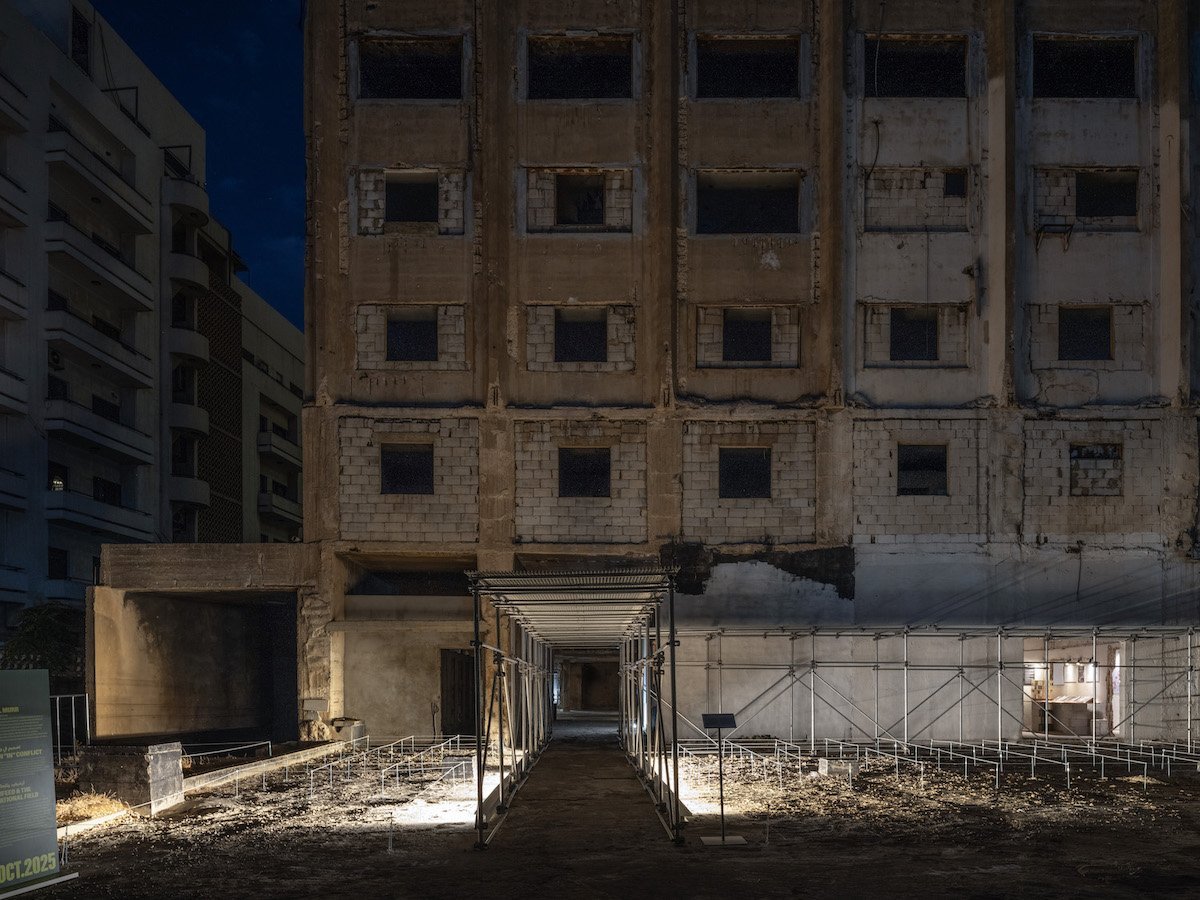
Design ‘In’ Conflict – Photo by Ieva Saudargaite.
At the Burj El Murr, one of Beirut’s most haunting brutalist icons, the Design ‘In’ Conflict exhibition opened the building’s doors to the public for the first time. Once envisioned as a skyscraper of progress, it now stood as a vertical archive of the city’s scars. Works by students from nine Lebanese universities reflected on how conflict shapes architecture, space, and identity — sparking dialogue through live discussions and installations.
Abroyan Factory

Sarah Beydoun at WDB 2025 – Photo by Bernard Khalil.
Meanwhile, at the Abroyan Factory — a 1940s textile mill turned vibrant cultural hub — craftsmanship and memory took centre stage. The exhibition Threads of Life celebrated textiles as living archives, while Métiers d’Art transformed the industrial halls into a collaborative workshop where artisans and designers reimagined traditional techniques for today.
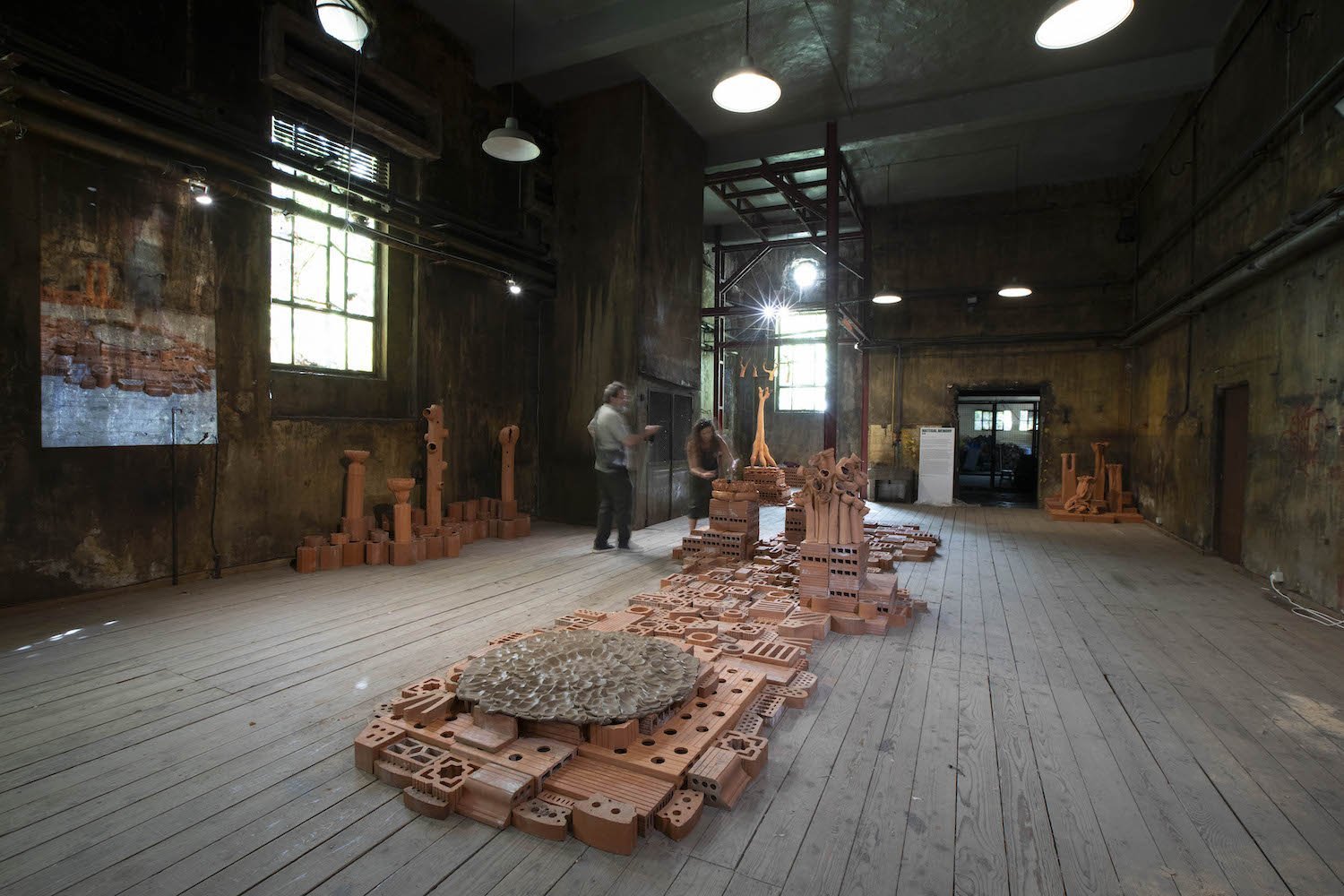
Tamar Hadechian at WDB 2025 – Photo by Bernard Khalil.
Among the highlights, Sarah Beydoun’s Hanging by a Thread paid heartfelt tribute to the fading art of handmade bridal trousseaus, lovingly assembled from heirloom garments and linens. As the founder of Sarah’s Bag, she continues to champion and empower women through the power of craft.
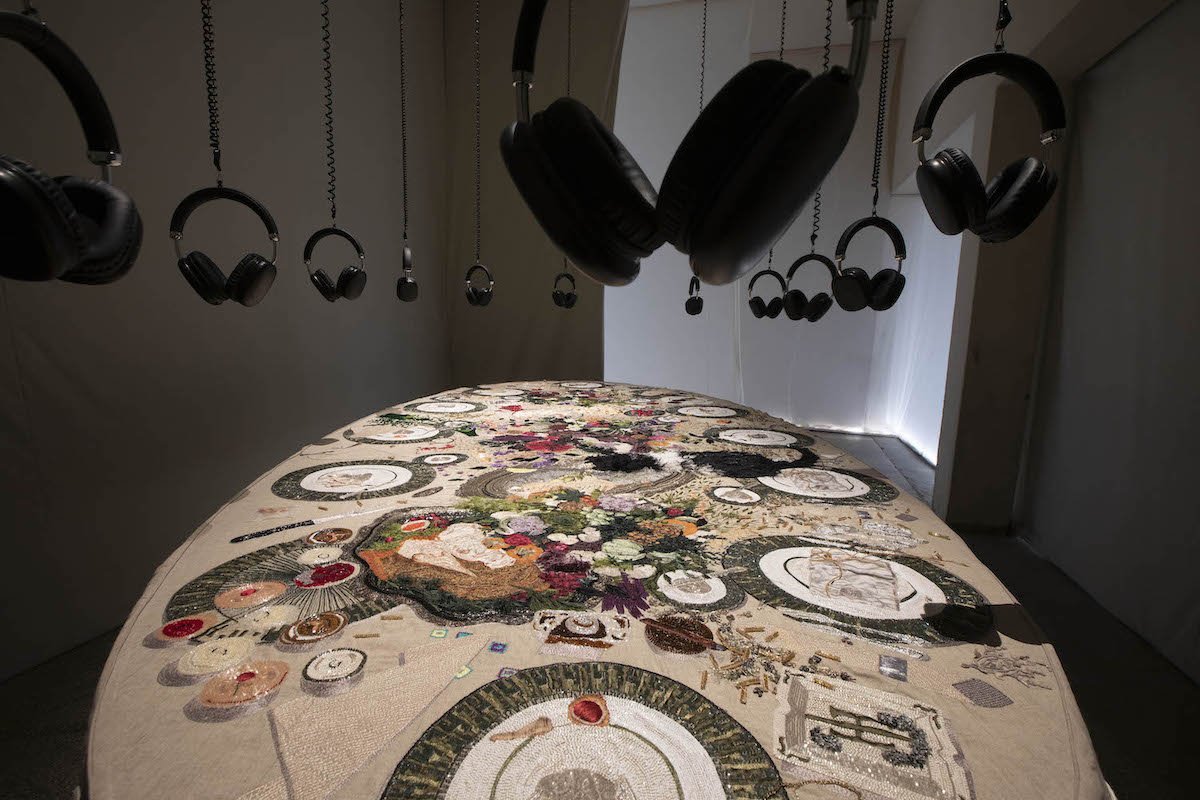
Hassan Idriss at WDB 2024 – Photo by Bernard Khalil.
Nearby, Tamar Hadechian’s Material Memory unfolded as a poetic performance of clay and labour, where touch itself became a form of architecture. And Hassan Idriss’s Supperclub invited visitors on a journey through a maze of linens, leading to an embroidered banquet — a witty, tactile reinterpretation of The Last Supper, meticulously crafted by twelve artisans over 2,305 hours.
Roman Baths
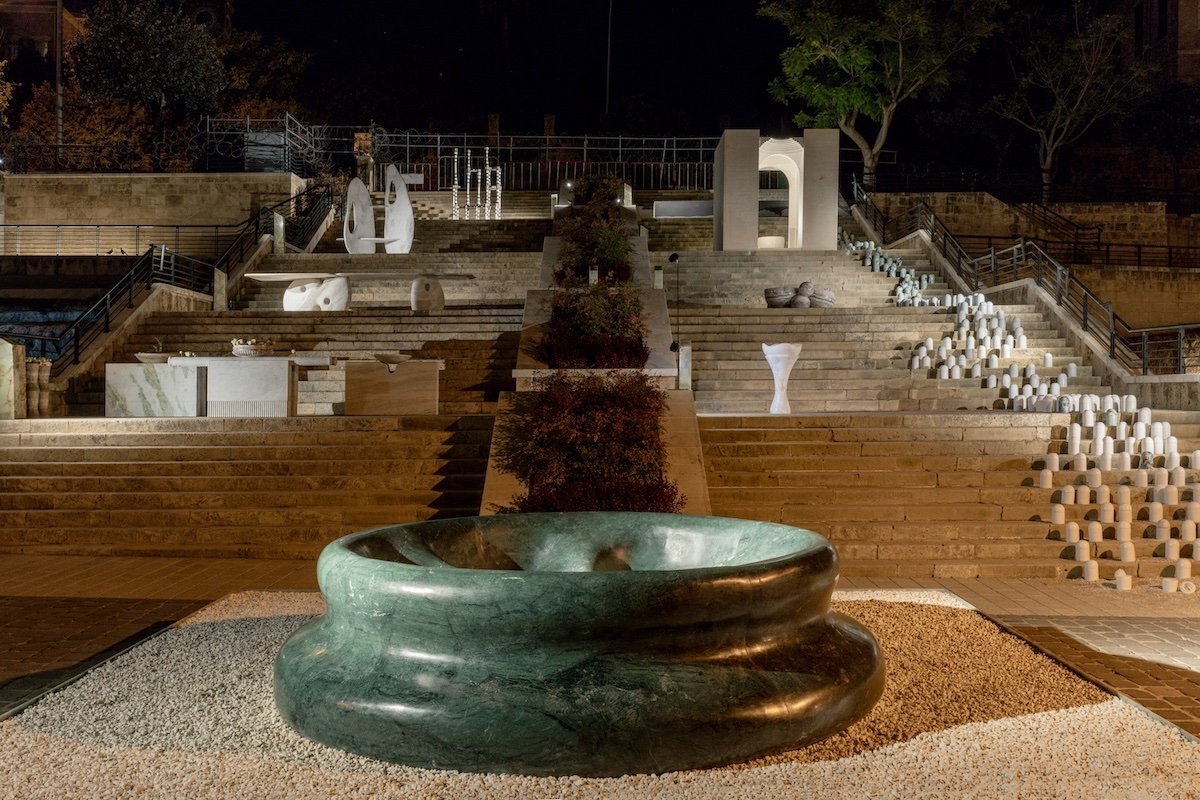
Carl Gerges at WDB 2025 – Photo by Walid Rashid.
At the Roman Baths, Of Water and Stone reimagined ancient rituals of cleansing and connection through contemporary marble design. Lebanese architect and rockstar Carl Gerges created a hot-water jet bath fusing combines contemporary hydrotherapy with ancient Roman culture. Sereen Hassanieh created a 7-meter-long modular marble bench inspired by the architectural poetry of the archaeological site.
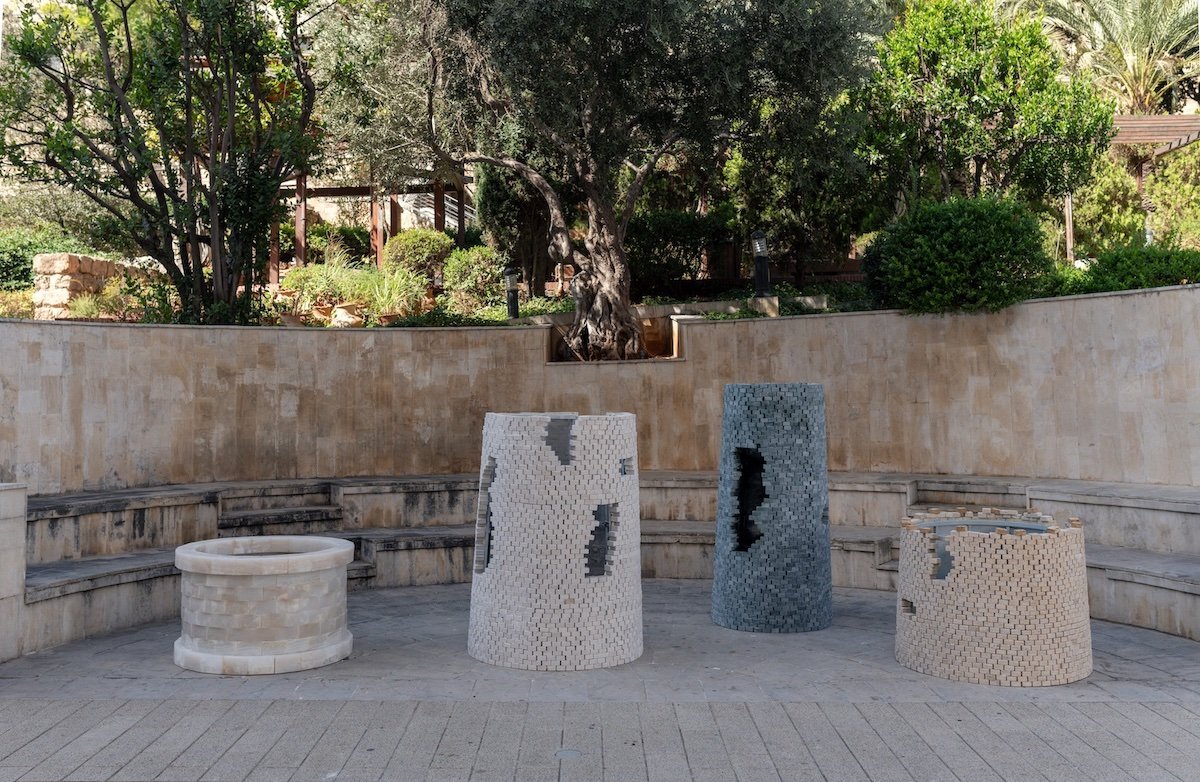
Ahmad Abouzanat at WDB 2025 – Photo by Walid Rashid.
New York–based Palestinian designer Ahmad Abouzanat’s Infinite Bonds is a poetic installation of hand-sized stone blocks shaped like Lebanese soap. Anchored by three marble “soap towers,” the work explores resilience, memory, and human connection. Visitors are invited to take a piece home, spreading the shared material across cities — a gentle gesture of unity through time and substance.
Villa Audi

Khaled Mouzanar at WDB 2025 – Photo by Charbel Saade.
At Villa Audi, a beautifully restored 20th-century Ottoman mansion, Gregory Gatserelia invited designers to imagine a “totem” for Beirut — a personal symbol of the city’s spirit. Visitors stepped into Khaled Mouzanar’s 18:07 — When Gravity Was No More, a poetic storm of floating pianos, music sheets, and doors, suspended midair as if time had paused.
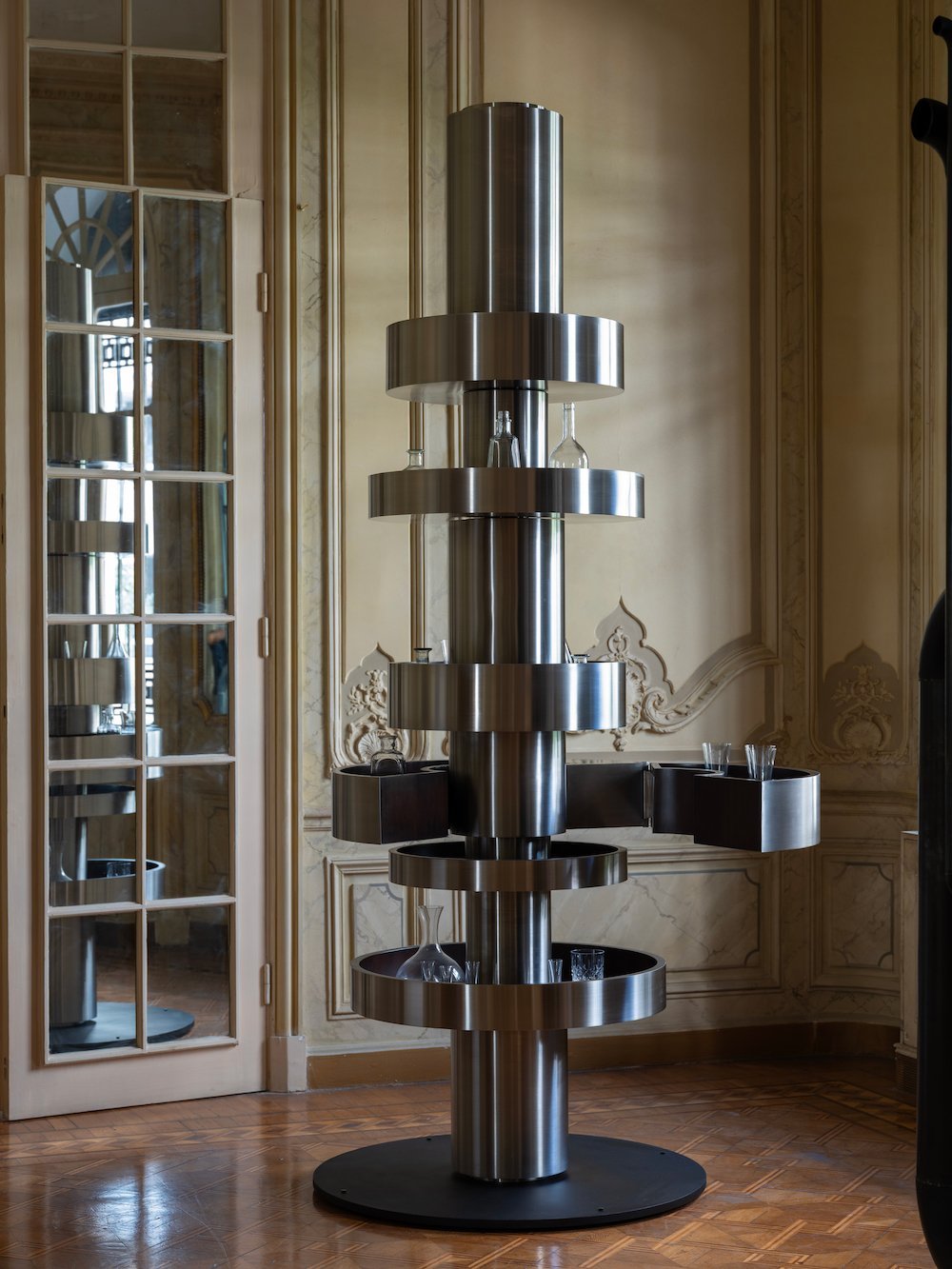
Emma Dya Jabr at WDB – Photo by Dia Mrad.
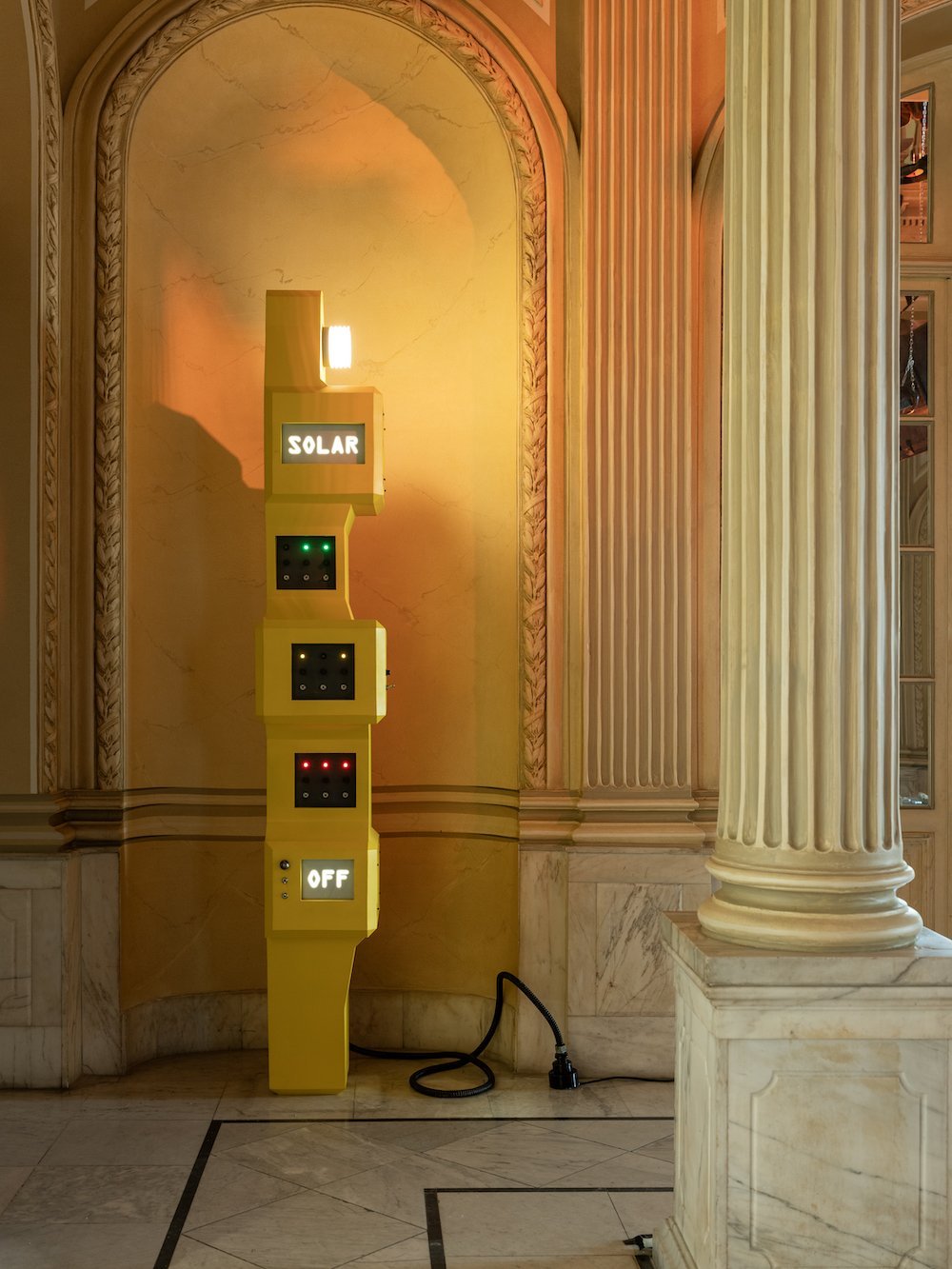
Dia Mrad at WDB – Photo by Dia Mrad.
Dia Mrad’s Shift turned Lebanon’s unpredictable power supply into a glowing sculpture that signals which energy source is active — grid, generator, solar, or none. What’s usually invisible or improvised becomes beautifully visible, turning a daily frustration into a bright commentary on resilience and adaptation in Beirut’s urban life.

In the centre: Hala Matta and Zein Daouk at WDB 2025 – Photo by Charbel Saade.
Hala Matta and Zein Daouk joined forces for Abacus Quadrumanus, a series of biomorphic ceramic forms inspired by ancient counting tools, where tradition meets modern minimalism. Finally, Emma Dya Jabr’s Bar Platine revealed rotating shelves that rise and fall like the layered ruins of Beirut itself — a tribute to a city that never stops rebuilding.
Immeuble de l’’Union
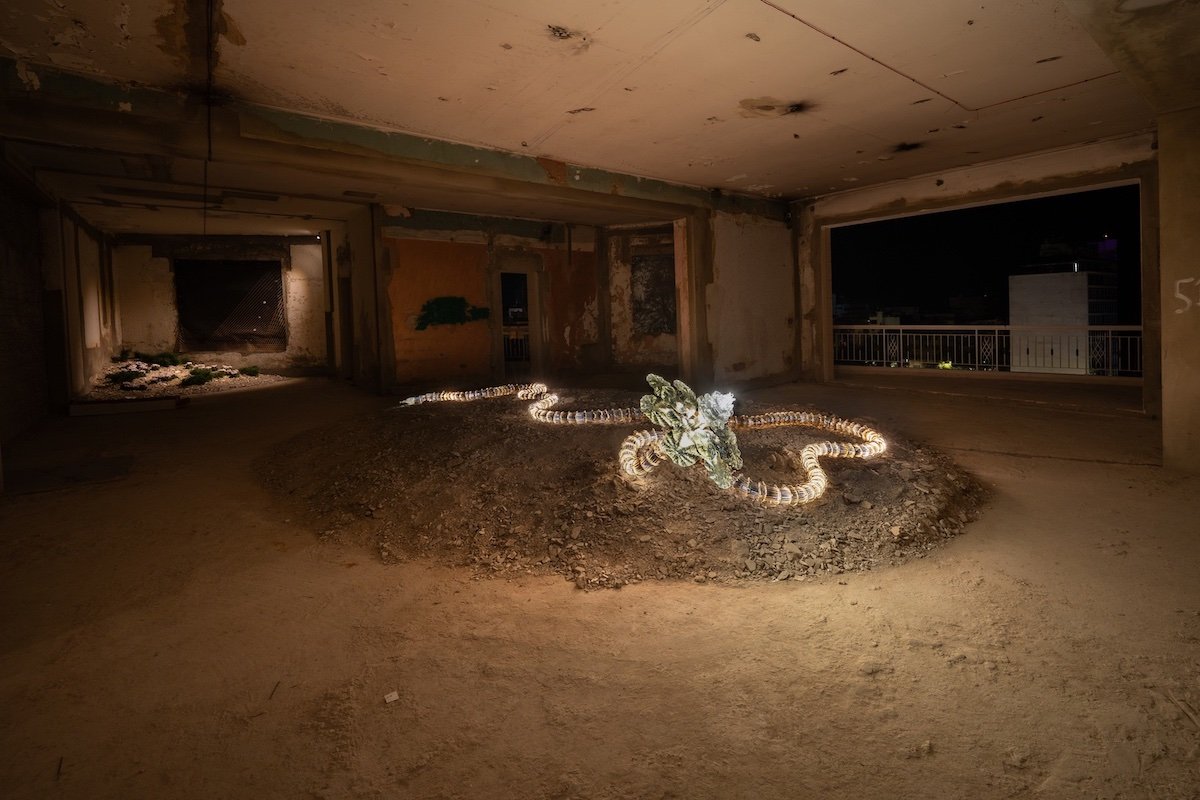
Christian Pellizzari at WDB 2025 – Photo by Youssef Itani.
Designed in the 1950s and now being lovingly restored by Karim Nader, this modernist landmark shines once again as a beacon of architectural continuity. Around its façade, Plan A Experience Design Studio animates the facade with light art projections, while Atelier33 illuminates the building from the basement to the rooftop, tracing the transformation of the building and the city. Egyptian artist Moataz Nasr presents an oversized rosary made from glowing orange gas canisters — a striking fusion of faith, fuel, and everyday life. Italian designer Christian Pellizzari adds a poetic touch with a glass sculpture inspired by Lebanon’s national flower, bridging traditional craftsmanship and contemporary design.
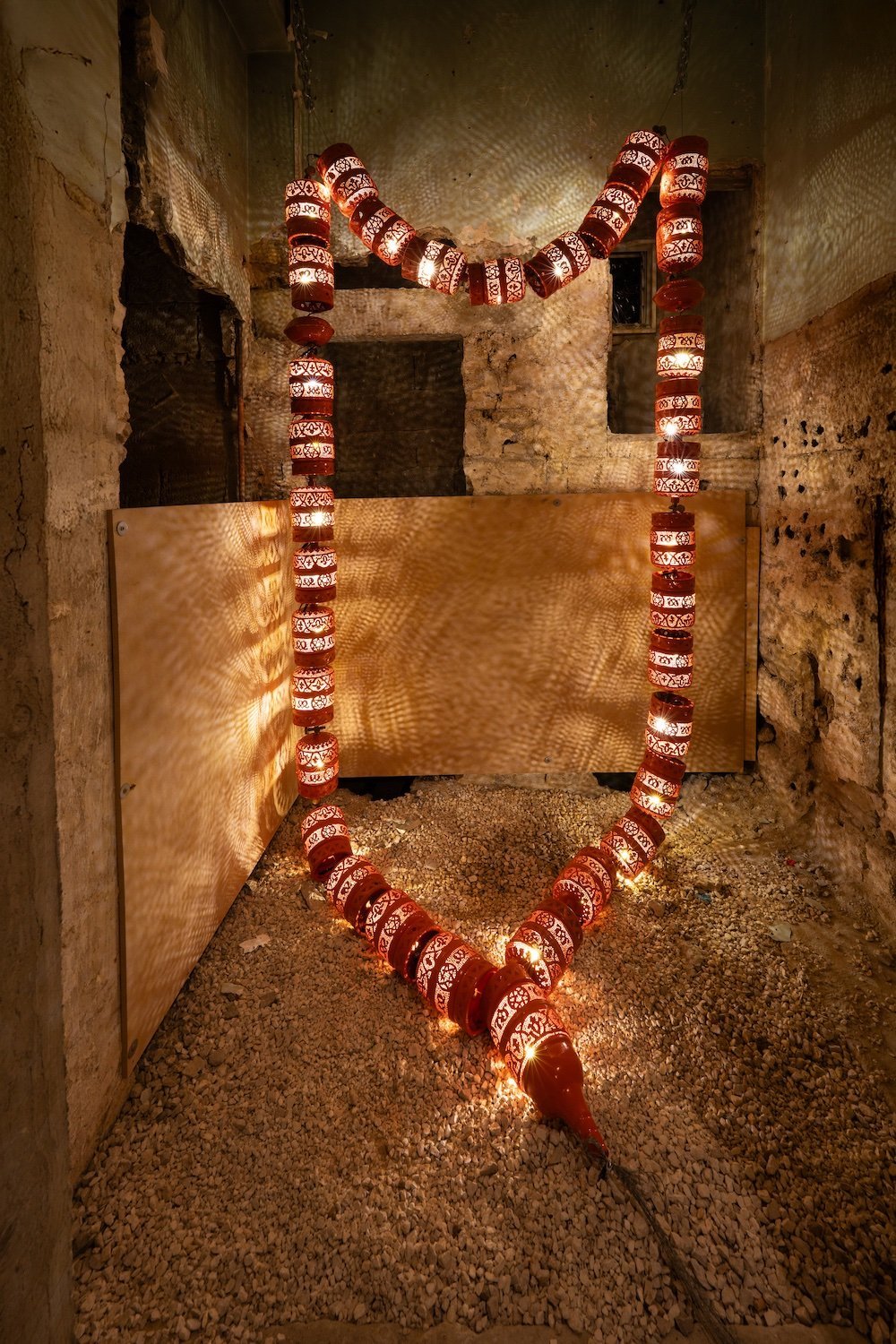
Moataz Nasr at WDB 2025 – Photo by Youssef Itani.
Inside, Japanese collective Spread brings colour to emotion with Much Peace, Love and Joy — a dreamy spatial installation where hand-torn paper shapes drift through a net of light and air, gently contrasting the raw concrete walls that still carry Beirut’s scars.

Spread at WDB 2025 – Photo by Youssef Itani.
Through its design, its people, and its creative pulse, We Design Beirut 2025 reaffirmed the city’s unbroken link between past and future. Every exhibition, performance, and gesture reflected Lebanon’s enduring ability to rebuild — not through nostalgia, but through imagination. With every edition, We Design Beirut 2025 grows into more than a design festival: it becomes a collective act of cultural resilience, proving that design can both heal and reinvent a city’s spirit.
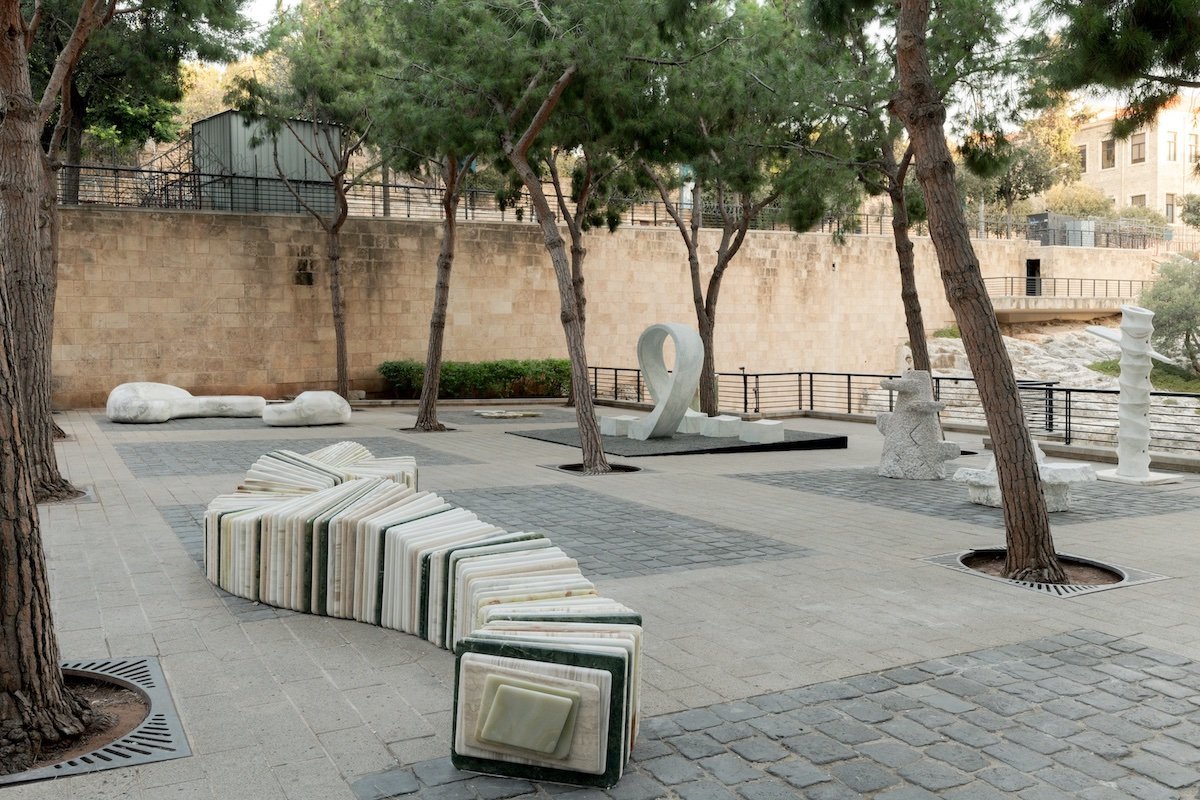
Sereen Hassanieh at WDB 2025 – Courtesy of Photo by Walid Rashid.
All photos are courtesy of Design Beirut 2025.
- RELATED STORIES: Discover more Lebanese archtiecture and design on Archipanic.

Khaled Mouzanar at WDB 2025 – Photo by Charbel Saade.