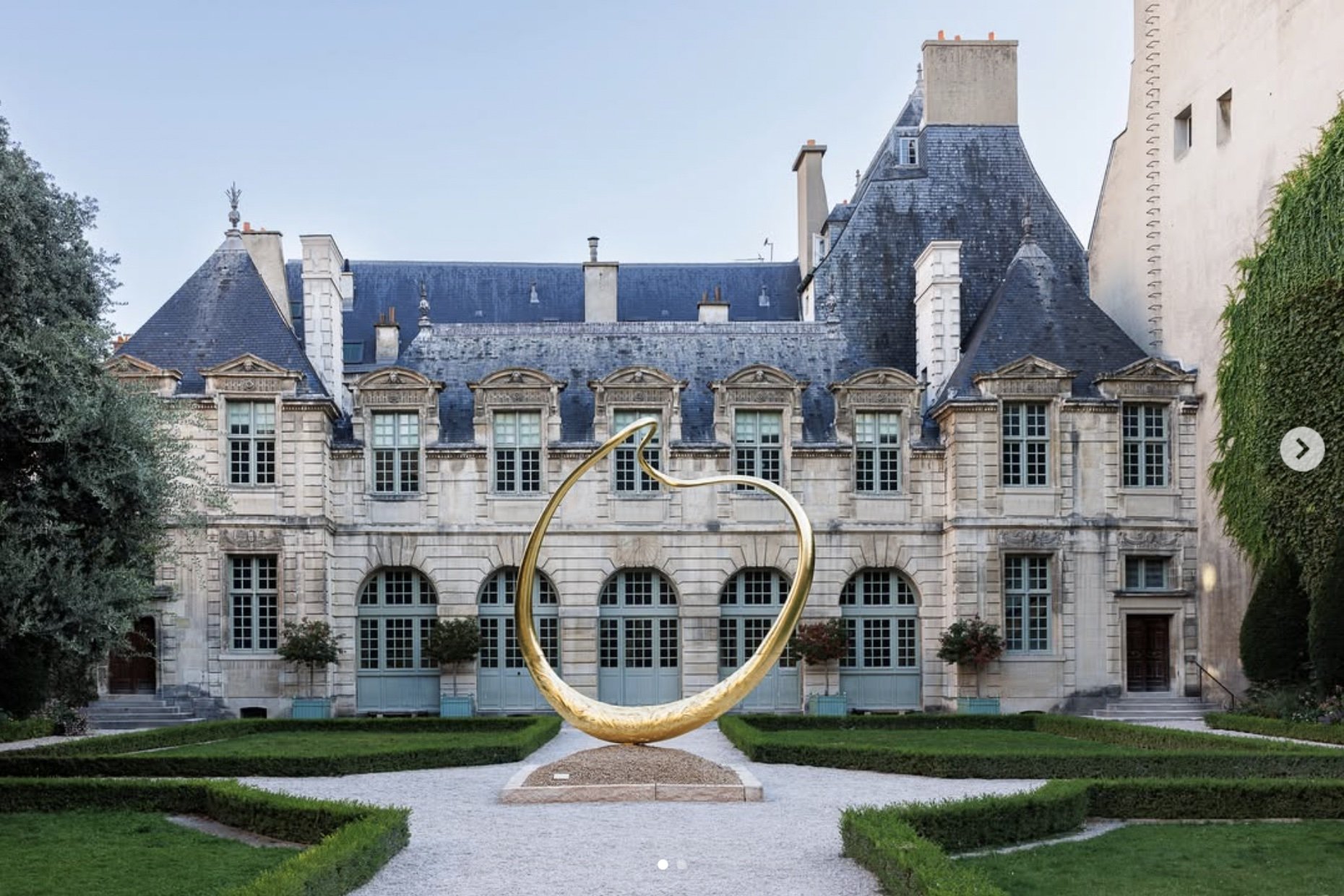
Parisian courtyards tour during PDW 2026. Joseph Walsh at Hôtel de Sully – Photo via IG by Alice Casenave, follow @josephwalshstudio.
Design, Architecture. Paris Design Week offers the perfect excuse to rediscover stunning venues through the lens of contemporary design — and this year is no exception. Wandering through the Ville Lumière, we found ourselves mesmerised all over again.
Joseph Walsh at Hôtel de Sully
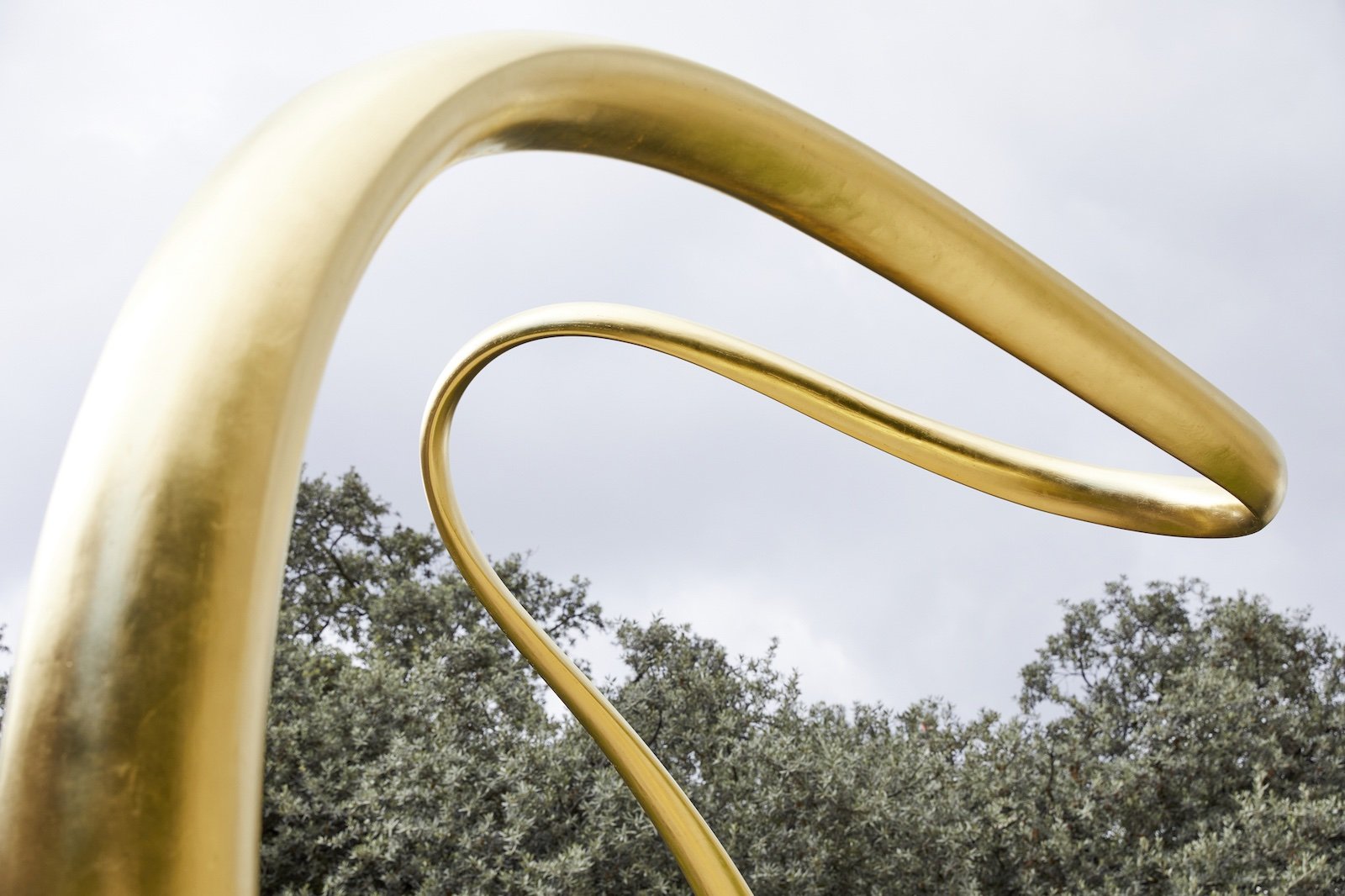
Photo by Grégoire Sevaz.
Our Parisian courtyards and palaces tour began at Hôtel de Sully. This year’s guest of honour is Joseph Walsh, a cabinetmaker whose work sits somewhere between sculpture and engineering. He’s claimed the orangery, the gardens and the main courtyard, filling them with ash forms that curve and lift as if they’ve shrugged off gravity entirely.
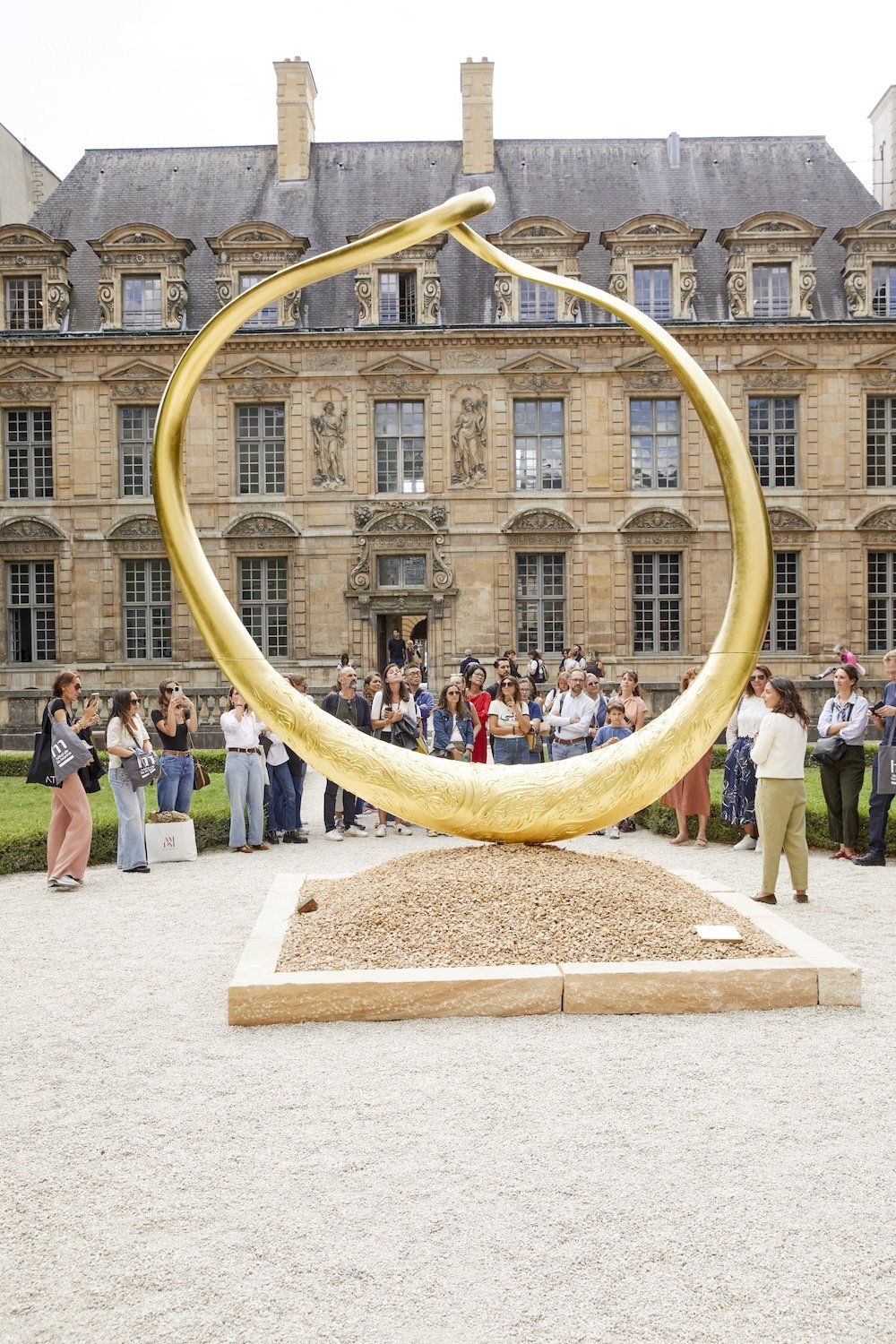
Photo by Grégoire Sevaz.
“I wanted to confront free movement with the perfect geometry of the Hôtel de Sully,” he told Archipanic. The pieces come from his Gestures and Enignum series, built with his team of Makers back at his workshop in County Cork — a body of work where precision and improvisation somehow coexist.
Pierre Renart’s Urban Poetry
L’Ar© Benedicte Drummond Photography.
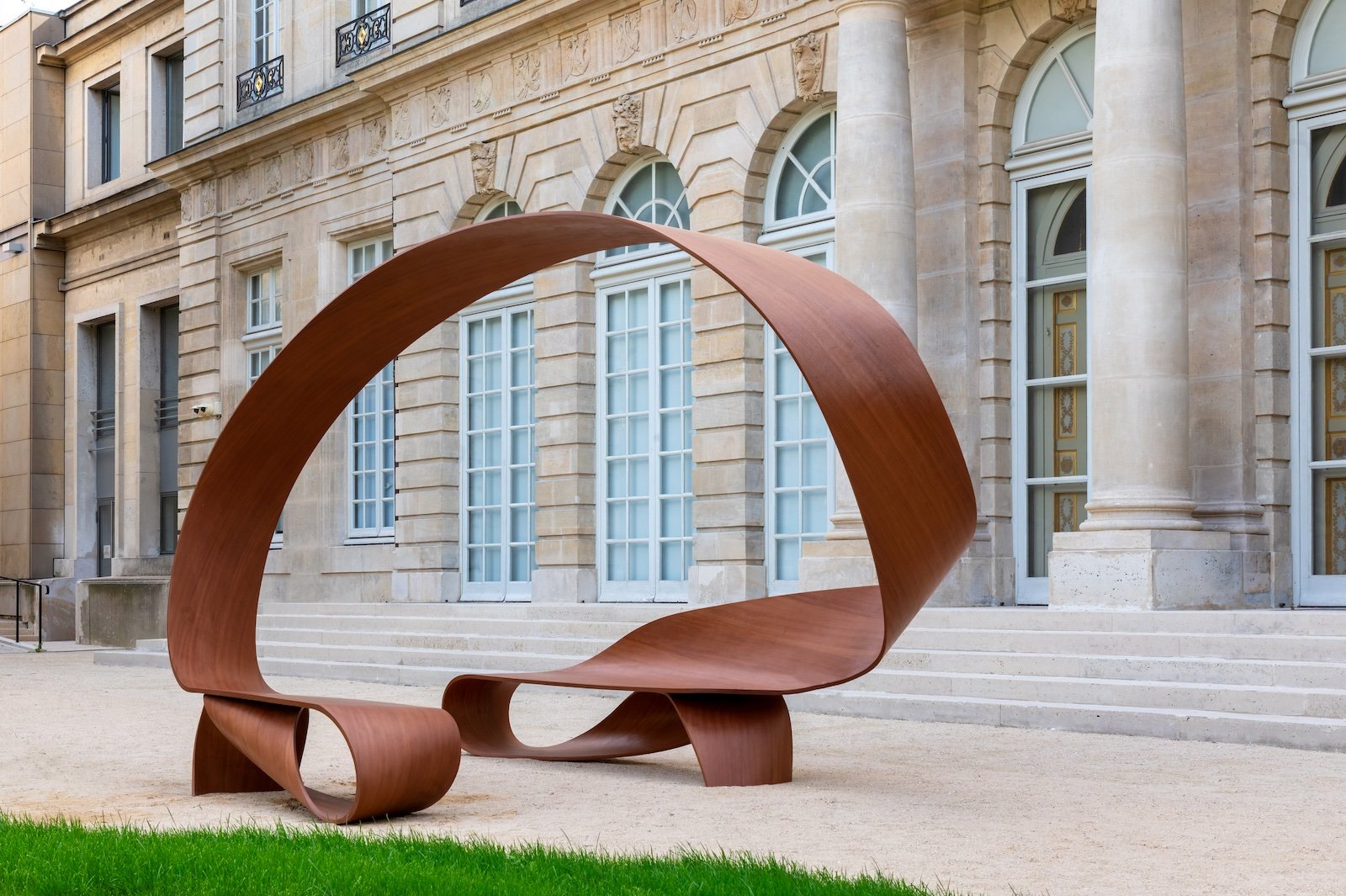
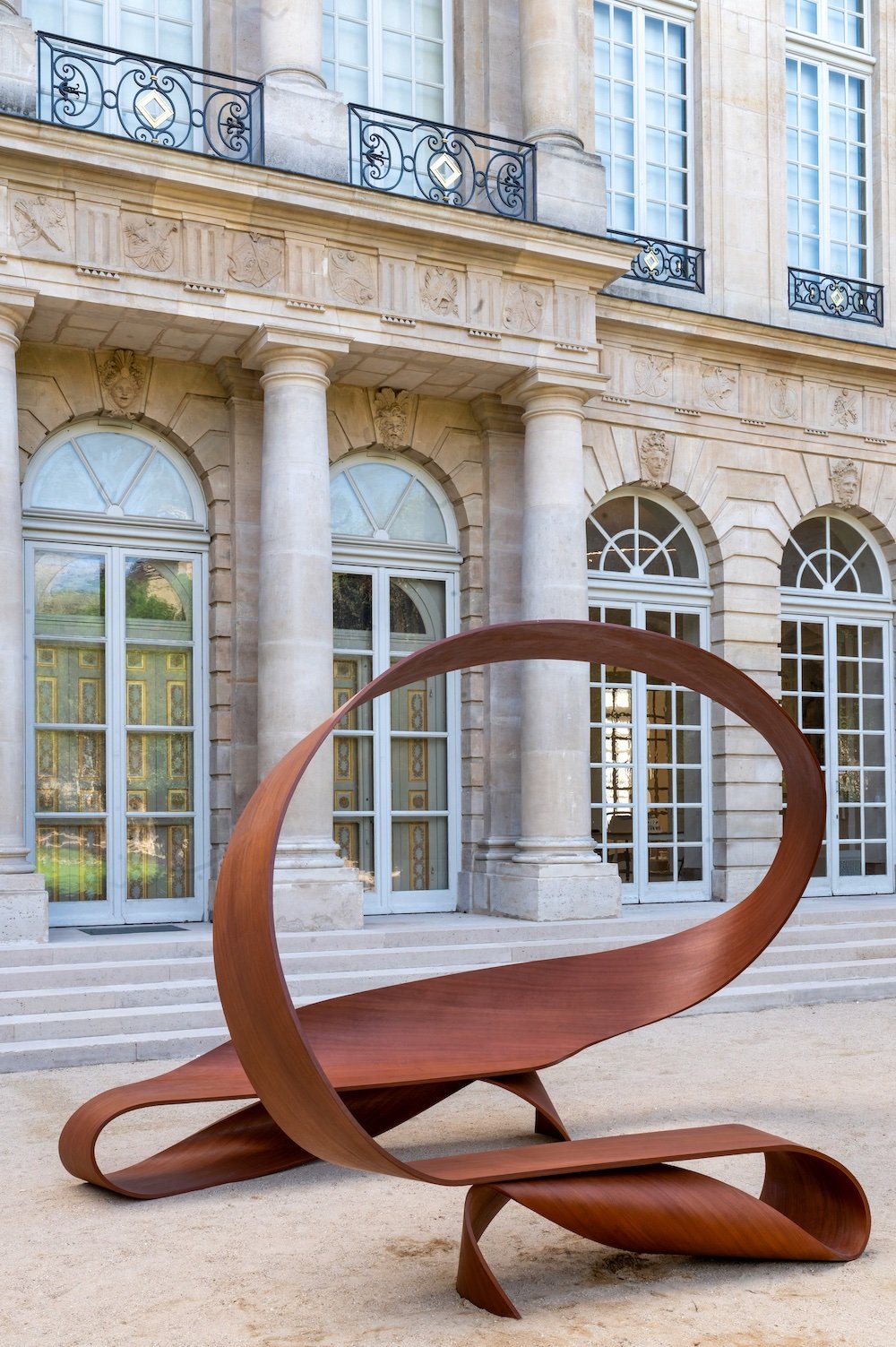
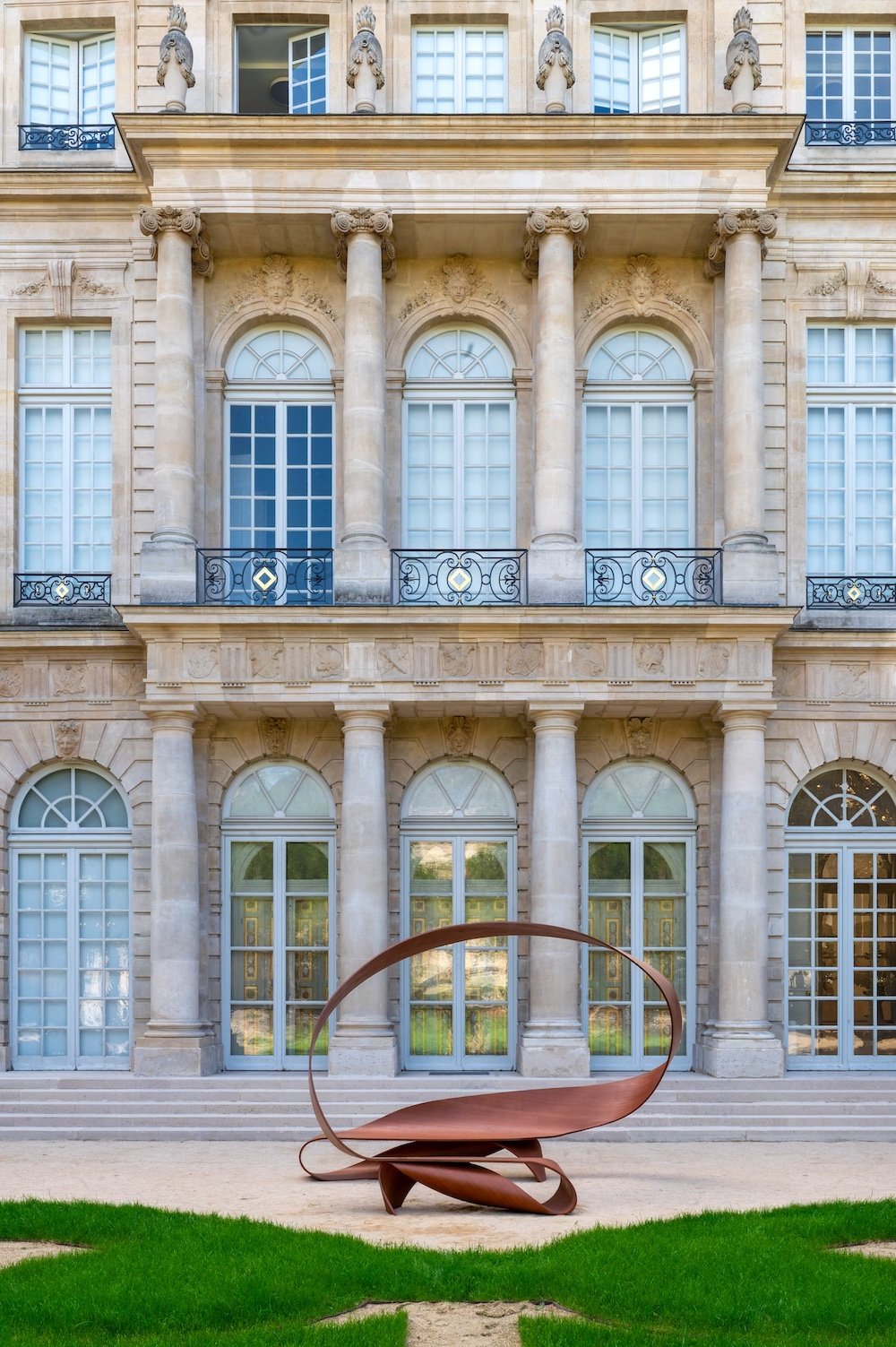
Over at the Hôtel de Rohan, whose gardens have only just reopened to the public, woodworker Pierre Renart has installed Arabesque, a vast bench commissioned by Maison Parisienne. He’s built it from laminated Moabi wood, layering thin veneer sheets until they read as one continuous ribbon.
© Benedicte Drummond Photography.
From a distance it looks like a puzzle; close up, it’s disarmingly functional — a single curved form that picks up the lines of the surrounding French parterre and lifts them into three dimensions.
Johanna de Clisson’s sculptural planters at Hôtel de Soubise
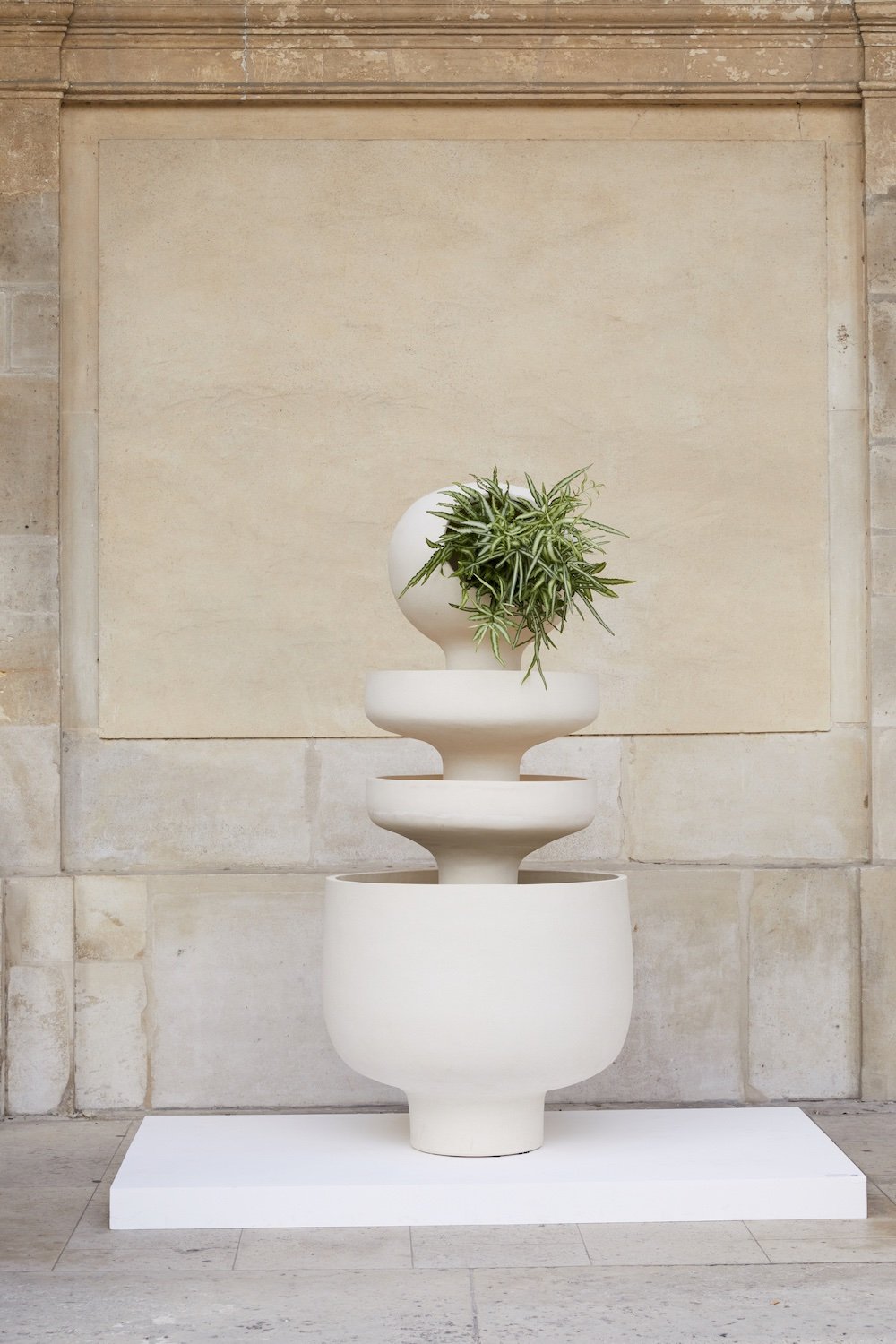
Photo by Grégoire Sevaz.
Maison Parisienne is also behind Sculpture/Landscape: New Figures of the French Garden, Johanna de Clisson‘s installation in the grounds of the Hôtel de Soubise–Archives Nationales. A dozen white stoneware planters line the garden’s classical sightlines, each caught between geometric discipline and looser, organic shapes.
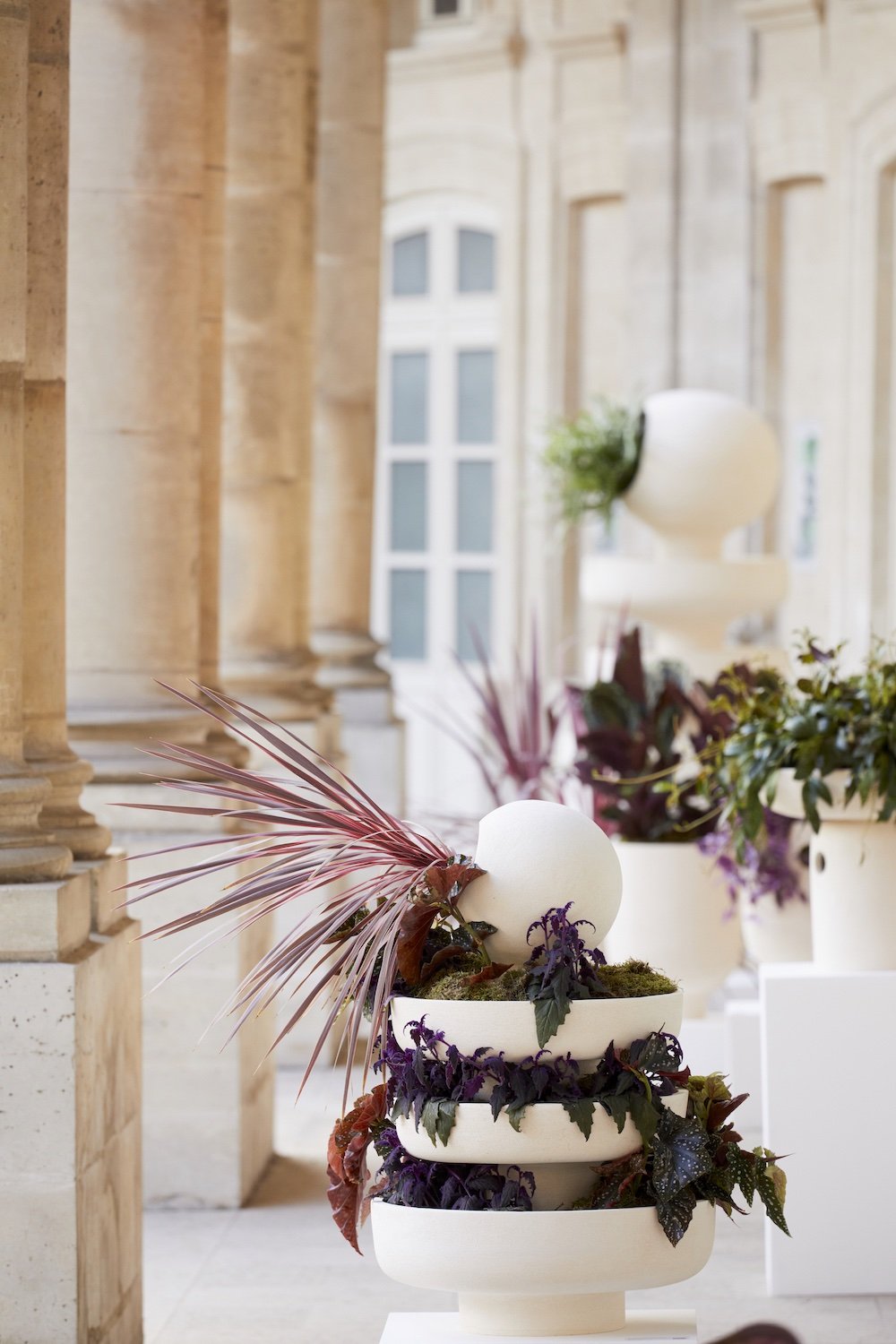
Photo by Grégoire Sevaz.
The effect turns a formal garden into something closer to a laboratory — a rethink of a genre that rarely gets rethought. This sort of quiet experimentation makes Paris Design Week worth returning to, year after year.
French-Korean paper crafts at Hôtel de la Marine
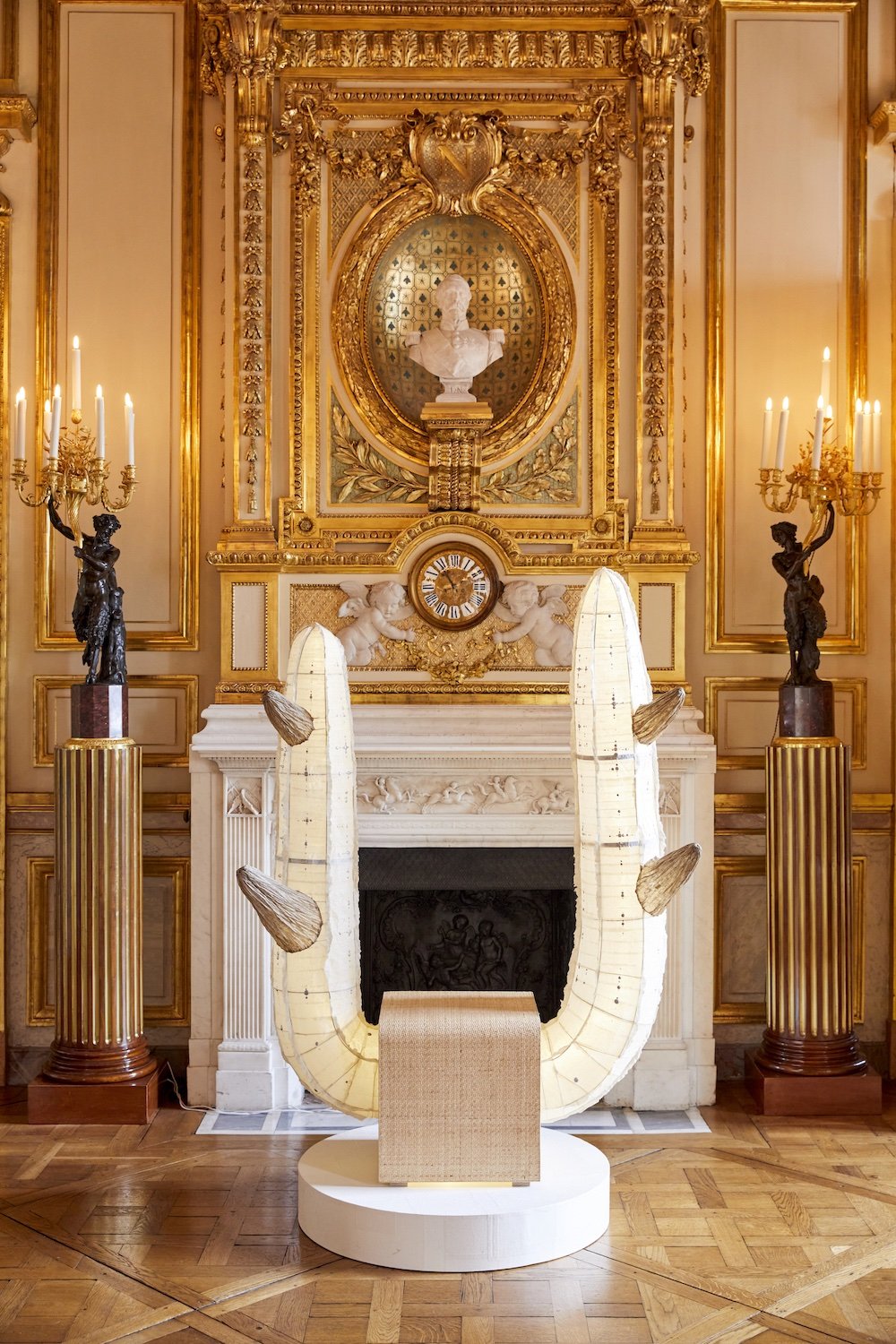
Photo by Grégoire Sevaz.
Inside the Crown Furniture Repository at the Hôtel de la Marine — an 18th-century interior in its own right — the Hanjimania exhibition puts French and Korean makers in conversation over hanji, a centuries-old handmade paper now headed for UNESCO’s Intangible Cultural Heritage list. The show began as a friendship between curators Catherine Lurault and An KangEun, and lands this year on the 140th anniversary of diplomatic relations between the two countries.
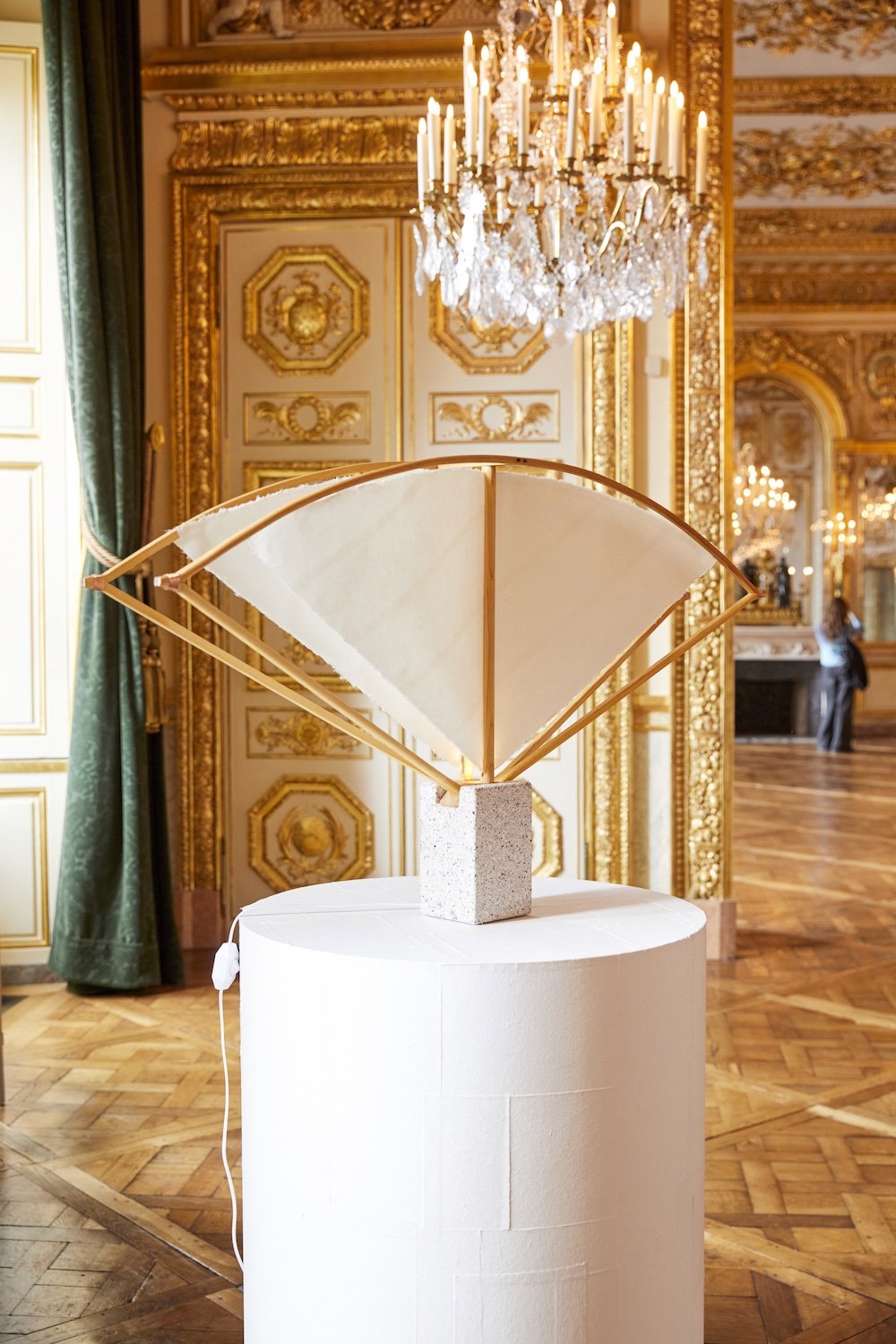
Photo by Grégoire Sevaz.
Studio KO, Pierre Yovanovitch, Constance Guisset, Aline Asmar d’Amman, Harry Nuriev and Jérémy Pradier-Jeauneau each take on the material, working opposite Korean artists Sim Jiseon, Lee Sun, Kim Woncheon, Studio Foh, Ko Somi, Yang Ji-Yoon, Yoo Ehwa, Jin Hyoseung and others.
Art Cars Hôtel de la Marine
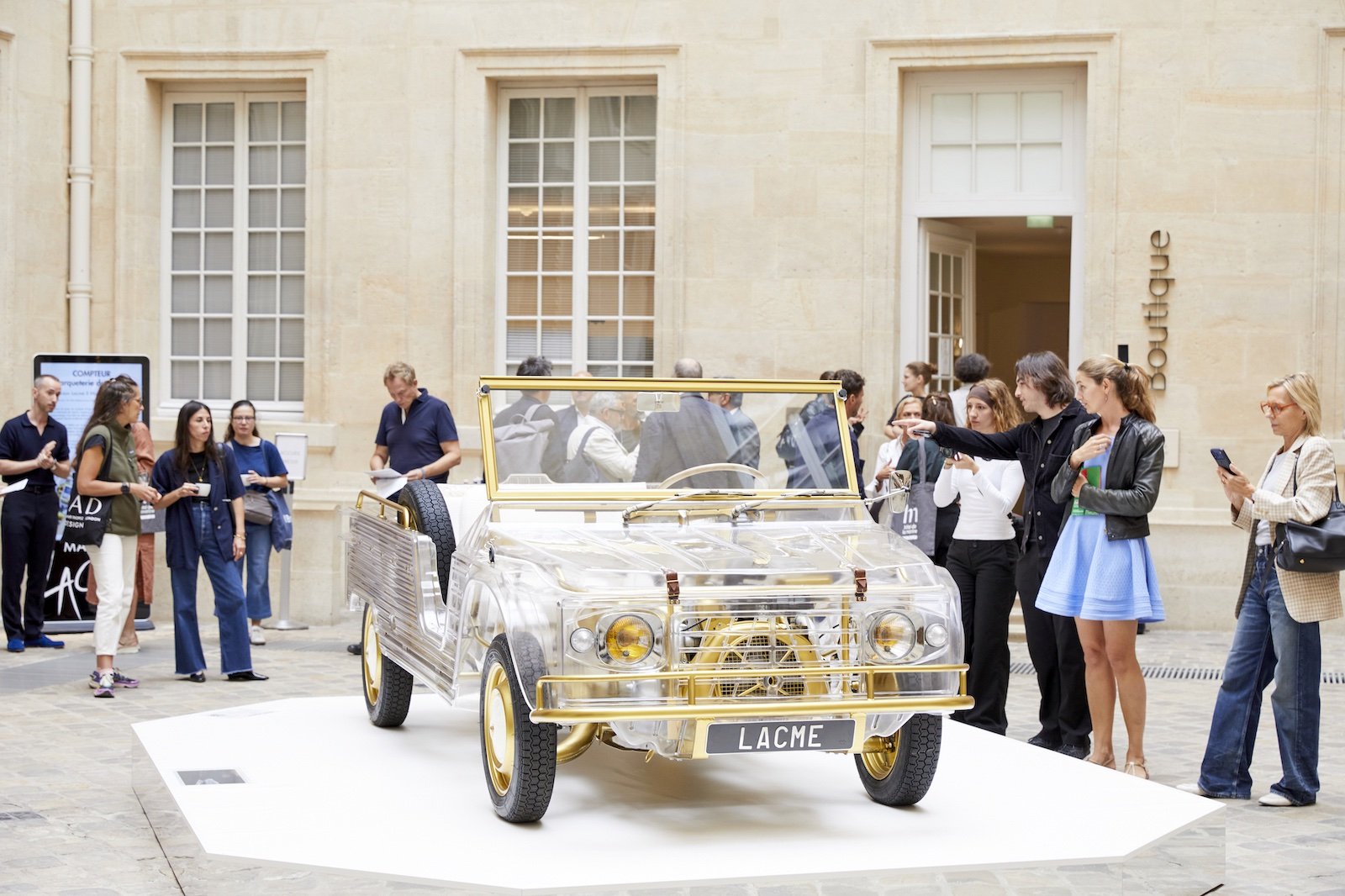
Photo by Grégoire Sevaz.
A few steps on, in the Cour de l’Intendant, the tone flips completely. Astre Mobile — created by Antoine Tauvel for Maison Lacmé — turns a transparent car shell into something between an Art Car and a cabinet of curiosities. French artisans built the vehicle with onyx, driftwood, leather, porcelain, urushi lacquer, feathers, shells, and metallic embroidery. Feathers line the dashboard, the hubcaps are carved from solid onyx, and the badge itself has been remade as a piece of jewellery — the endpoint of countless drawings, maquettes and prototypes.
Perfume and architecture at Victor Hugo’s home
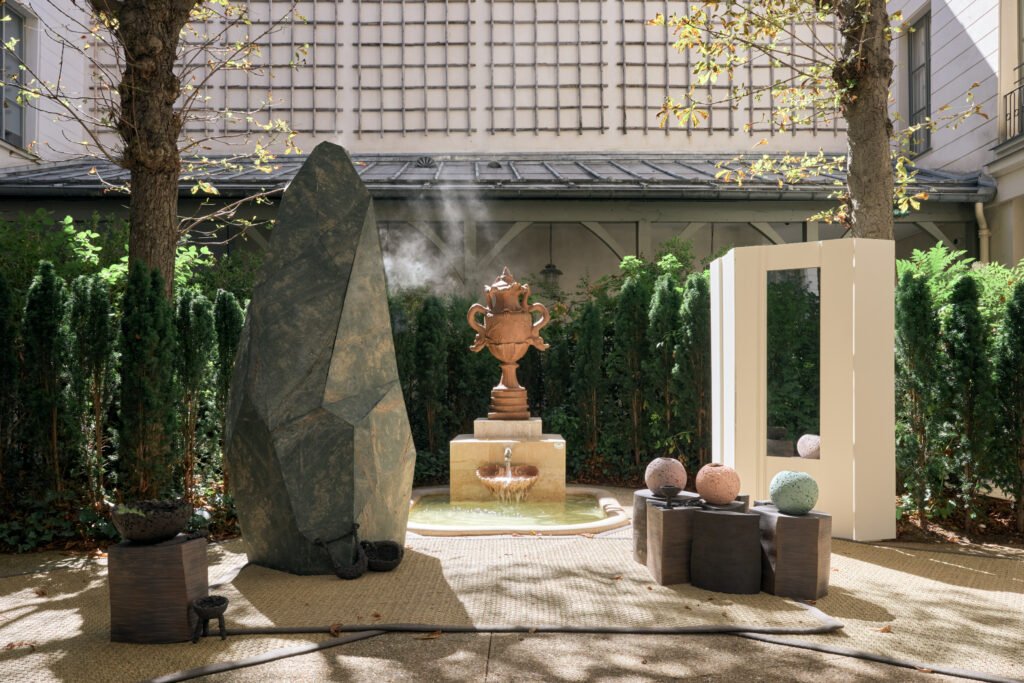
Photo by © Romain Moriceau.
On Place des Vosges, inside the Maison de Victor Hugo, Lucas Huillet and Alexandre Helwani have built Anankè, a scent-led installation echoing the museum’s Hugo and Architecture exhibition. “Ceramics and perfume tell something of our origins, of a lost world, submerged and yet to be reinvented,” Huillet told Archipanic.
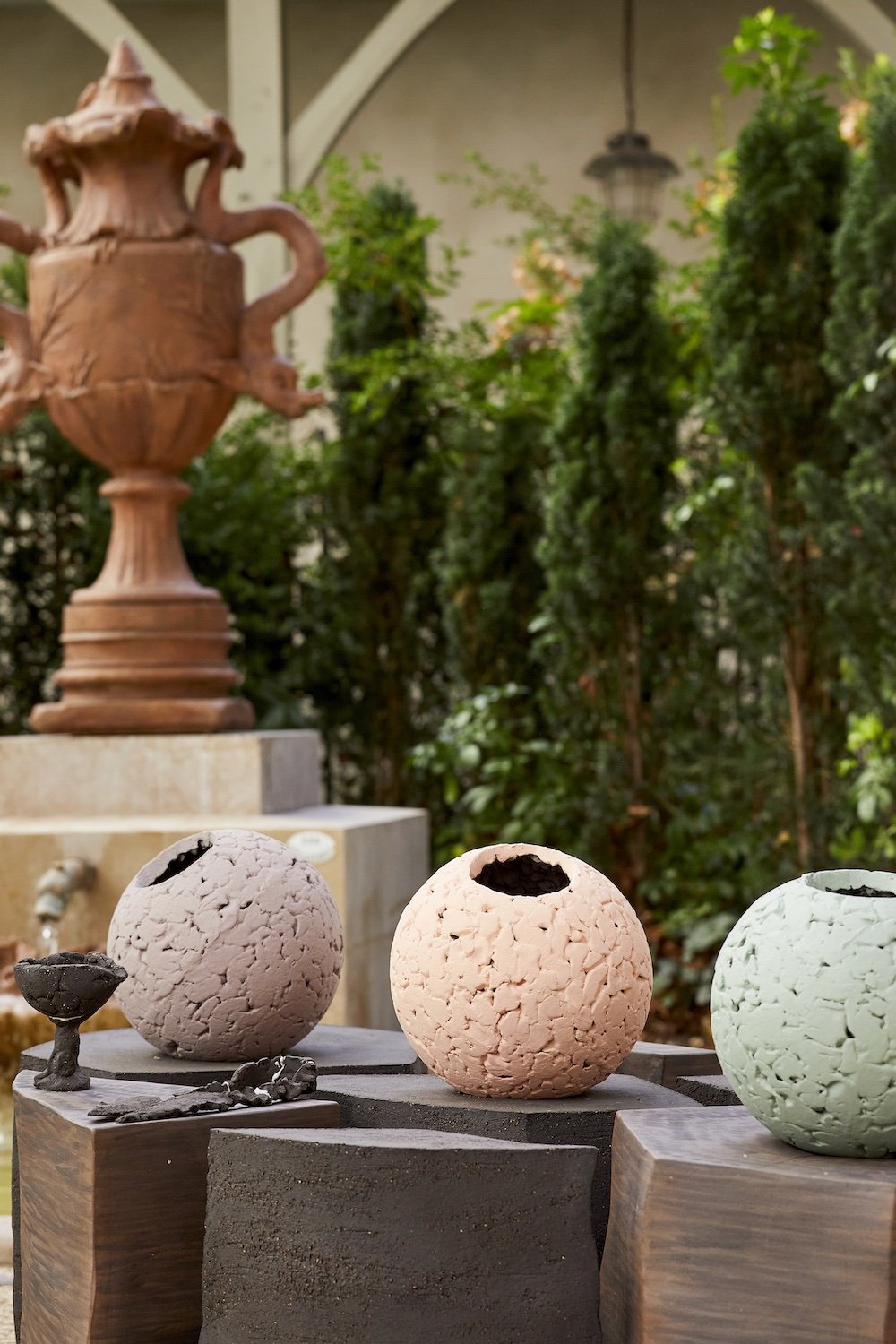
Photo by Grégoire Sevaz.
An upright menhir diffuses incense; a second, fragmented one has been recast and fitted with capsules of scent — stone, clay and perfume all pointing back to some half-remembered origin. Master perfumer Nathalie Lorson, of dsm-firmenich, composed the fragrance itself, closing out this year’s Paris Design Week on a genuinely sensory note.
Wu Bin’s Time Pavilion
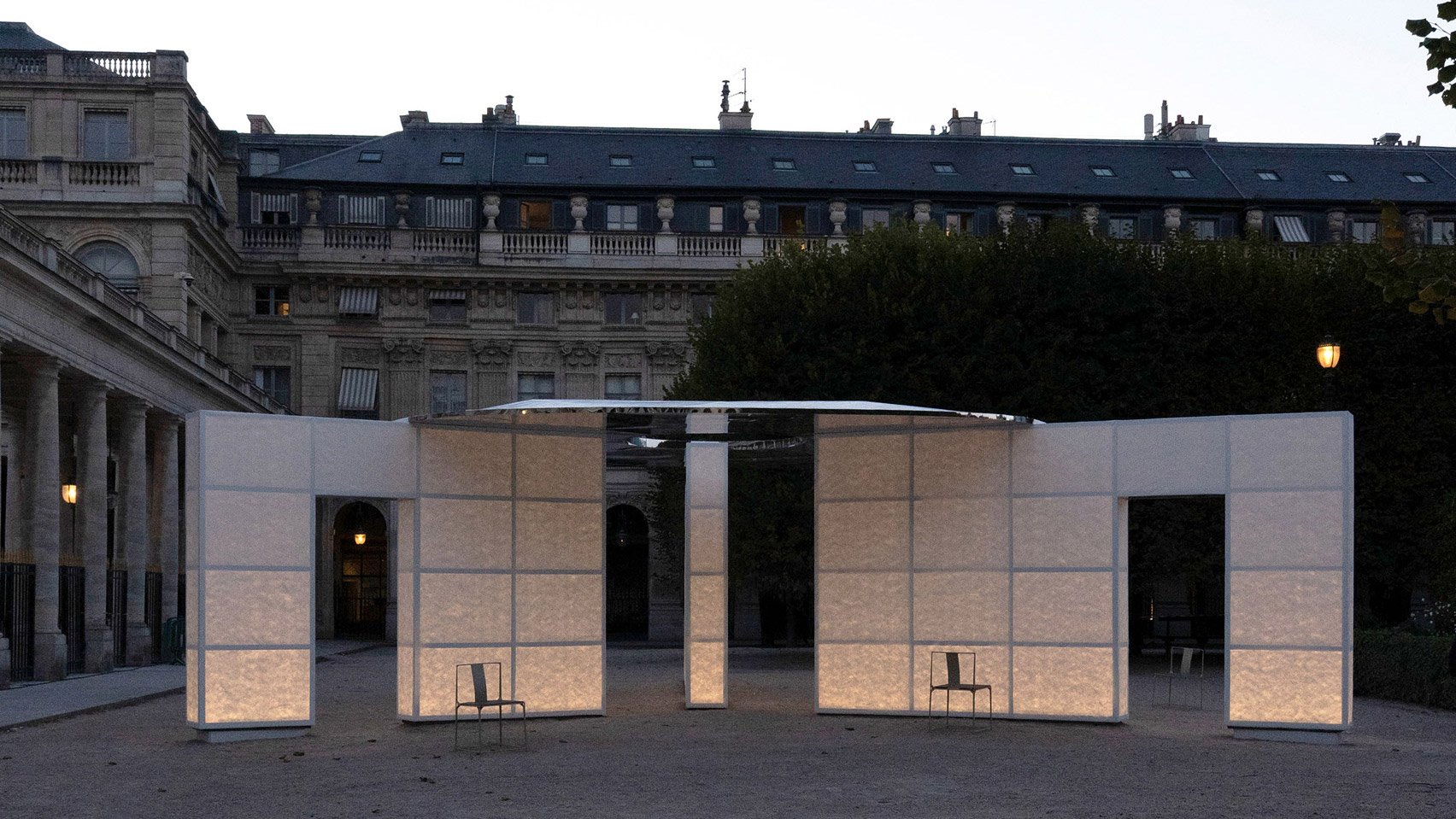
Photo by SHIDAI.
At the Palais-Royal Garden, Chinese designer and interior architect Wu Bin of W.DESIGN stages The Pavilion of Time, built from mirror-polished stainless steel and a translucent membrane echoing the texture of traditional Xuan paper. Together, the two materials set up a study in architecture, light and reflection — and, by extension, in time itself.
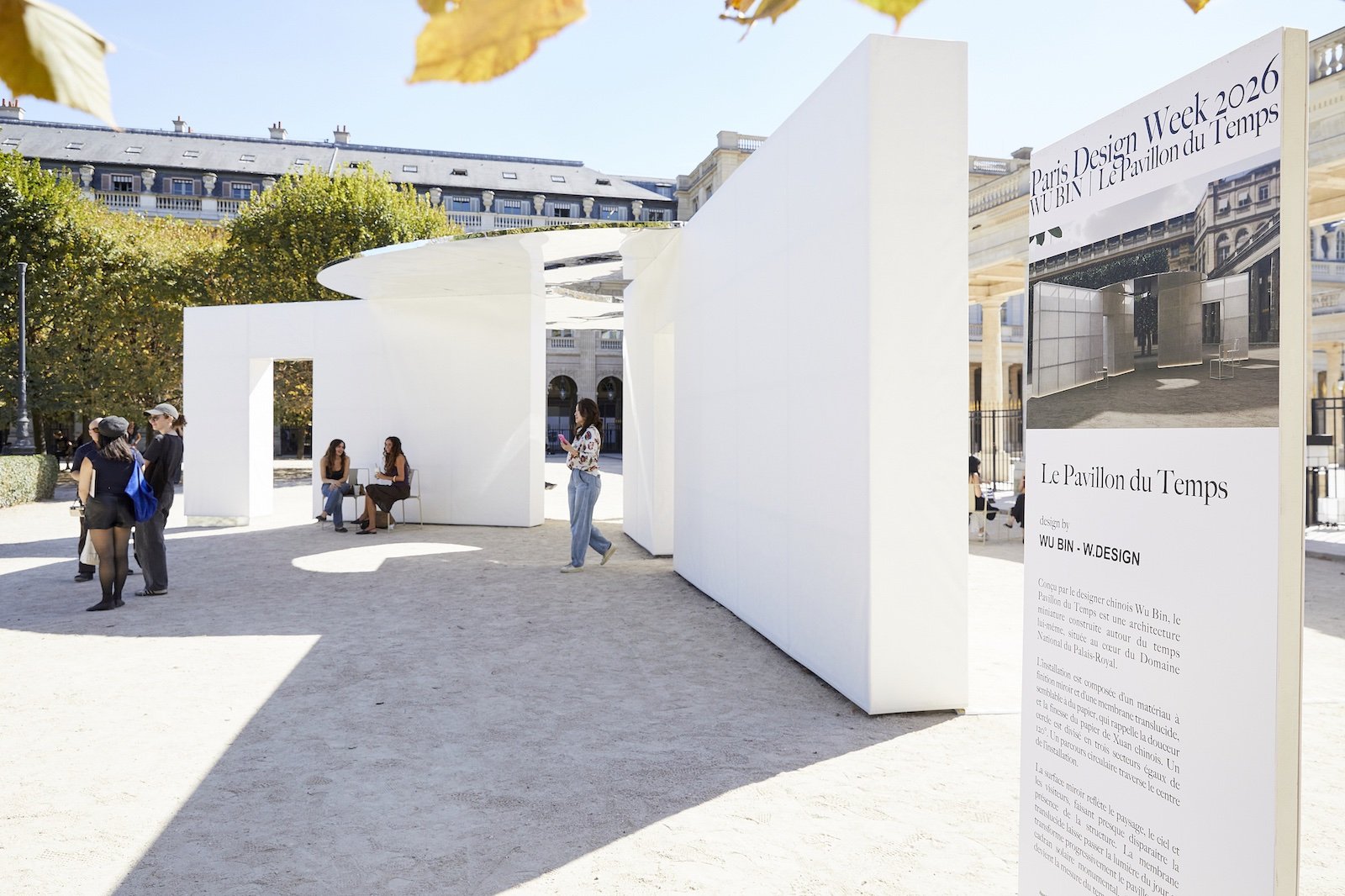
Photo by Grégoire Sevaz.
As the sun tracks across the garden, the pavilion’s mirrored surfaces pick up the surrounding trees, sky and passing visitors, so the whole structure appears to shift and resettle with its surroundings throughout the day.
Harry Nuriev’s Objets Trouvées
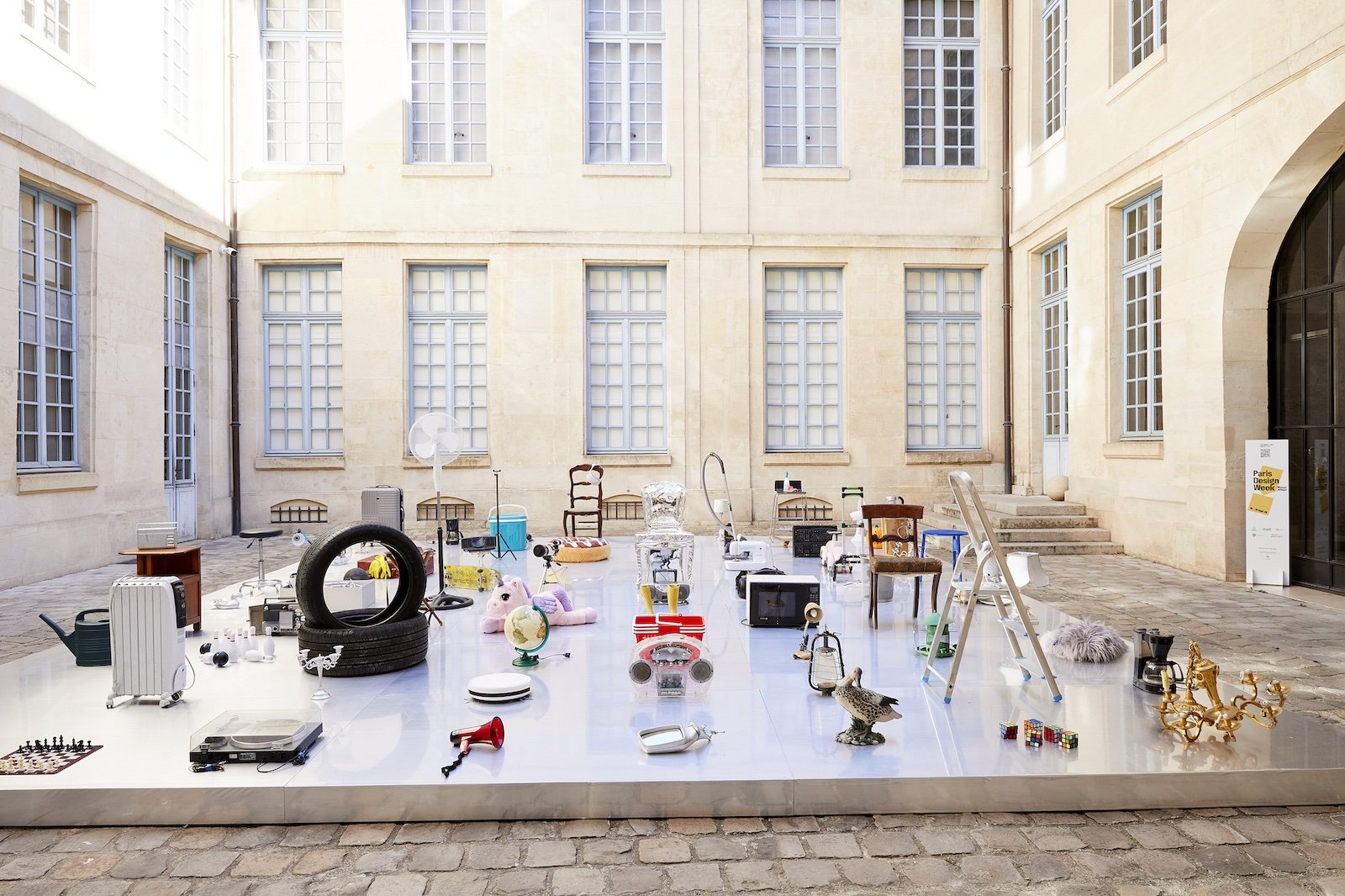
Photo by Grégoire Sevaz.
Our Parisian courtyards and palaces tour concludes at the Mussée de la Chasse et de la Nature, where Harry Nuriev continues his Objets Trouvées project, inviting visitors to bring a personal unwanted object and exchange it with one on display. The installation becomes a participatory living cycle of art, exchange, and renewal – Read more. Over the course of the week, the installation evolves organically, shaped by the flow of human interaction, blurring the line between creator and participant, value and disposability.
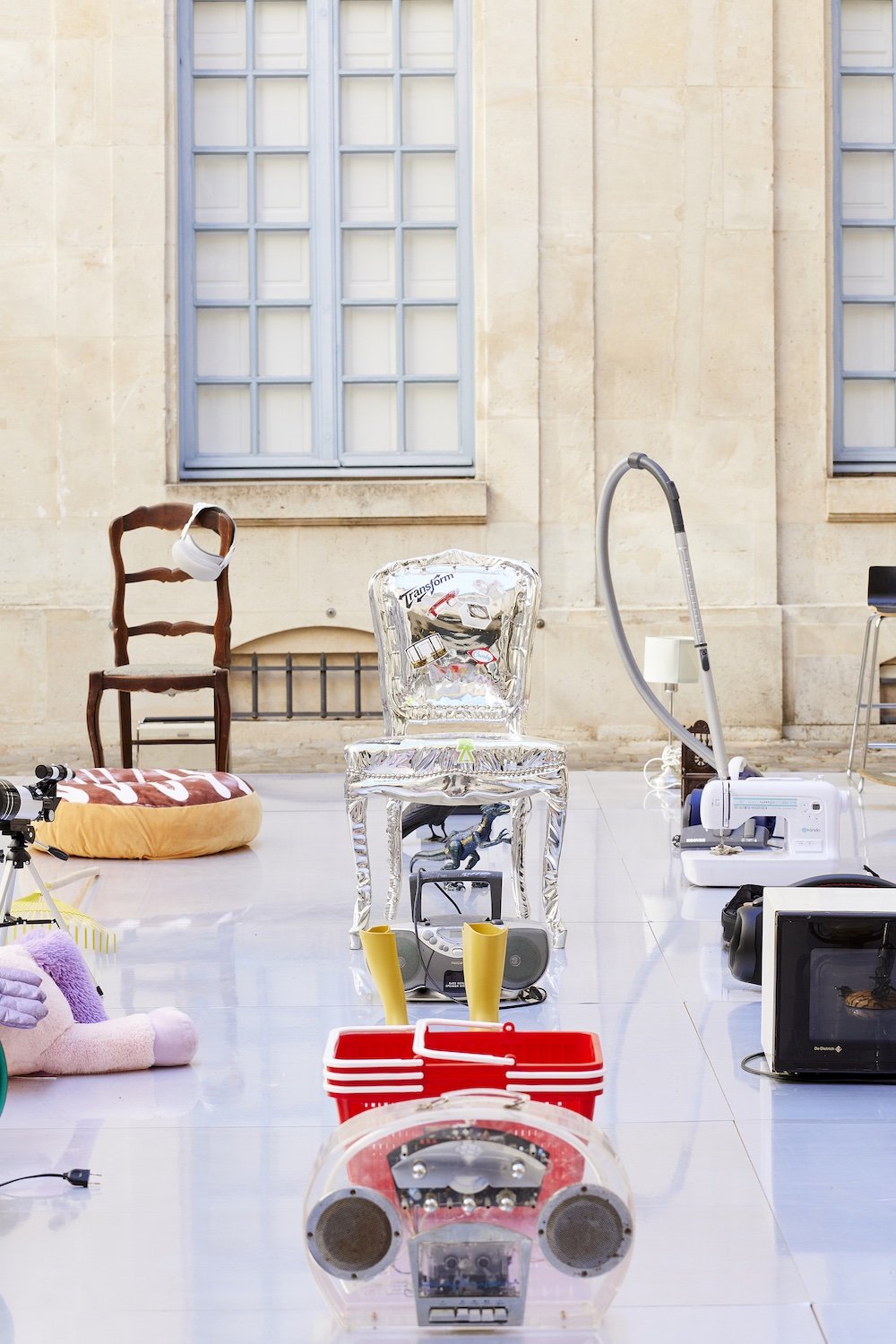
Photo by Grégoire Sevaz.
All photos by Grégoire Sevaz are courtesy of Paris Design Week.
PIerre Renart x Maison Parisienne – Photo by Benedicte Drummond, © Maison Parisienne Galerie.
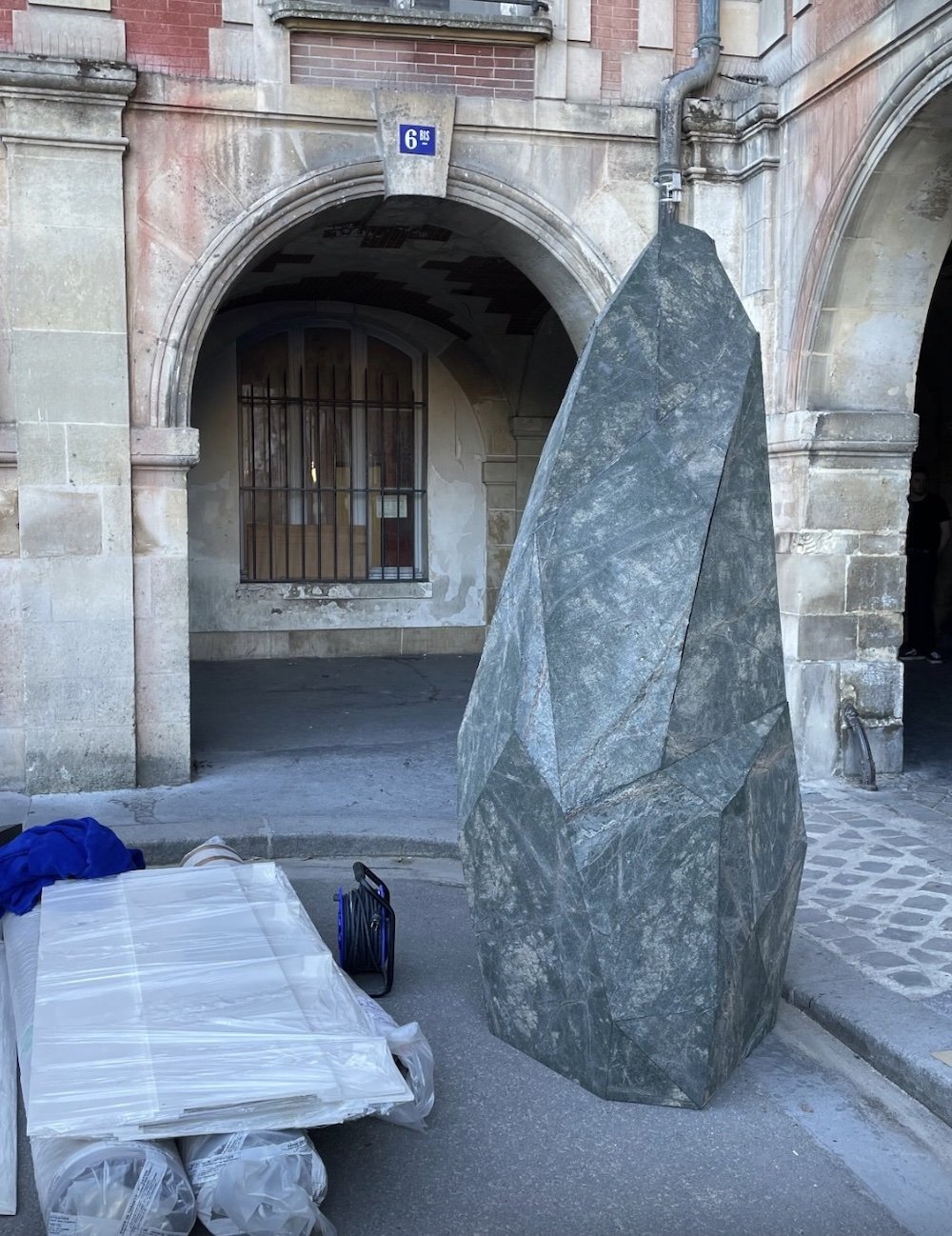
Photo via IG, follow @lucashuillet.
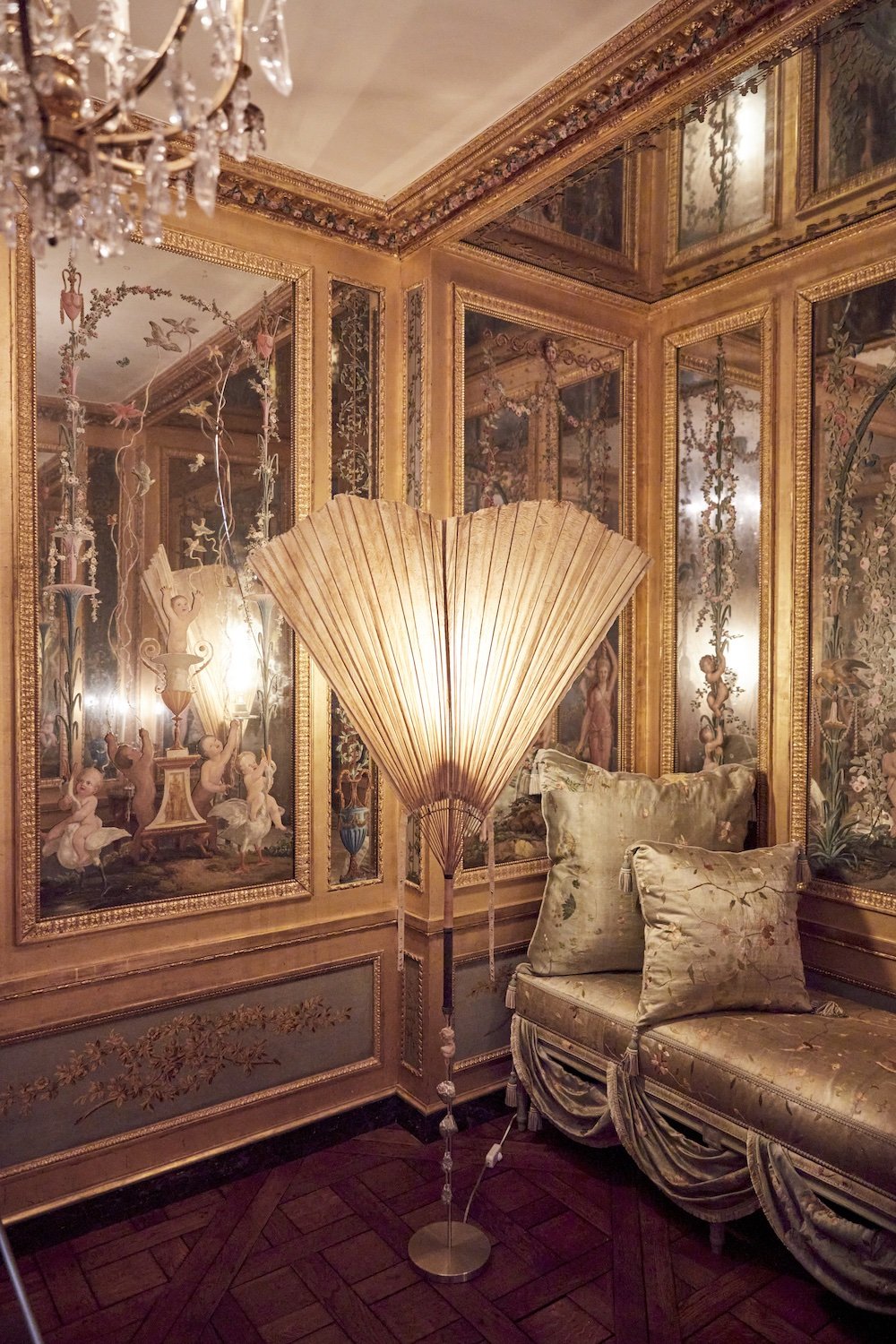
Hanjimania at Hôtel de la Marine – Photo by Grégoire Sevaz.
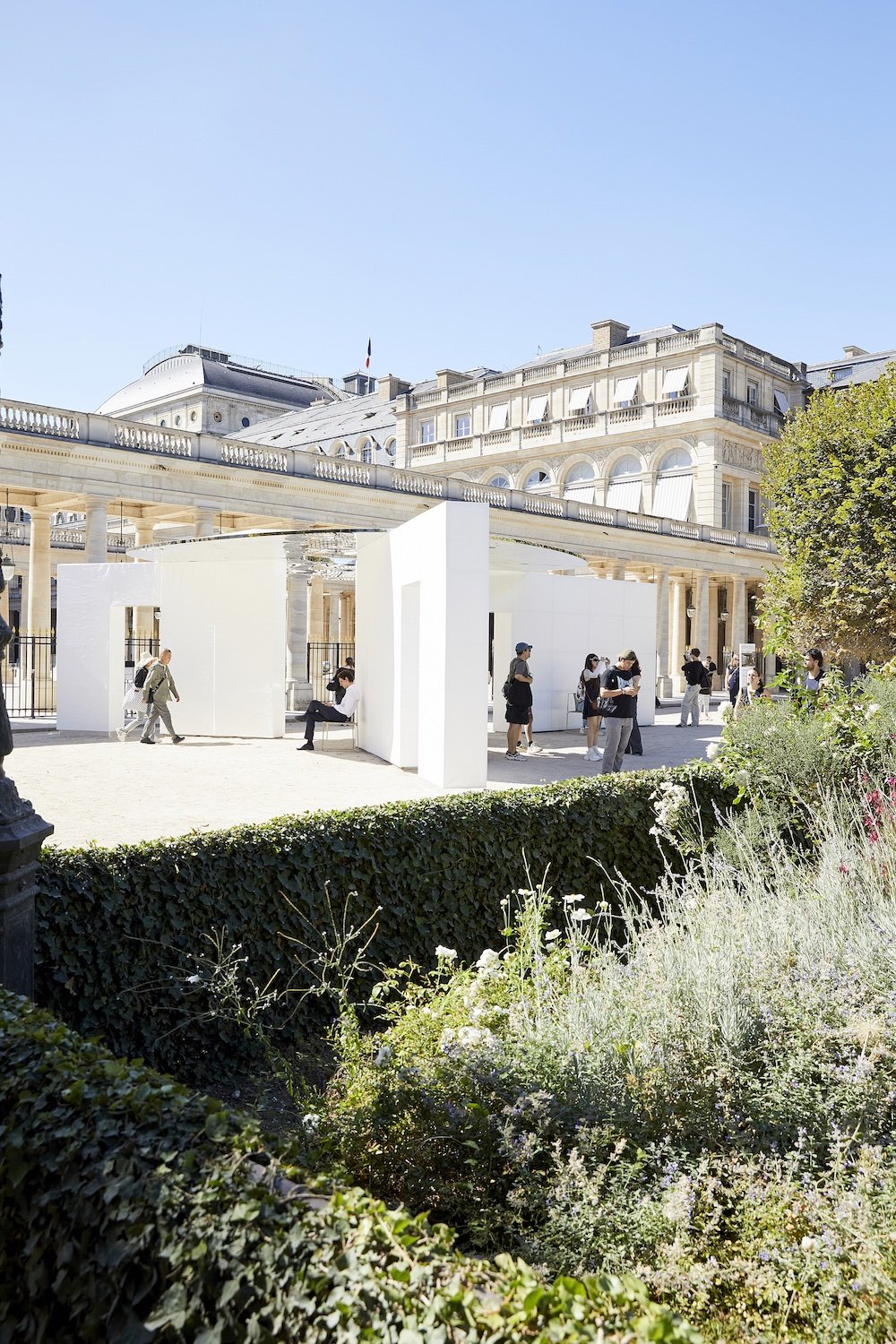
The Pavilion of Time by Wu Bin at Paris Design Week 2026 – Photo by Grégoire Sevaz.