Hydro Circal 100R exhibition @ Spazio Maiocchi – Photo by Einar Aslaksen.
Design–Hydro, the world’s Leading Norwegian aluminium and renewable energy company, has teamed up with seven international designers to celebrate Hydro CIRCAL1 00R, the world’s first industrial-scale aluminium product made entirely of post-consumer scrap that can be mass-produced on an industrial scale.
- RELATED STORIES: Read more about Milan Design Week 2024 on Archipanic.
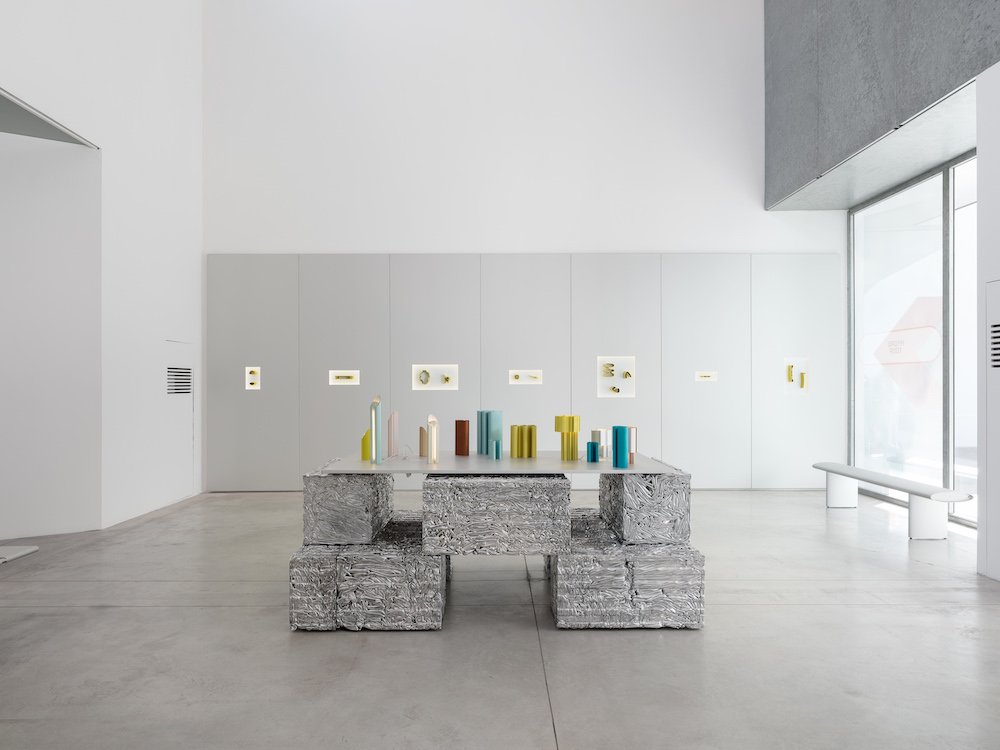
Hydro Circal 100R exhibition @ Spazio Maiocchi – All photos by Einar Aslaksen, courtesy of Hydro.
“This project is a testament to our commitment to a future where the use of materials already in circulation is not just a choice but a necessity for sustainable living and manufacturing,” the company’s art director, Lars Beller Fjetland, told Archipanic. Hydro CIRCAL1 00R is a game-changer in this regard. Aluminium, a material that can be endlessly recycled without any loss of quality, is the key.”
Hydro Circal 100R exhibition @ Spazio Maiocchi.
Often overlooked and discarded, aluminium scrap is turned into exquisite, pristine-looking designs. The 100R showcase is a bold challenge to the perception of aluminium, aiming to inspire more designers and brands to consider this highly sustainable material.
[su_image_carousel source=”media: 39949,39950″ limit=”0″ slides_style=”minimal” crop=”none” columns=”2″ spacing=”no” dots=”no” autoplay=”2″ speed=”immediate”]
Inga Sempé has designed a collection of table lamps using two profiles, one sliding into the other, to protect the light sources from the eyes. An inner part hides the main source. Max Lamb‘s Prøve Light features two aluminium profiles connected by a friction ball-and-socket joint.

Max Lamb x Hydro.
The Tsuba freestanding coat stand by Andreas Engesvik comprises a main stem with adjustable coat hangers from extruded profiles. “We also wanted to give the material itself a more non-industrial appearance and texture.” For his Billet Chair, John Tree used one profile, and a couple of dies to form both legs into a backbone that supported a seat and back.
[su_image_carousel source=”media: 39951,39952″ limit=”0″ slides_style=”minimal” crop=”none” columns=”2″ spacing=”no” dots=”no” autoplay=”2″ speed=”immediate”]
“Modularity is a natural fit for the aluminium extrusion process,” says Rachel Griffin, who created the Serial partition system. Built from a collection of modular, interlocking aluminium extrusions, it can be combined to produce screens of virtually any length.
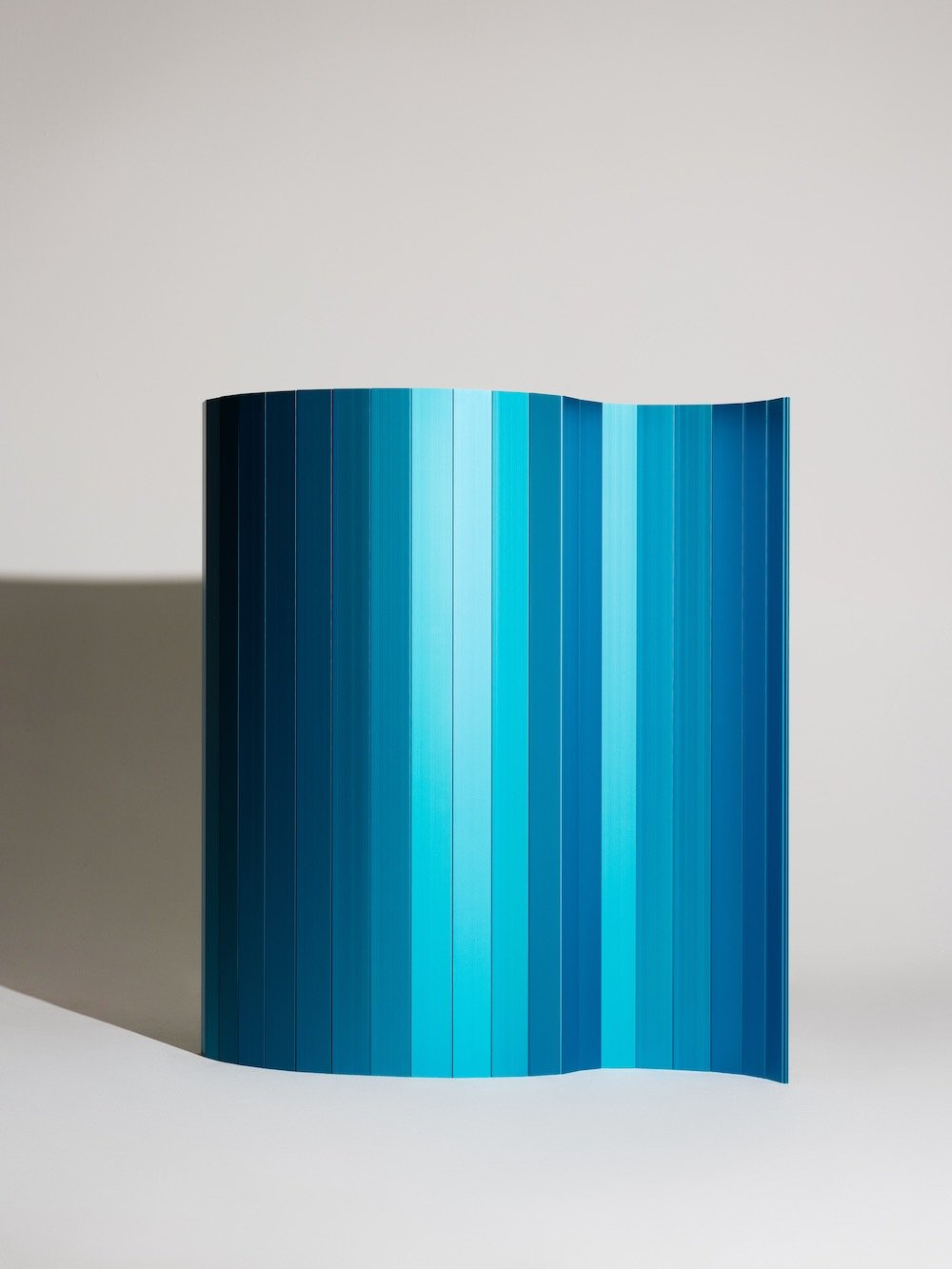
Rachel Griffin x Hydro.
Shane Schneck explored the contradiction of machine precision and the fortuity of the human hand to create a series of vessels named Nave, the Italian word for vessel.

Shane Schneck x Hydro.
The T-Board shelving system by Philippe Malouin takes advantage of the hardware already available for the popular T-slot extrusions. Made from a single extruded aluminium profile, the profiles can be anodised in an array of colours and extruded to as long as six meters.

Philippe Malouin x Hydro.
Hydro 100R exhibition: all photos by Einar Alasken, courtesy of Hydro.

Max Lamb x Hydro.