Malta Pavilion @ London Design Biennale 2023 – All photoa by Taran Wilkhu, courtesy of London Design Biennale.
Design – Under the theme ‘The Global Game: Remapping Collaborations,’ London Design Biennale 2023 brings together over 40 participants from across the world to enact new forms of international cooperation and participation through design. The biennial’s fourth edition returns to the Somerset House in central London and is curated by Aric Chen, general and artistic director of Rotterdam’s Nieuwe Instituut. Archipanic’s Editor-in-Chief Enrico Zilli has selected eight must-see exhibitions on show.
- RELATED STORIES: Read more about London Design Biennale on Archipanic.

Chile Pavilion.
“The Global Game: Remapping Collaborations aims to create an alternative geopolitical landscape driven not by competition nor conflict but rather cooperation.” Aric Chen told Archipanic. “We all know that global challenges require global collaboration. This is easier said than done, but in some small way, we hope real international exchanges will arise from this biennial in a way that also invites visitors to become part of the process.”
Turkish Pavilion

Gates enforce borders and social hierarchies. From here, Melek Zeynep Bulut has conceived the Turkish Pavilion as a hexagonal architectural structure of steel portals that works like a giant wind chime. Steel rods dangling from the arches resonate with the breeze in Somerset House’s central courtyard.
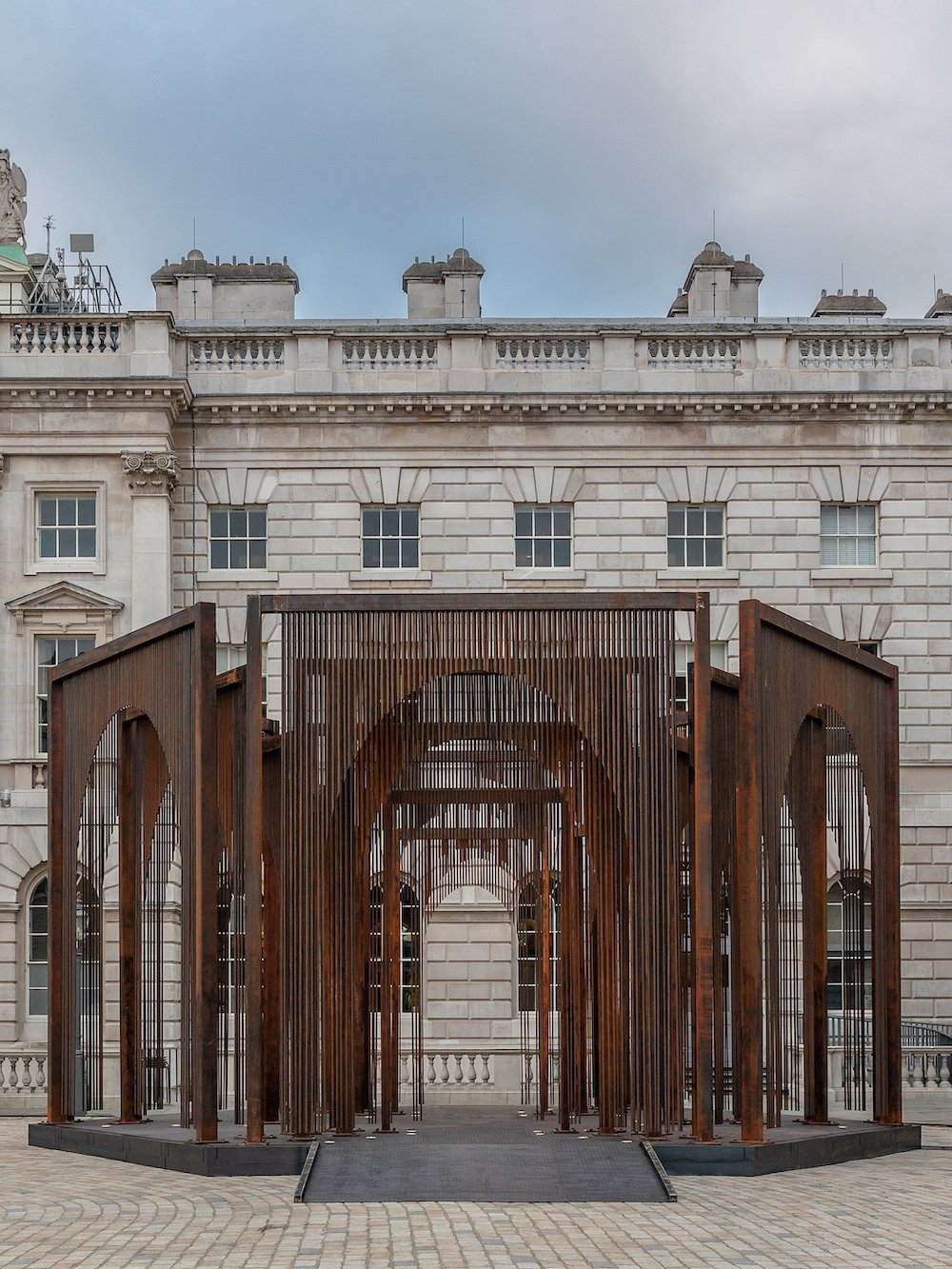
“The world is at an important threshold and moment of transformation, and while thresholds have been a symbol of enlightenment throughout history, in recent years, they have turned into defining borders and gates and have thrown the planet into a mess.” Explain Melek Zeynep Bulut.
Polish Pavilion
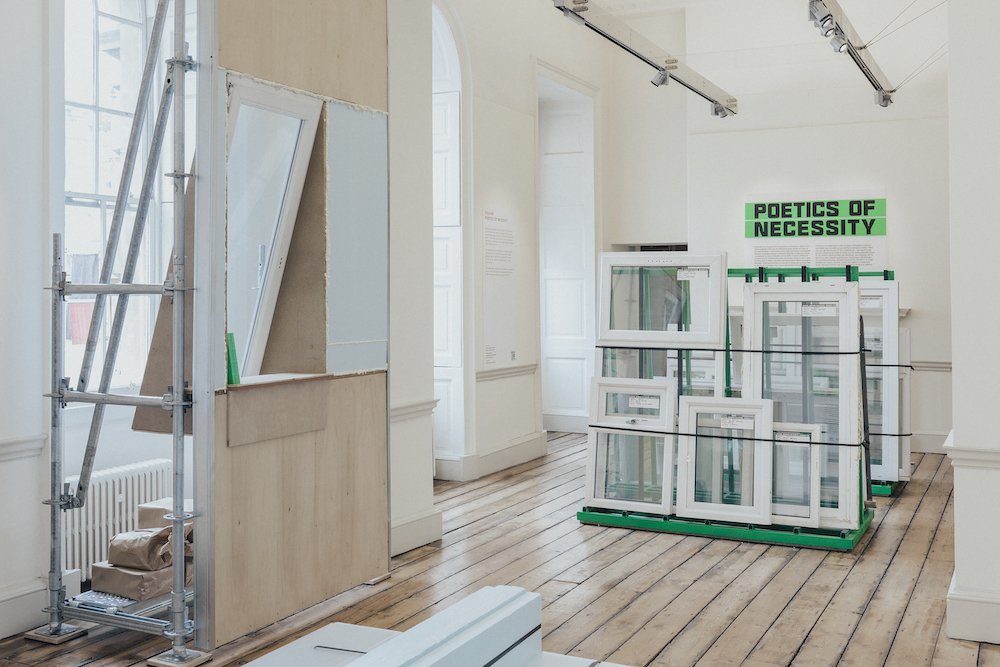
The Poetics of Necessity installation by TŁO Michał Sikorski Architects explores the role of designers in times of crisis when available resources change and shrink. The installation is inspired by the WINDOW project – a call to action to collect reusable windows given by Poles to Ukrainians.

Due to the war, windows are frequently destroyed by Russian shelling, but most of Ukraine’s glass supply comes from Russia. The exhibition explores how unexpected objects, such as reclaimed windows, emerge from the world of reuse and crisis collaboration.
Humanitarian Pavilion
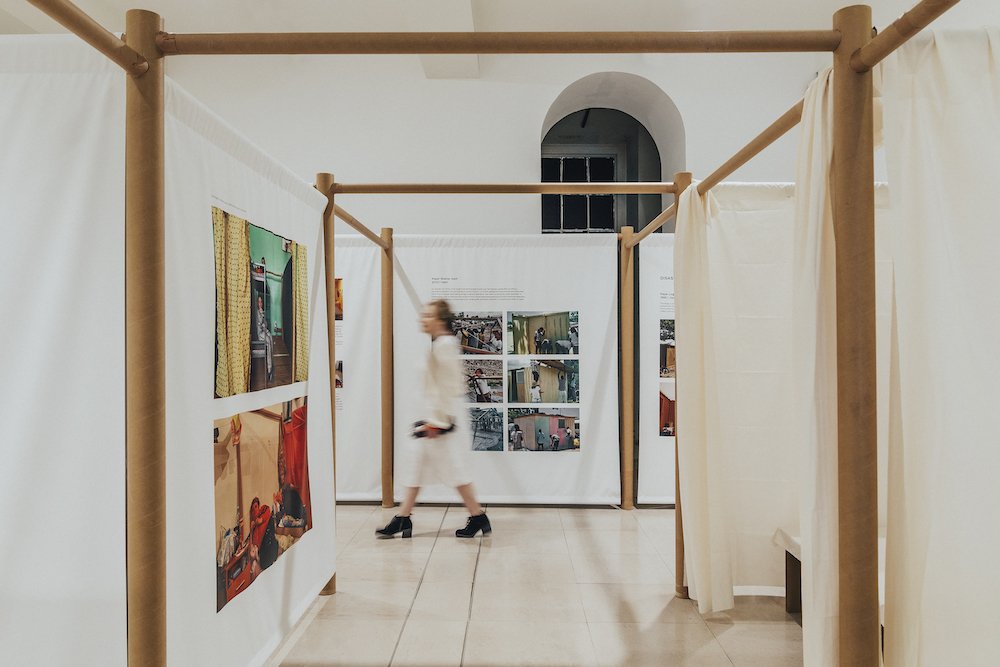
The Humanitarian Pavilion comes in the shape of Shigeru Ban’s Paper Partition System, a simple yet powerful shelter composed of humble materials: cloth curtains and paper tubes from the fabric industry that interlock to form reusable, sustainable modules. The PPS has been used in temporary shelters for Ukrainian refugees. The installation features poems by novelist and literary translator Svetlana Lavochkina, shots by Berlin photographer Vincent Haiges, and a soundscape by Ukrainian composer Valentin Silvestrov, now a war refugee in Berlin himself.
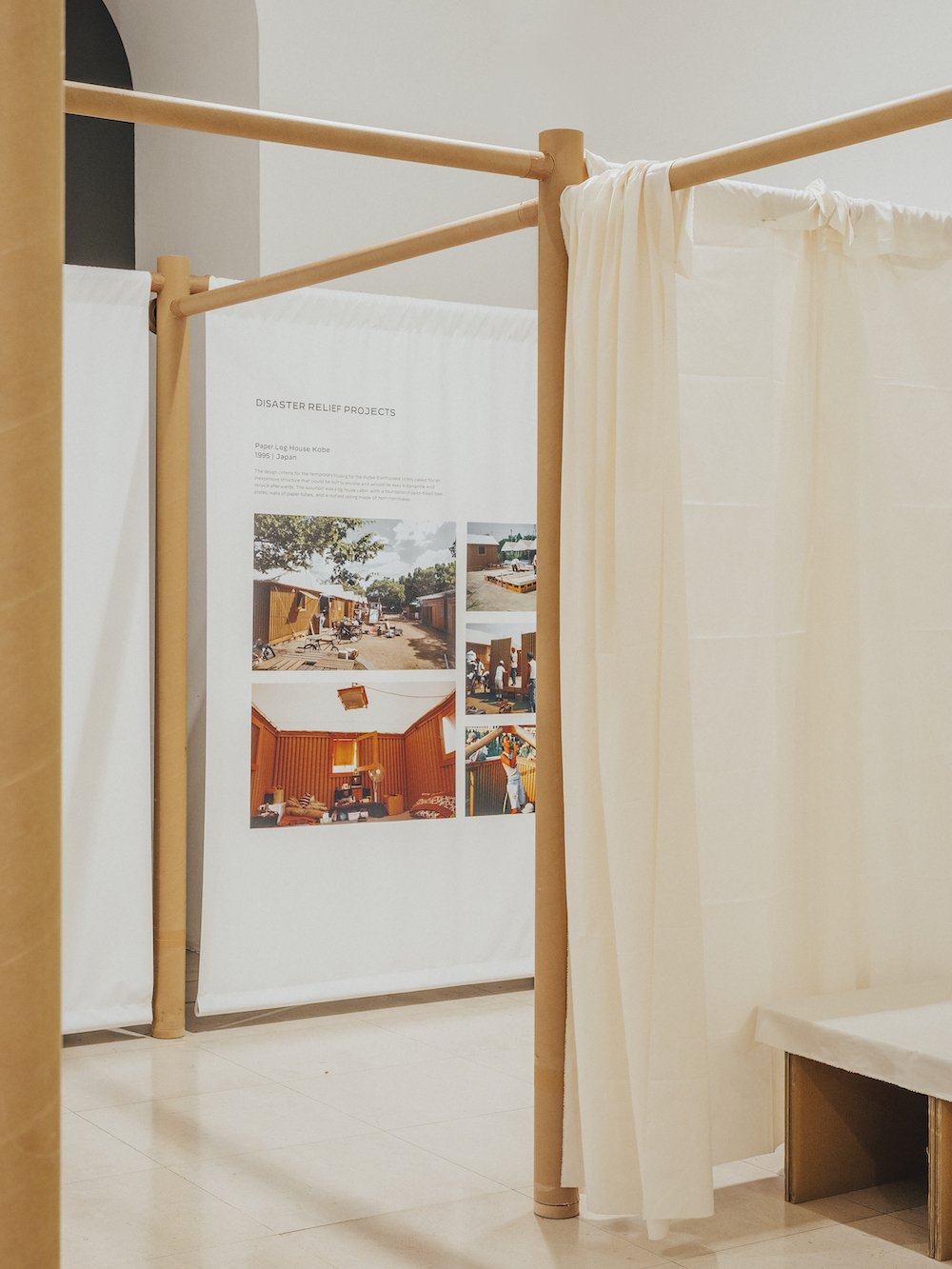
The pavilion will raise funds through public donations to further the development of a longer-term temporary housing system by Shigeru Ban: small prefabricated houses that will allow the lives of individuals, not numbers, to continue.
Malta Pavilion
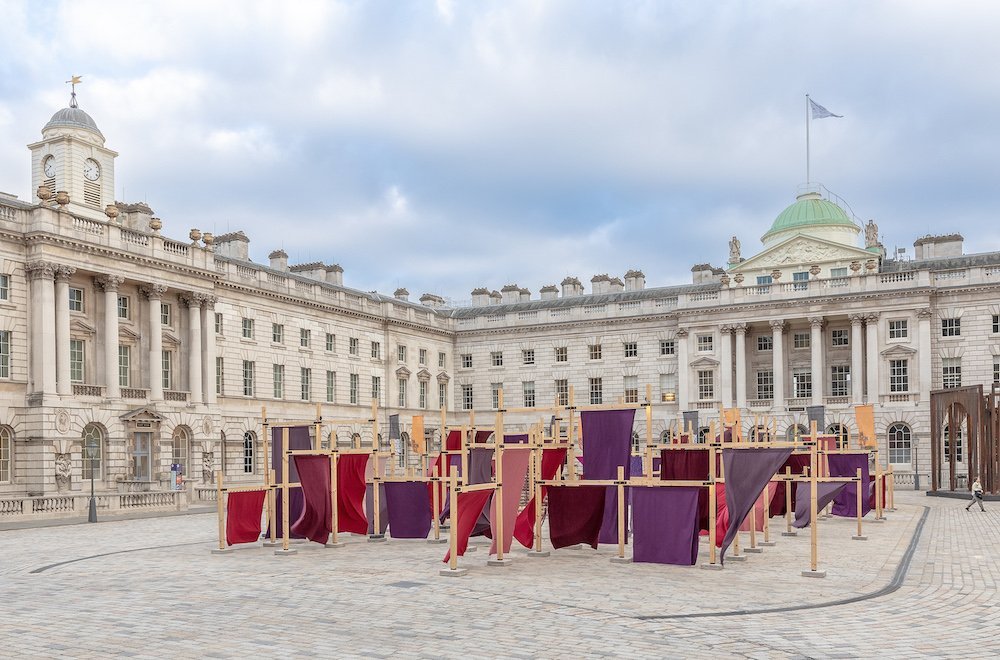
Titled Urban Fabric installation in Somerset House’s central courtyard is a large-scale ‘village-square’ installation that merges traditional city planning with the Phoenician-Maltese tradition of fabric production and dyeing of the multiple colours of Phoenician purple.
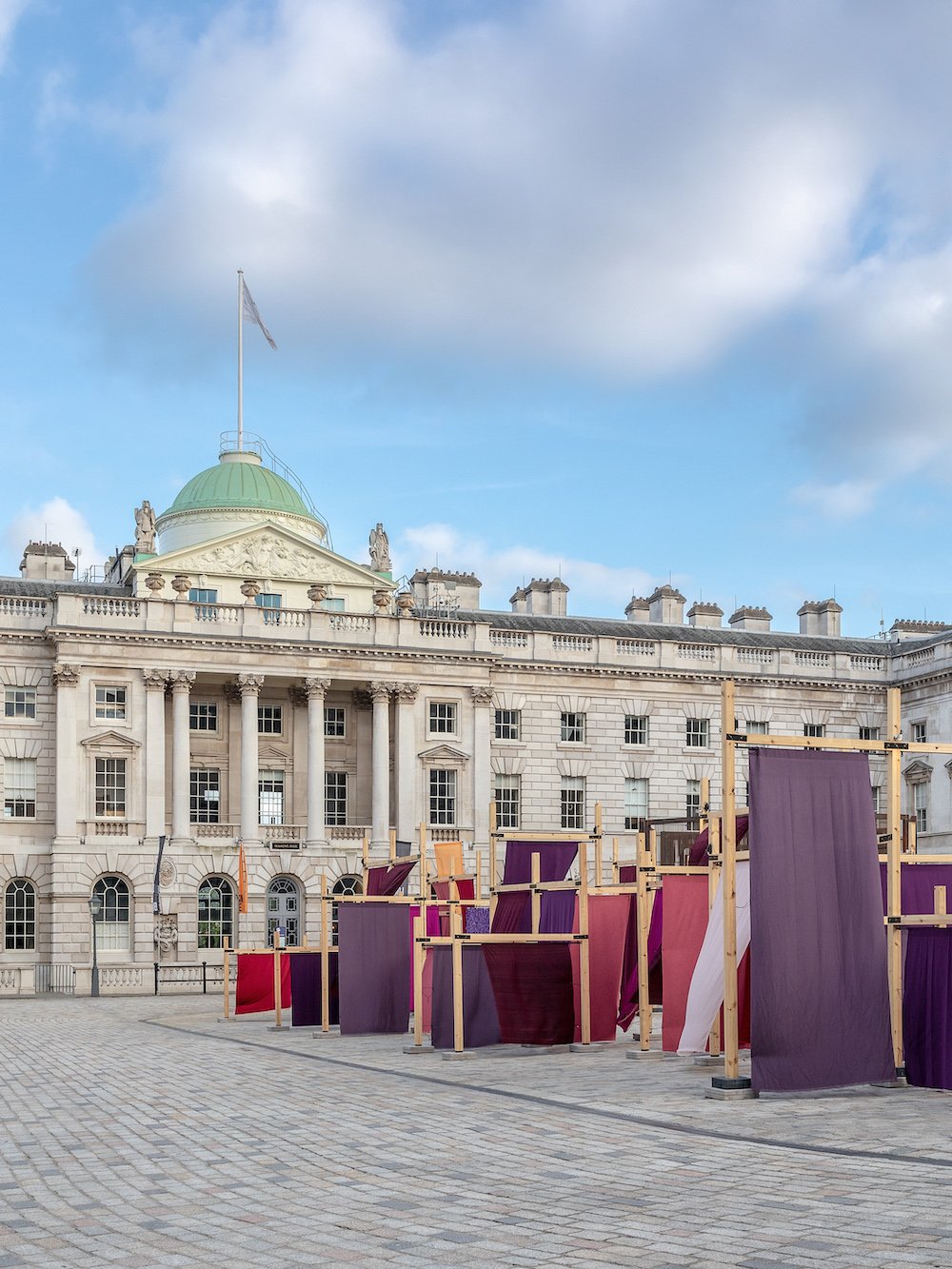
The installation by Matthew Joseph Casha of Createit Studio uses wood, recycled stone and organic fabric that is certified eco-friendly for its main components. These create a ‘street-like’ layout that enables the audience to meet and collaborate while interacting directly with the installation.
Automorph Network Pavilion

Automorph Network is a collective of scientists and designers who explore the concept of self-shaping matter. At Somerset House, they present objects that shape-shift when in contact with natural forces such as air or heat or once their maker touches them.
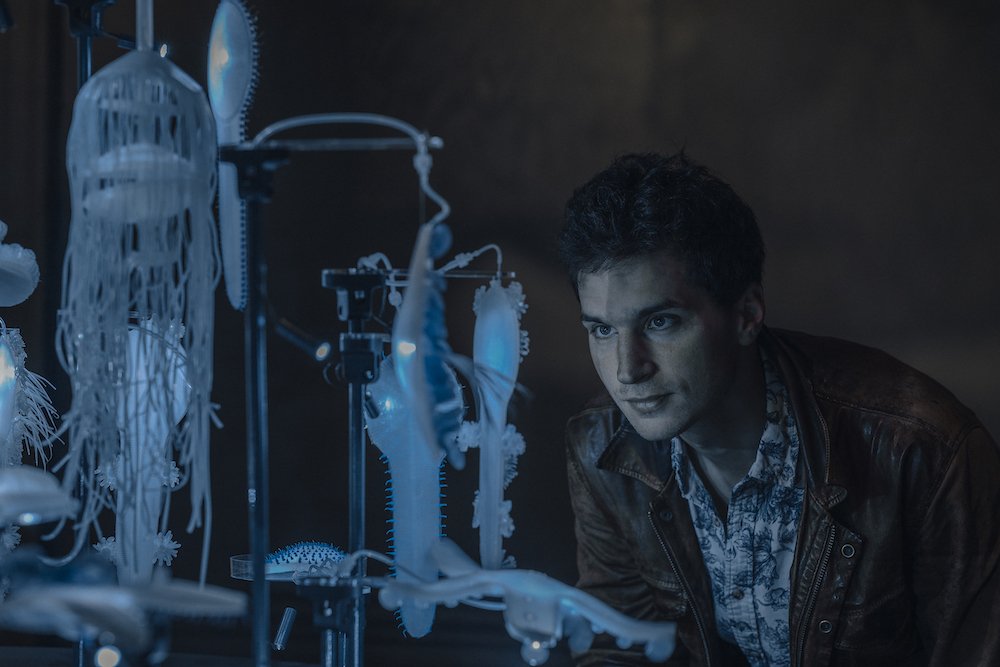
A self-morphed structure of undulating partitions evokes different imaginary environments, representing the land, underwater, and urban worlds. Video projections of self-shaping systems from nature and laboratories highlight the creative power of well-managed differences in shaping our future.
Saudi Pavilion
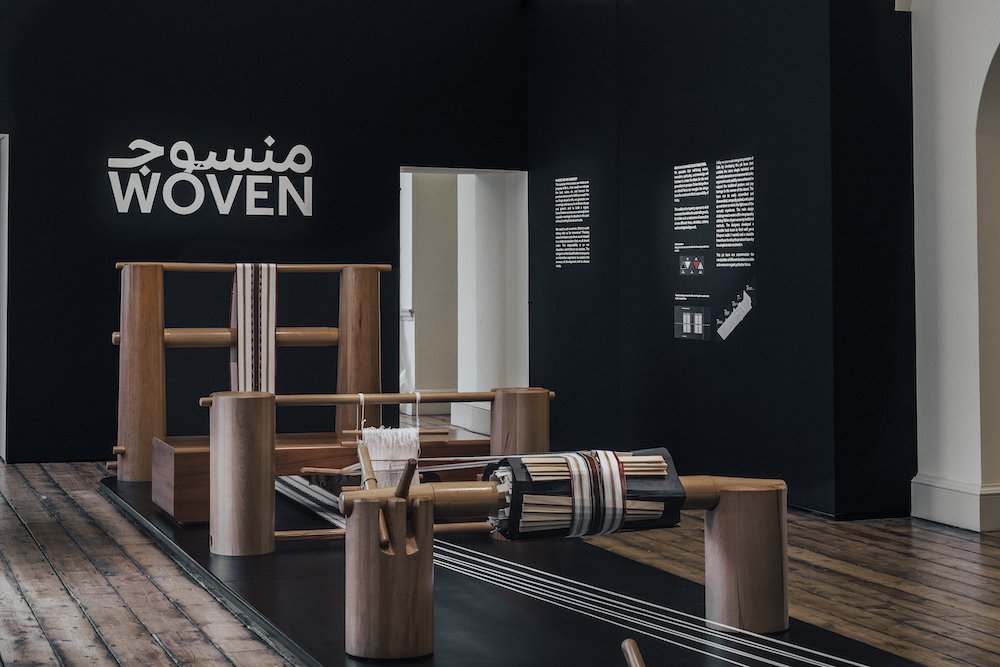
Saudi Arabia presents Woven, a collaborative installation where “the future is interwoven with the fabric of humanity.” Originating in the delicate hands of powerful women in the Arabian desert practising humble textile artisanship.
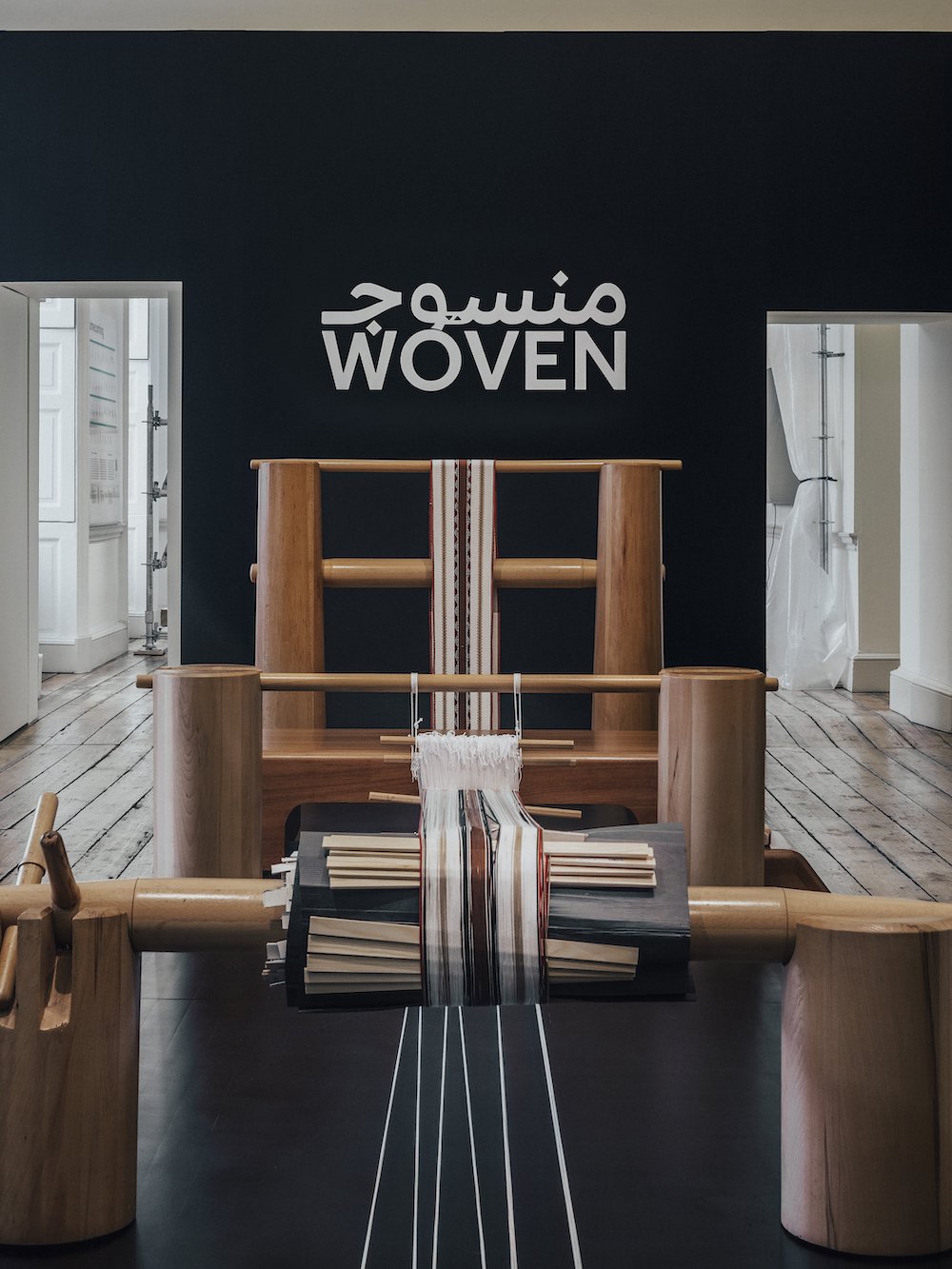
The installation has been designed and curated by leading Saudi designers Ruba Alkhaldi and Lojain Rafaaand consists of a large loom and visual displays. Participants can choose to weave one of five different colour threads, each representing innovation, nature, spirituality, knowledge and wellness.
Nigerian Pavilion

The tactile installation by Omotunwase Osinaike presents Natural Synthesis and invites visitors into a typical local courtyard where they can contemplate the nature of collaboration and conflict. Designed to draw attention to the global connections between ecosystems, the installation features an innovative collection of hand moulded fibreglass lounge chairs, exploring an intercontinental exchange between the Amazon and the Sahara, two interdependent and crucial ecosystems giving life to many native lifeforms.
Chile Pavilion

Conceived by Sofía Guridi, the Chilean Pavilion presents a sensory installation highlighting novel ways of working with wood cellulose as a bio medium. Seven suspended bio-textile works made with natural fibres and cellulose sheets. The largest of which gradually degrades during the exhibition to reveal hidden layers of information for visitors to discover.
All photos by Taran Wilkhu – Courtesy of London Design Biennale 2023.