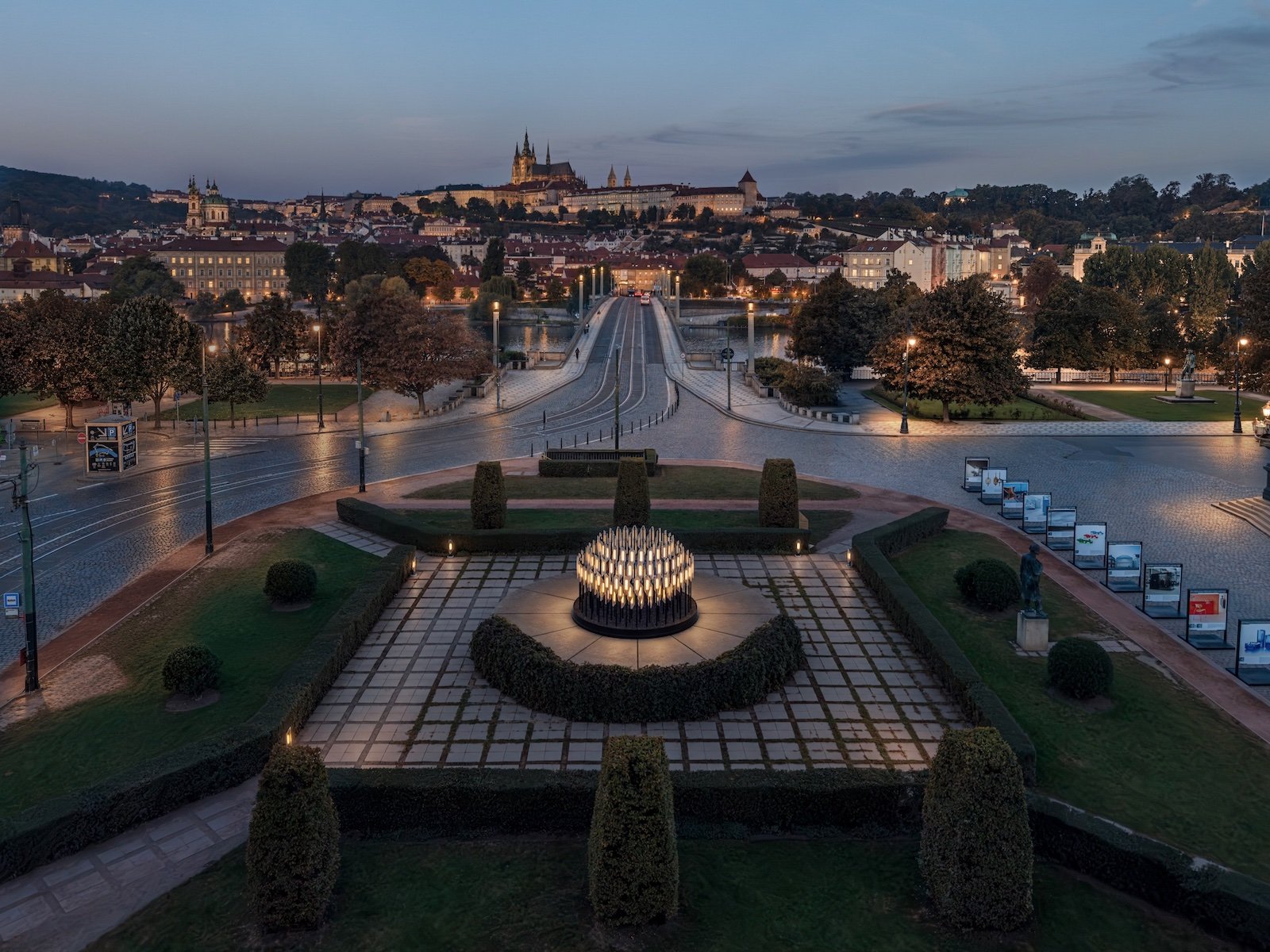
Beacon by Lee Broom and Brokis at DesignBlok 2026 – Courtesy of DesignBlok.
Design. A table that grows with its guests, a roomful of retro lamps and a tribute to the Czech Republic’s first president: Prague is in a luminous mood. Until 11 October, DesignBlok 2026, the largest design and fashion festival in Central Europe, spreads across some of the city’s most significant cultural institutions and, for the first time, the newly restored Industrial Palace at Výstaviště Praha.
- RELATED STORIES: Read more Czech architecture and design 2026 on Archipanic.
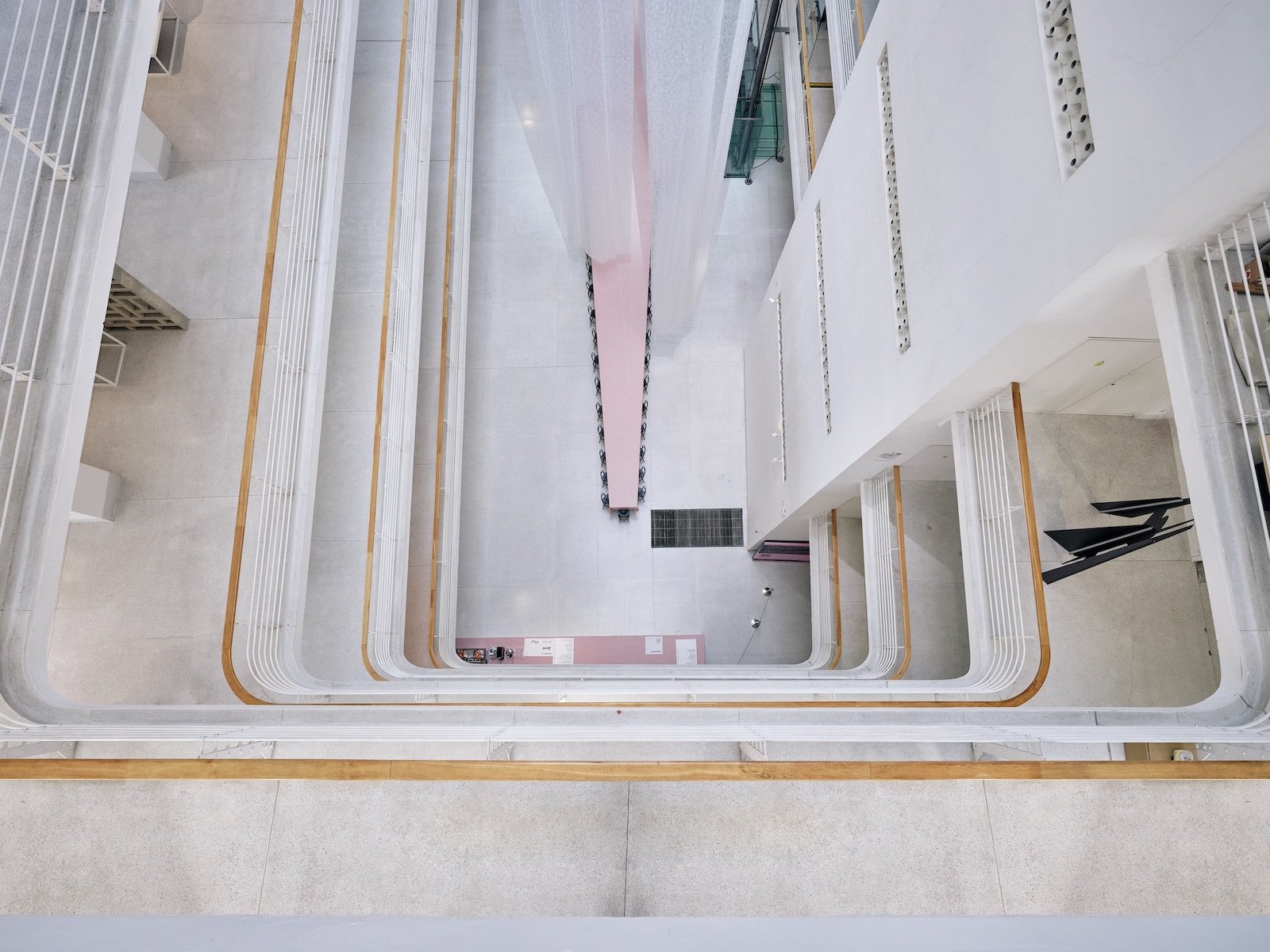
Veranda by Maxim Velcovsky – Photo by Vojtech Veskrna.
This year’s theme is Light, read as a symbol of knowledge, hope and life. Czech philosopher Jan Amos Comenius attributed to light the power to free us from confusion and steer us towards truth, as festival director Jana Zielinski points out. “From here, we examine the influence and role of design in today’s world. Can it improve the state of the world and contribute to development and quality of life?” Here’s what caught our eye.
Industrial Palace
Courtesy of DesignBlok.
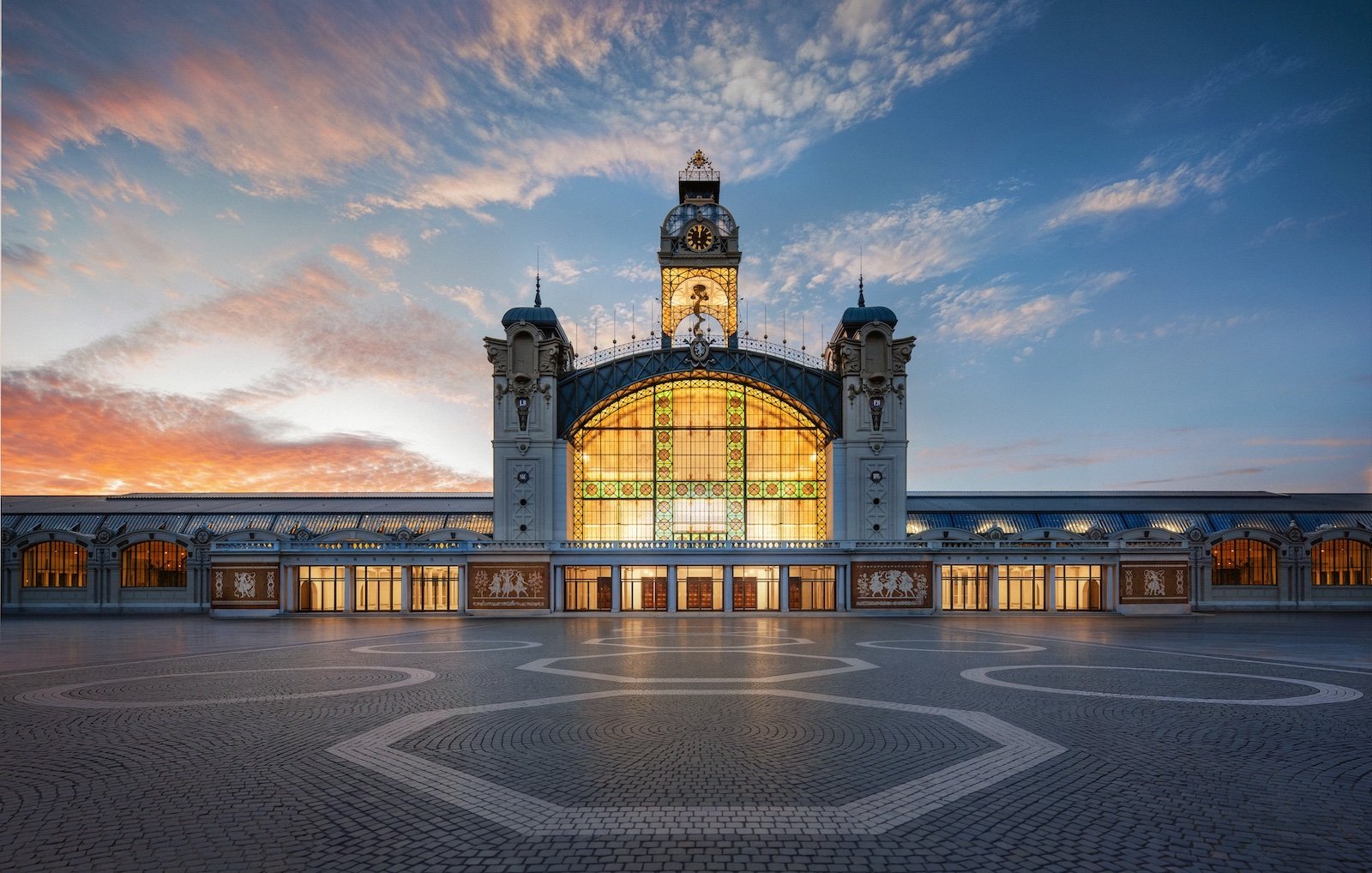
DesignBlok 2026 is the first major event to open the historic Central Hall of the Industrial Palace to the public after four years of reconstruction. Visitors can explore the restored hall during the festival’s opening hours. Accompanying programme events, including DesignBlok Talks, the DesignBlok Awards Gala and the Diploma Selection fashion shows, each require a separate valid ticket.
National Gallery Prague
Veranda by Maxim Velcovsky – Photo by Vojtech Veskrna.
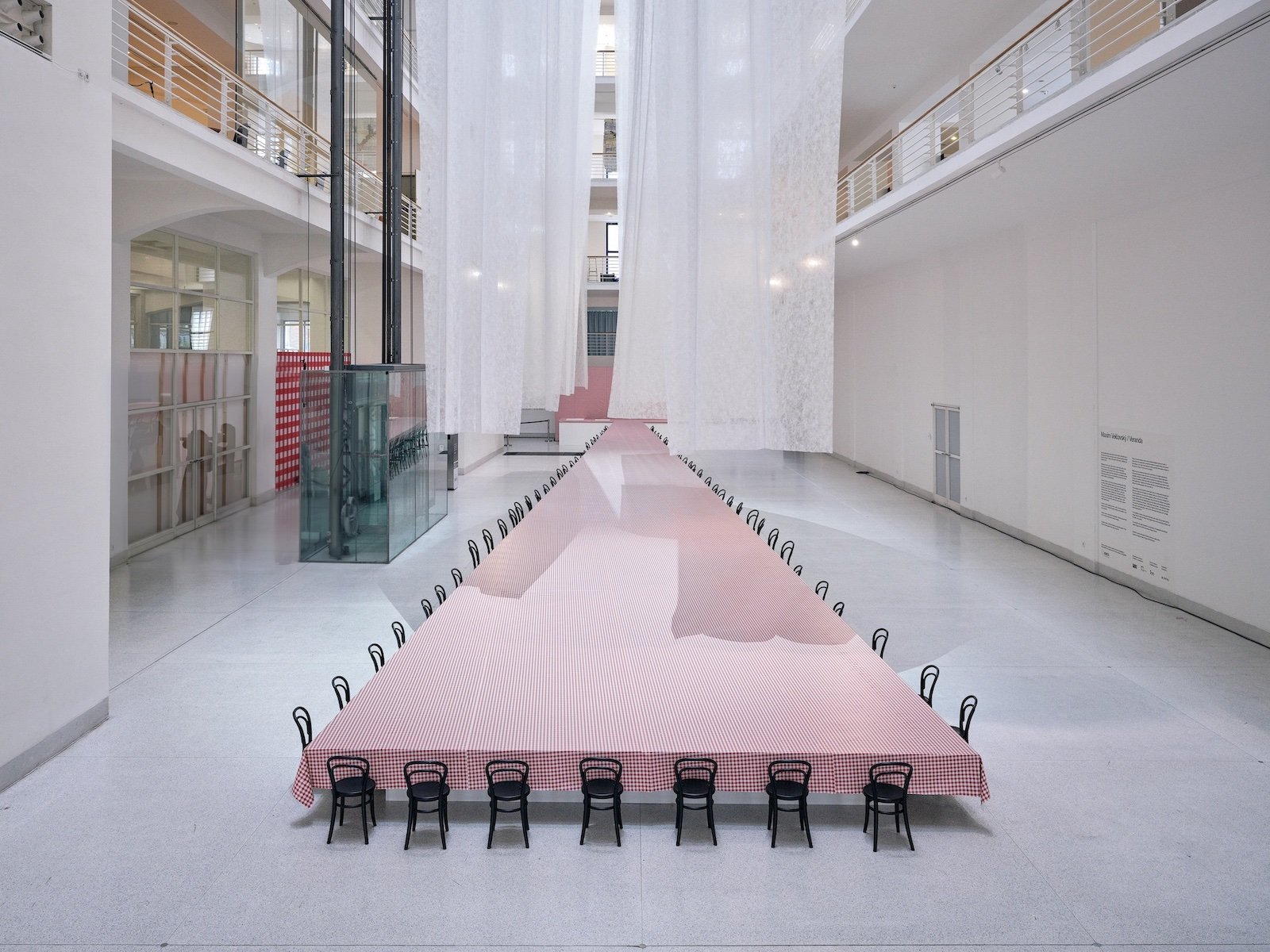
The festival’s main hub, the Trade Fair Palace of the National Gallery Prague, hosts 250 showcases from leading European designers, emerging talent, manufacturers and brands. In the Small Hall, Maxim Velčovský presents Veranda, an installation on light, movement and coming together. Its centrepiece is a table that climbs from children’s-table height to bar-counter height. The slow gradation stands for growth, transformation and the passing of time: first board games, then family and friends gathered round, finally informal chats at the counter.
Diploma Selection – Photo by Adam Mracek.
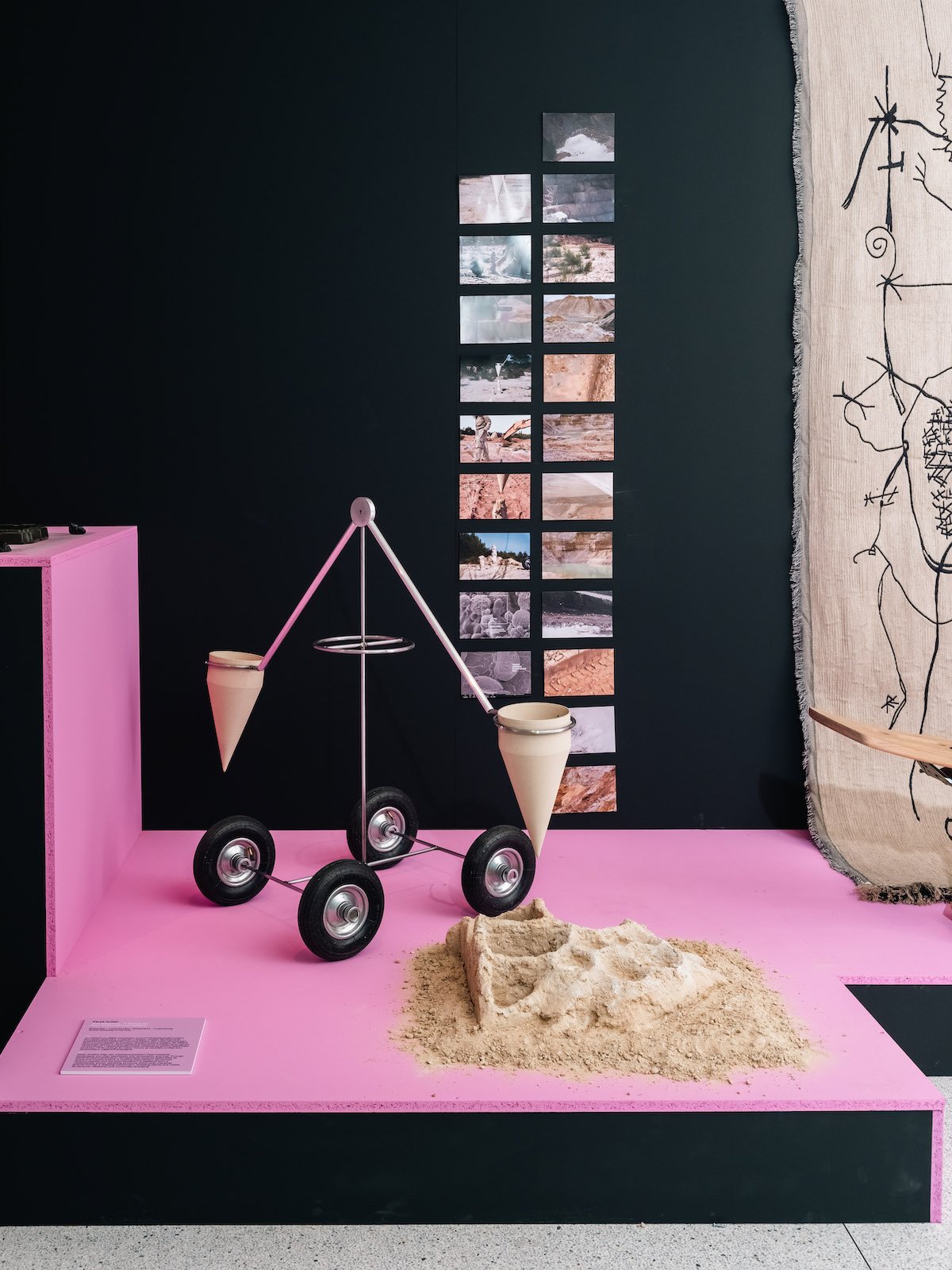
DesignBlok Selects gathers 28 objects and new releases from Czech and international design, among them a limited-edition gold Panton Chair by Vitra and the Axis collection by Laurids Gallée for Moser. The next generation gets its own billing through the Diploma Selection finalists, the DesignBlok Talent Cards programme and a School Today section, where Czech and international schools and studios present their work.
Prague Castle
Design for Václav Havel – Photo by Filip Slapal.
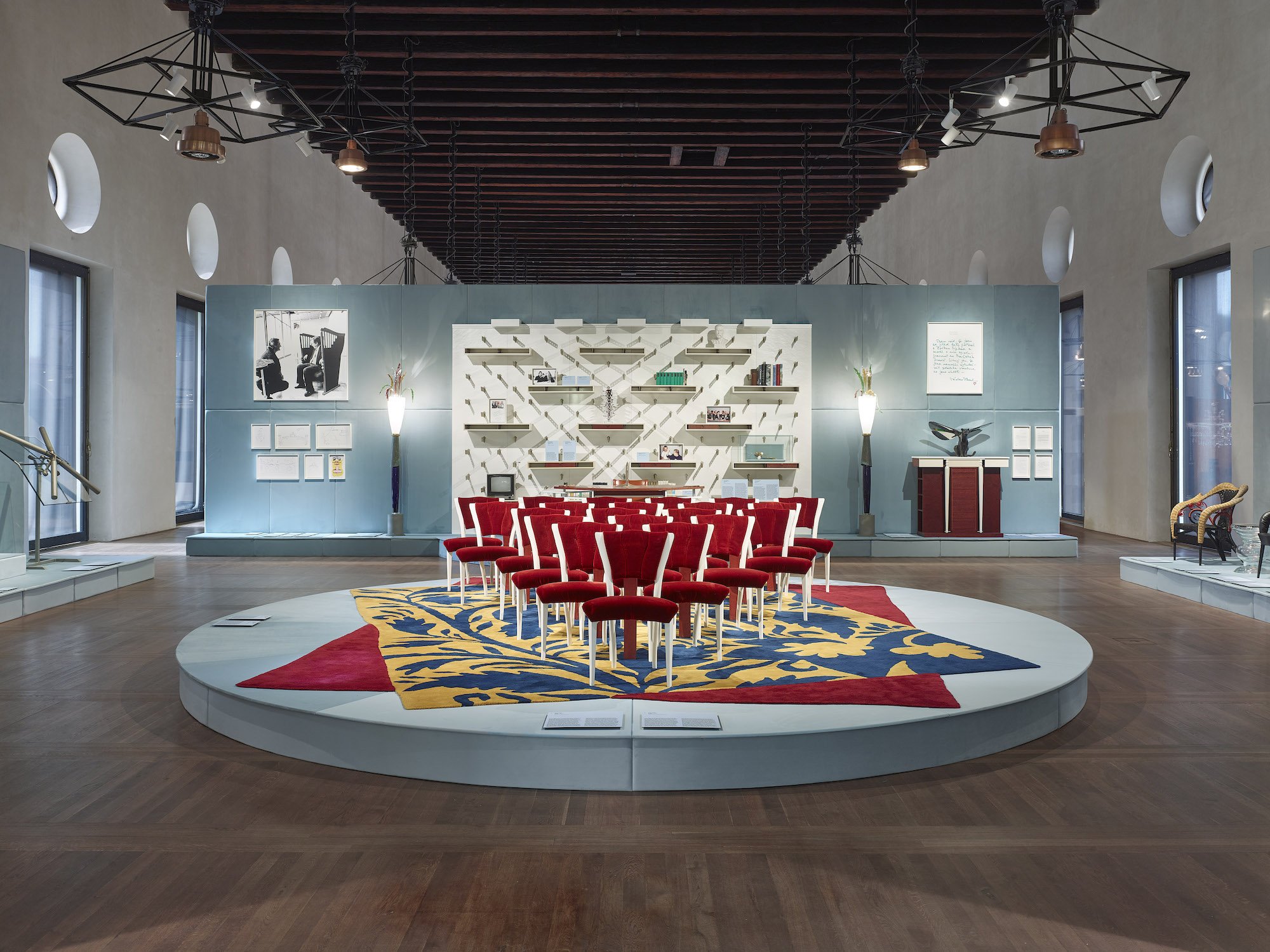
After more than twenty years, President Václav Havel’s study, designed by Bořek Šípek in 1993–1994, returns as the centrepiece of Design for Václav Havel, on view at the Riding Hall. Václav, the beloved first President of the Czech Republic, “did not see himself just as a client but wanted to be actively involved in the individual works,” says Andrea Běhounková, the exhibition’s curator.
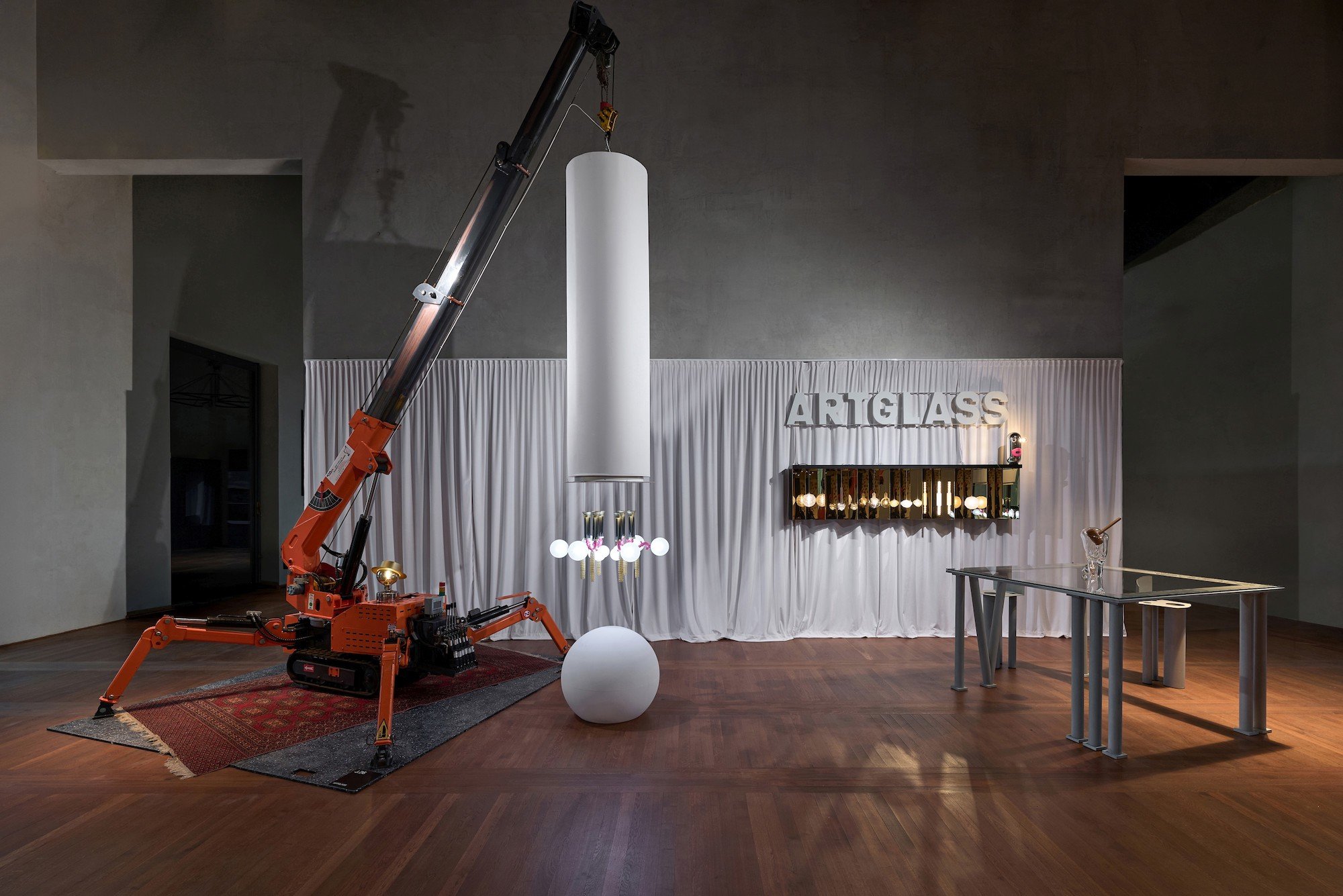
Artglass at High Crafts – Photo by Honza Zima.
The fourth edition of High Craft, staged in collaboration with Vogue CS, presents more than twenty carefully selected Czech designers and brands reinterpreting traditional crafts through innovative technologies, sustainable approaches and contemporary aesthetics.
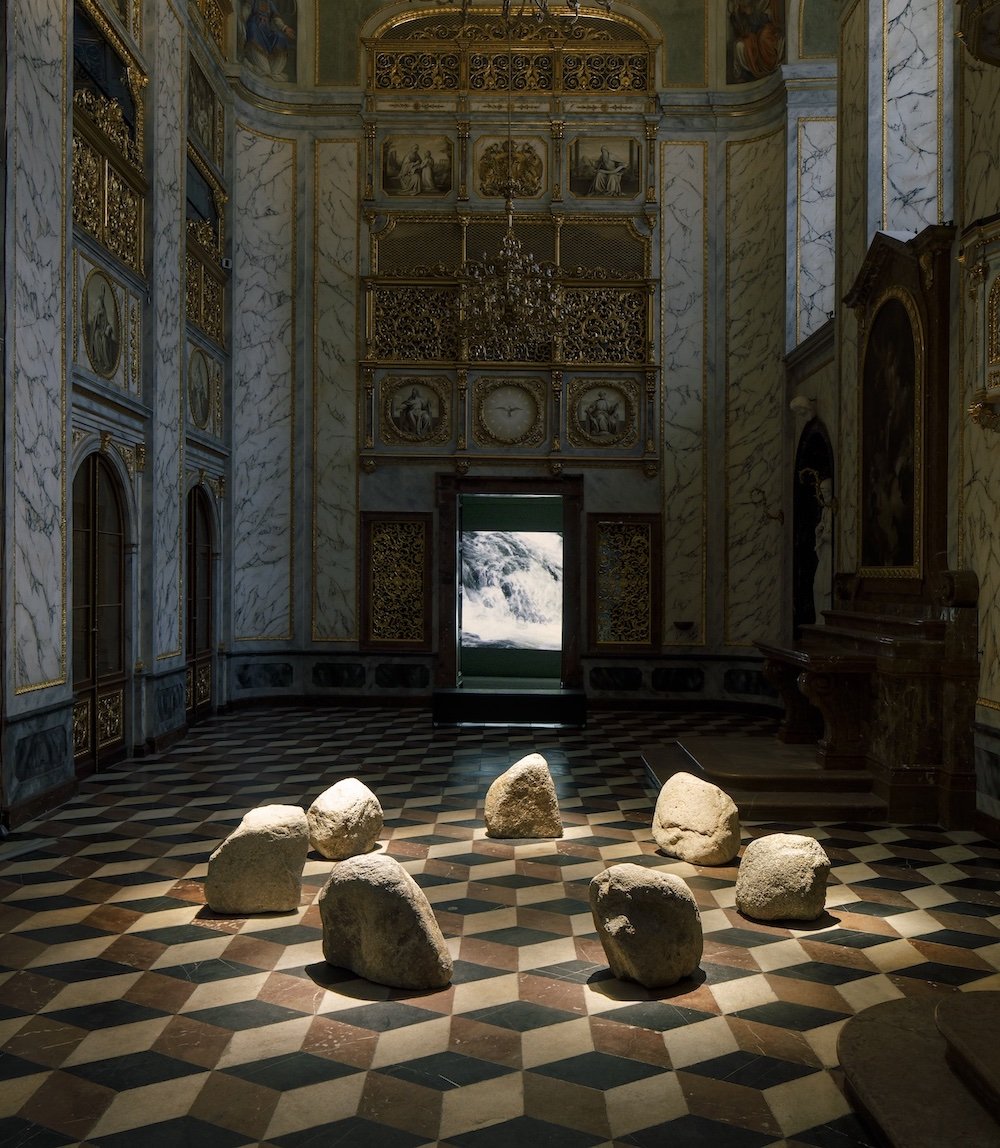
Circle of Silence by Eva Eisler – Photo by Tomáš Souček.
Also at the Castle, in the Baroque Chapel of the Holy Cross, Eva Eisler presents the Circle of Silence installation. Seven river boulders, light, sound and moving image build an environment that probes the relationships between matter and time, between natural and human order, and between the present moment and memory.
Jan Palach Square
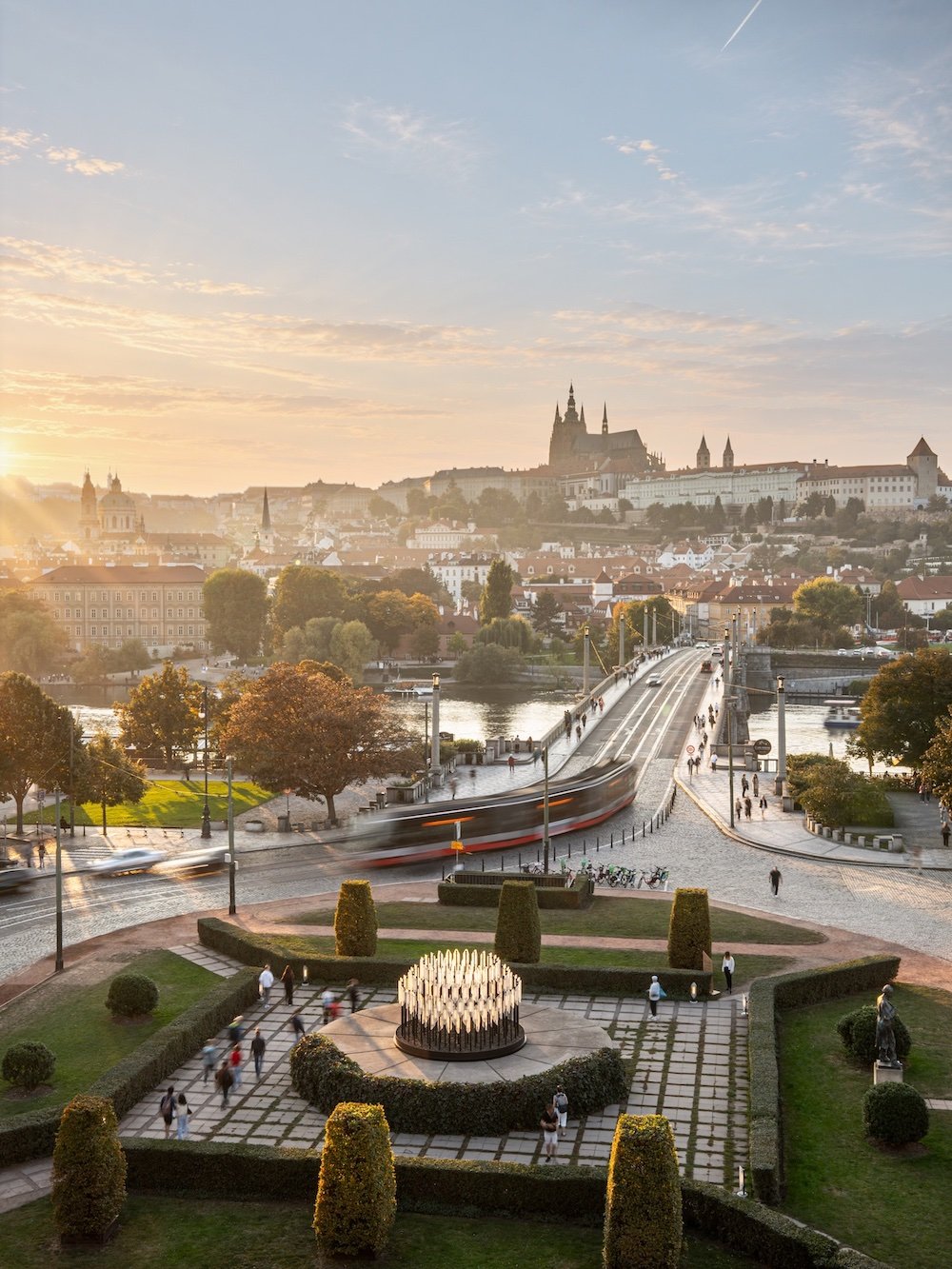
Courtesy of DesignBlok.
British designer Lee Broom brings BEACON, a monumental light installation created with Czech lighting brand Brokis. After its London premiere and an appearance at Milan Design Week, it meets Czech audiences for the first time, illuminating Jan Palach Square in front of the Rudolfinum. Find out more…
Museum of Decorative Arts
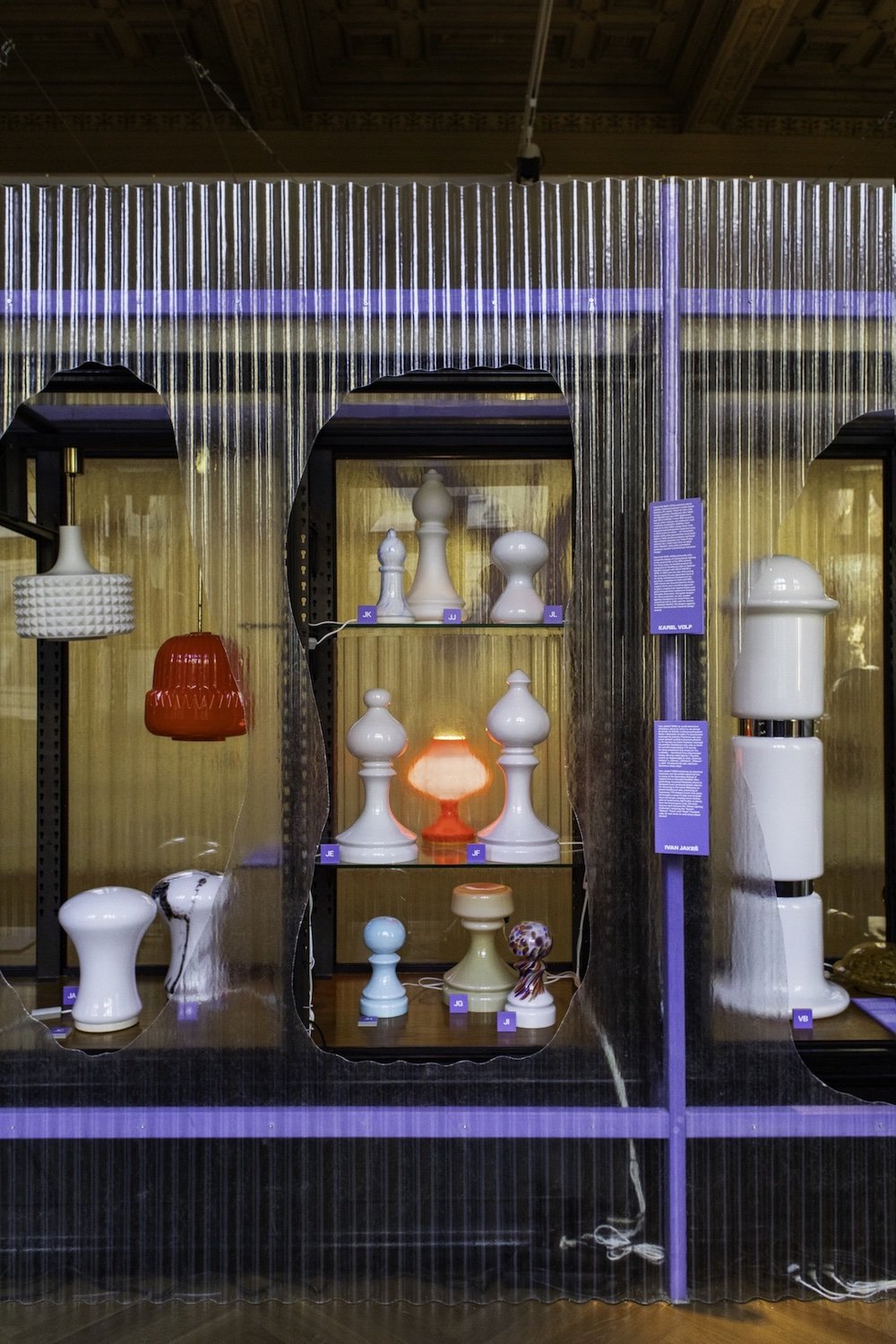
Retro Lampy – Photo by Zuzana Vesela.
Retro Lamps: Forgotten Stories of Czechoslovak Design, a collaboration between the museum and the Paris-based Initio Arts & Design gallery, explores mass-produced table, floor, and pendant lamps made in Czechoslovakia between the 1950s and 1980s. It puts the spotlight back on designers whose names were often overshadowed by the manufacturers behind their work. Bodo Sperlein debuts at DesignBlok with a showcase at the 1940 Czech Modernism Pavilion in the museum gardens. The exhibition includes furniture, lighting, porcelain, textiles, carpets and concrete.
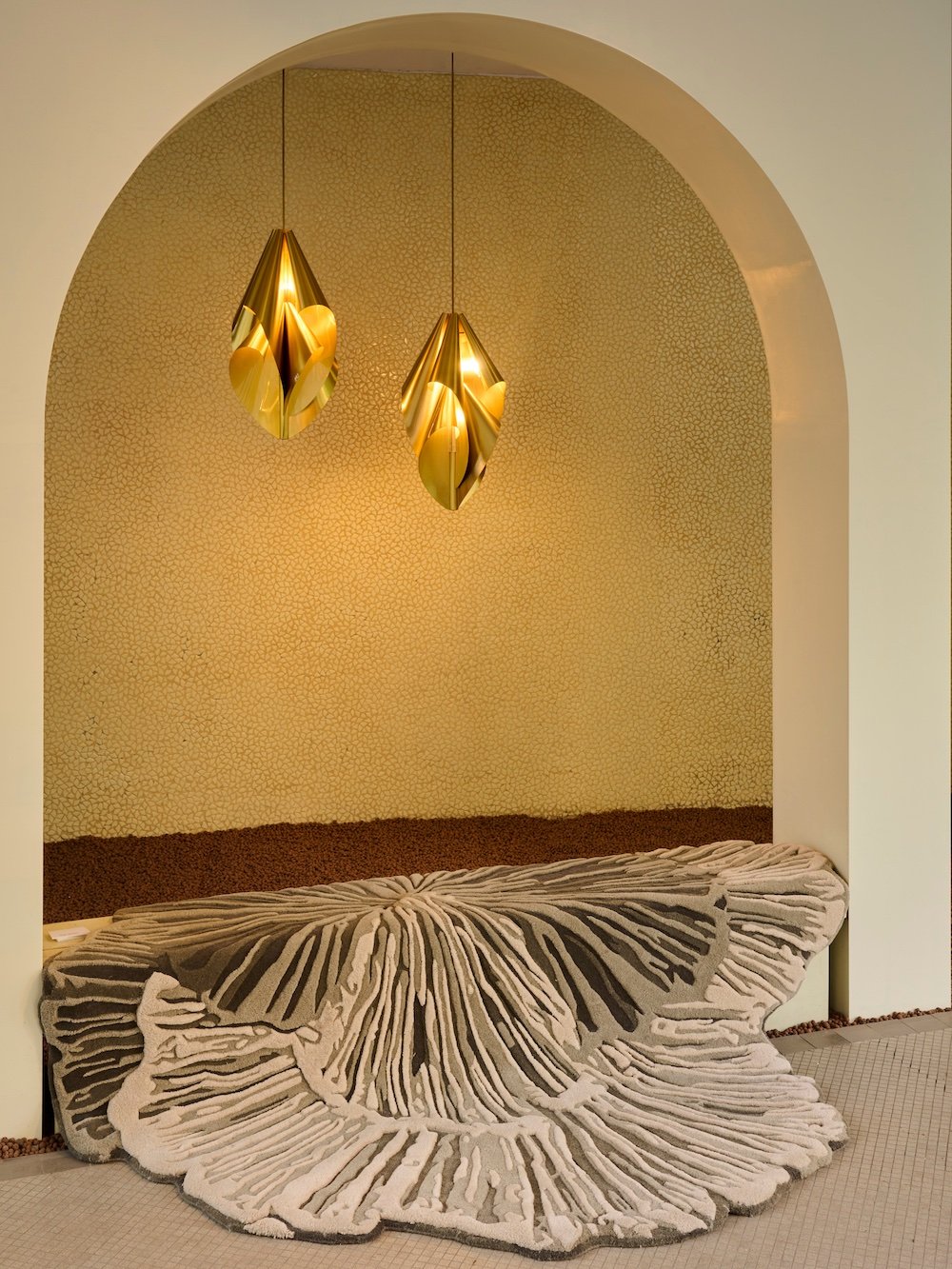
Bodo Sperlein at DesignBlok 2026 – Photo by Fabian Frinzel.
500 Lights for the Emperor tells the story of the tragic fire at Vienna’s Ringtheater, which accelerated the advent of electric light and brought traditional glassmaking into contact with one of the greatest technological revolutions of its time. The installation focuses on some of the first electrified crystal chandeliers, made in Kamenický Šenov, which lit the Emperor’s palace with hundreds of bulbs in 1883.
Across the city
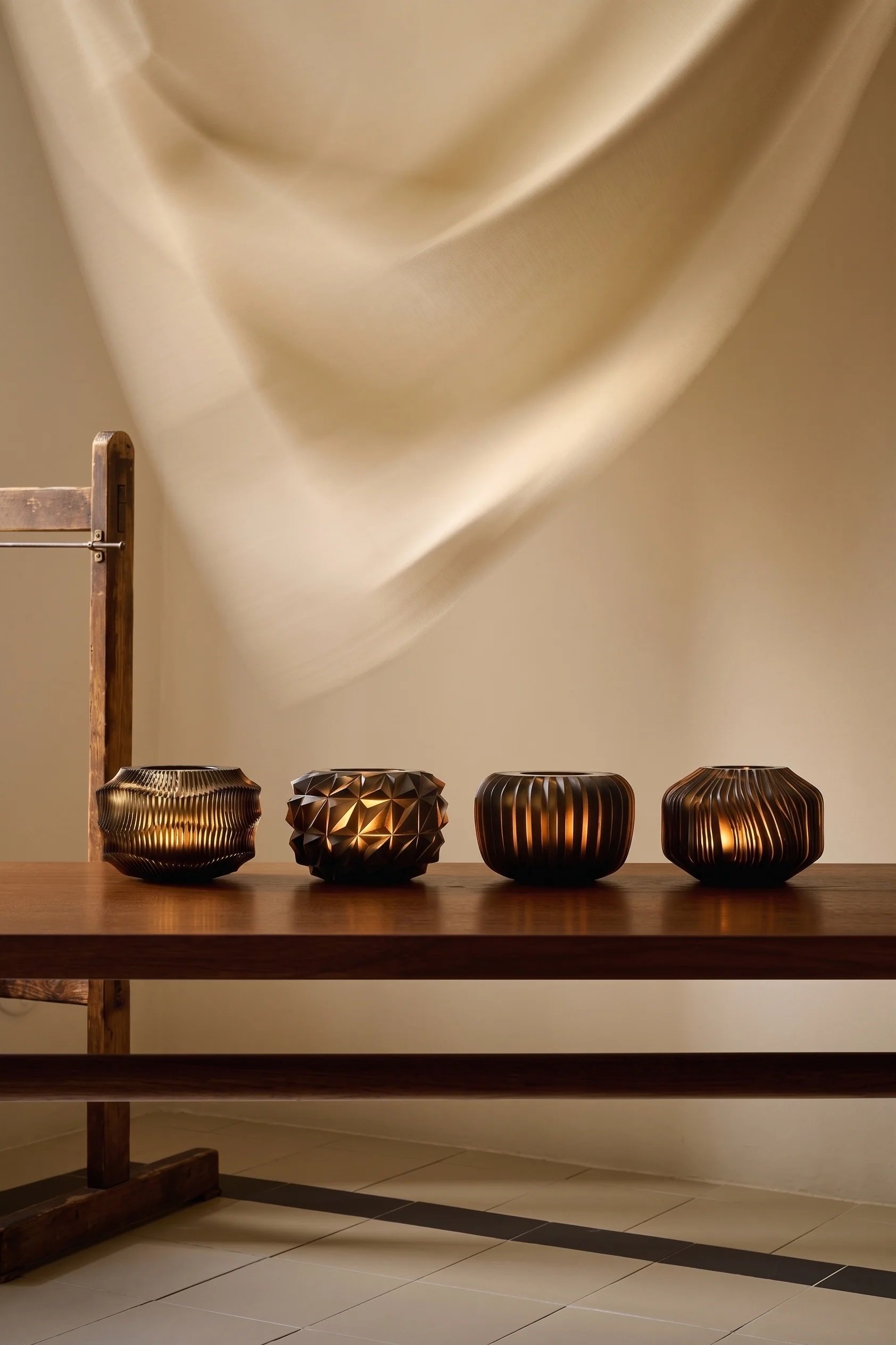
Courtesy of Rückl.
DesignBlok 2026 also extends into independent venues, shops, showrooms, pop-up stores, galleries, museums, art schools and other distinctive spaces across Prague, with over 50 destinations on the festival map. Rückl marks 180 years with a new flagship store at Vězeňská 7, where contemporary Czech design meets traditional glassmaking. The Bulb showroom shows pieces by Moooi and Marcel Wanders, this year’s guest of honour.
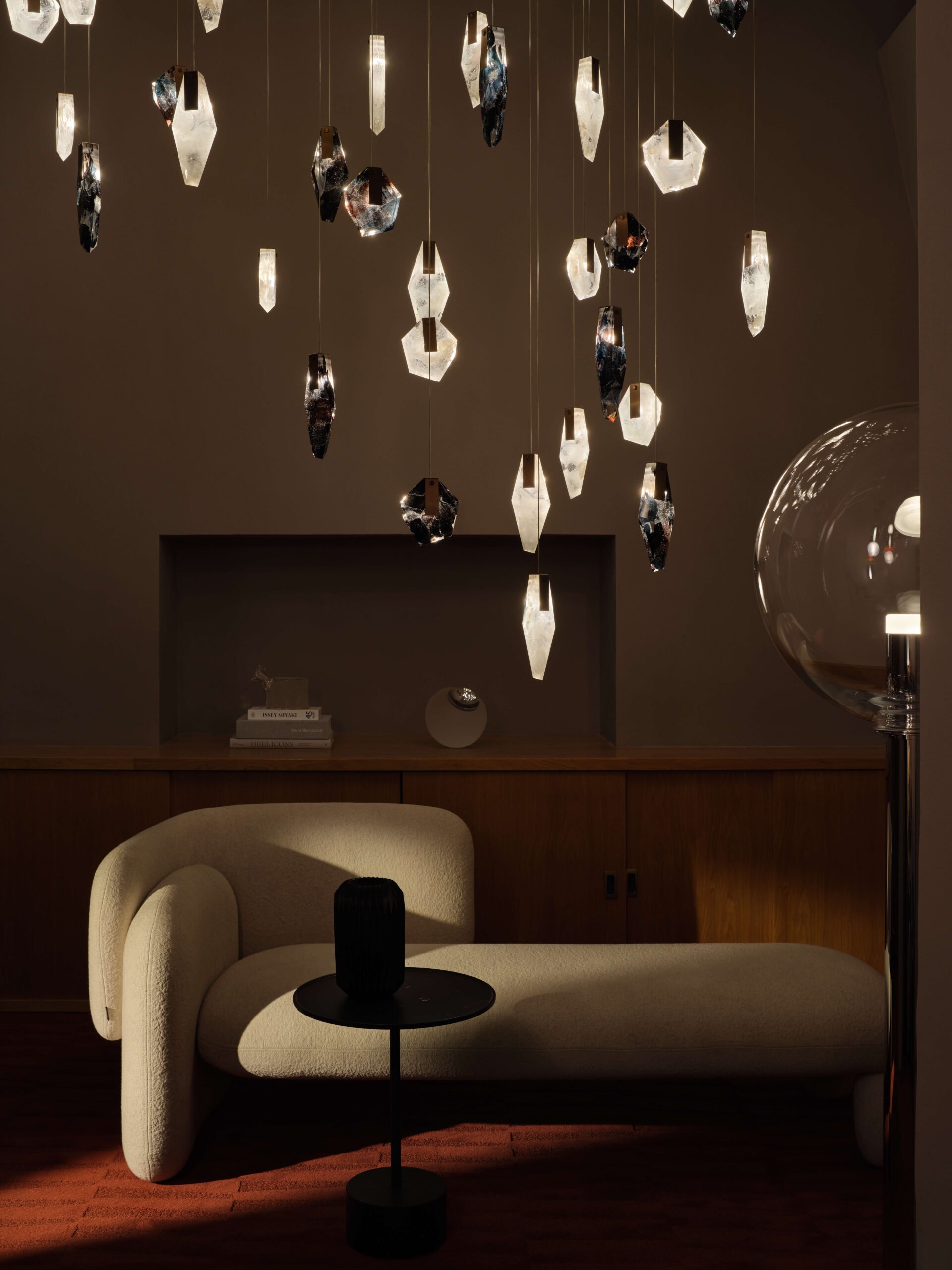
BOMMA Atelier at DesignBlok 2026 – Photo by Radek Šrettr Úlehla.
Then there’s BOMMA Atelier, set inside Prague’s Cubist Diamant House and transformed by architectural studio Atelier Monday. The redesigned interior puts the BOMMA lighting collections centre stage, showing how they alter the atmosphere, accentuate the architecture, and redefine how space is experienced.
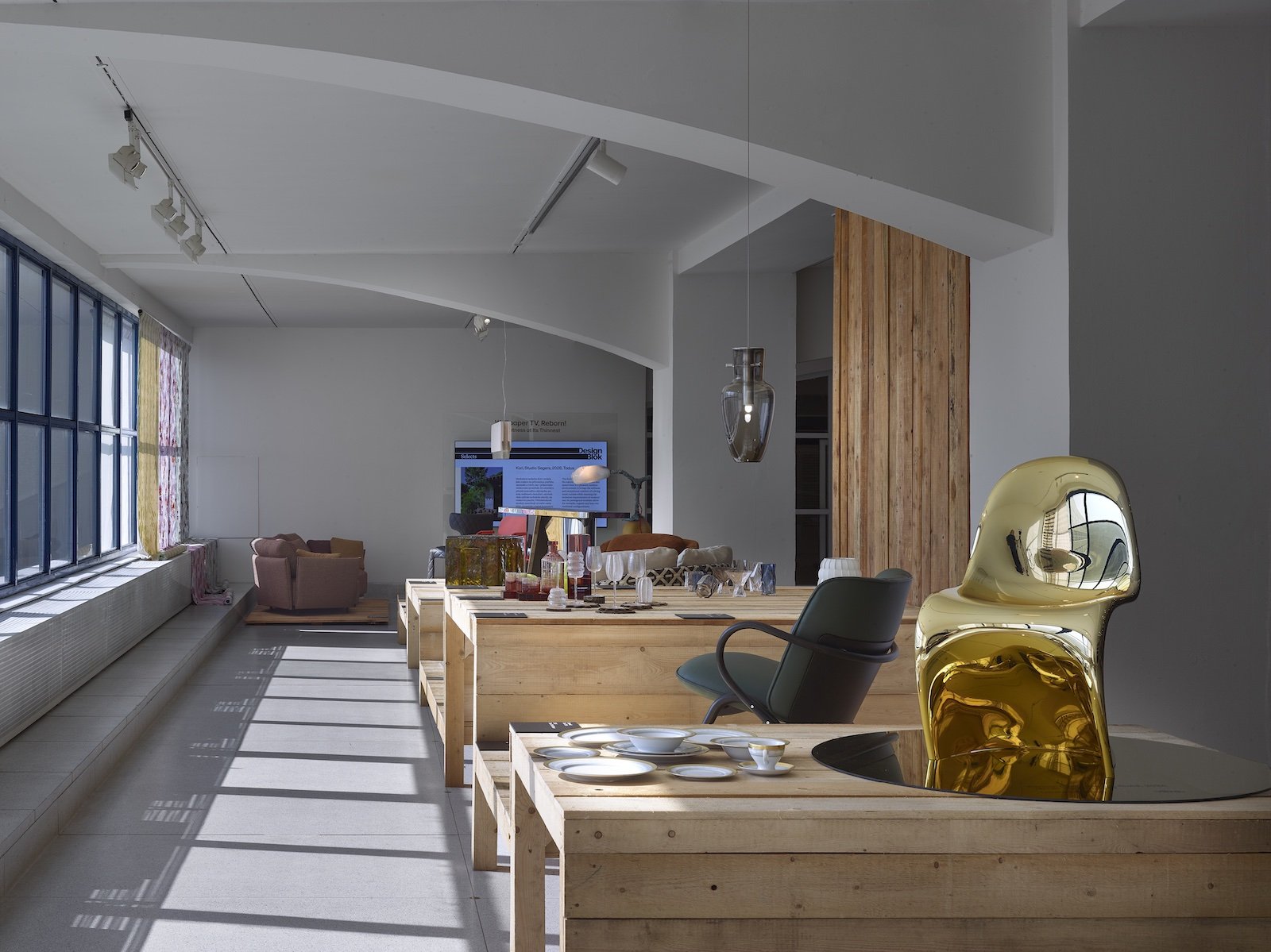
DesignBlok Selects 2026 – Photo by Filip Slapal.