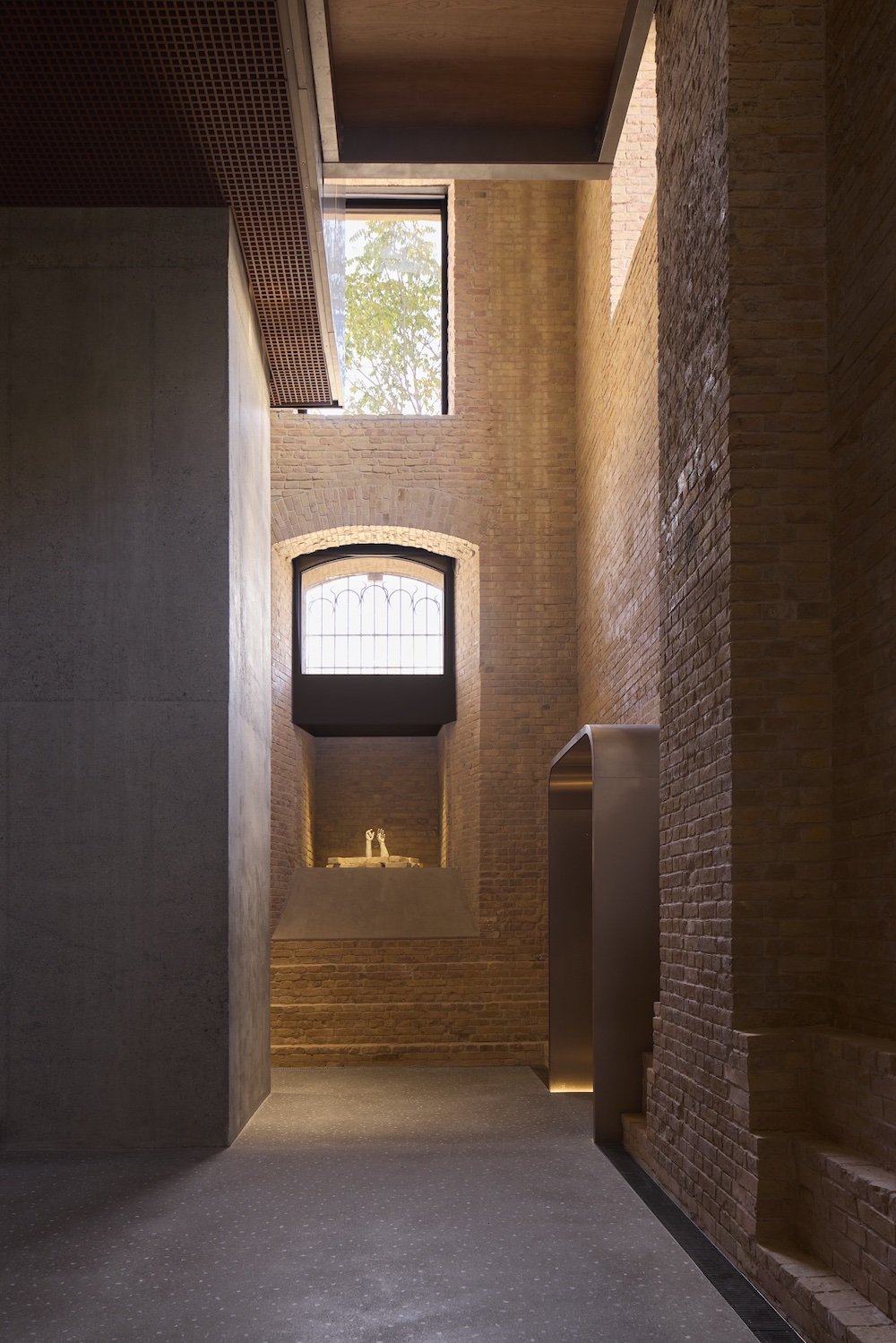
German Pavilion at Venice Biennale 2026 – Photo by Jens Ziehe, Berlin.
Art, Architecture. The late Koyo Kouoh‘s curatorial vision for Venice Biennale 2026 — In Minor Keys — called for quieter, more sensorial encounters with art, stepping back from spectacle. Several national pavilions responded in an unexpected way: they made architecture itself the protagonist. From sacred spaces to colonial greenhouses, sewage plants to escape rooms, the buildings didn’t just host the art — they became it. Here are the pavilions where the dialogue between structure and concept proved most compelling.
- RELATED STORIES: Read more about Venice Art Biennale 2026 on Archipanic.
Austria
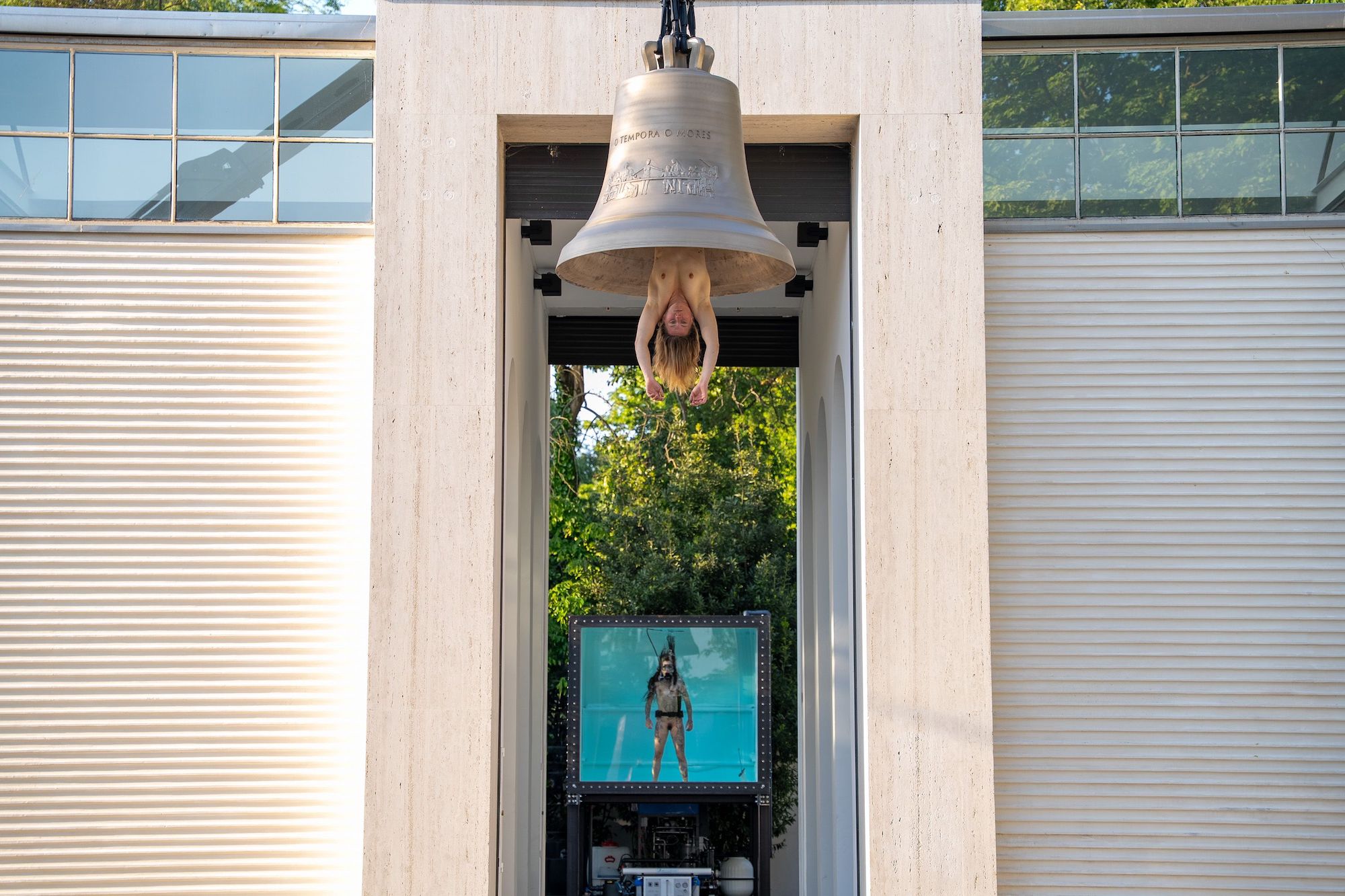
SEAWORLD VENICE, 2026 © Nicole Marianna Wytyczak.
Choreographer Florentina Holzinger has transformed the Austrian Pavilion into a church, an underwater theme park and a sewage treatment plant, all at once. SEAWORLD VENICE blends dance, theatre and performance to interrogate our relationship with water: its consumption, its waste, its political weight within the climate crisis.
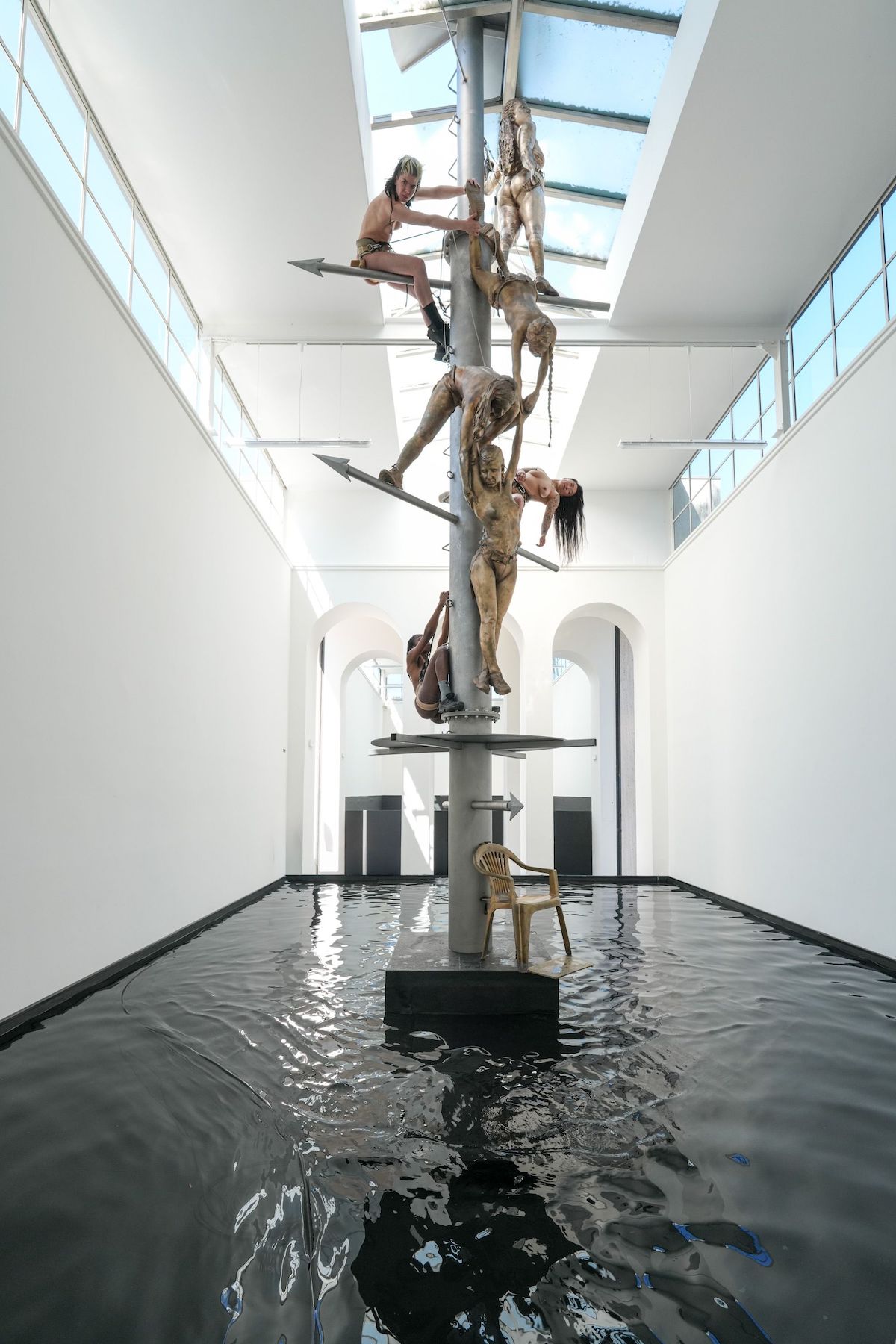
© Nicole Marianna Wytyczak.
A performer becomes a living church bell clapper at the entrance; inside, a jet ski orbits as a monument to turbotourism’s ecological damage. Elsewhere, a rotting weather vane with hanging female bodies pierces the architecture. In the back, performers swim in a water tank sustained — quite literally — by visitors’ urine. Uncomfortable, yes. Unforgettable, absolutely.
Greece
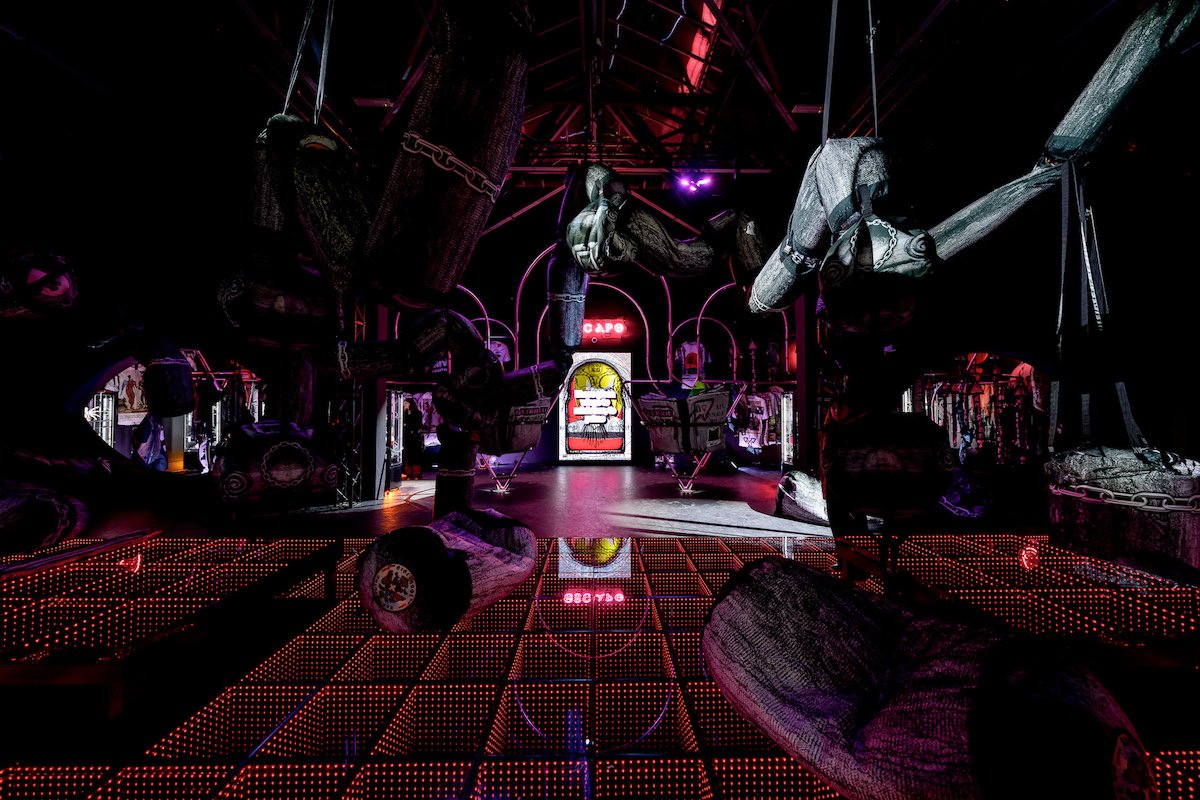
Photo by Andrea Avezzù.
Completed in 1934 — the year of Hitler and Mussolini’s alliance — both the Greek and Austrian pavilions carry charged histories. At Venice Biennale 2026, Greek architect Andreas Angelidakis leans directly into that discomfort. His Escape Room reimagines the building as a contemporary Platonic Cave with a post-modern queer twist: an LED floor, a self-filming surveillance system and oversized soft sculptures fill the stage-like interior.

Photo by Andrea Avezzù.
Yet, everything distorts, displaces and repackages — like in the philosophical cave, you can discern the truth from deceptive images. The exhibition reflects on our world where digital illusion, post-truth and Neo-fascisms, and history are repackaged as consumable merchandise. If Austria floods you, Greece disorients you — and both leave you asking the same questions.
Germany
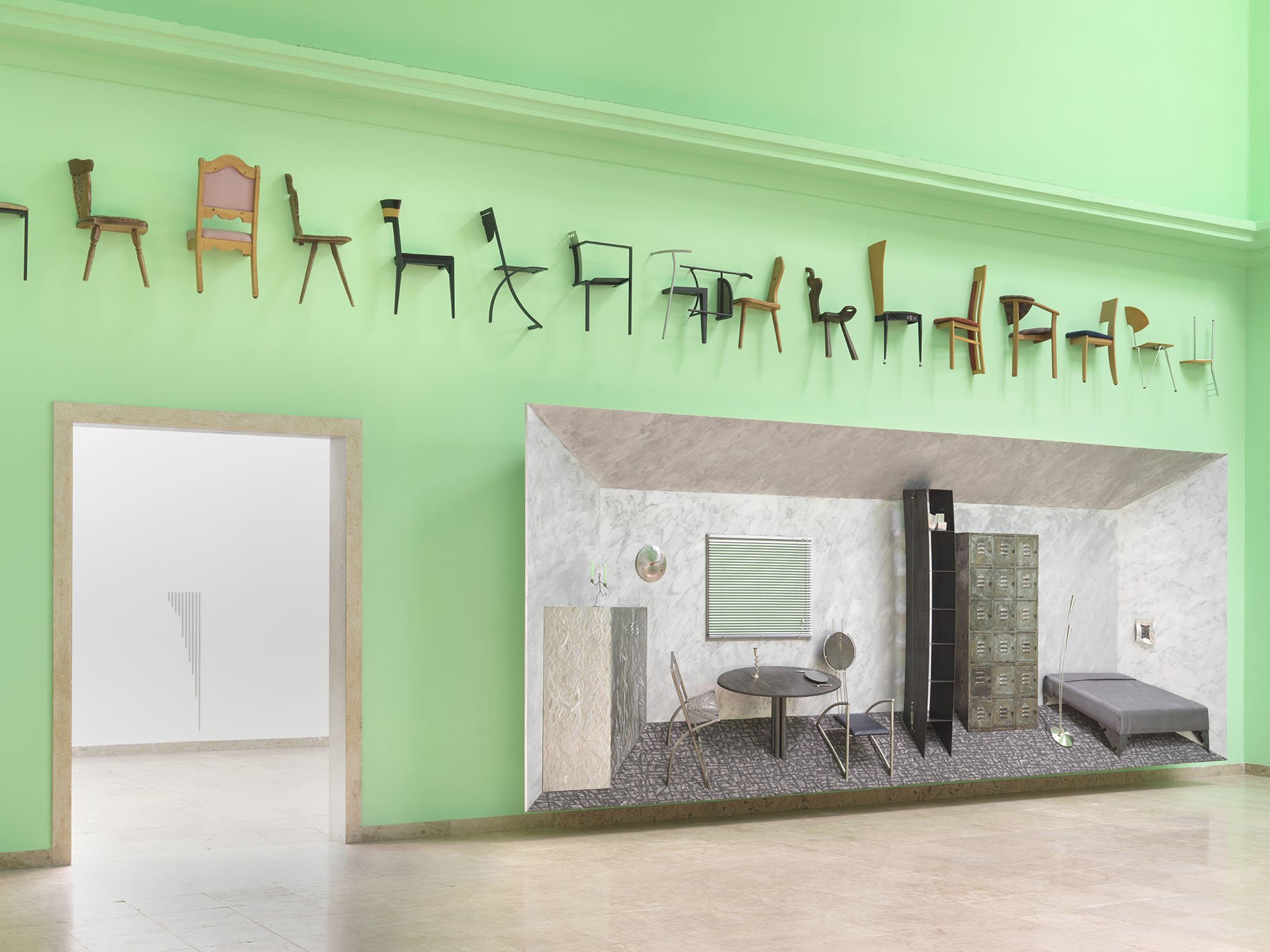
Henrike Naumann, The Inner Front, 2026. Courtesy of the Artist – Photo by Jens Ziehe, Berlin.
The Ruin exhibition at the German Pavilion confronts architecture’s most uncomfortable role: as silent witness or complicit to atrocity. The late Artists Henrike Naumann and Sung Tieu draw on scarred East German sites — the vanished GDR Pavilion, the demolished Palace of the Republic, the Rostock-Lichtenhagen Sunflower House, where a 1992 pogrom against migrants went unchecked by the government.
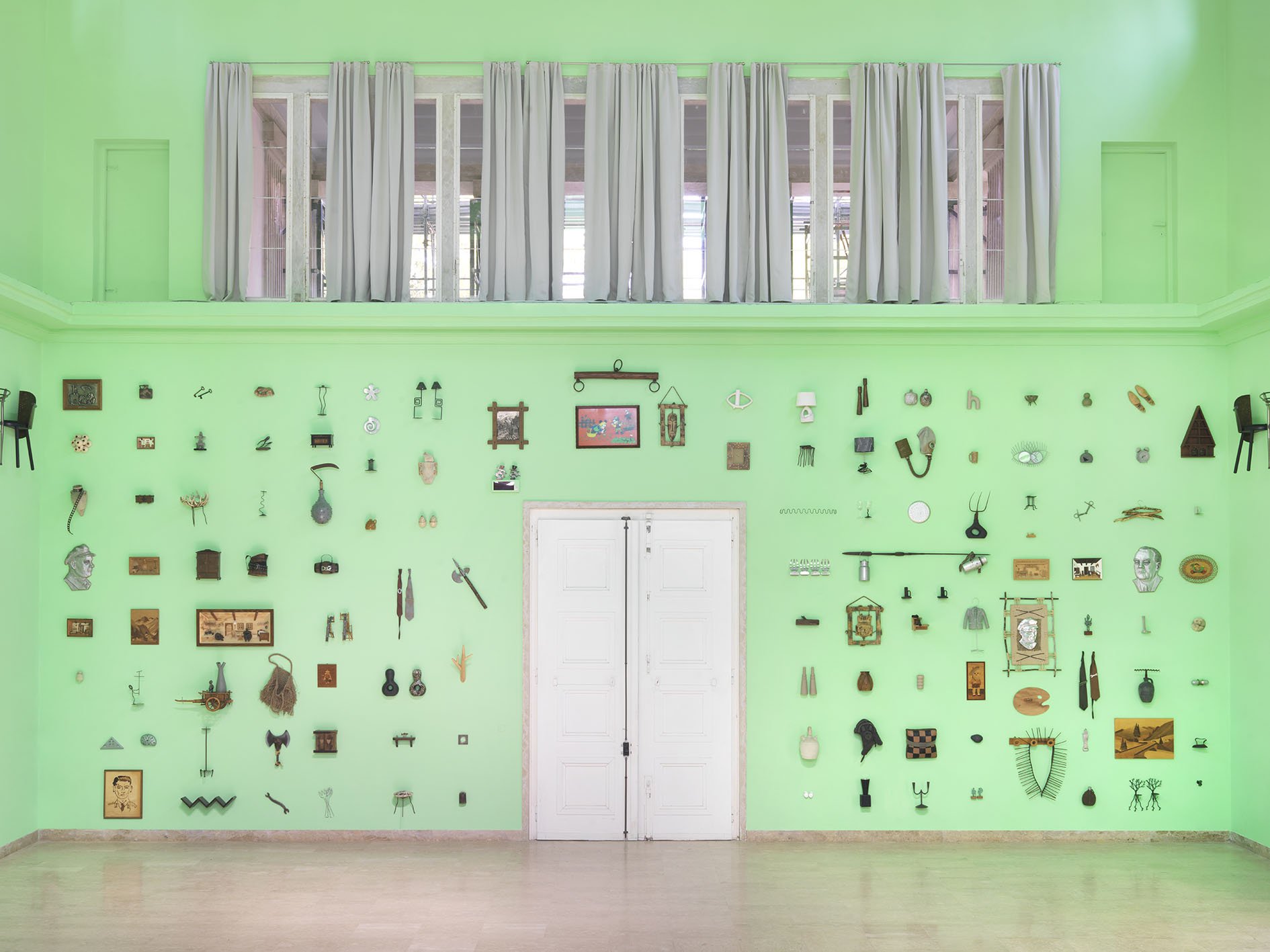
Through interiors, archives, sound and sculpture, they map the political structures embedded in everyday space. In the central room, furniture, tools, and everyday objects from the past are mounted on walls painted mint green, the colour of abandoned Soviet barracks. At Venice Biennale 2026, this pavilion asks which absences we choose to memorialise — and which we quietly erase.
Canada
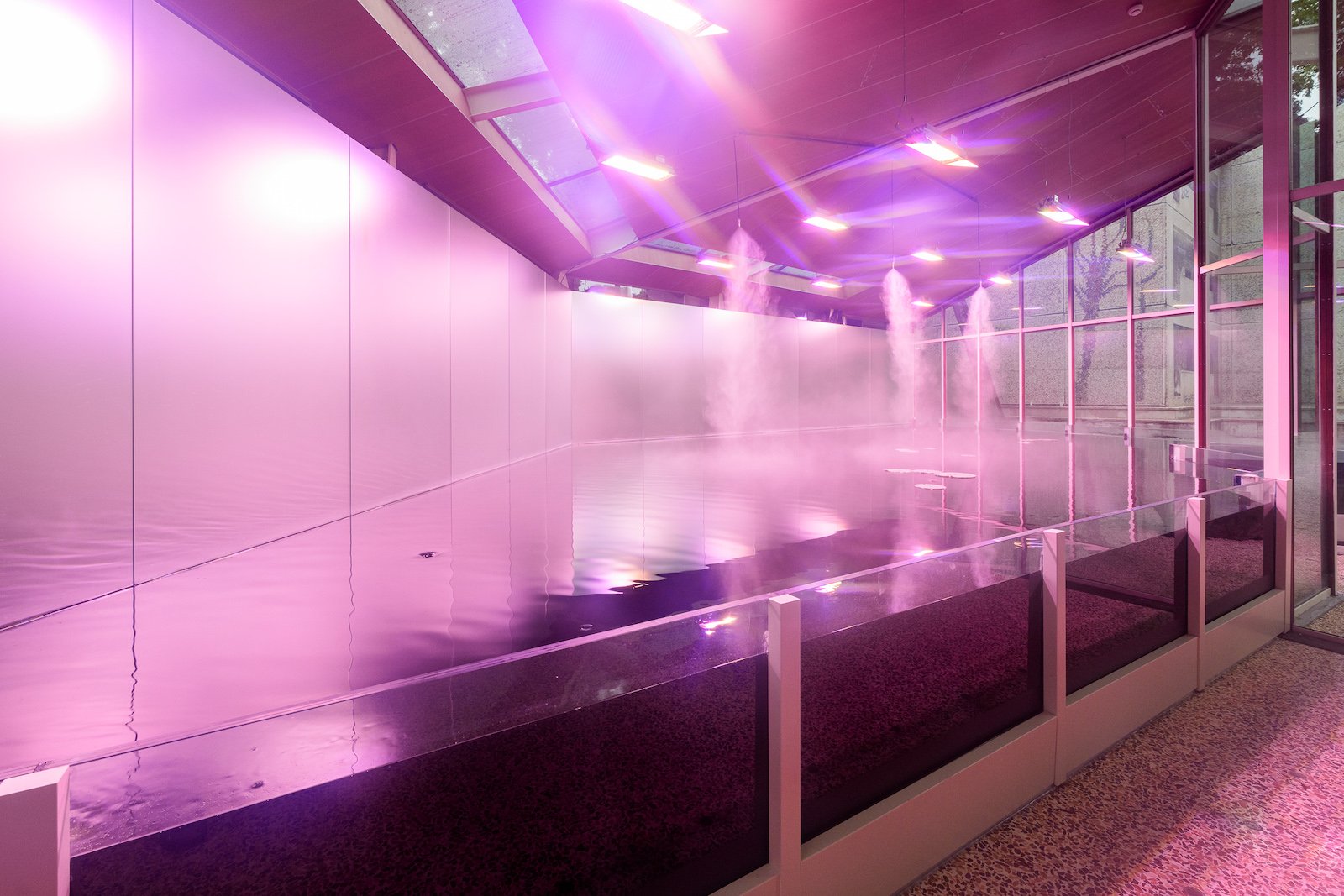
Photo by Andrea Avezzù.
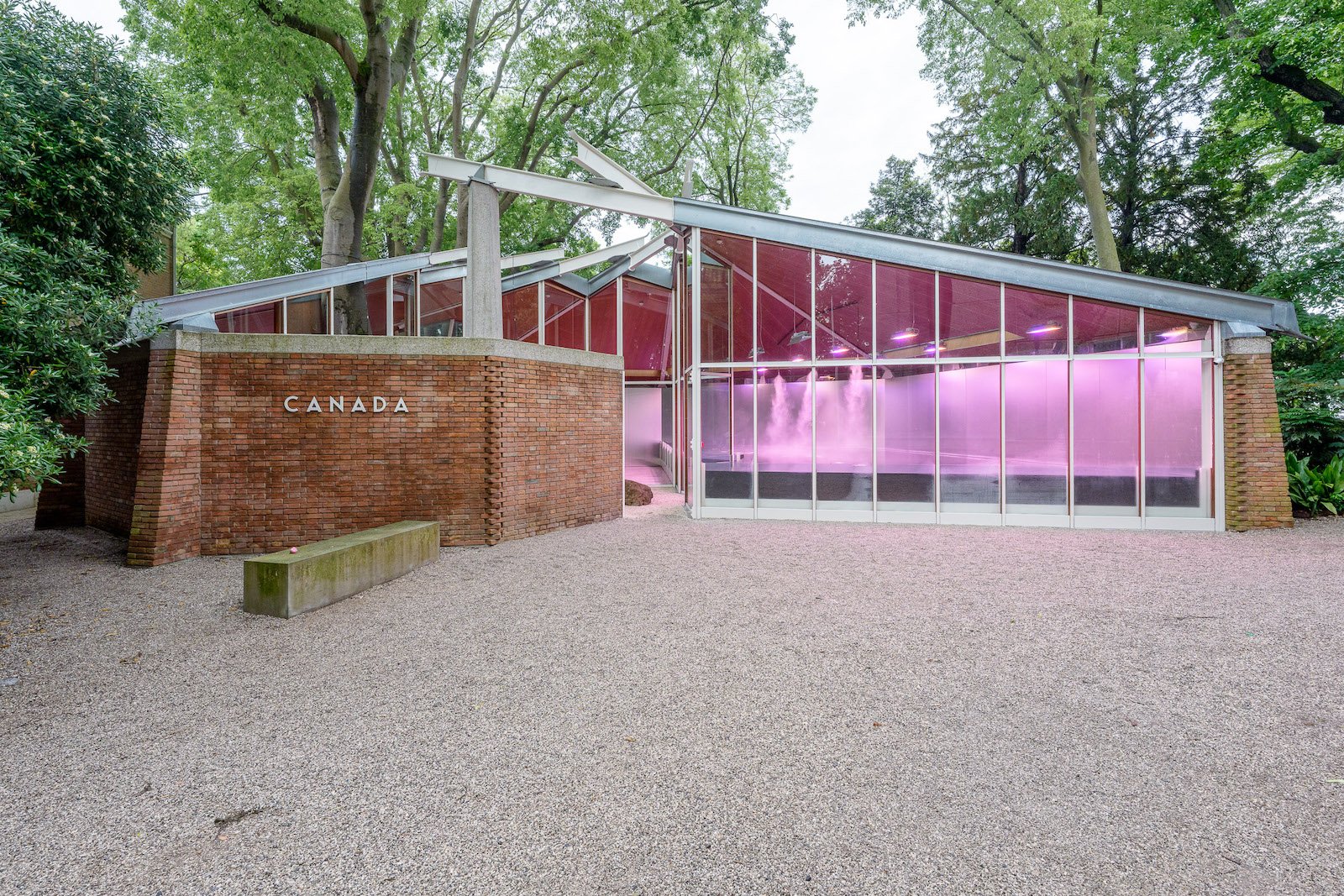
From ruins to botanical speculation. Abbas Akhavan reimagines the Canadian Pavilion as a Wardian case — the sealed glass vessel used to transport plants across the British Empire. A custom pool fitted with grow lights showcases giant Victoria water lilies, evoking the Crystal Palace display of 1851. Presented within a Commonwealth pavilion built under Queen Victoria’s reign, the gesture is quietly devastating: a meditation on colonial extraction, on what we carry and what we lose. Architecture, botany and imperial history entangle with remarkable delicacy.
Chile
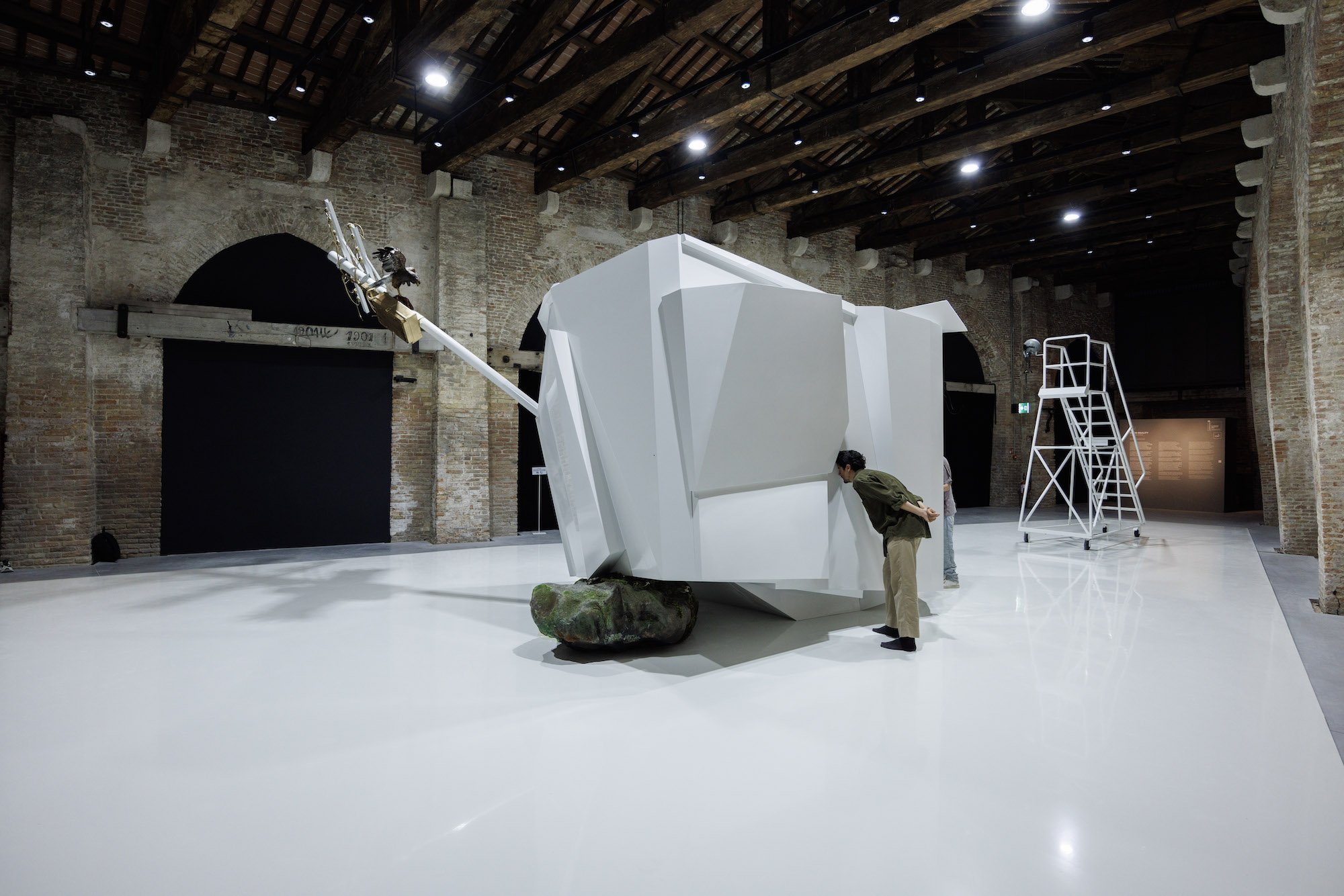
Photo by Jacopo Salvi.
Norton Maza‘s Inter-Realities lands a space-like structure at the heart of the Chilean Pavilion, surrounded by a boulder, a boarding ladder, a pilot’s helmet, a falcon and a power transmission tower. The resulting surrealism is entirely purposeful — visitors are nudged to peek inside, find multiple perspectives, and sit with the disorientation of migration, ecological crisis and political tension. South America, Maza insists, is not peripheral but a critical node. At Venice Biennale 2026, this pavilion makes that argument through architecture as a riddle.
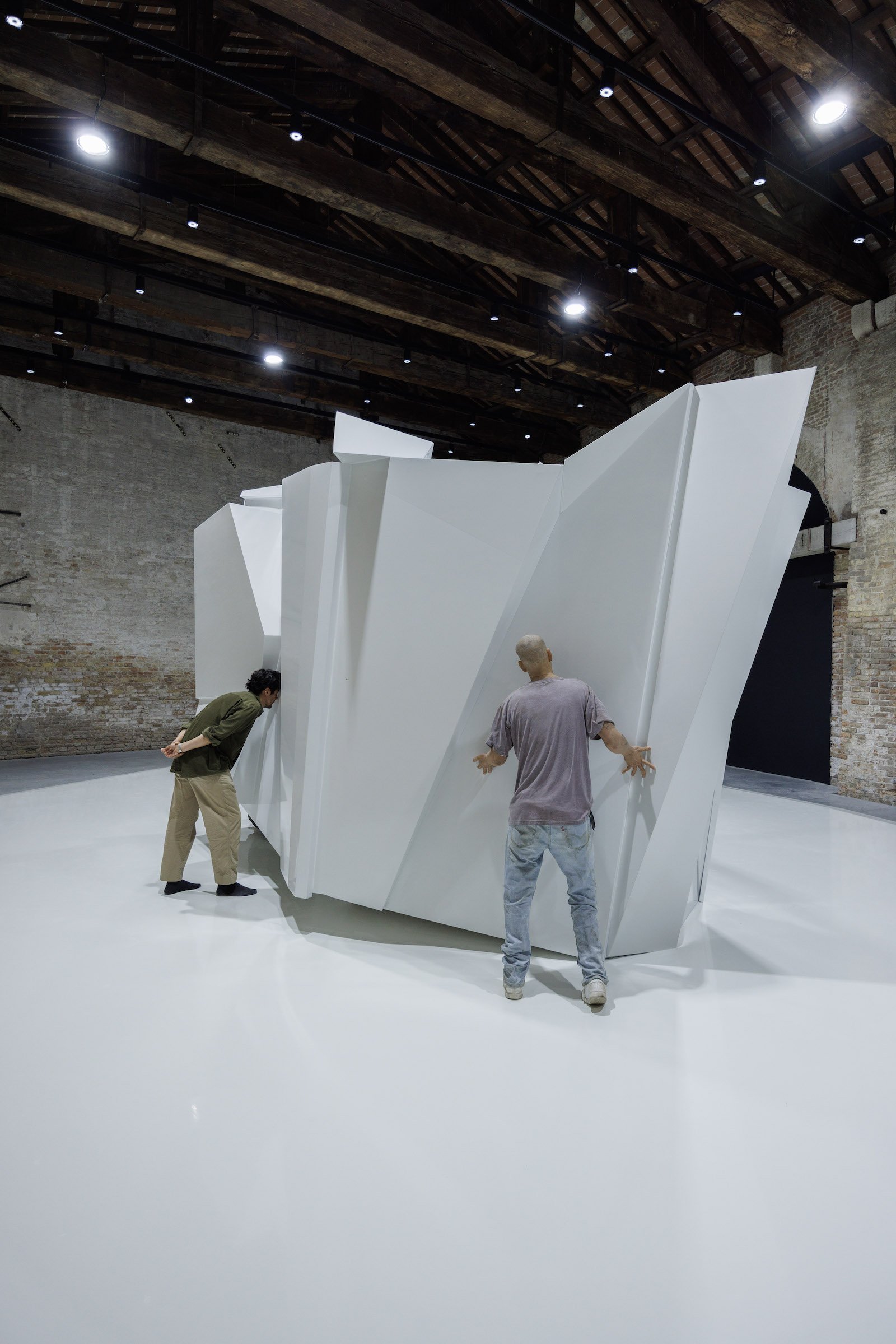
Photo by Jacopo Salvi.
All photos are by La Biennale di Venezia or the pavilions.
Canada Pavilion at Venice Art Biennale 2026 – Photo by Andrea Avezzù.