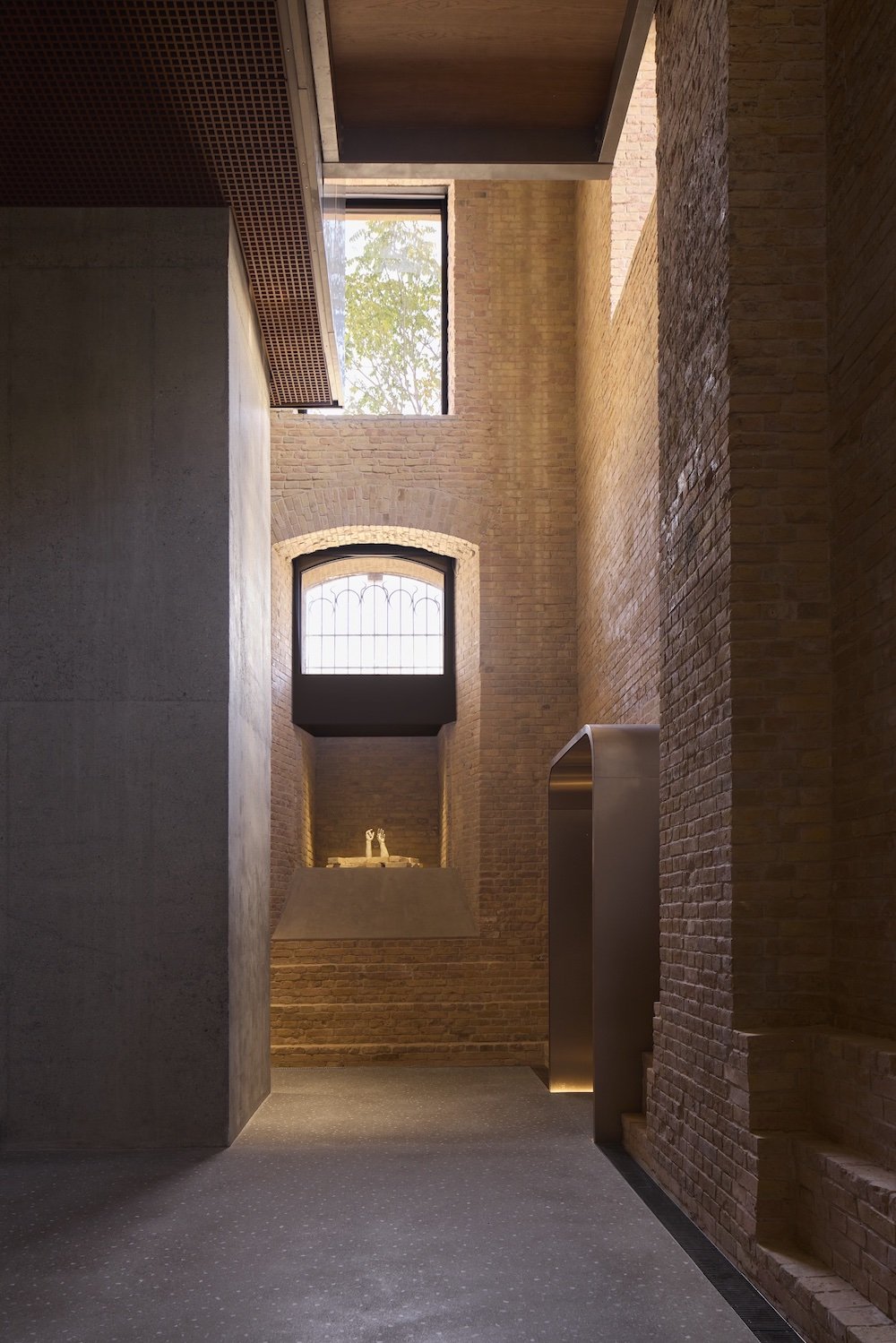
Dutch Design Week 2026: installation at Ketelhuisplein, Eindhoven – Photo by Max Kneefel.
Design. As technology, AI and visual culture drift ever further towards optimisation and polish, Dutch Design Week 2026 backs the rough, the experimental and the unforeseen. Its theme, RAW — Rebel, Authentic, Worth — champions unfiltered creativity, material enquiry and ideas that slip free of algorithmic control. Across Eindhoven, more than 2,500 designers, studios, schools and cultural institutions unveil new work, from established practitioners to collaborative showcases.
- RELATED STORIES: Read more about Dutch Design Week 2026 on Archipanic.
Design Academy Eindhoven Graduation Show
Microstad, Professor Doctor, Dorgelolaan 2, [Map].

“Grounding 1359” project by Luca Weste @ DAE Graduation Show 2026 – Photo by Cleo Goossens.
Design Academy Eindhoven Graduation Show is arguably the world’s most influential design education exhibition, and the obvious start to any design safari. More than 200 Bachelor and Master students present final projects spanning objects, sound, film, performance and interactive systems. Drawing on Italy’s pirate radio networks, Luca Weste asks how communities might reclaim abandoned technologies such as AM radio, turning them into spaces for communication that sit outside algorithmic platforms and commercial media.

“The Smell of Rain is a Bacterial Trace” project by Bridget Boyle @ DAE Graduation Show 2026 – Photo by Cleo Goossens.
Bridget Boyle stages a sensory encounter with the microbial world through petrichor, the distinctive scent released when rain falls on dry ground. Hye-In (Harry) Jung offers quirky unexpected furniture guided by a fascination with asking absurd questions about what an object can be. Luella Exton charts radioactivity warning signs across Australia, calling for greater transparency around British colonial toxicity, beginning with Britain’s nuclear testing programme.
A ‘walk-through piano’ and a 3D-printed House of Lights
Ketelhuisplein, [Map].

Electric Grand by Antoon Versteegde and Bart van Dongen – Photo by Max Kneefel.
At Dutch Design Week 2026, Ketelhuisplein is the creative epicentre of the Strijp-S design district. Here, visual artist Antoon Versteegde and pianist and composer Bart van Dongen turn a Yamaha CP-70 electric grand piano into a monumental, walk-through sound installation. Each of its 72 keys is wired to a dedicated loudspeaker, suspended within a bamboo structure. Rather than listening from a distance, visitors step inside the instrument itself.

Blind Spots by Fairspace × Studio Shruthi Venkat × Sagitta Creatives – Photo by Max Kneefel.
For Dutch Design Week 2026, TAM Industries has 3D-printed House of Lights, a full-scale architecture that reads as an archetypal house by day and glows after sunset. Designed to be fully recyclable after use and printed by in-house-developed machines, the pavilion asks how industrialised construction ended up producing houses that adapt to factories. “We believe factories should adapt to architecture instead.”
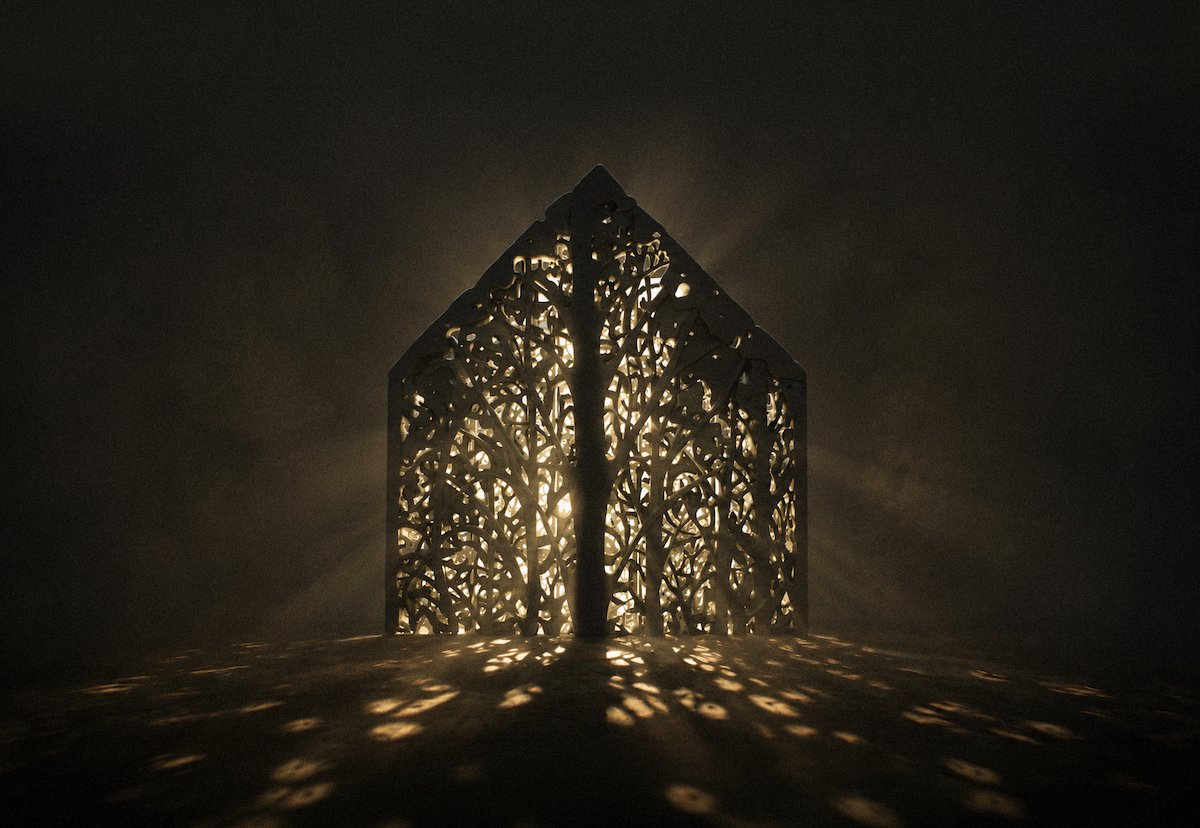
House of Lights by TAM Industries – Courtesy of TAM Industries.
What if care became part of the city’s infrastructure? In Ketelhuisplein, Fairspace × Studio Shruthi Venkat × Sagitta Creatives present Blind Spots, a participatory installation on what safety means across identities. Visitors pass through cameras, scaffolding nets and overlapping voices, and the experiences and responses they leave behind continually reshape the work, revealing invisible differences in identity.
Harvesting light, wind, yeast, algae and fungi…
Klokgebouw 50, [Map].

Between Lights by Teresa van Dongen – Photo by Hans Boddeke.
The Philips-blue Clock Building, or Klokgebouw in Dutch, overlooks Ketelhuisplein. Teresa van Dongen’s Between Lights weaves organic photovoltaics and printed electronics into a translucent window, harvesting sunlight and indoor light to ask how solar technology might become an integral part of everyday materials and objects.

Bio Design Warehouse by Emma van der Eest – Photo via IG, follow @emma_van_der_leest.
Think about colours made from yeast, glitter made from seeds, and fungal supercoating. Bio Design is not a trend, believes Emma van der Leest. In Eindhoven, she presents the Biodesign Warehouse, a department store where bacteria, fungi, and algae grow, ferment, and transform materials and products, from cosmetics to fashion, packaging, interiors, and construction.
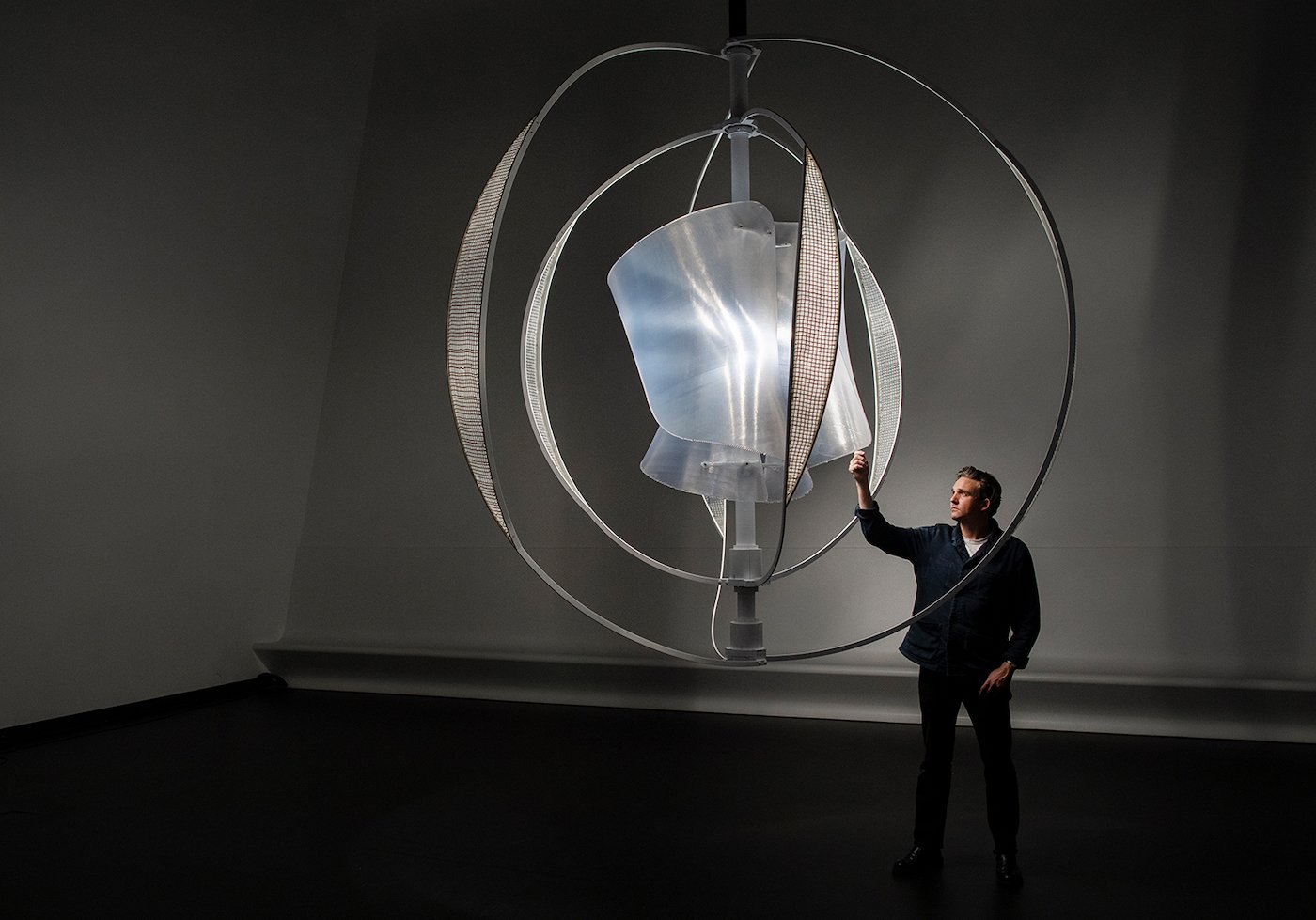
We Harvest Wind by Thijs Biersteker x Polestar – ©Thijs Biersteker.
Play with Thijs Biersteker‘s We Harvest Wind, an interactive installation that lets visitors switch on its fans and bring a wind-powered world to life. Grounded in research and developed with Swedish automotive brand Polestar, the work underlines the sustainability benefits of charging electric vehicles with wind energy.
An ode to wind energy
Stadhuisplein, [Map].

FIELD installation by Isabel + Helen – Photo via IG, follow @isabelandhelen.
On Eindhoven’s City Hall Square, Isabel + Helen present FIELD, a wind-powered interactive installation of turbines on wheels. Visitors can push the structures around, generating ever-shifting movements and patterns. At Dutch Design Week 2026, it stands as an ode to wind energy, with nature, people and design in constant interplay.
Blue urban furniture and golden birds
Markt Eindhoven, [Map].

BLAUPAUSE by Kollektiv Plus X – Courtesy of Kollektiv Plus X.
In the market square, Kollektiv Plus X presents BLAUPAUSE, a temporary, mobile architecture of blue wooden structures that stage playful scenarios in urban space. The result is a trio of a stage, a grandstand and a kiosk, each building block carried and stored on three mobile trailers.

Atelier van Lieshout at DDW 2026 – Photo by Nick Bookelaar.
Atelier Van Lieshout has perched a 7-metre-tall golden bird on a giant egg, which doubles as a design object and a consultation room. Inside the egg, “visitors can literally and figuratively lose themselves, raising the critical question of whether technological innovations such as AI and robotics actually do mental health any good.”
Dutch collectibles and a swamp gas-powered motorbike
Building TX – Achtsteweg Zuid 187, [Map].
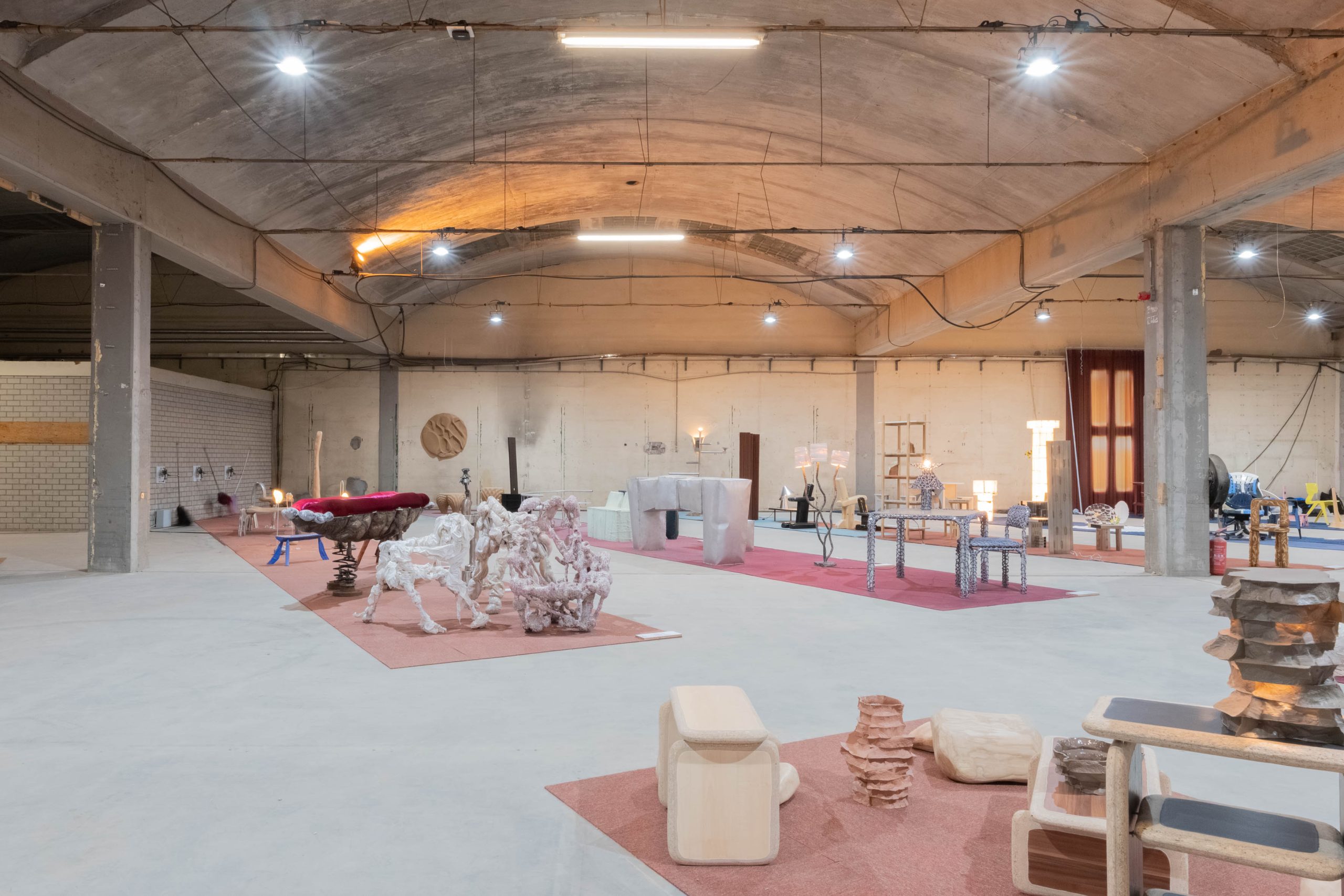
Forward Furniture – Photo by Titia Hahne.
At the newly opened Building TX, Dutch Design Week 2026 hosts Forward Furniture, curated by Liv Vaisberg and devoted exclusively to signature and collectible design. About 100 emerging and established designers each show three pieces from one cohesive collection.
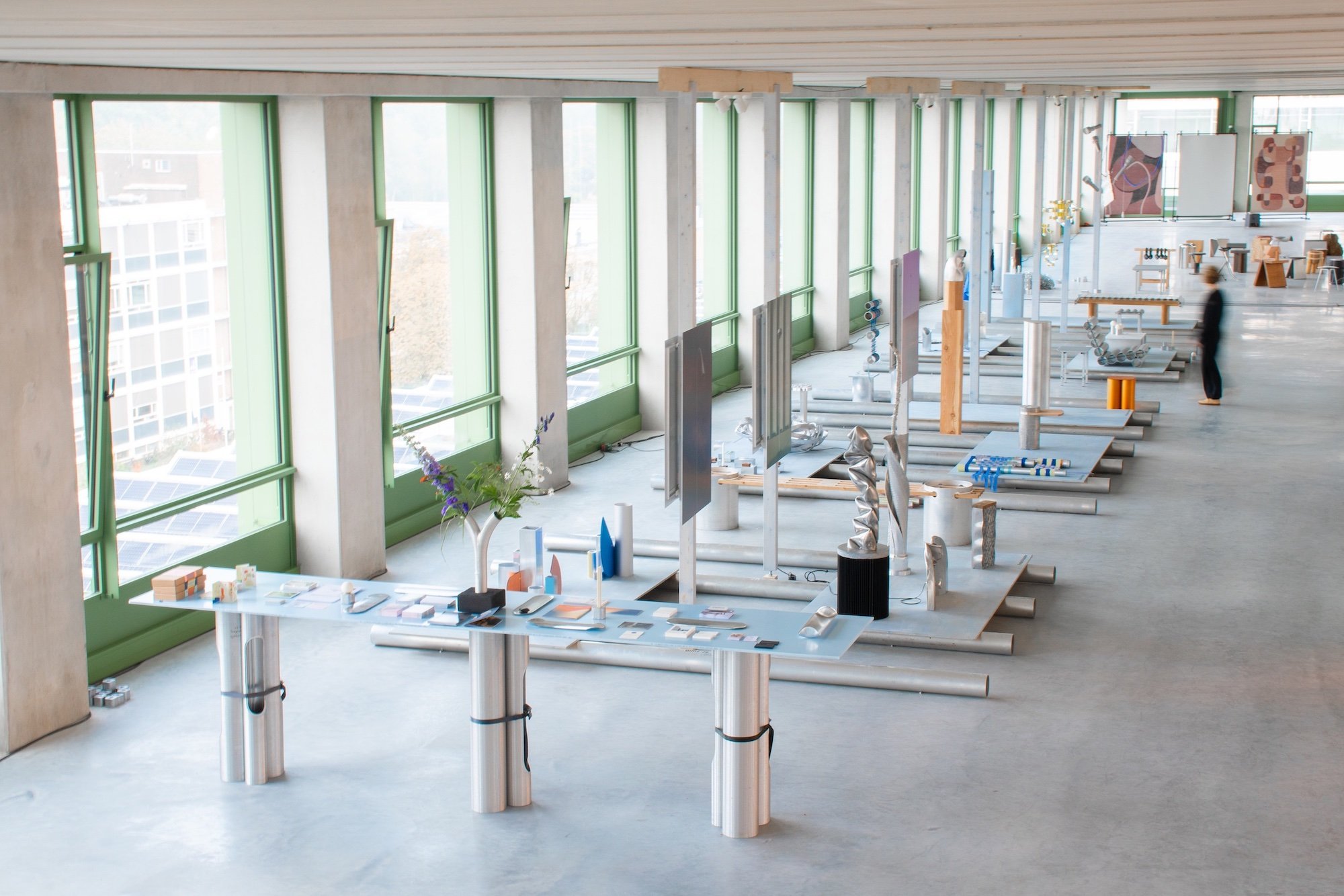
01 ALU EDITION by ECHO – Photo by Studio Jeroen van Veluw.
Design platform ECHO presents a group exhibition that gathers 14 designers reimagining aluminium offcuts from streetlight and extrusion manufacturing as functional objects. Dutch designer Gijs Schalkx questions our dependence on fossil fuels with a provocative plastic-waste-powered car and a motorbike running on swamp gas.
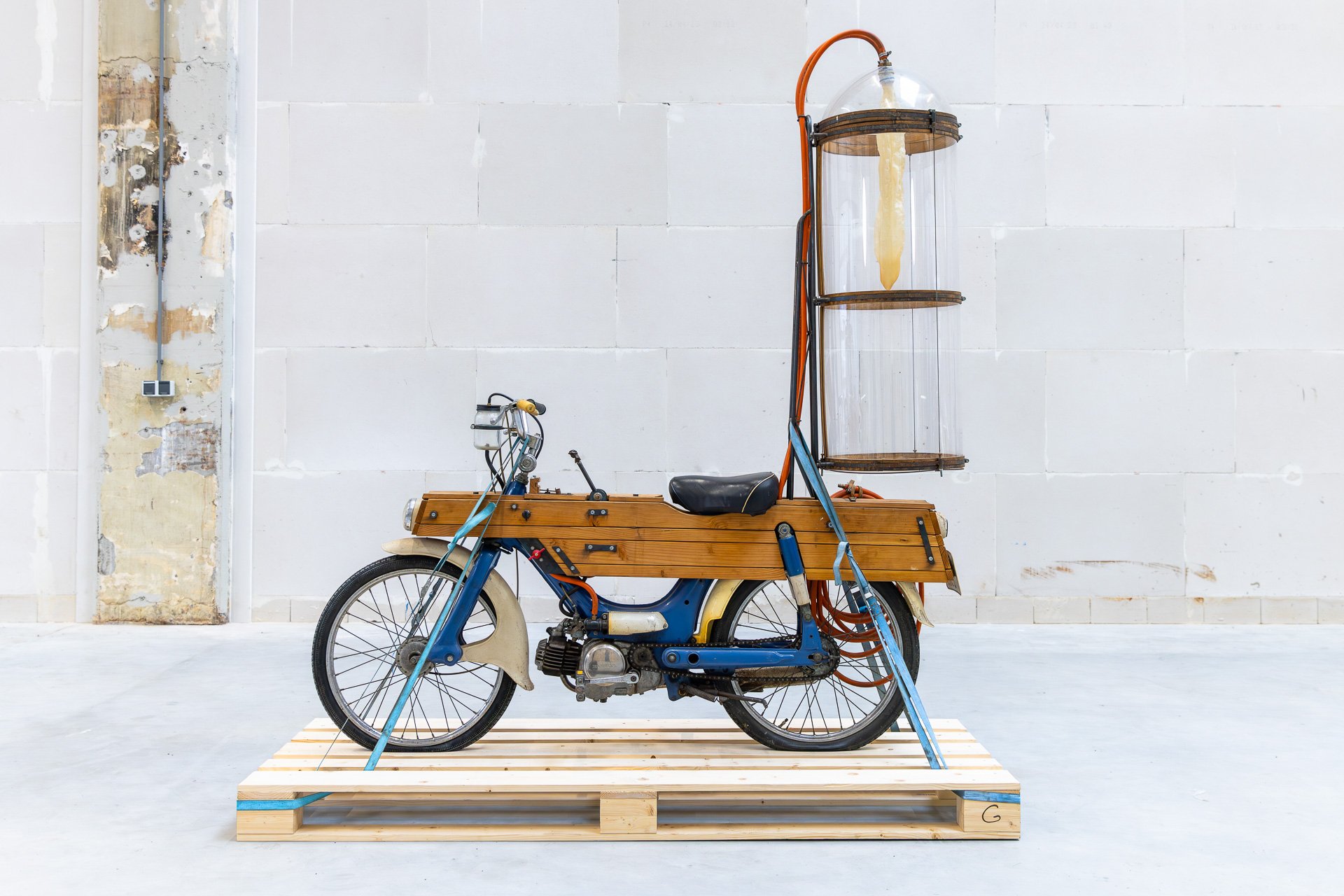
Slootmotor By Gijs Schalkx – Photo by Maarten van der Wolf.
Raw design, made in steel
Building TT – Achtseweg Zuid 251, [Map].
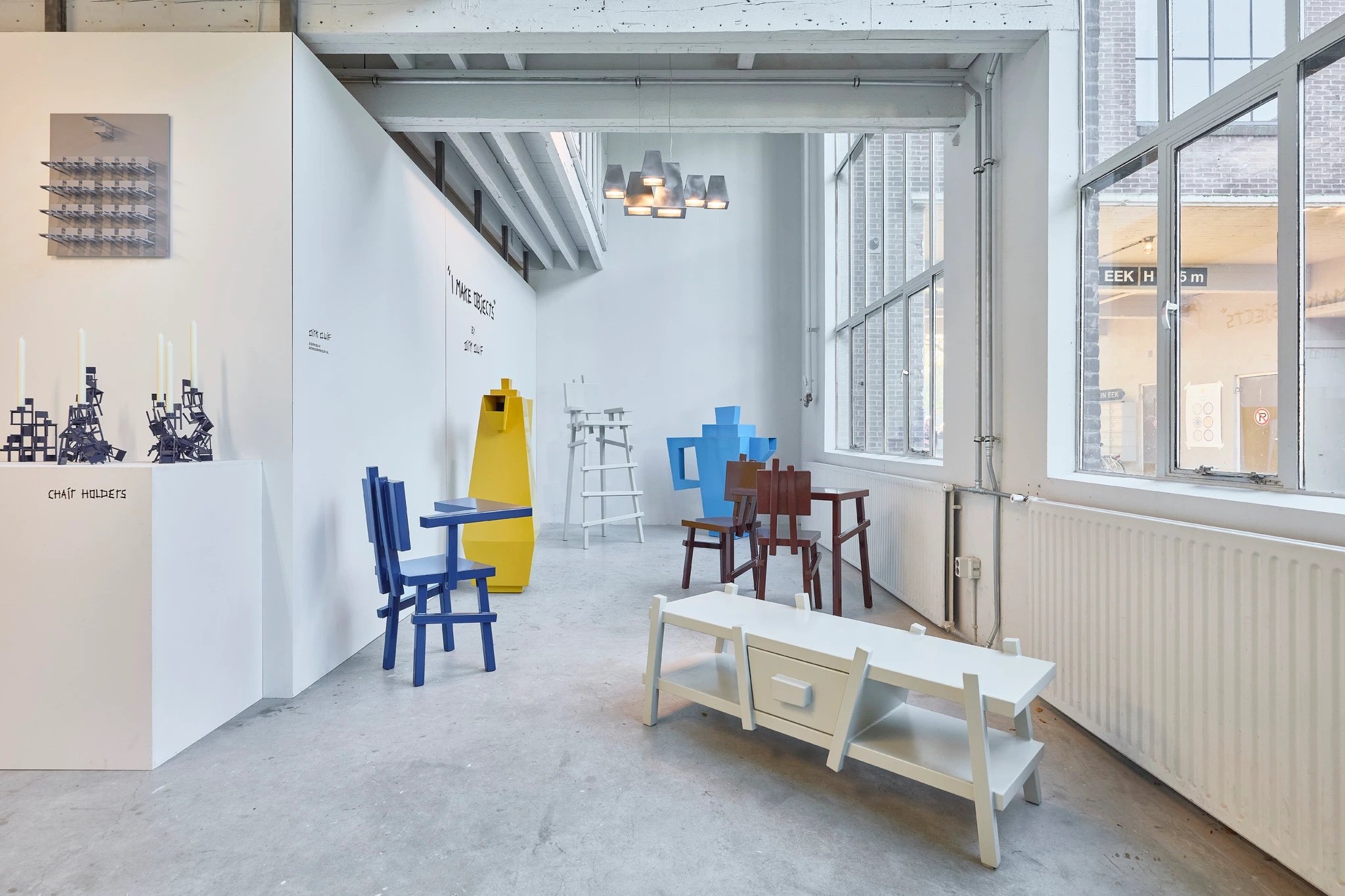
Dirk Duif at Dutch Design Week – Photo by Jeroen van der Wielen.
Known for his chunky steel furniture, lighting, and sculptural installations often upcycled from industrial waste, independent Dutch designer and maker Dirk Duif takes over Building TT, a former Philips garage from 1954, and brings together his complete collection, where experimentation, material, and the making process are central.
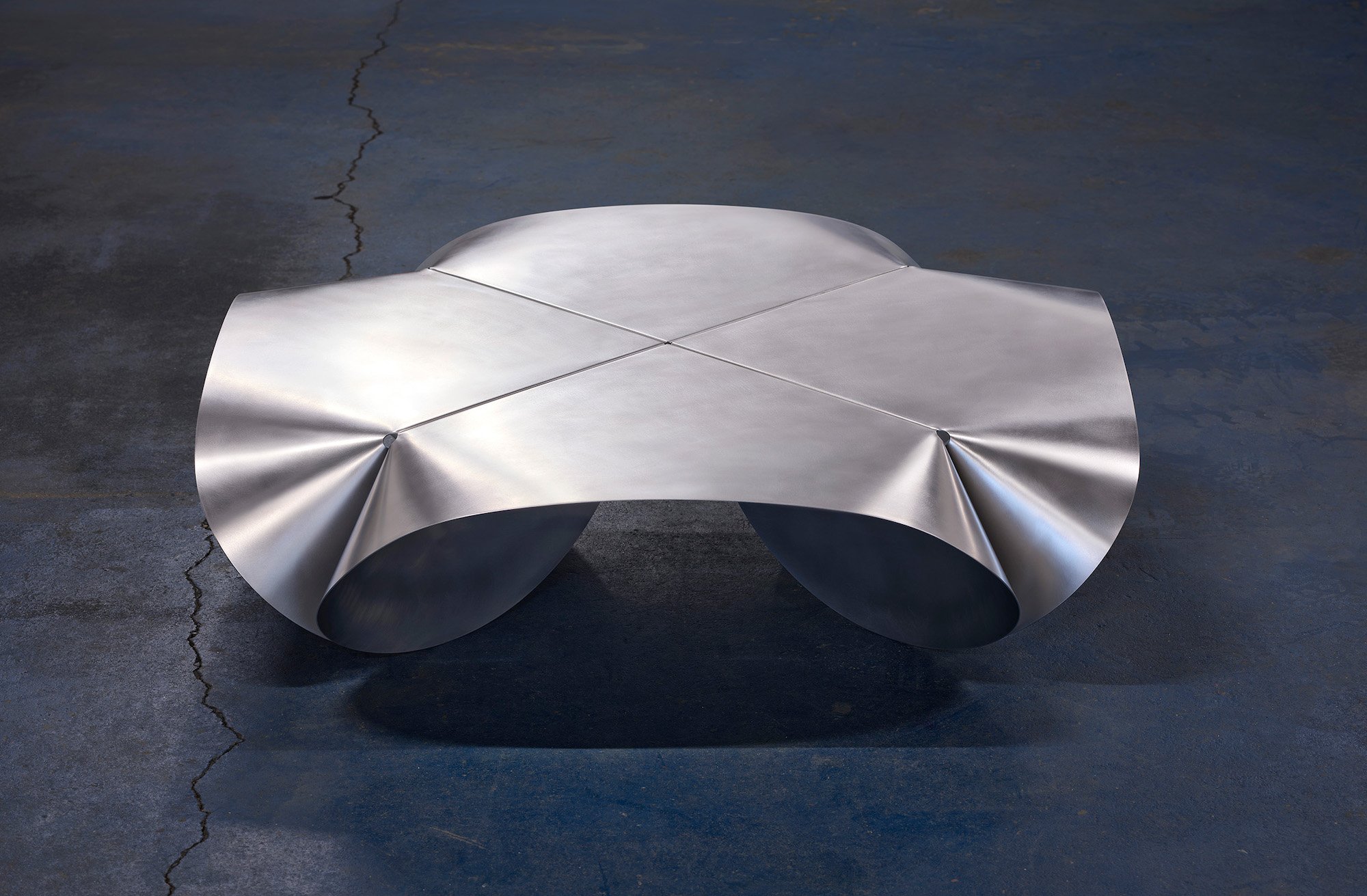
Coil Coffee Table by Paul Coenen – Photo by Jerome van der Wielen and Paul Coenen.
Also on view, Paul Coenen presents new and existing works that reveal the evolution of his practice, from intuitive paper scale models to full-scale furniture and objects crafted from sheet metal. LABORATORIOFERRETTI presents a modular lighting system in square tubular steel and standard industrial hardware. The shade is embossed in plexiglass, with a pattern inspired by antique decorative salvaged objects.
Piet Hein Eek
Halvemaanstraat 30, [Map].

Piet Hein Eek at StrijpTR, Dutch Design Week 2024 – Photo by Cleo Goossens.
Nearby, Piet Hein Eek opens his studio and factory for Dutch Design Week 2026, showing his latest pieces in recycled materials alongside the Annual Designer Exhibition, which features over 60 exhibitors. Atelier Arunika presents Picche, a limited-edition collectible chest of drawers that turns everyday storage into sculpture, blending Postmodern expression, playful symmetry and fine craftsmanship. SOGA unveils its first limited-edition furniture collection, pairing ordinary industrial materials with Ikkanbari, the hand-applied Japanese lacquer technique.
Digital Camouflages
Punt-C, Daalakkersweg 10-16 – Hal 10, [Map].
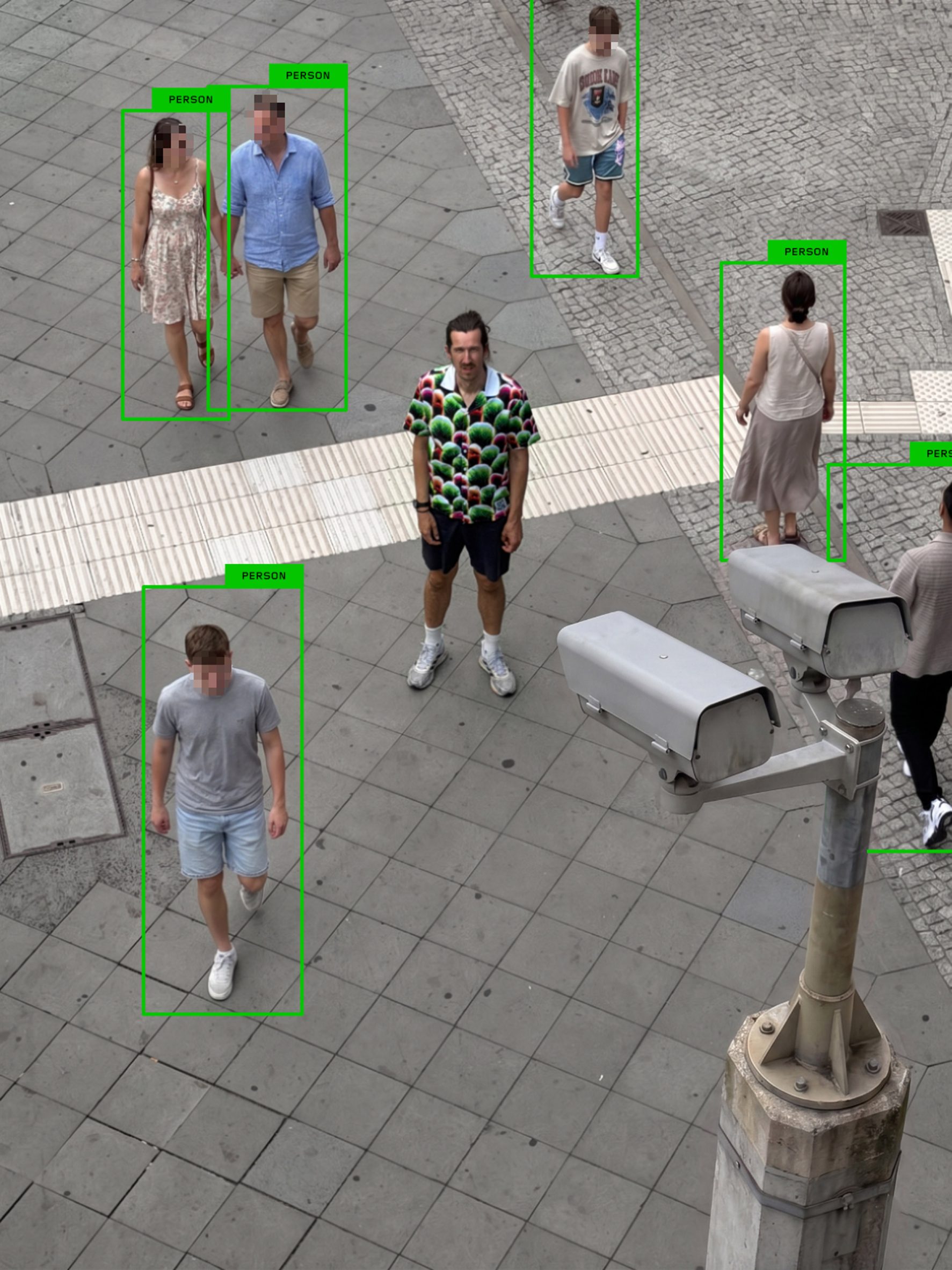
Digital Camouflage by Simon Weckert – Photo by Simon Weckert.
Raw, distinctive and full of energy, Sectie-C is a creative hub during Dutch Design Week 2026. At its heart, Punt-C shows the work of 14 international designers. Berlin’s Simon Weckert presents Digital Camouflage, a garment whose hypnotic pattern tricks the computer-vision systems watching public space. “Worn in public, it is a visible signal that being read by machines is not something everyone consents to.” A share of the proceeds goes to organisations defending digital civil rights.
Scrolling robots and Taiwan’s design resilience
Kazerne, Design Lab – Paradijslaan 8, [Map].
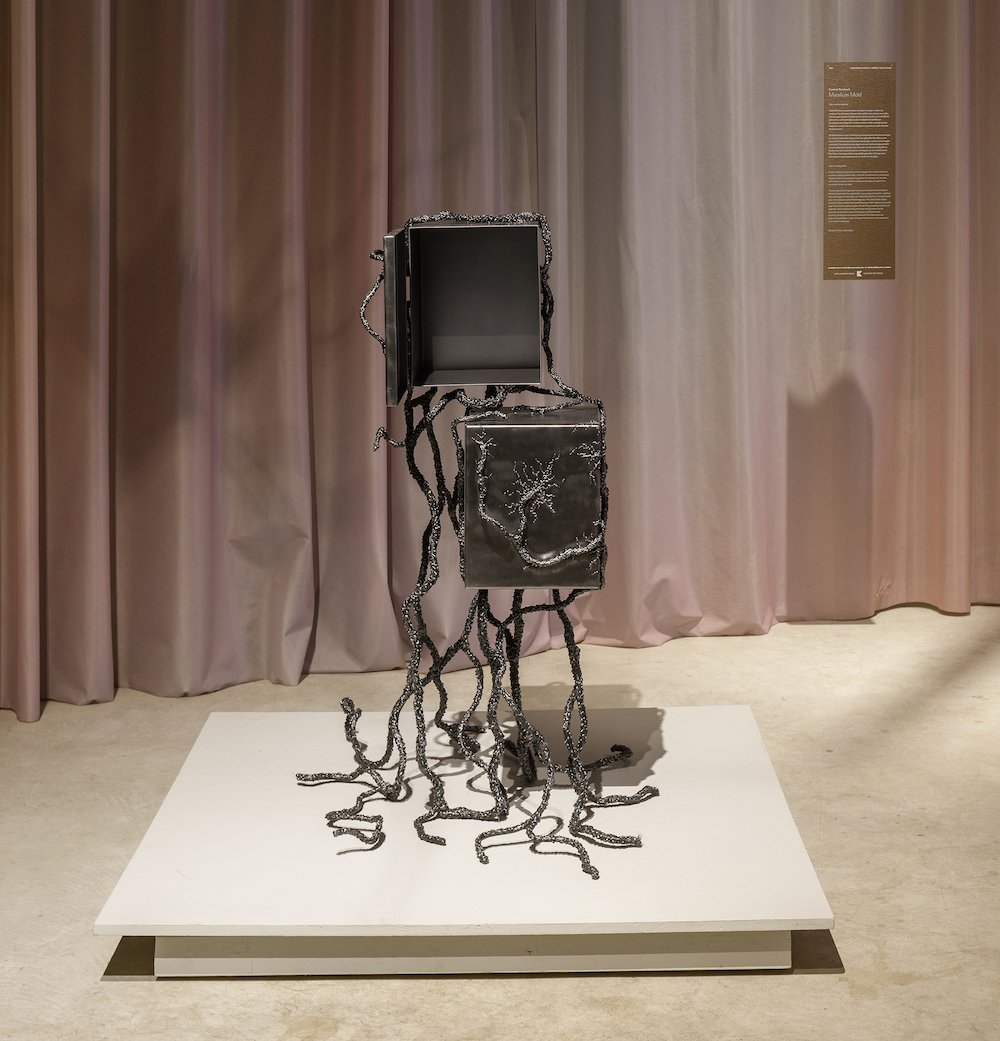
Entangled Bodies by Elena Nechaeva – Photo by Ruud Balk.
Over at the Kazerne design hub, Elena Nechaeva presents Entangled Bodies, a hybrid collection exploring how adaptive plant growth can inform design. Amsterdam studio Tjep’s Infinite Scroll sets six kinetic robots performing the gesture we can’t put down: they scroll, so you don’t have to.
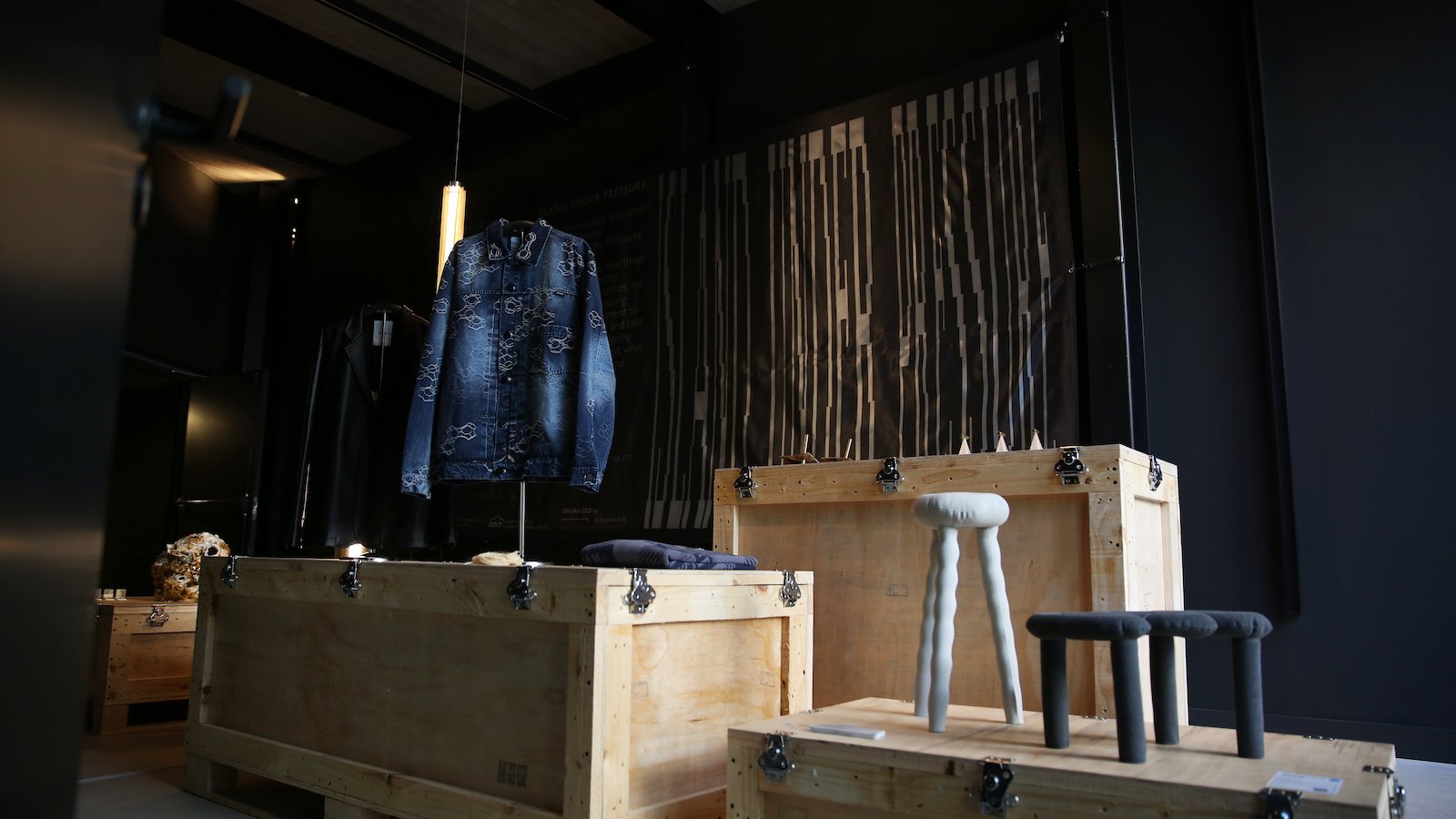
ISLAND UNDER PRESSURE at Kazerne – Courtesy of the Taiwan Pavilion.
At Dutch Design Week 2026, the Taiwan Pavilion presents ISLAND UNDER PRESSURE, an exhibition on how design responds to the forces shaping contemporary Taiwan. Environmental vulnerability, limited resources, intensive agriculture, advanced manufacturing and technology, and the island’s geopolitical condition form a complex system of pressures that influence how the island nation produces, innovates and imagines its future.
Electric Grand by Antoon Versteegde – Courtesy of Antoon Versteegde.
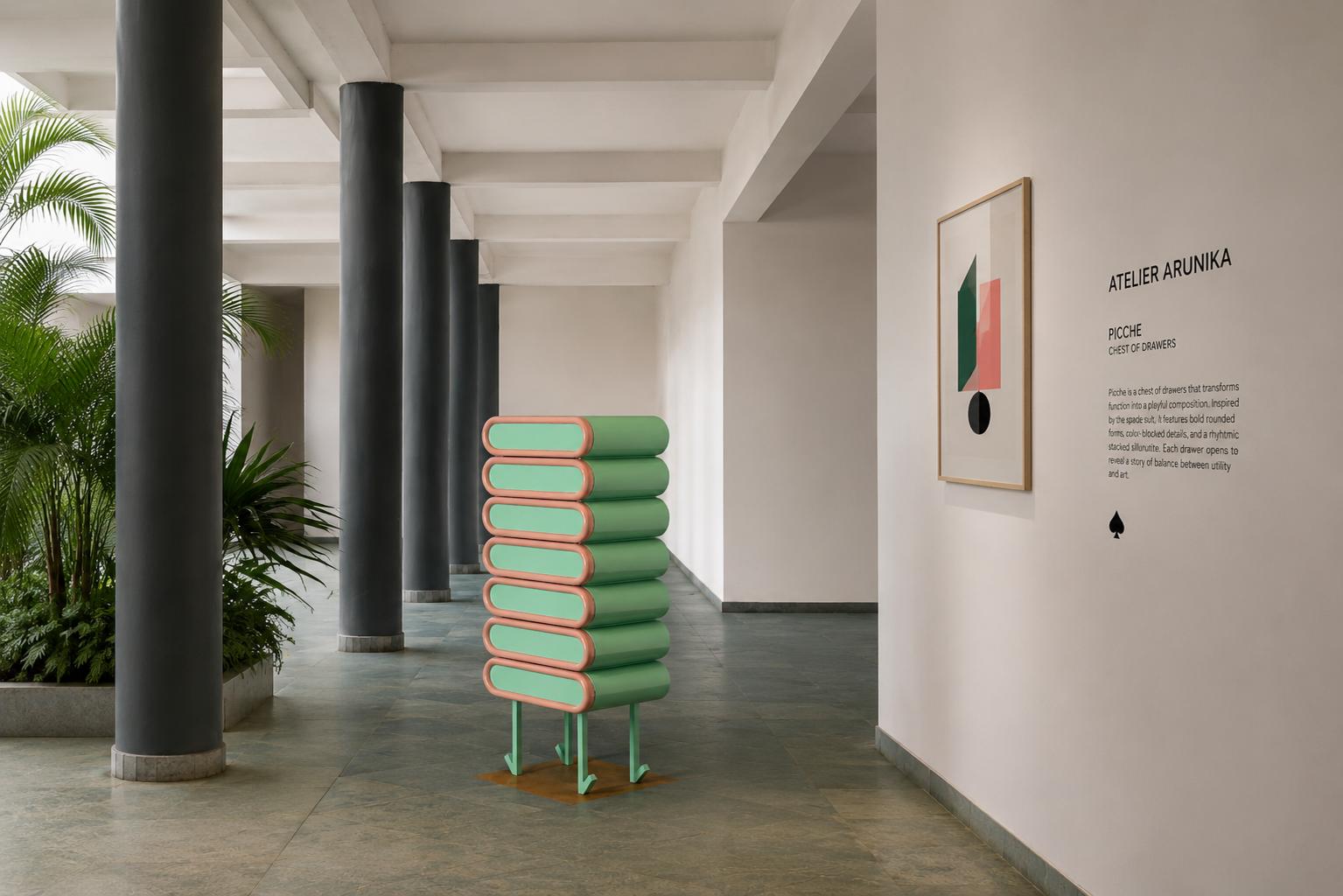
Picche by Atelier Arunika – Courtesy of Atelier Arunika.