Venice Architecture Biennale 2023. Lesley Lokko in Venice – Portrait by Jacopo Salvi, all photos are courtesy of La Biennale di Venezia.
Architecture – “Africa is the laboratory of the future,” explained Ghanan architect Lesley Lokko, curator of the Venice Architecture Biennale 2023, which kicks off on May 20 until November 26. “We are the continent with the world’s youngest population, the fastest urbanisation, growing at a rate of four percent per year, often at the expense of local ecosystems – so we are at the forefront of climate change, too. Yes, the show will focus on Africa, but we are not only talking about Africa – we use it as a place in order to try and understand everything everywhere. After all, the Biennale itself is a workshop for the future.”
- RELATED STORIES: Read more about Venice 2023 on Archipanic.

LABORATORY OF THE FUTURE graphic identity – Photo by Fred Swart.
The main exhibition at the Arsenale [Map] and the Central Pavilion at Giardini [Map] features the work of 89 studios – over half of them are from Africa or the African Diaspora – with a 50/50 gender balance. The show features small emerging studios as well as internationally renowned practices such as David Adjaye and Francis Kéré, Theaster Gate, Cave_bureau, Neri & Hu and Design Research Office, Forensic Architecture, and more.

Accra Festus – Photo by Jackson Davis.
“Central to all the projects is the primacy and potency of one tool: the imagination,” Lokko continues. “It is impossible to build a better world if one cannot first imagine it.” The Laboratory of the Future begins in the Central Pavilion in the Giardini, where 16 practices representing a distilled force majeure of African and Diasporic architectural production have been gathered. It moves to the Arsenale complex, where participants in the Dangerous Liaisons section – also represented in Forte Marghera in Mestre – rub shoulders with the Curator’s Special Projects.
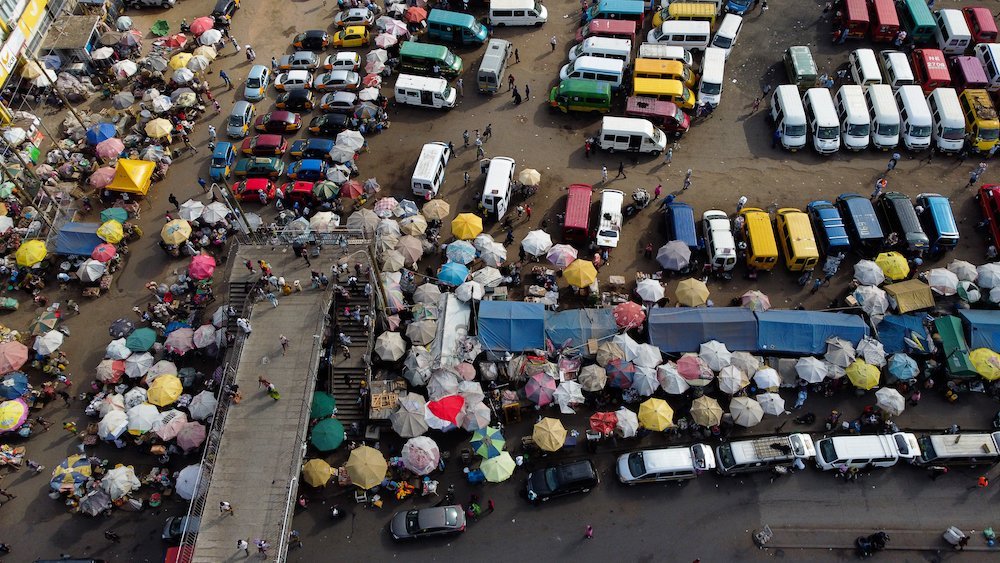
Accra Festus – Photo by Jackson Davis.
The Applied Arts Special Project, in collaboration with the Victoria & Albert Museum in London, focuses on how Modernist architecture in Africa. The architectural style “was initially developed and employed as a tool to support colonial rule before being adapted by West African architects to promote the excitement and possibilities of the period that followed Ghana becoming the first sub-Saharan African country to gain independence in 1957.”
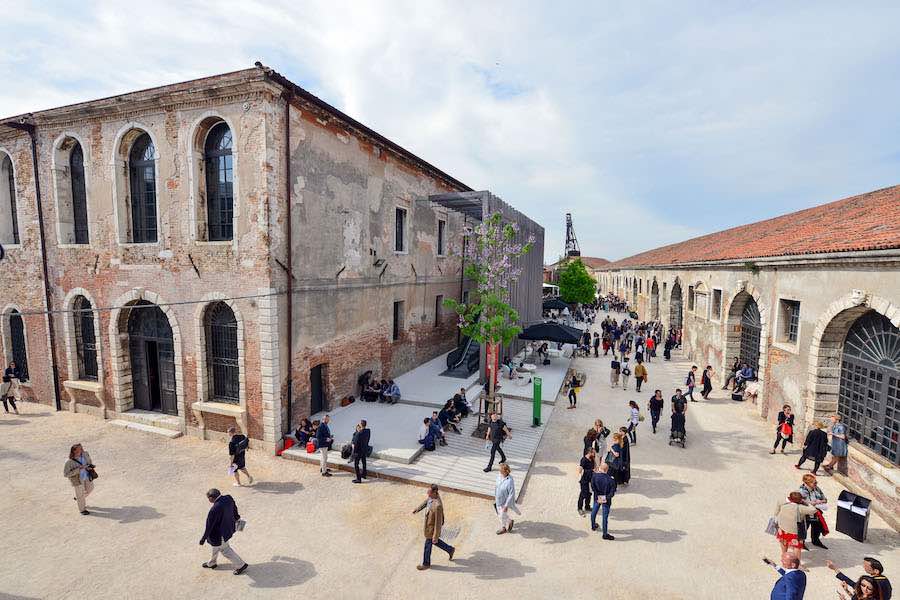
Photo by Andrea Avezzù.
Across Arsenale, Giardini, and the city of Venice, 63 national pavilions explore and expand the central theme. Niger and Panama joined the architecture biennial for the first time, while Ukraine returns with a double exhibition since 2014. Denmark focuses on the rising sea levels issue, while Brazil explores Brasília and modernism under the lens of decolonisation, national identity, diaspora, and indigenous knowledge systems. The UK Pavilion explores daily rituals in Diasporic communities. The United States looks at plastic’s impact on our lives and the earth. Italy showcases examples of collaboration, sharing, and dialogue between a generation of professionals trained against a backdrop of permanent crisis.

Photo Giorgio Zucchiatti.
The Laboratory of the Future programme is enriched by Carnival, a six-month-long cycle of events, lectures, panel discussions, films, and performances, that explore the themes of the Biennale Architettura 2023. “Conceived as a space of liberation rather than a spectacle or entertainment, Carnival offers a space for communication in which words, views, perspectives, and opinions are traded, heard, analysed, and remembered,” Lokko said. The Carnival Programme is powered by Rolex.

Photo by Andrea Avezzù, courtesy of La Biennale di Venezia.

Venice Architecture Biennale 2023. Lesley Lokko in Venice – Photo by Jacopo Salvi.