Turning Tides: Designing a Modern Brazil – All photos are by Matt Harrington, courtesy of Carpenters Workshop Gallery.
Design – In New York until May 1st, Carpenters Workshop Gallery presents Turning Tides: Designing A Modern Brazil, an exhibition narrating the country’s history through masterpieces from the ‘40s until today. “Turning Tides pays tribute to Brazil’s design legacy, highlighting the historical impact of modernism, local craftsmanship, and innovative forms. Every piece tells a story of resilience, ingenuity, and the unwavering pursuit of beauty.” Says Loic Le Gaillard, co-founder of Carpenters Workshop Gallery.
- RELATED STORIES: Discover more Brazilian architecture and design on Archipanic.
From Modernist furniture reflecting post-war optimism to Oscar Niemeyer’s Brazilia, which marked a new era and aesthetics in the ‘60s, up to Zanine Caldana’s design and activism in the ‘80s and contemporary pieces by Fernando and Huberto Campana, whose work is deeply rooted in Brazilian culture and traditions, igniting their pieces with an abundance of colour, textures and creative chaos.

“Turning Tides presents the fabric for modern living in Brazil.” Explained Maria Cecilia Loschiavo, who curated the exhibition. “The public will see the various trends, the avant-garde and the diversity of materials used, but also the sovereign presence of wood, which establishes the designers’ link with vernacular culture and the beginnings of Brazilian furniture.”

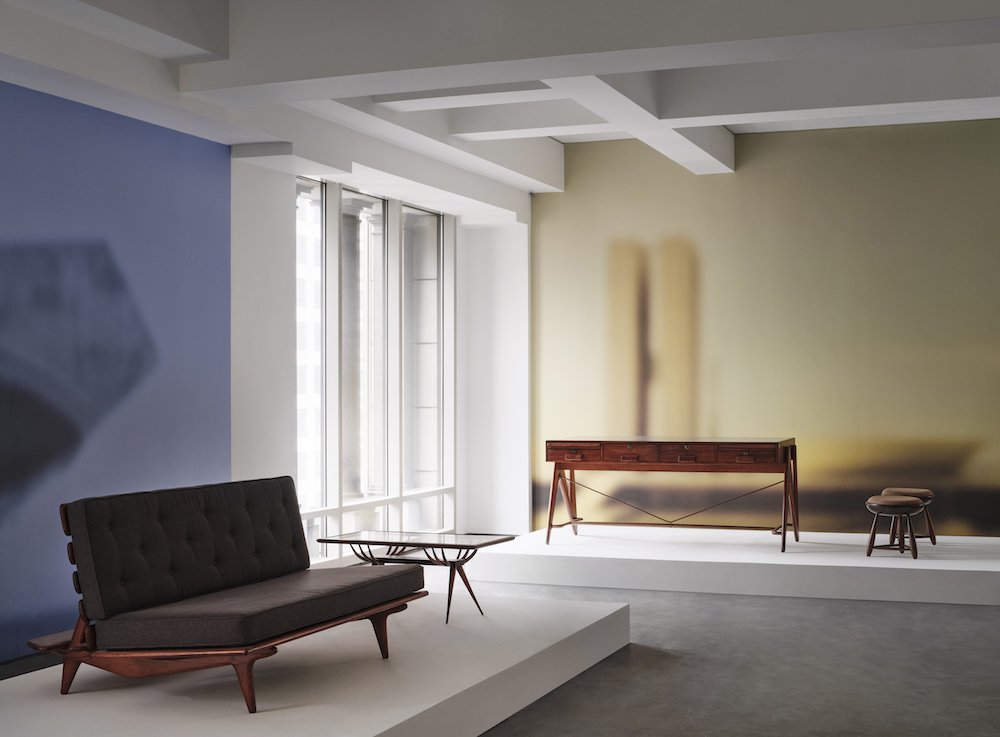
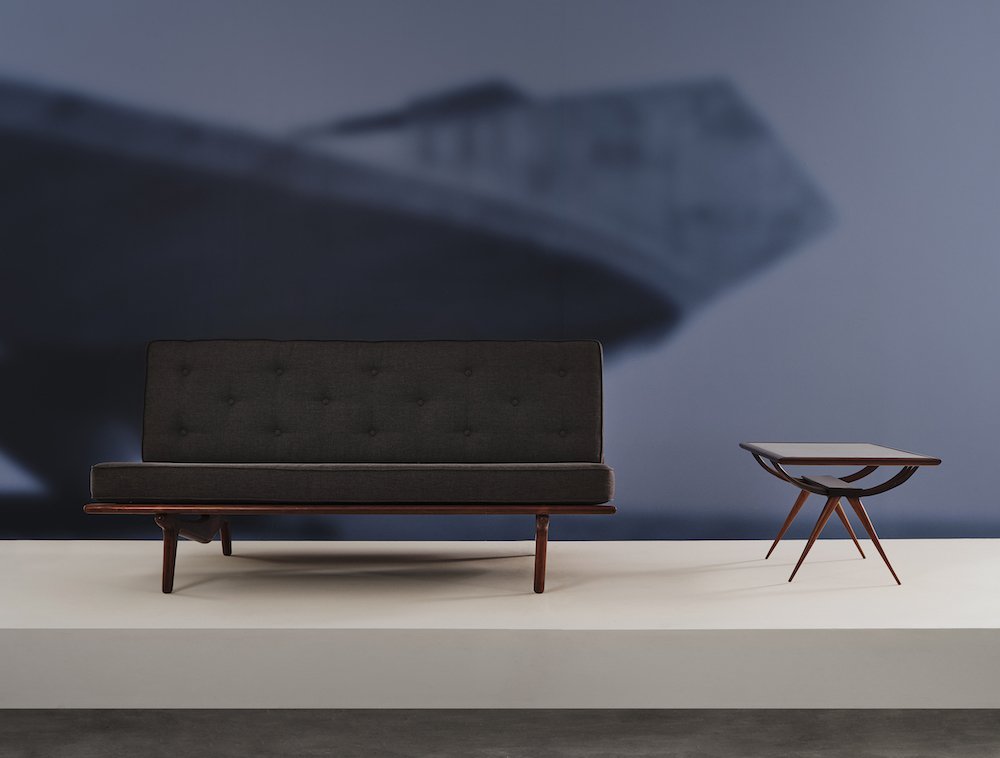
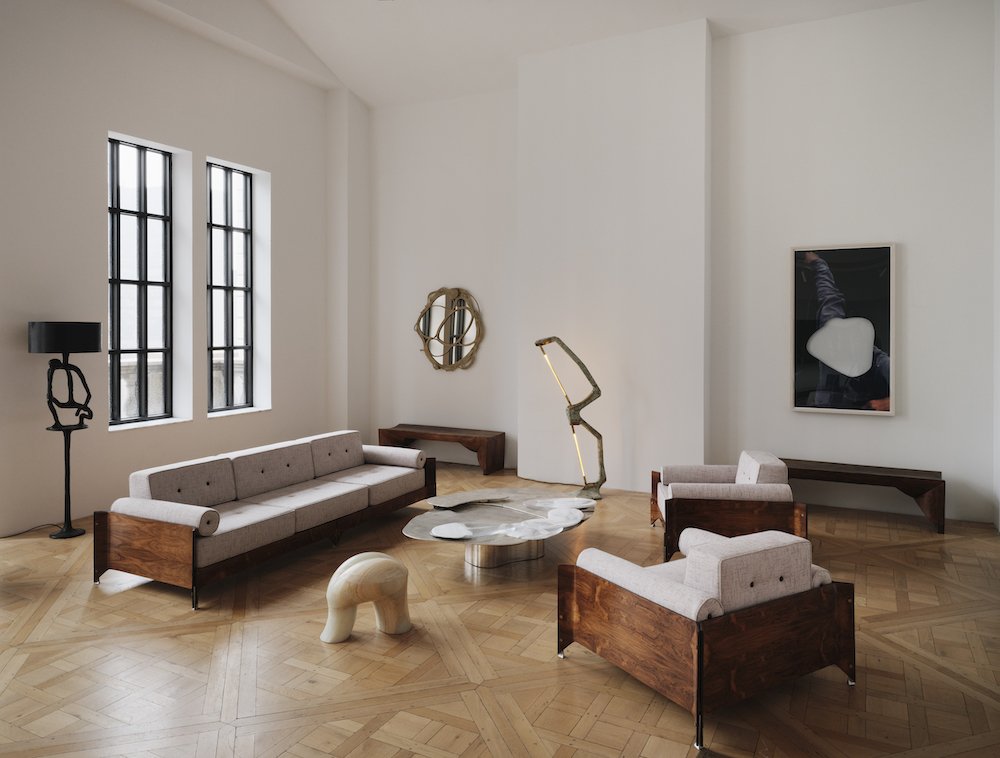
The Hauner sofa by Sergio Rodrigues (1950) features tapered slanted legs attached to a slatted wooden frame that contains upholstered loose cushions and a storage shelf in its back. Pictured below on the left.
Zanine Caldas presents a dining table from the ‘80s made of pequi wood and carved from a single tree trunk. The designer and activist’s pieces are imbued with a deep sense of respect for the trees from which they were made. The table’s unique, organic form comes from the tree’s shape, which defines its form. The table’s sculptural quality gives the piece a monumental feeling without sacrificing functionality.

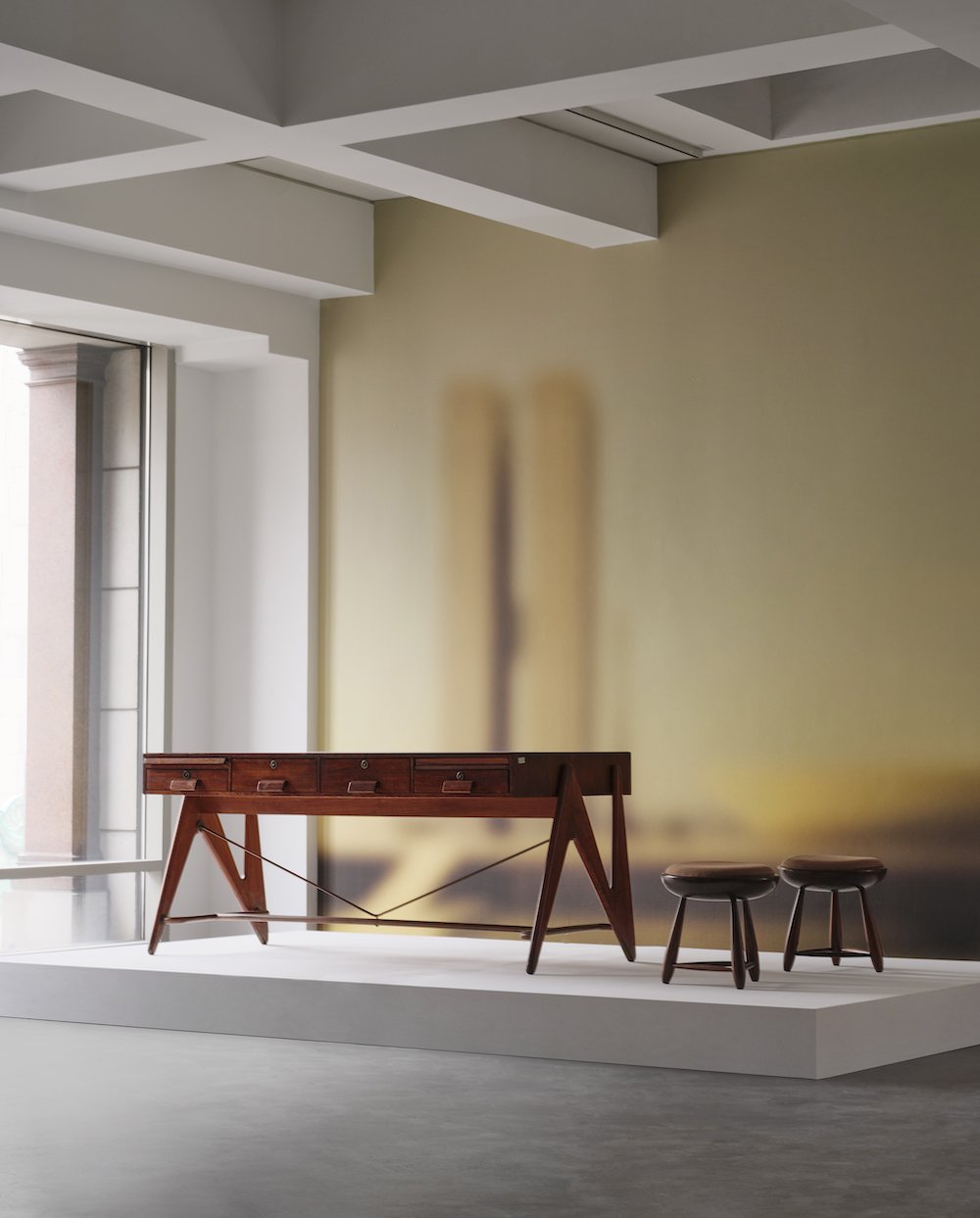
Crafted from caviuna wood, Lina Bo Bardi’s Writing Desk (1950) stands out for its playful silhouette with Z-shaped legs. The piece exemplifies the Italian-born architect’s pioneering contribution to Brazilian modernism, breaking gender barriers for women in a time and field mostly reserved for men. Below on the left.
Next to the desk is a couple of Mocho stools by Sergio Rodrigues (1980). Inspired by milking stools, they were carved from a single piece of imbuia wood, showing the designer’s hallmark fascination with good craftsmanship.
The exhibited works include Joaquim Tenreiro’s Coffee Table (1950), which was made using native Brazilian wood. Through geometric circles, understated structure and application of native materials, the piece illustrates Tenreiro’s crucial role in introducing modernist principles to Brazilian furniture design, standing as a tribute to Latin America’s local wood and craftsmanship.
The Manhattan Lounge Set (1960) by Jorge Zalszupin comprises delicately sculptural pieces that fuse European influences with local Brazilian aesthetics. The result is an energetic, geometric silhouette, attesting to his unique modernist vocabulary.
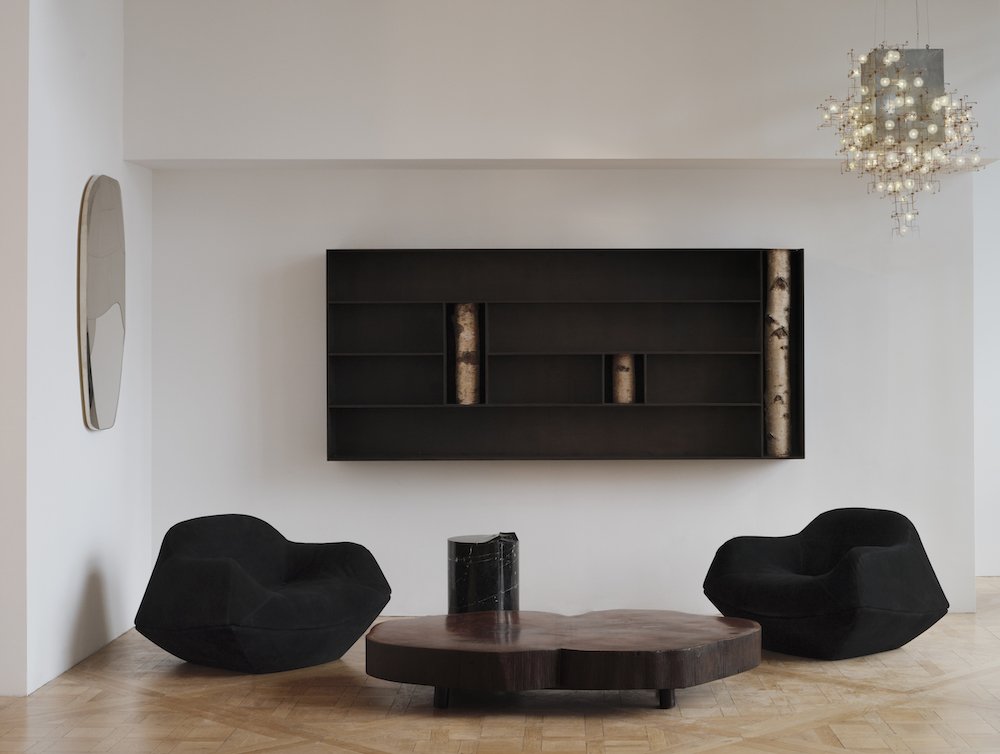
Zalszupin’s Brasiliana Lounge Set (1960) is an homage to Brasilia. The sinuous lines of the design reference Niemeyer’s architectural aesthetic. Each set piece features a spectacularly carved wooden frame with a delicate, curved form.
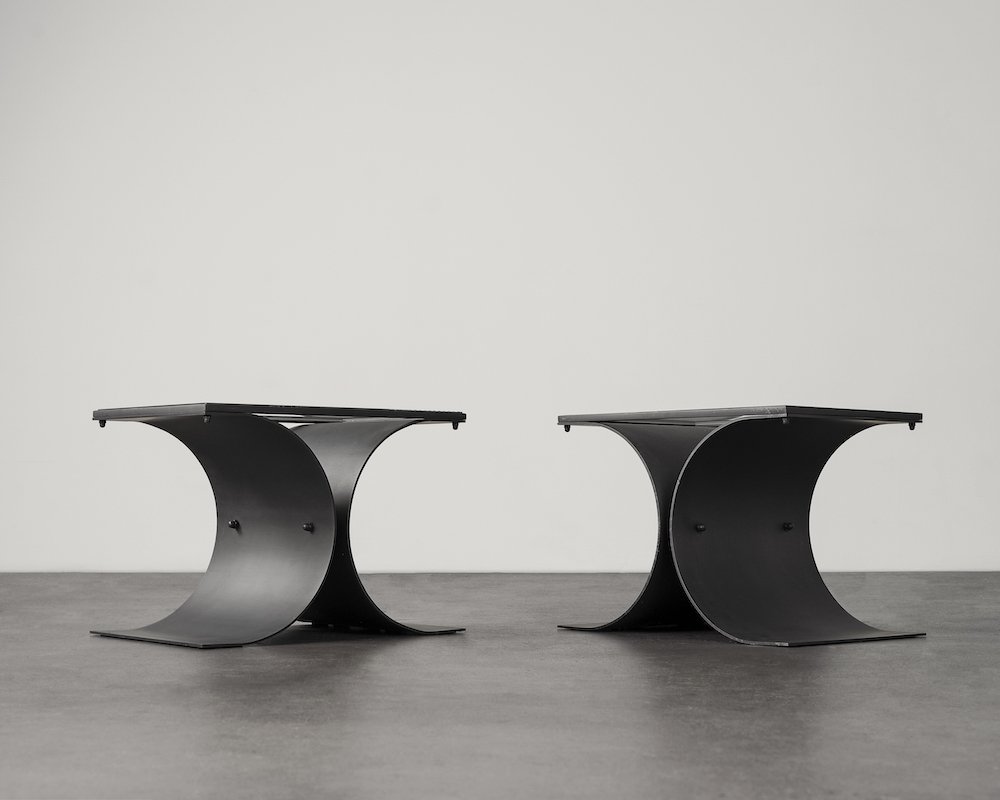
On display are also a pair of side tables by Oscar Niemeyer, Brazil’s most iconic architect. The designs feature curved and sinuous forms, hallmarks of Niemeyer’s artistic vocabulary. He sought to imbue furniture-making with the traditions of modernist and contemporary architecture.
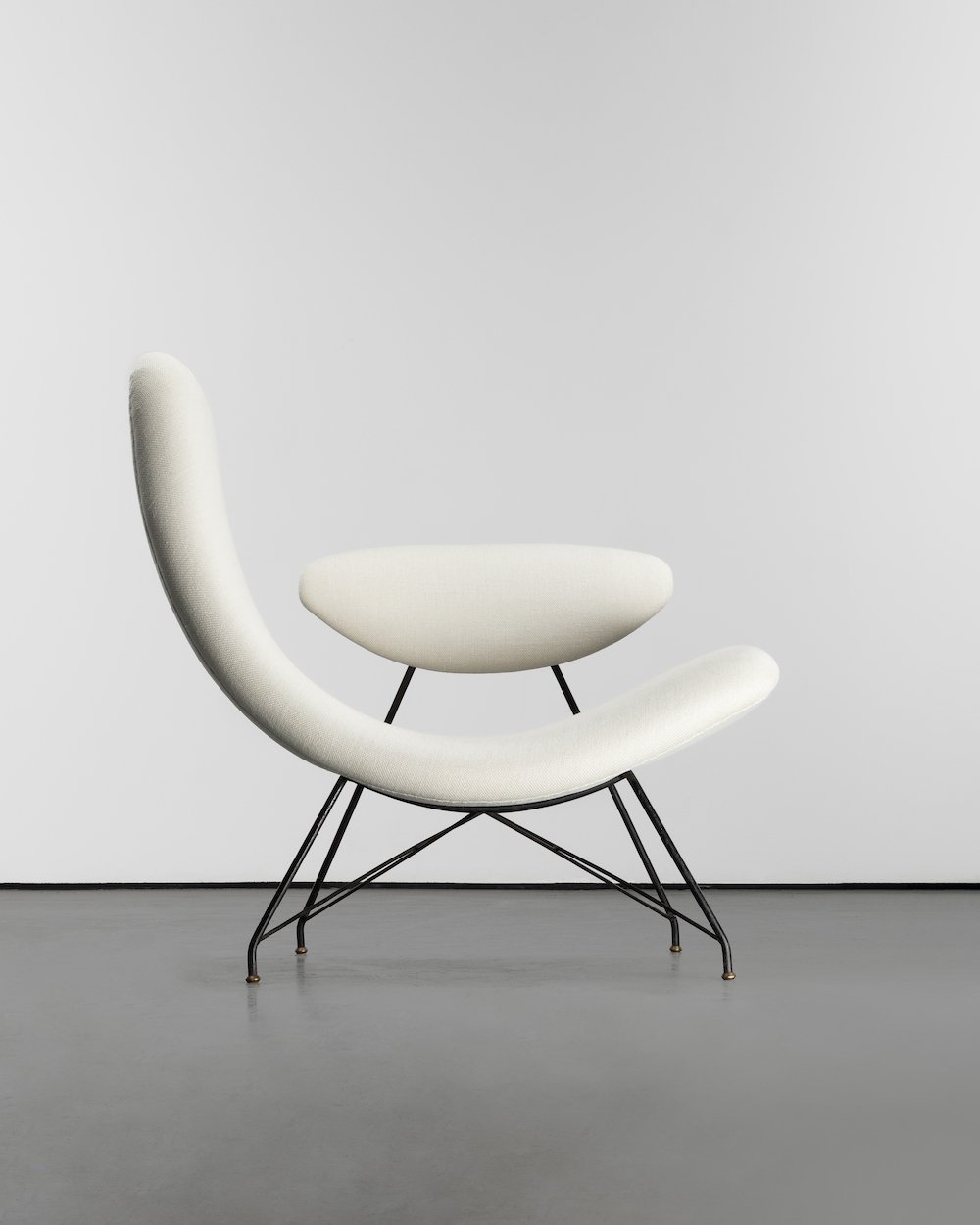
The iconic Reversivel chair, designed by Carlo Hauner and Martin Eisler and manufactured by Forma Moveis in 1955, comes with a seat that is not fixed and, therefore, usable in many different positions. The matching curves of the two components combine the minimalism of European modernism with the sensual forms of Brazilian design.
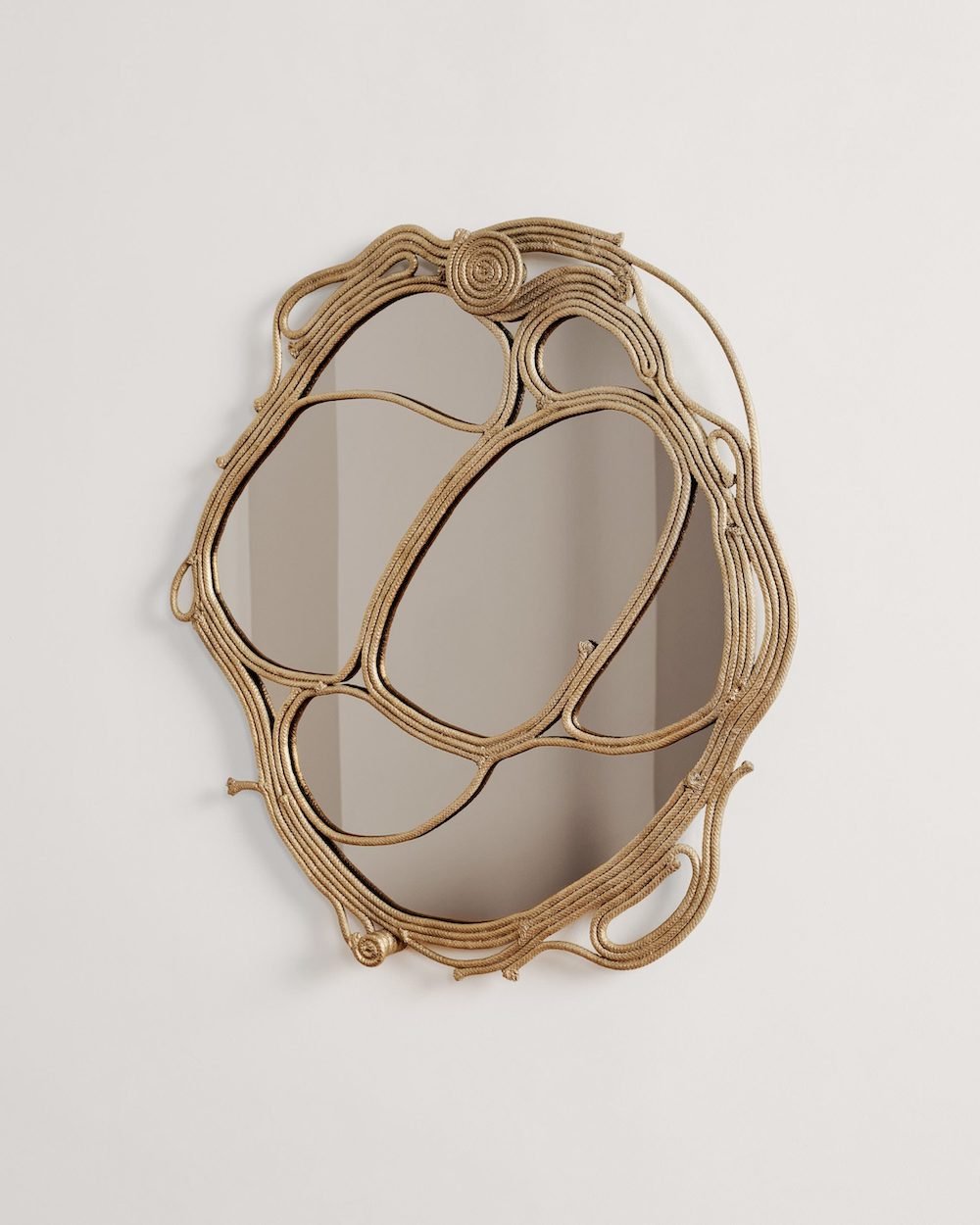
The Campana Brothers appropriate everyday materials in their work, often collaborating with local Brazilian communities and factories to inspire their signature blend of ergonomic industrial design. In the Ofidia mirror, a loose formation of bronze ropes loop around each other, with custom fitted mirrors filling the spaces between. Cast in a trompe l’oeil style, the mirror pairs conceptual simplicity with a visually charismatic design.
All photos of Turning Tides: Designing A Modern Brazil are by Matt Harrington, courtesy of Carpenters Workshop Gallery.