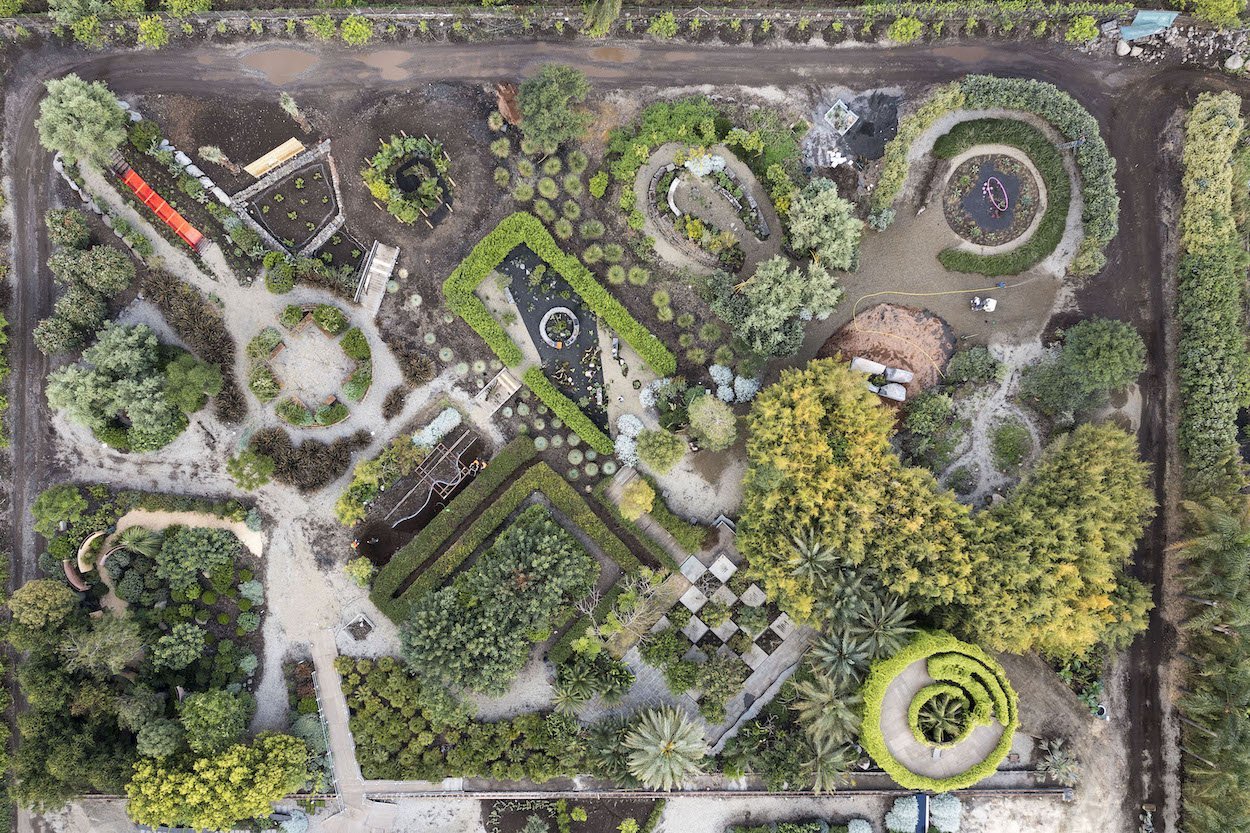
Radicepura Garden festival 2025, permanent gardens from above – All photos are by Alfio Garozzo.
Design, Architecture. Set against the stunning backdrop of Mount Etna and the Ionian Sea, the Radicepura Garden Festival 2025 transforms Sicily’s vibrant Radicepura Park into an open-air laboratory of Mediterranean landscape design. As the first international biennial dedicated to Mediterranean garden culture, the festival brings together established names and rising stars in landscape architecture to create an immersive experience of both ephemeral and lasting gardens. Open until December 7, this year’s edition is a celebration of design, nature, and critical dialogue.
- RELATED STORIES: Discover more landscape design on Archipanic.
Under the artistic direction of renowned landscape designer Antonio Perazzi, the 2025 theme, Chaos and Order, serves as a conceptual compass for the festival. It explores the intricate dance between natural spontaneity and human intervention, while also reflecting on today’s ecological and social complexities. “The garden is no longer just a private refuge,” says General Director Mario Faro, “but a collective space—something we share and care for as a common good.”
[su_image_carousel source=”media: 44663,44665″ limit=”0″ slides_style=”minimal” crop=”none” columns=”2″ spacing=”no” captions=”yes” dots=”no” autoplay=”1″ speed=”immediate”]
Ten emerging landscape architects from around the globe were invited to interpret this theme in their own unique ways. Their gardens don’t just display plants—they tell stories, challenge perceptions, and pose questions about our place in the natural world. As the climate crisis looms large, the festival asks: who generates chaos, and who restores order—humans or nature?
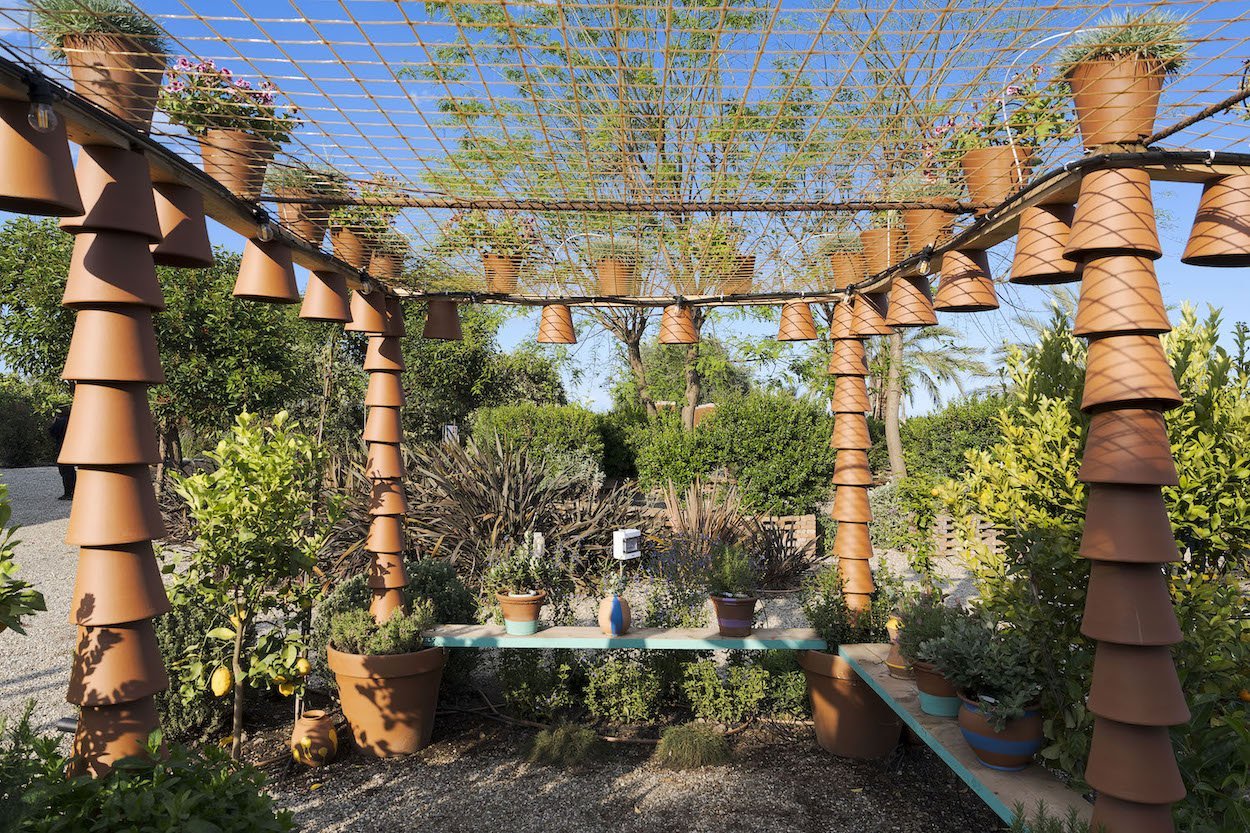
Patio by Follow Friday.
Sarah Eberle, a multi-award-winning British designer, presents Postcard from Sicily, a tribute to the island’s richness and diversity. With terracotta jars, Mediterranean flora, and even an octopus sculpture, the garden is both playful and deeply rooted in the Sicilian landscape. “Mount Etna inspires everything,” she shares. “The volcanic soil allows an extraordinary blend of plants from many cultures—just like Sicily itself.”
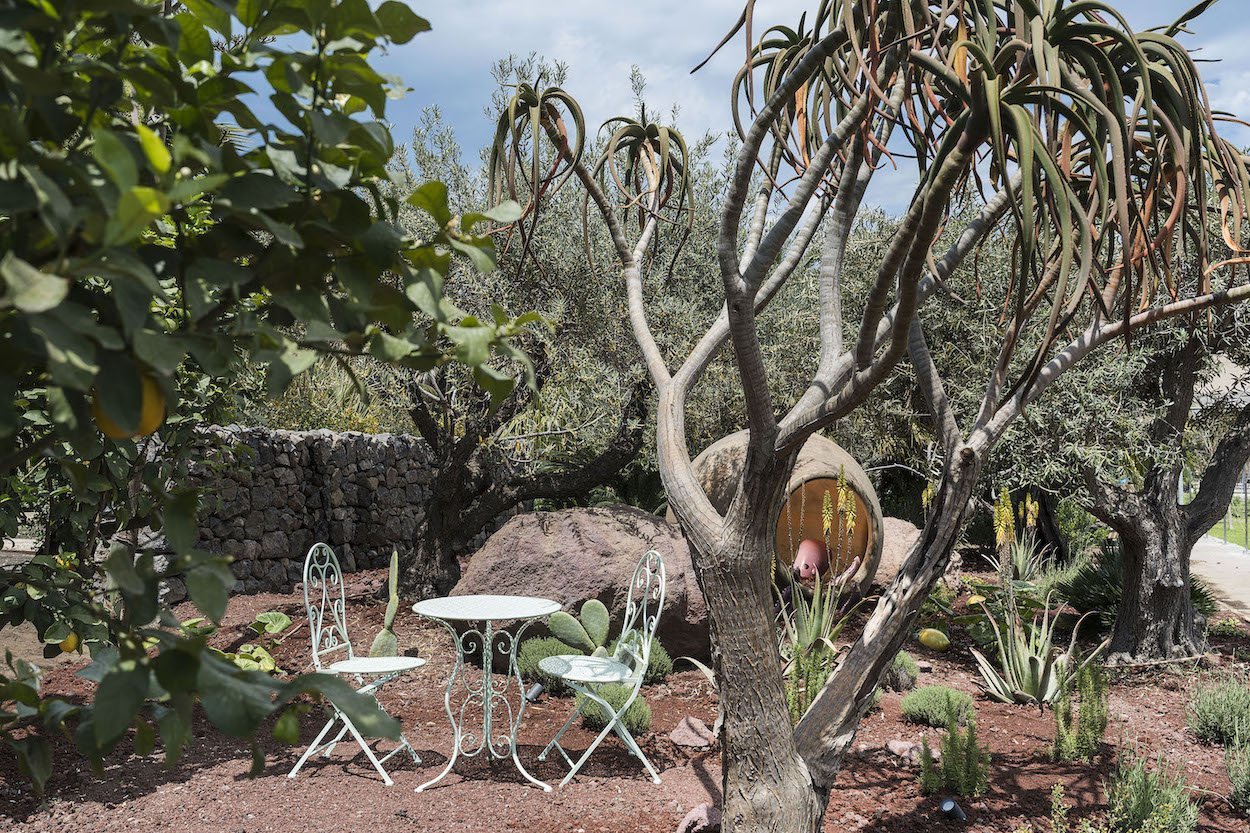
A Postcard from Sicily by Sarah Eberle.
Among the standout installations is Echoes by Claudio Bussei, where intersecting paths, fragmented memories, and emotional plantings create a space that feels both intimate and vast. “Chaos is not disorder,” says Bussei, “but a source of new beginnings.” His garden encourages visitors to explore freely, each turn evoking shifting moods and moments of quiet reflection.
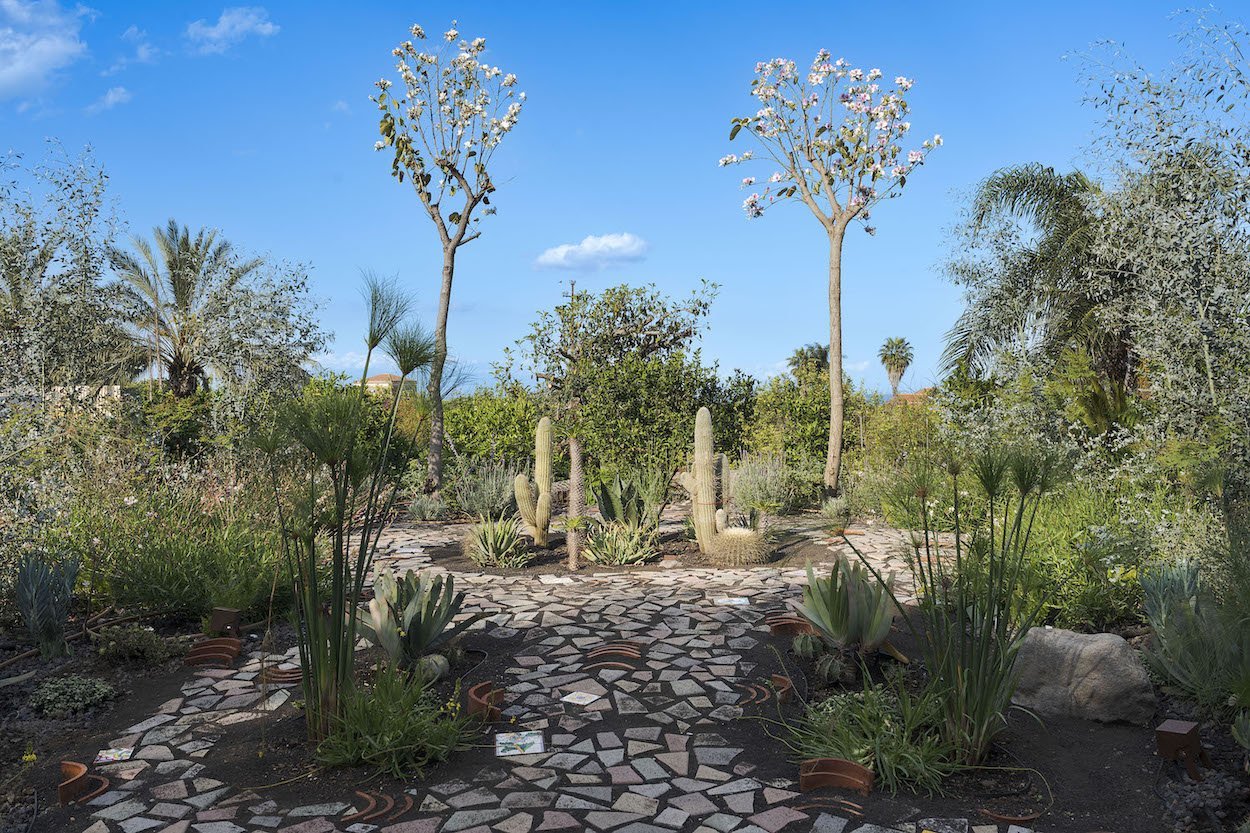
Echoes by Claudio Bussei.
Poetry takes root in Il Miracolo di Quasimodo, a deeply symbolic garden by Carlo Federico and Franco Enrico Serra. Inspired by a poem of Nobel Laureate Salvatore Quasimodo, the installation features two opposing yet intertwined spaces that represent life and death, chaos and order—a contemplative metaphor for the cycles of nature and the human condition.
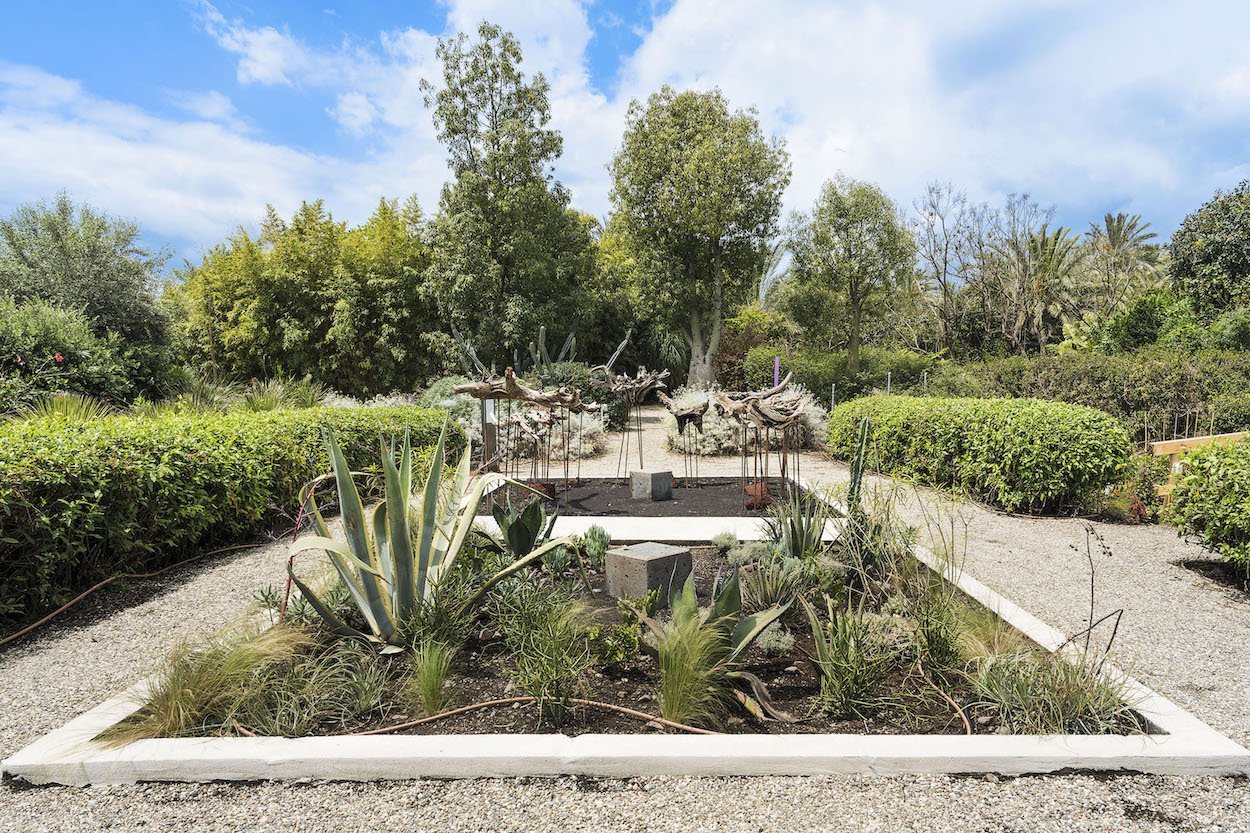
Il Miracolo di Quasimodo by Carlo Federico and Franco Enrico Serra.
The volcanic essence of Sicily takes centre stage in Ignivomus Hortus, created by Icelandic designer Guðmundur Björnsson. Shaped by the elemental power of Mount Etna, the garden imagines a post-climate-crisis world—harsh, exposed, and eerily quiet. Ancient building materials serve as seating. Black sand, wind-swept grasses, and scattered stones suggest a land reclaimed by nature. At its centre, a raised fireplace glows, representing both human resilience and the dual nature of fire: destruction and rebirth.
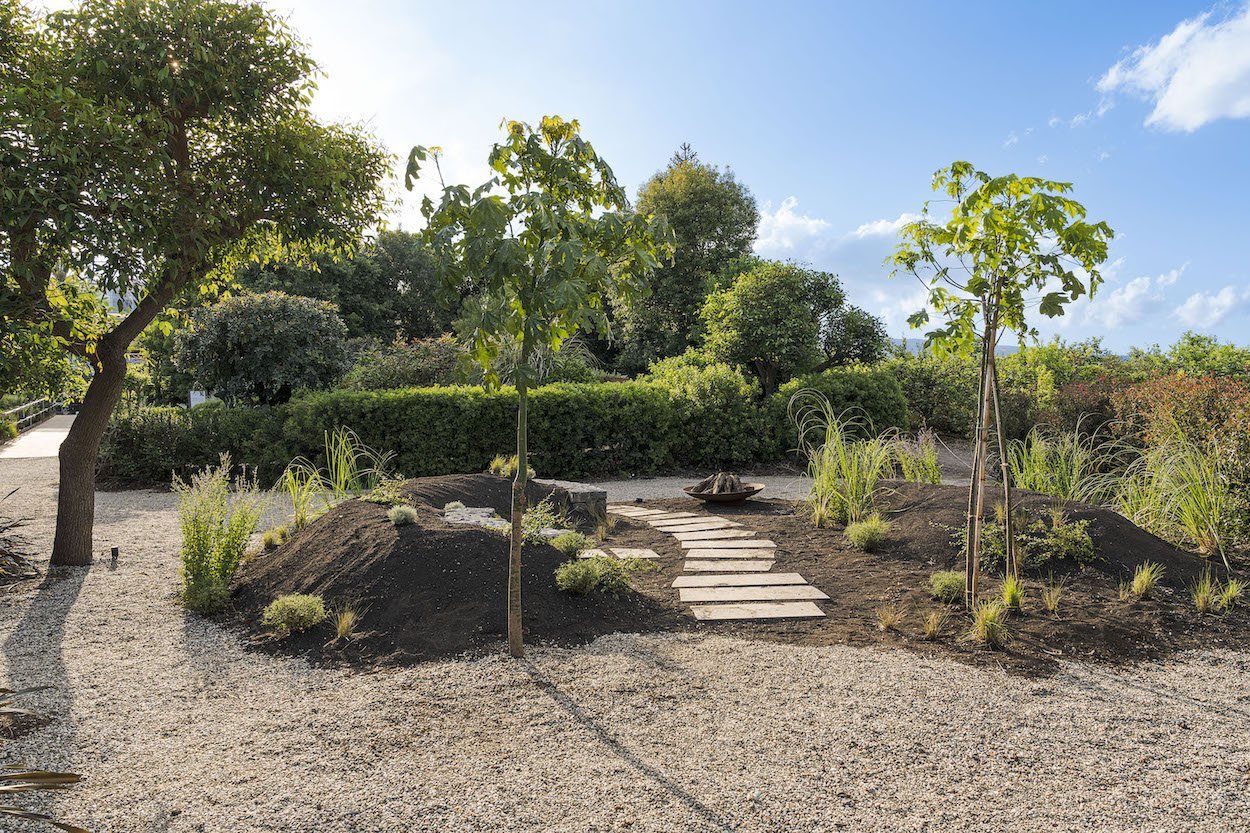
Ignivomus Hortus3 by Guðmundur Björnsson.
In Giardino di Terra, designers Vincent Dumay and Baptiste Wullschleger create a forest of raw earth columns, evoking both tradition and innovation. The tactile installation calls attention to poverty, climate resilience, and the materials that connect us to the land.
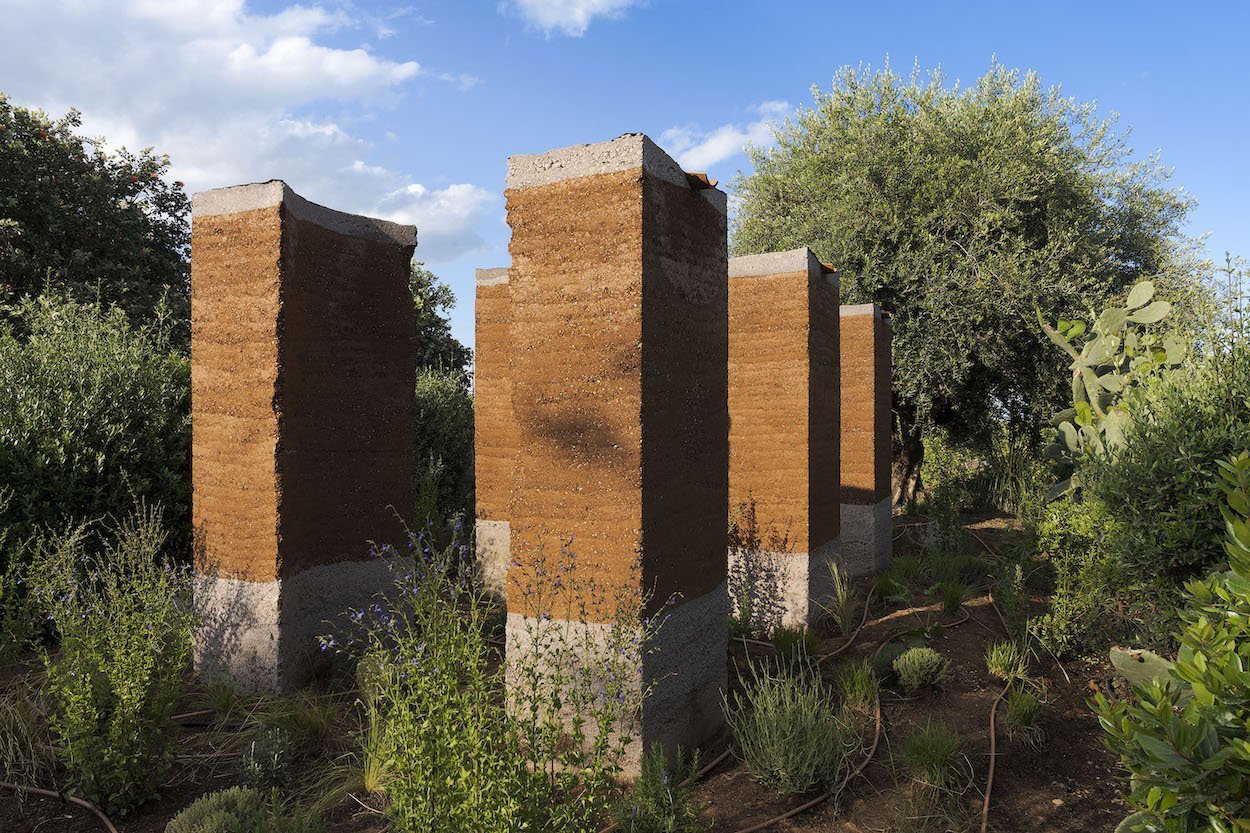
Giardino di Terra by Vincent Dumay and Baptiste Wullschleger.
Meanwhile, Follow Friday studio by Marta and Fernando Gamarro reimagines the Andalusian patio with their garden Patio. Historically social, cooling, and communal, the Mediterranean courtyard is here reinterpreted through a sustainable lens, with all materials being recyclable and reusable. It’s a space of memory and meeting, where the past flows seamlessly into the present.
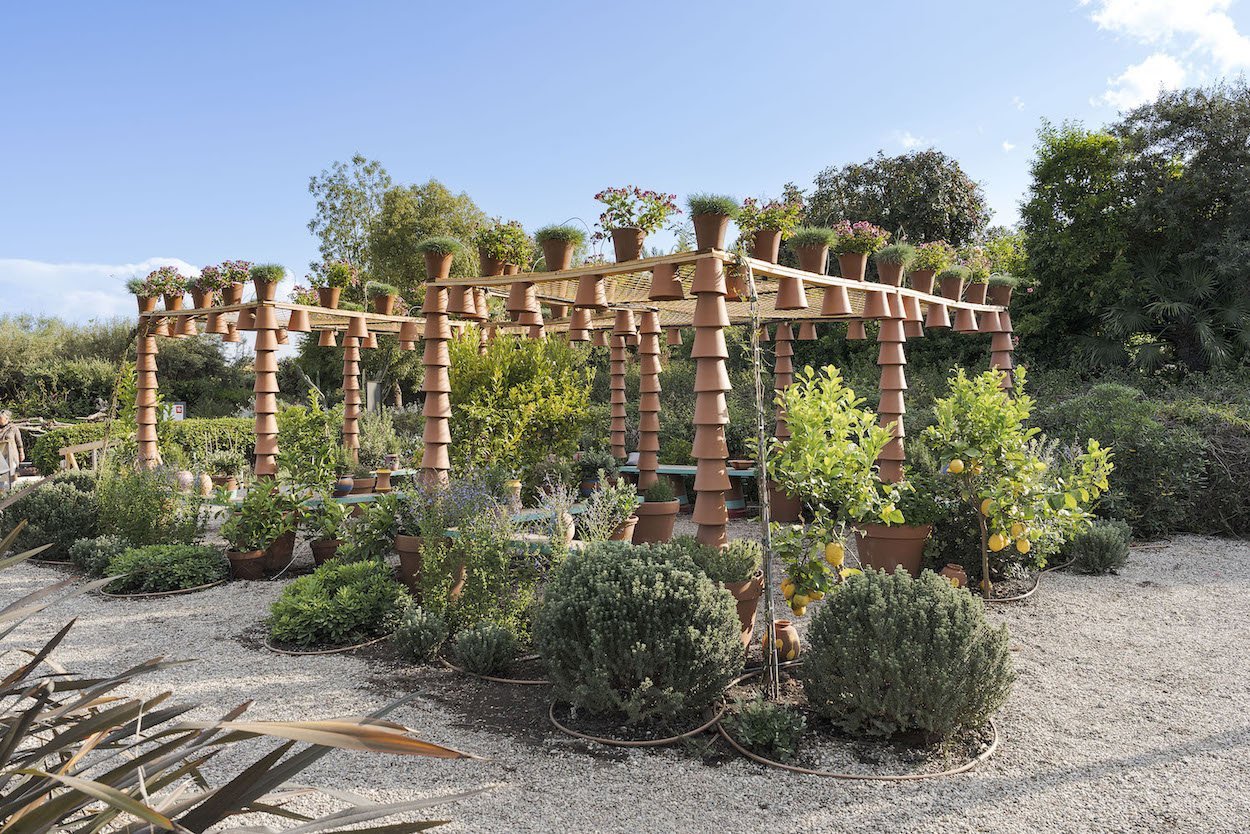
Patio by Follow Friday.
Mira, by Monica Torrisi and Giada Straci, celebrates the strength of Mediterranean scrubland. Hidden behind a perforated wall, the garden reveals itself gradually—like a botanical investigation. The viewer is encouraged to focus on individual elements before seeing the bigger picture, echoing a deeper understanding of nature and ourselves.
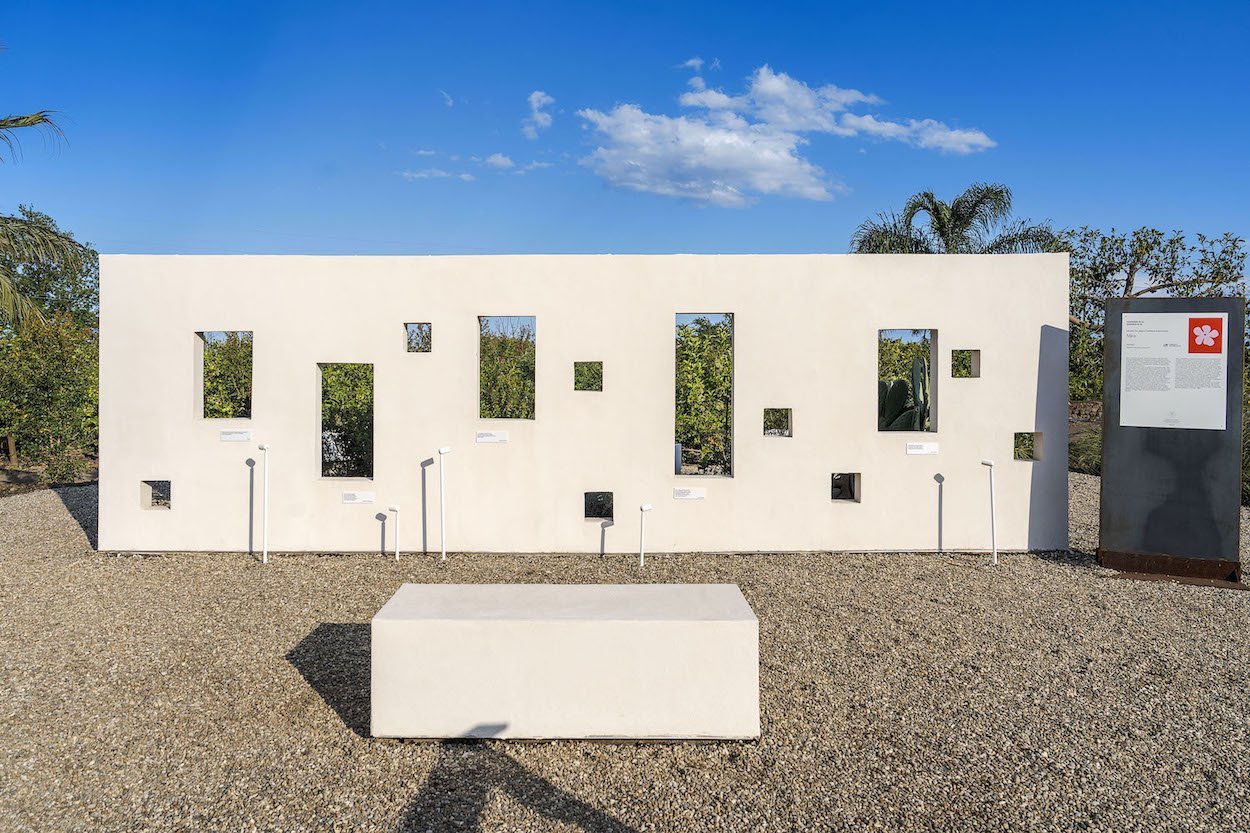
Mira by Monica Torrisi and Giada Straci.
Beyond the show gardens, the festival features a curated path through permanent installations and botanical collections, blending art and nature. François Abèlanet created elevated gardens radiating from a prismatic pool, while Michel Péna designed a luxurious tower overlooking the gardens and Mount Etna. Other gardens, including those by James Basson, Kamelia Bin Zaal, Paolo Pejrone, and Andy Sturgeon, guide visitors through themes of sustainability, climate adaptation, and aesthetic innovation. Artistic highlights include monumental pieces by Emilio Isgrò and Adrian Paci, which blur the boundaries between sculpture and garden.
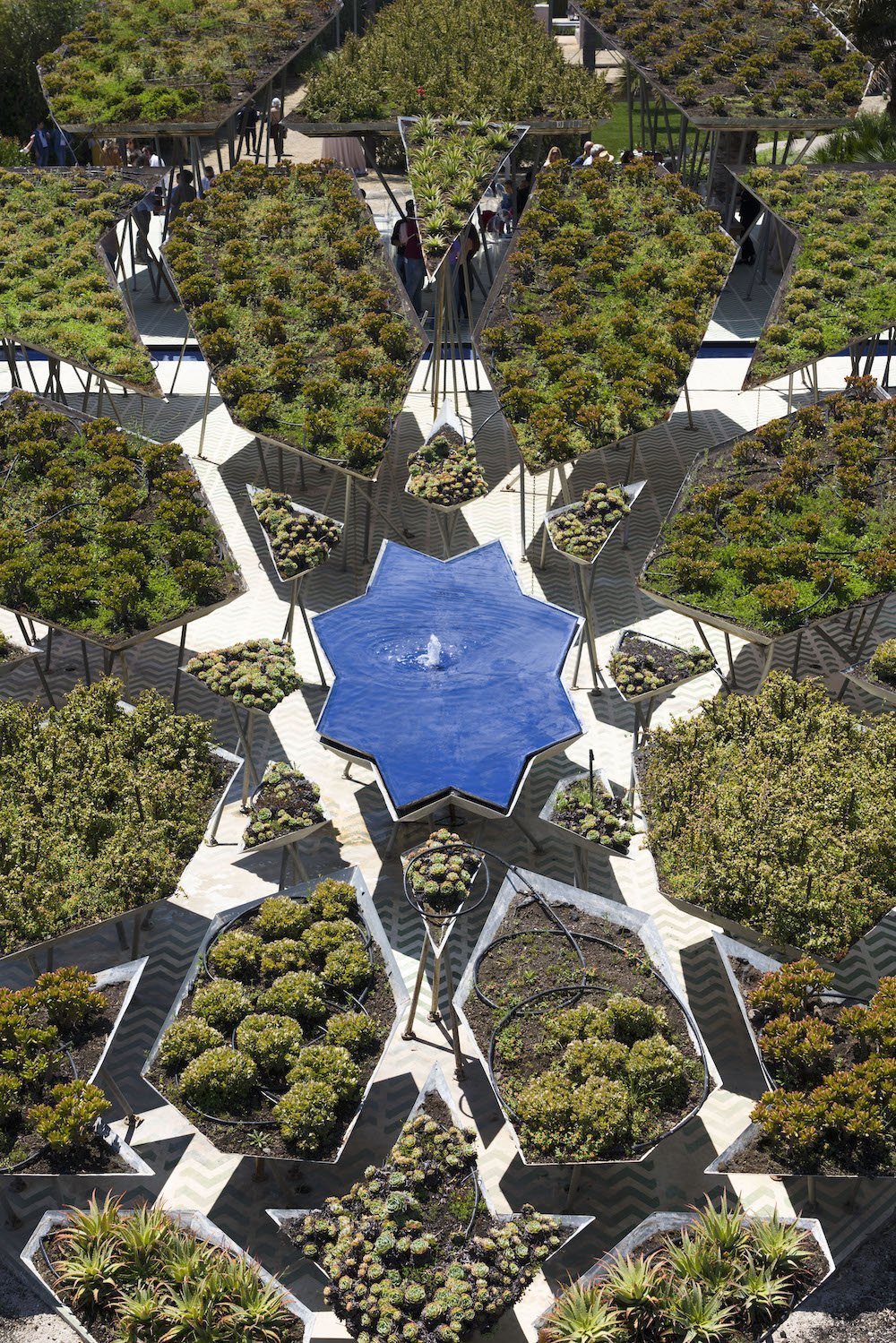
Anamorphose garden by Francois Abèlanet.
The Radicepura Garden Festival 2025 is not just a celebration of horticultural artistry—it’s a call to action and a space of imagination. It invites us to question, observe, and engage with the natural world, cultivating not only beauty but also a sense of responsibility. Whether you’re a design enthusiast or simply a curious wanderer, this is a journey worth taking.
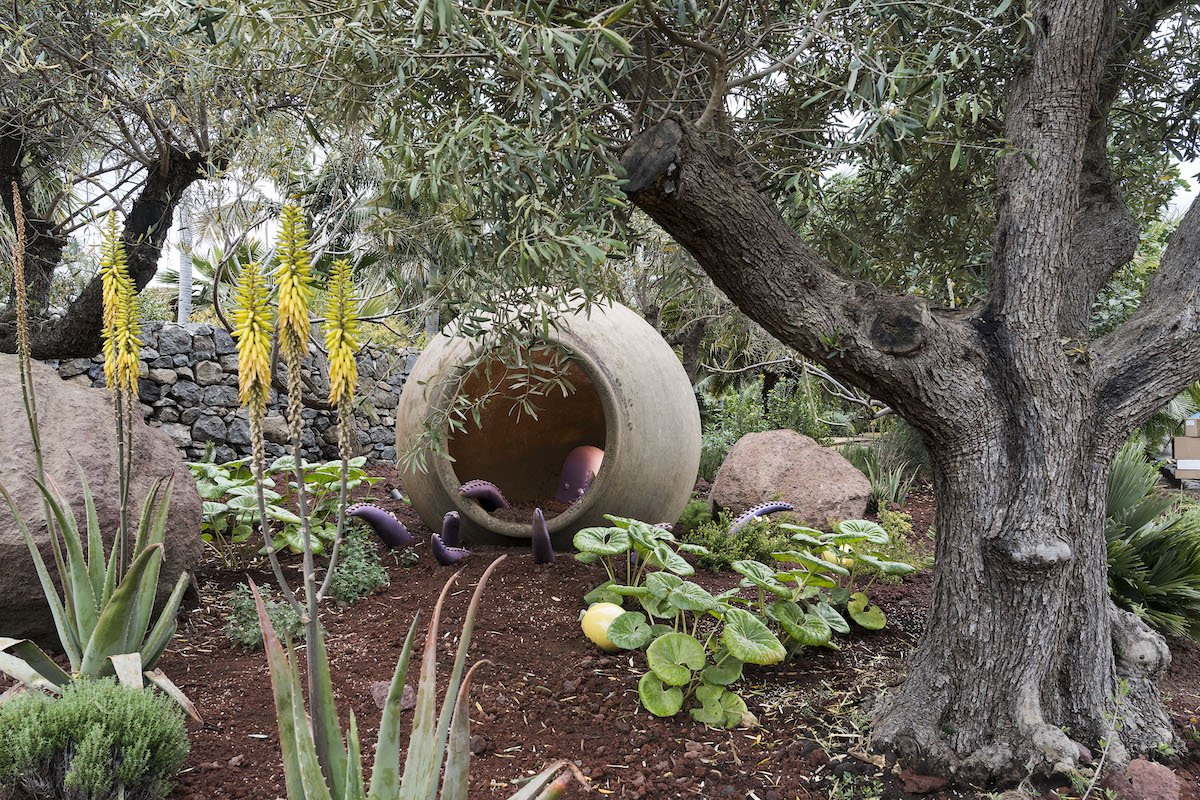
A Postcard from Sicily by Sarah Eberle.
- All photos of the Radicepura Garden Festival 2025 are by Alfio Garozzo, unless indicated otherwise.
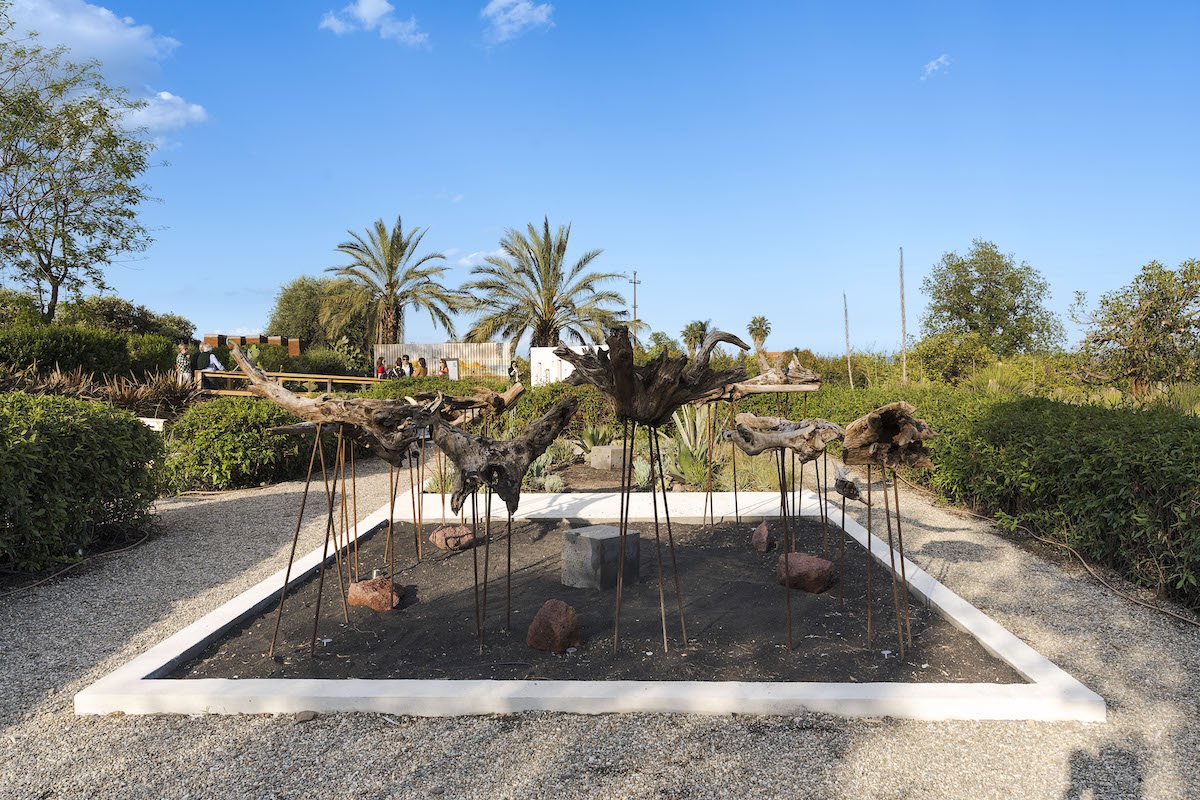
Il Miracolo di Quasimodo by Carlo Federico and Franco Enrico Serra.
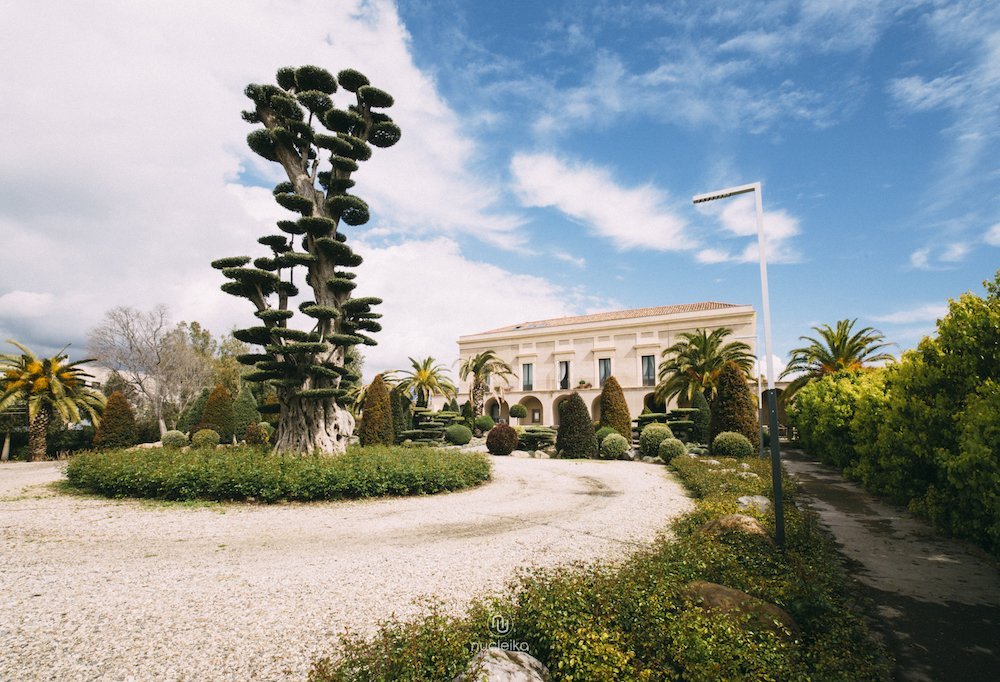
Photo by Nukleika.