Happy Year of the Snake. Quetzalcoatl’s Nest by Javier Senosiain – Photo via AirBnB.
Design. It’s time for our annual appointment with the Chinese Zodiac. Happy Year of the Snake! The sixth animal in the Chinese zodiac is linked with characteristics such as wisdom, intuition, and charm. Those born in the Year of the Snake are thought to possess perceptiveness, intelligence, and grace. Antonella Galimberti, our brilliant design contributor, has selected design pieces (and one mesmerising architecture) inspired by the spirit of the voluptuous and enigmatic creature.
- RELATED STORIES: Dragon, rabbit, tiger, ox, and pig… Explore the Chinese Zodiac through the lens of design.
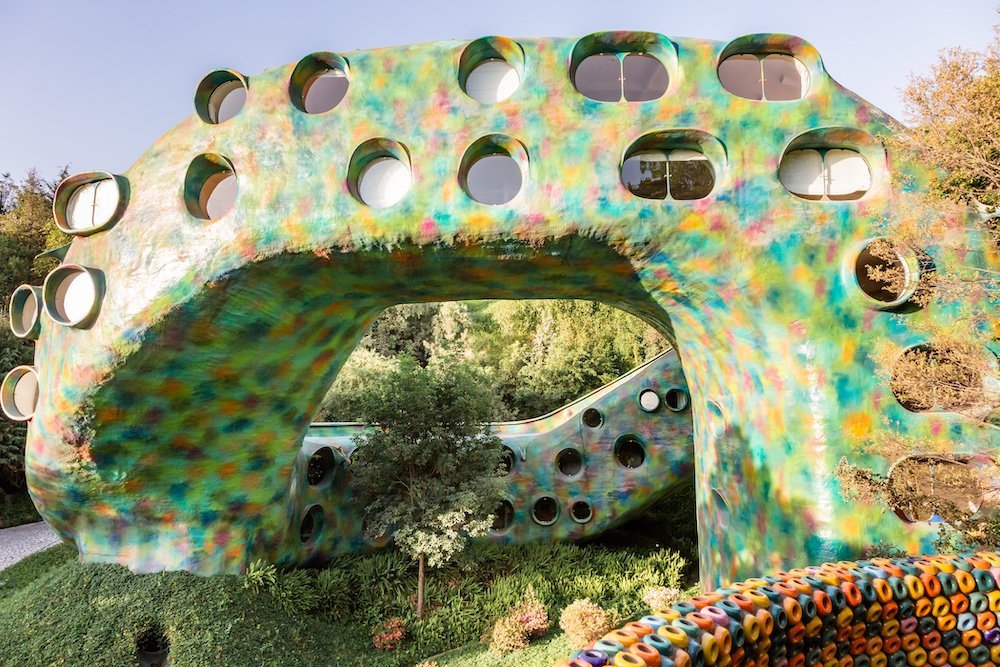
Quetzalcoatl’s Nest by Javier Senosiain – Photo via AirBnB.
The Quetzalcoatl’s Nest, inspired by an Aztec serpent god and designed by architect Javier Senosiain, is located just north of Mexico City. It is a snake-shaped structure featuring a captivating head and tail that fully utilises the natural caves and curves around it.
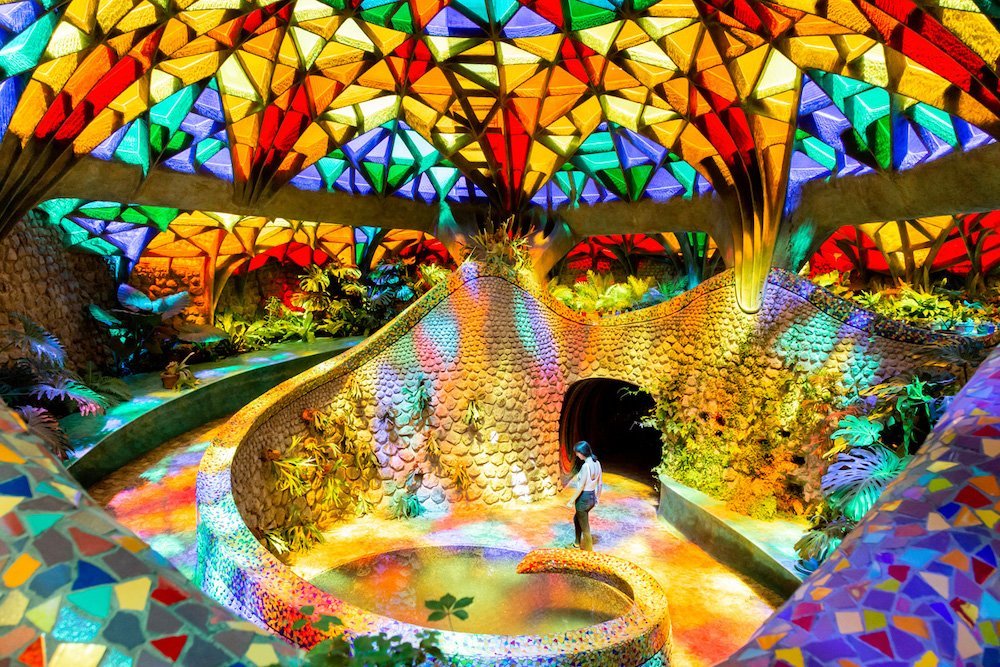
Quetzalcoatl’s Nest by Javier Senosiain – Photo via AirBnB.
The otherworldly 165,000-square-foot complex comprises ten stunning apartments, vast botanical gardens, gleaming lakes, and mystical mineral caves. Each space is ingeniously linked by tunnels, allowing natural light to pour in since there are no doors other than the main entrance. Book it on AirBnb!
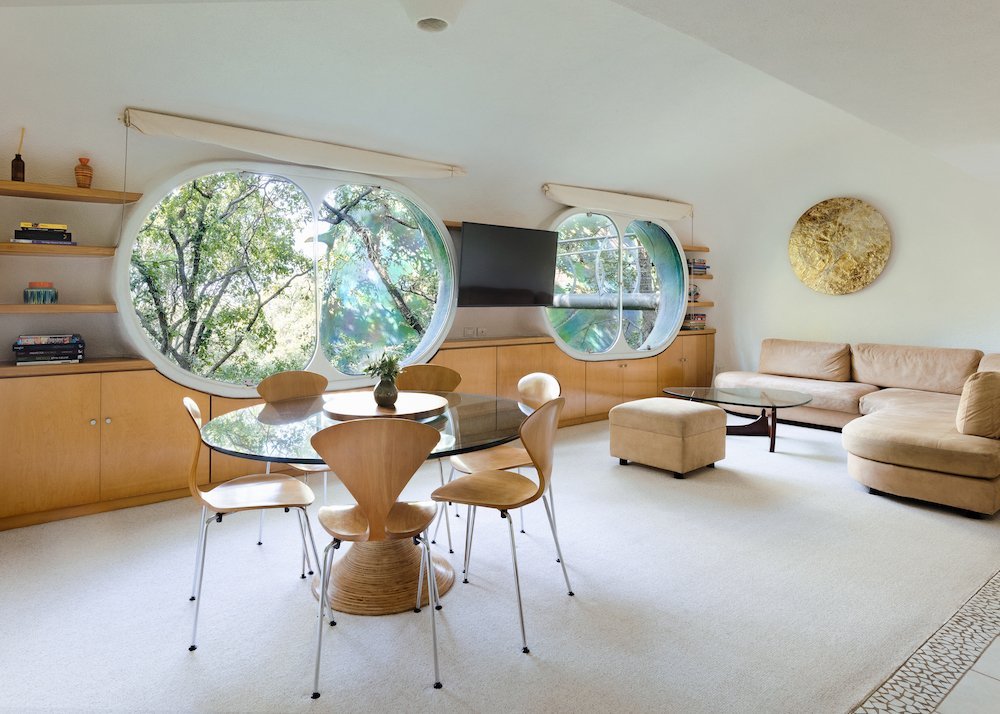
Quetzalcoatl’s Nest by Javier Senosiain – Photo via AirBnB.
South African fashion and furniture designer Rich Mnisi explores history and the Congolese Bushongo mythology, playing with the duality of fear and beauty, epitomised by the image of a snake. His Nyoka design collection and exhibition for the Southern Guild gallery started with a nightmare. “My mother dreamt of a snake on her back. When she turned to look at it, she saw an intense green creature, frightening and fluid, dangerous and beautiful.
[su_image_carousel source=”media: 42261,42302″ limit=”0″ slides_style=”minimal” crop=”none” columns=”2″ spacing=”no” captions=”yes” dots=”no” autoplay=”2″ speed=”immediate”]
The series comprises mysterious cabinets, voluptuous furniture, and Vulthari, a serpentine lighting design digitally created in collaboration with industrial designer Charles Haupt. Nyoka wrestles with the idea of beauty distilled from darkness. “To live is to embrace this duality. To accept that joy and tragedy, light and darkness, dreams and nightmares are connected, orbiting and defining each other.”
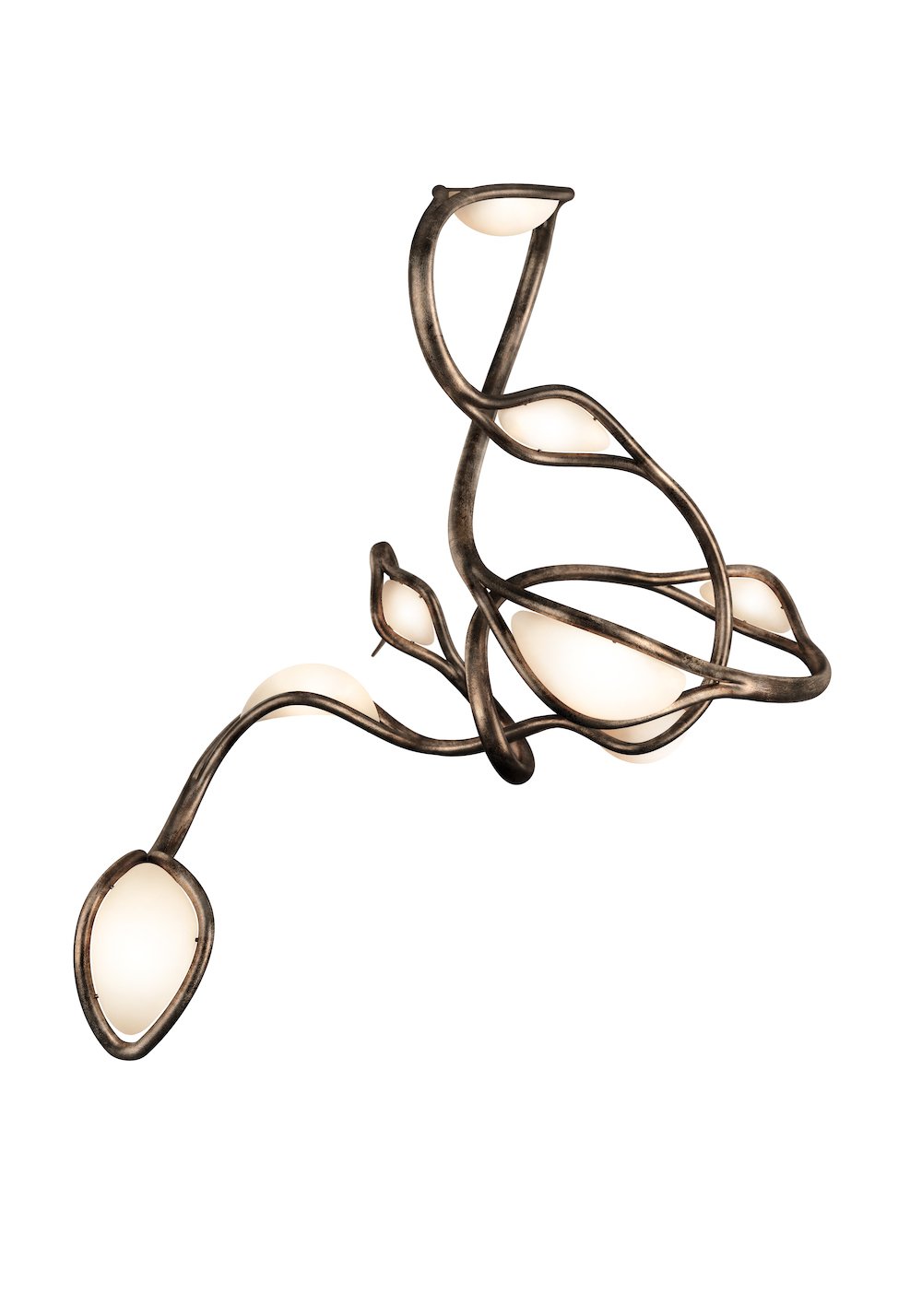
Vulthari lighting design by Rich Mnisi – Photo by Christof Van der Walt and Southern Guild Gallery.
A snake snakes on the label of the Meandra wine from the Bulgarian cellar Domain Marash. Created by Labelmarker, the name of the Cabernet Franc & Merlot Sauvignon wine was inspired by the Year of the Snake in 2013. “Meandra derives from ‘meander,’ referring to a bend in a winding watercourse or river. Rivers create meanders by eroding their banks and forming large loops as they flow through valleys—similar to how a snake glides through desert sands.”

Meandra wine by Domain Marash, desig by Labelmarker – Photo by Jordan Jelev.
In 1973, Japanese artist and designer Mariyo Yagi honoured actress Greta Garbo with the scenographic Garbo R Wave Lamp, created for Sirrah and now showcased by Paradiso Terrestre Gallery. The lamp is part of the permanent collections at the Tokyo National Museum of Modern Art and the Galleria Nazionale in Rome. A gentle breeze sets off a cascade of glimmering light through transparent threads, resulting in a radiant sparkle and an enchanting ambience that brightens a party room from above.

Garbo R Wave Lamp by Mariyo Yagi – Courtesy of Paradisoterrestre.
Emerging Italian designer Marco Oggian worked on colours and shapes to design SLIP, a funky serpent for Qeeboo. Simple and bold hues and a stylised comic-like design defined the pop rug.
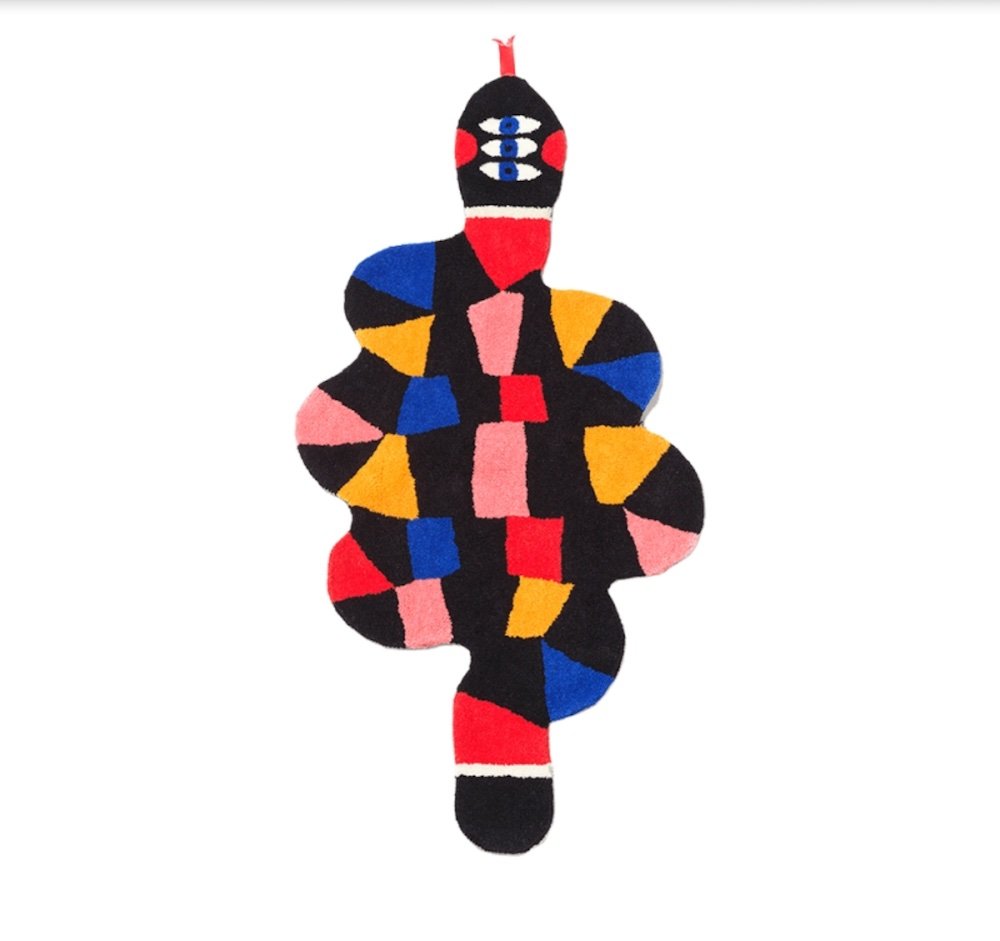
Slim carpet by Marco Oggian x Qeeboo – Photo by Qeeboo.
After honing his skills at the Ronan ed Erwan Bouroullec’s studio, French designer and artist Jean-Baptiste Fastrez created an asymmetrical mirror inspired by the iridescent aluminium scales of a serpent for Galerie Kreo.
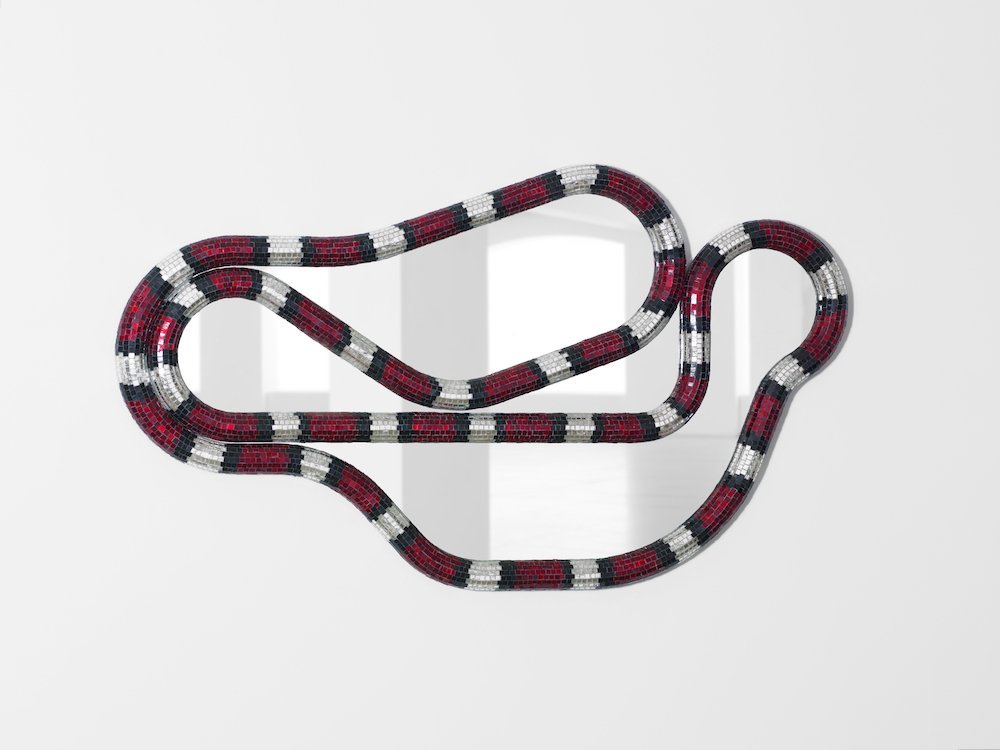
Snake Mirror by Jean-Baptiste Fastrez – © Fabrice Gousset, courtesy of Galerie kreo.
Tokyo-based company Ibasen handcrafts Uchiwa fans from washi and bamboo. Their Ibasen Zodiac Hand Fan collection features gold ink-embellished illustrations by French designer Jacque Averna, merging tradition with a modern twist. Each of the twelve Junishi Japanese zodiac animals is represented by their own fan, including the snake. The creature and sign “represent mystery, wisdom and intelligence. It will appear to slither as you open and close the fan.” You can find it in the MoMA design shop.
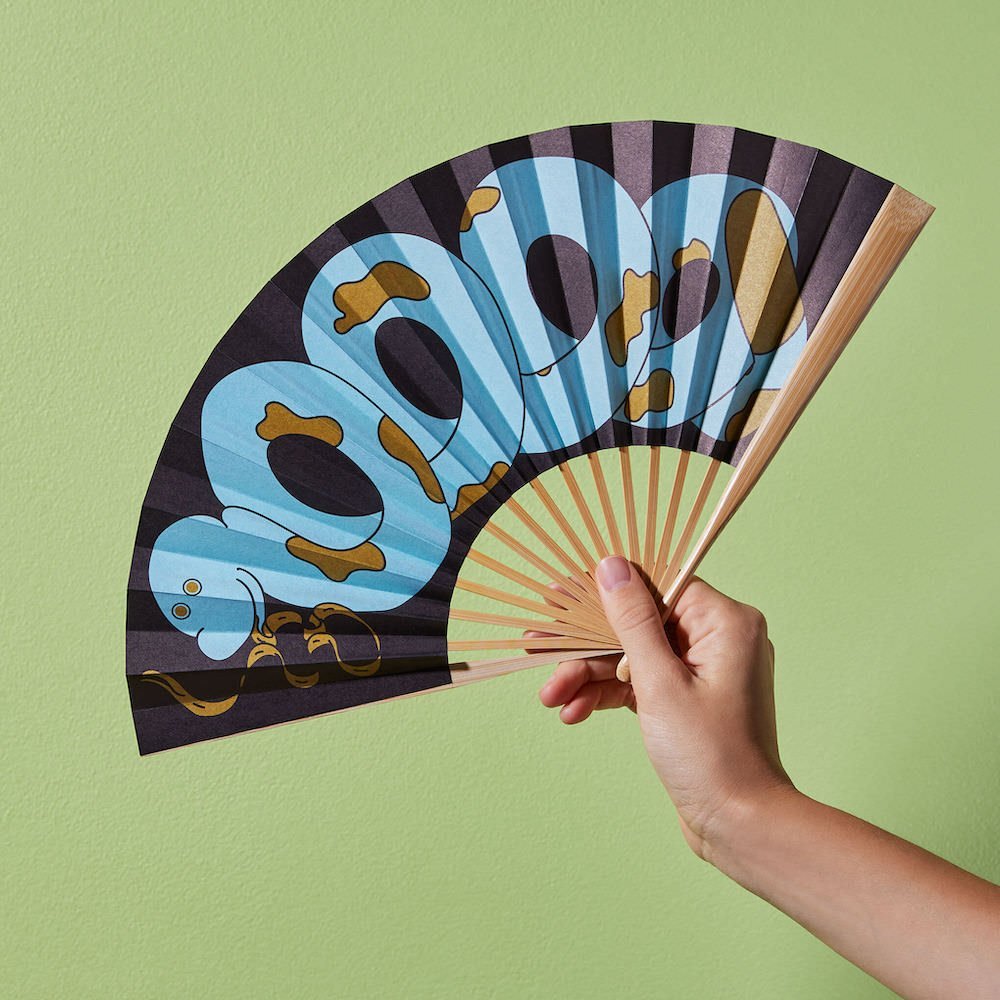
Ibasen Zodiac Hand Fan, Snake – Courtesy of MoMA Store.
For its Wunderkammer collection, Italian design brand Seletti proposes a proud snake challenging people with a clear message: DON’T STEP ON ME! Made of golden aluminium, the bold decorative object and creature invites you to hang jewellery on it. Dare you!
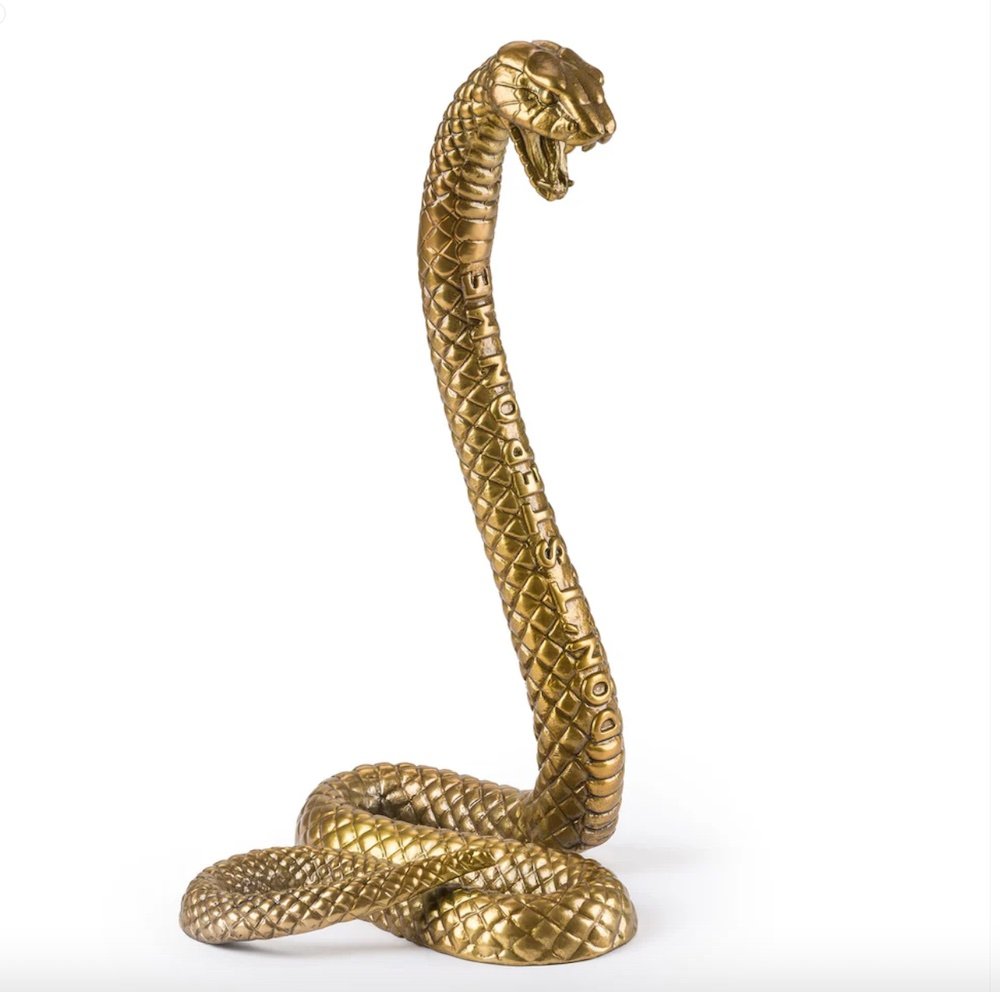
Wunderkrammer snake – Photo by Seletti.
Called Peccato Originale [Original Sin], this Fornasetti wall clock showcases an alluring snake holding an apple. Representing a classic symbol of temptation, the clock’s design embodies the timeless elegance of the Italian brand.
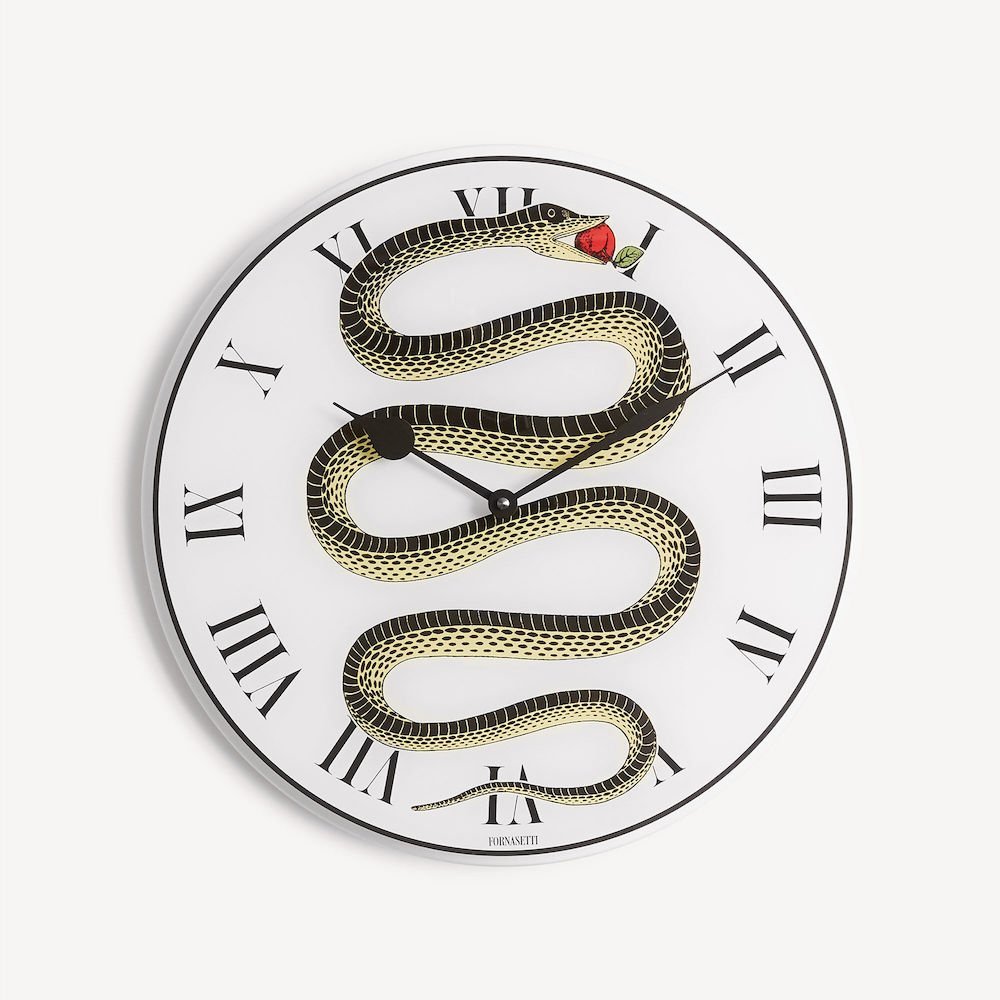
Peccato Originale wall clock – Photo by Fornasetti.
Last but not least – how could we forget this design icon? – is the famed Serpentone [Big serpent] by Cini Boeri. Designed in 1971 for Arflex and made from rubber and plastic, the ‘infinite sofa’ has no structure or covering and can be sold by the metre. Due to its lamellar structure, it can be shaped into continuous, potentially unlimited snaking forms. Although its debut caused a sensation, the sofa was neglected by the market and never went into serial production.
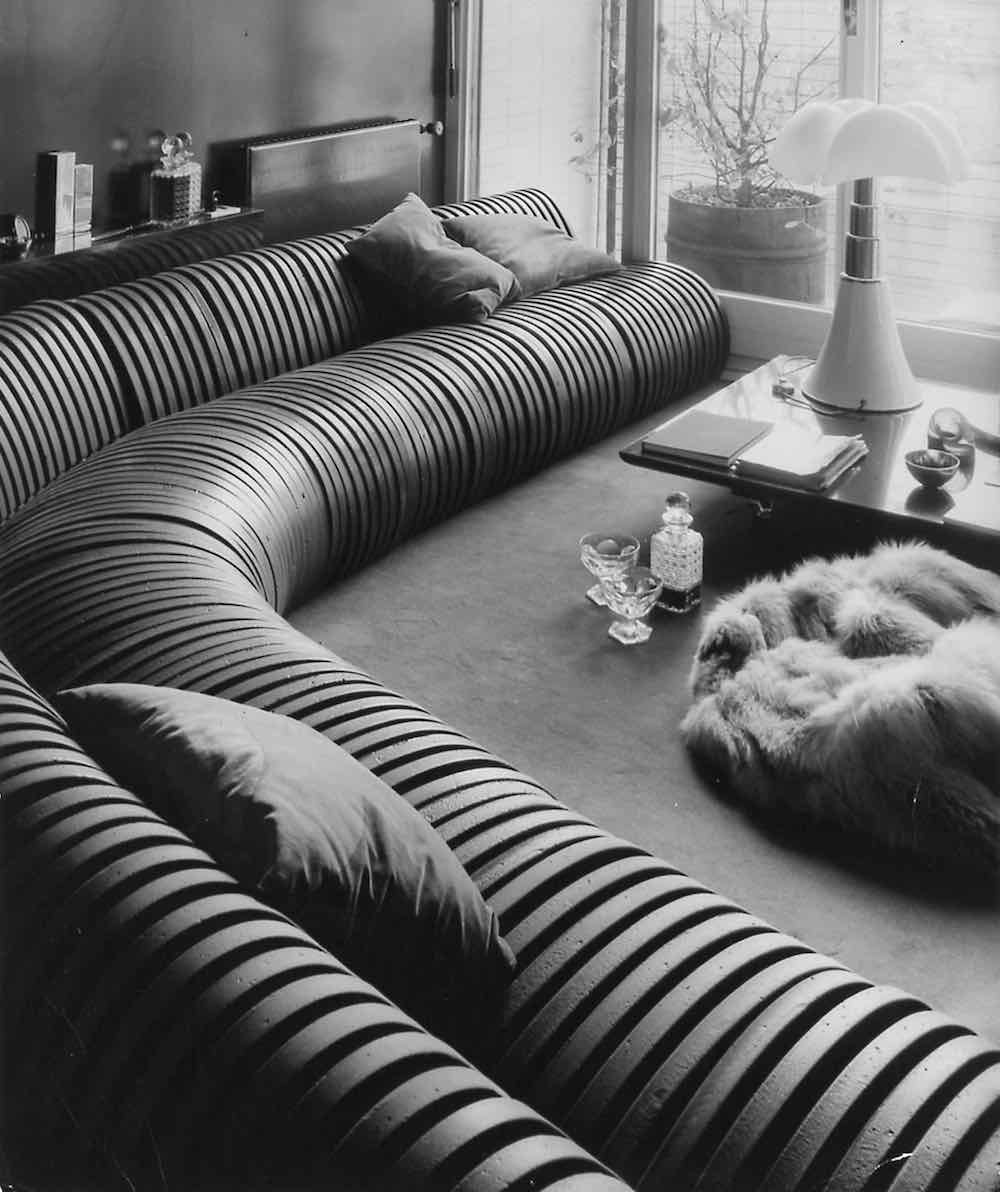
SERPENTONE by Cini Boeri x Arflex – Photo by Masera.

Serpentone by Cini Boeri x Arflex, 1971.
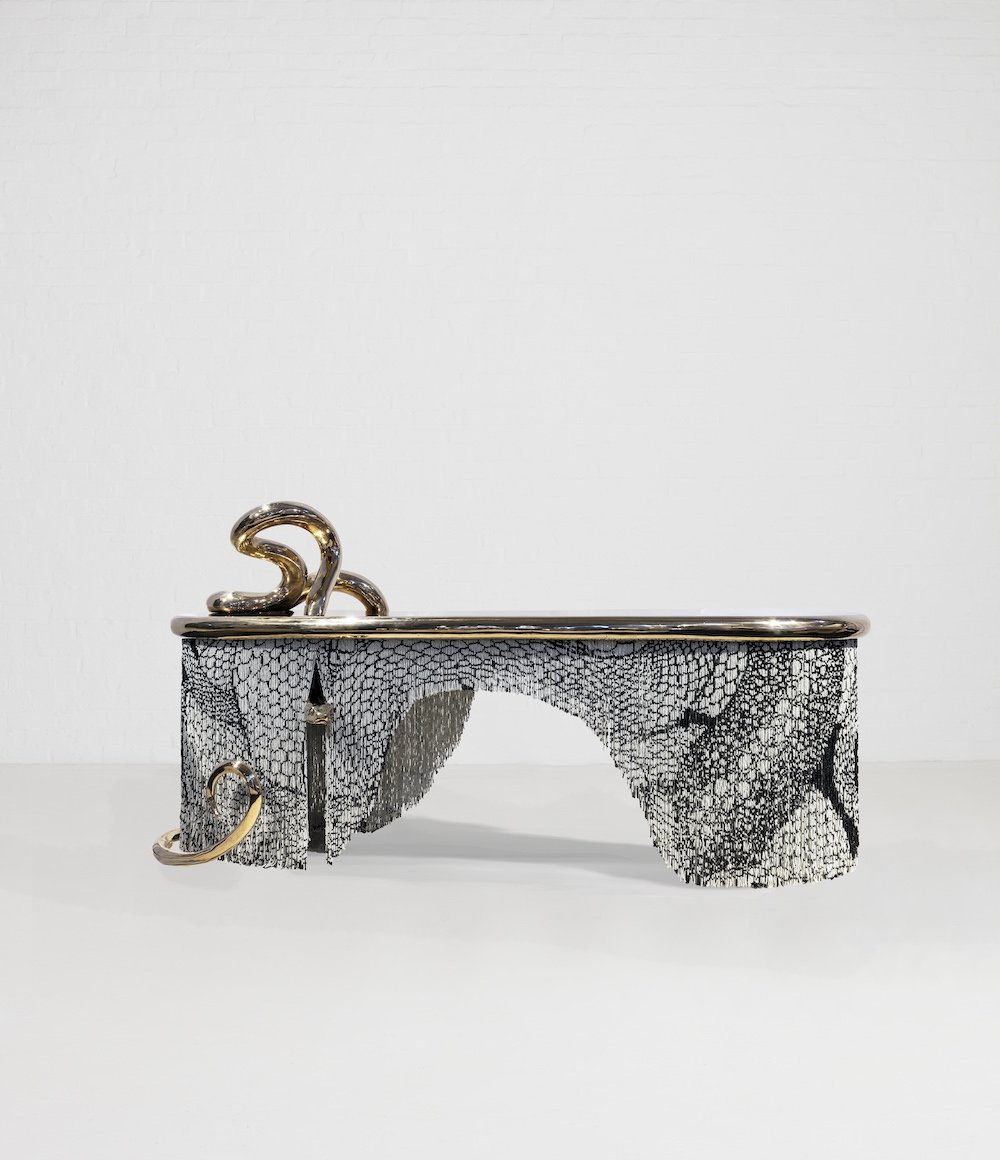
Rifuwo cabinet by Rich Mnisi – Photo by Christof Van der Walt and Southern Guild.