Weaving the landscape. Above: Racines collection by LUMA X Elitis – Photo by Mattia Zoppellaro.
Design. From Brittany’s windswept coastlines to Ghana’s rural settlements, from a resilient desert island in Bahrain to Alabama’s luxurious Black Belt, designers, artisans, and local communities are weaving the landscape into works that speak of ecology, heritage, and human connection. Across continents, textiles become more than materials — they become storytellers, meditative reflections, and bridges between people and place.
- RELATED STORIES: Discover more textile design projects on Archipanic.
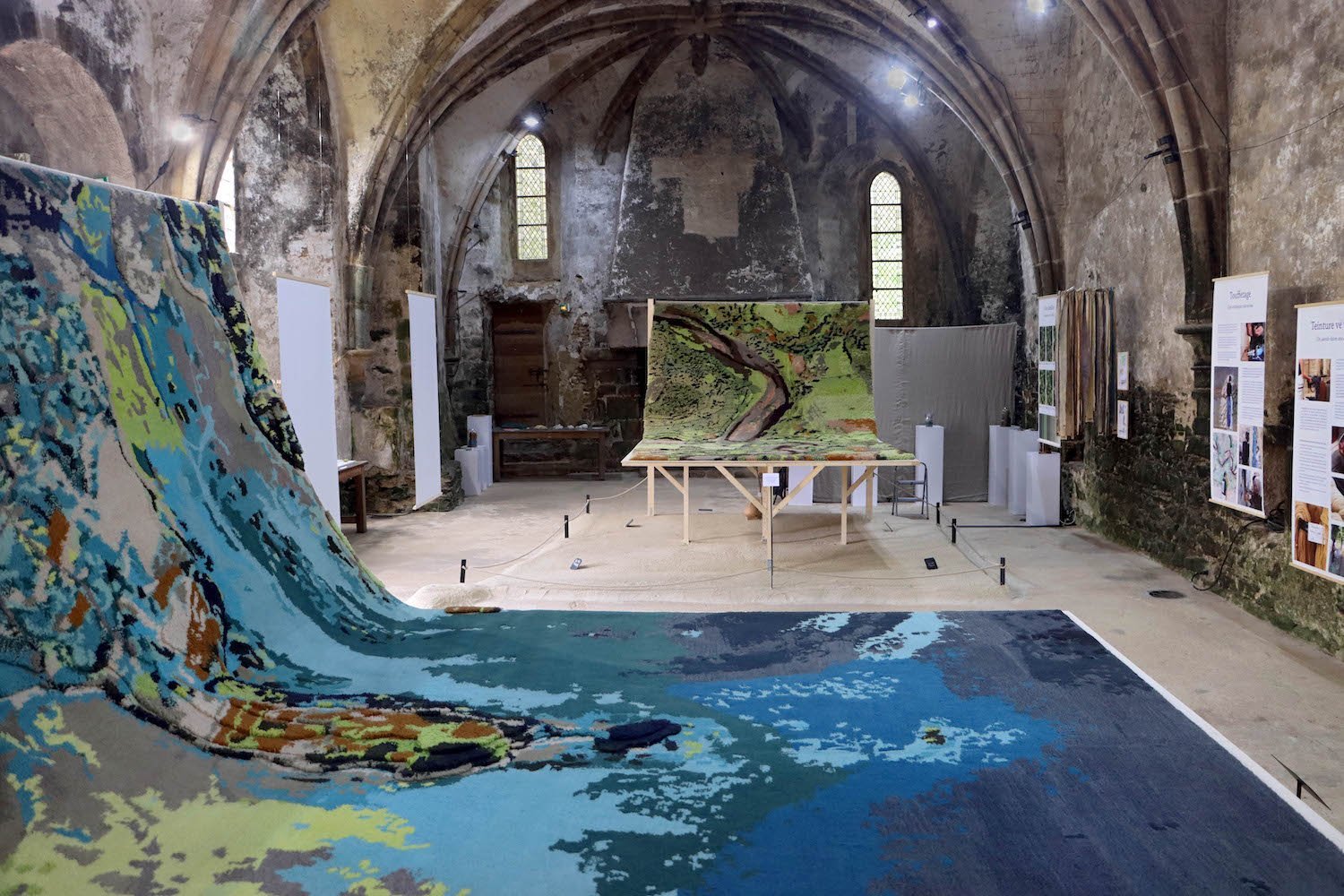
Pays’Âges by Dorian Étienne: Installation in Brittany – Courtesy of the designer.
In the heart of the Camargue in southern France — where sea, salt, and wind shape the rhythm of the land — a new kind of textile story takes root. Here, French manufacturer Élitis teamed up with Atelier LUMA, the design research laboratory of the Frank Gehry–designed LUMA Arles, to create Racines: a collection of fabrics that celebrates the region’s living ecosystem and the quiet poetry of its colours.
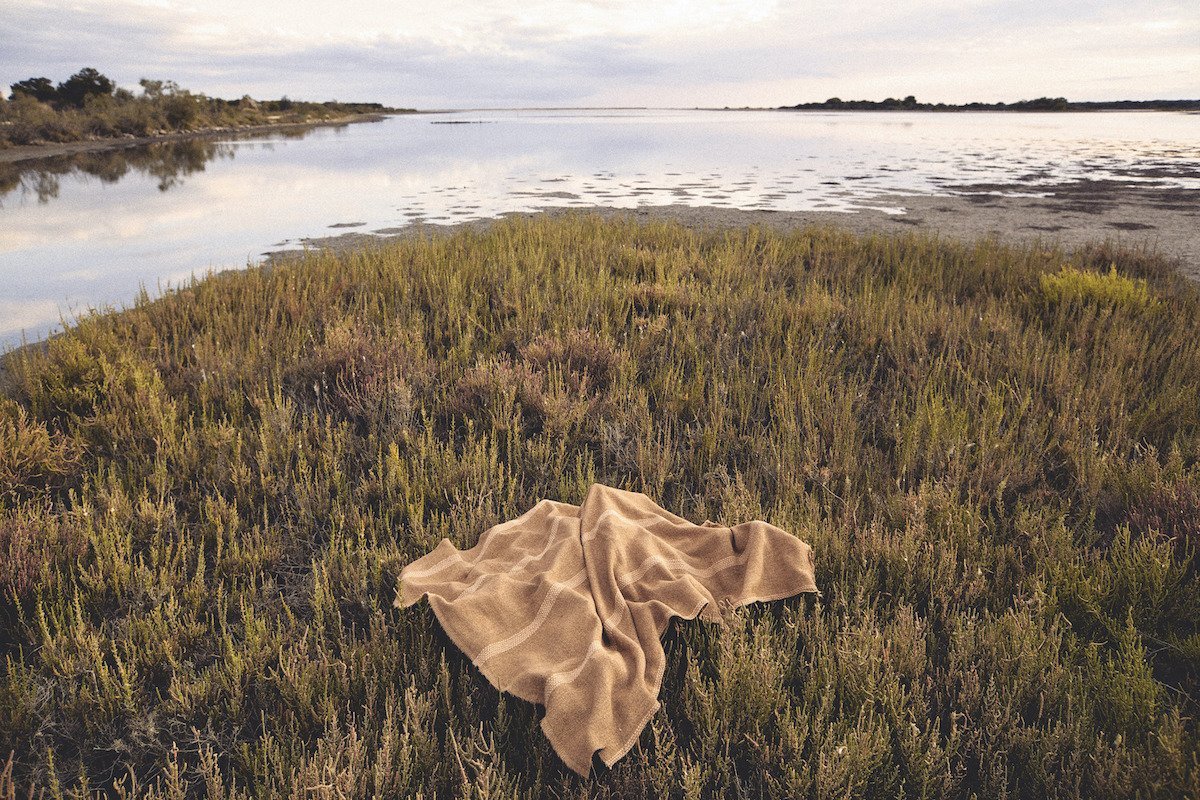
LUMA X Elitis – Photo by Joana Luz.
Born from the principles of bioregional design, Racines is more than a collection — it’s a collaboration between nature, craft, and community. Using Arles merino wool and locally sourced natural pigments, each fabric carries the imprint of its origin. Every hue in Racines tells a story — drawn from living organisms and developed in partnership with local dyeing workshops – reveals nature’s subtle language, weaving the landscape into thread and texture.
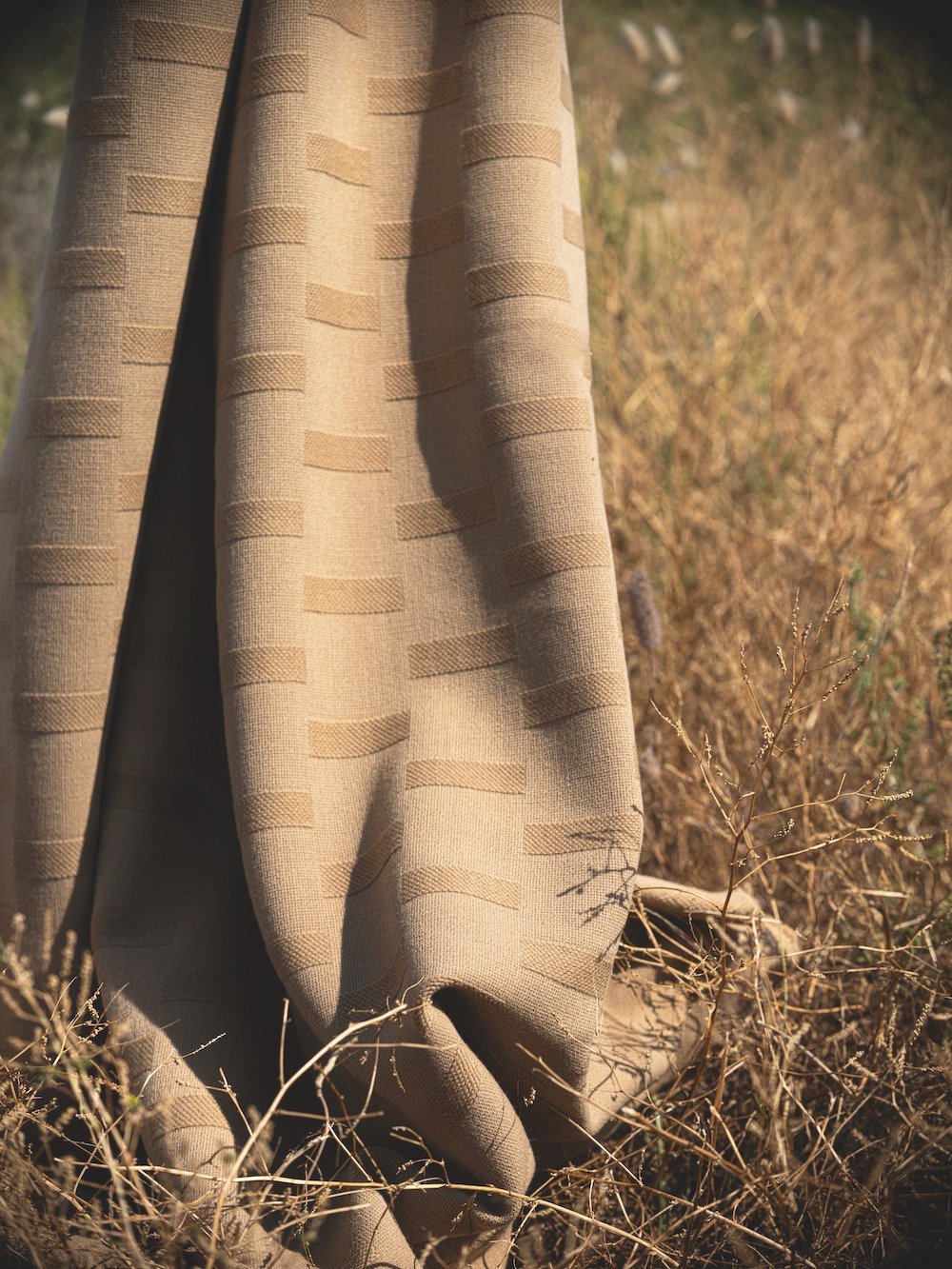
LUMA X Élitis – Photo by Joana Luz.
Further north, Brittany’s coastline inspires Dorian Étienne’s Pays’Âges. The project transforms bird’s-eye views of evolving topography and biodiversity into large-scale tapestries crafted on-site with 100% local, natural materials. For each piece, the French designer and traveller collaborates with local communities in a three-month residency.
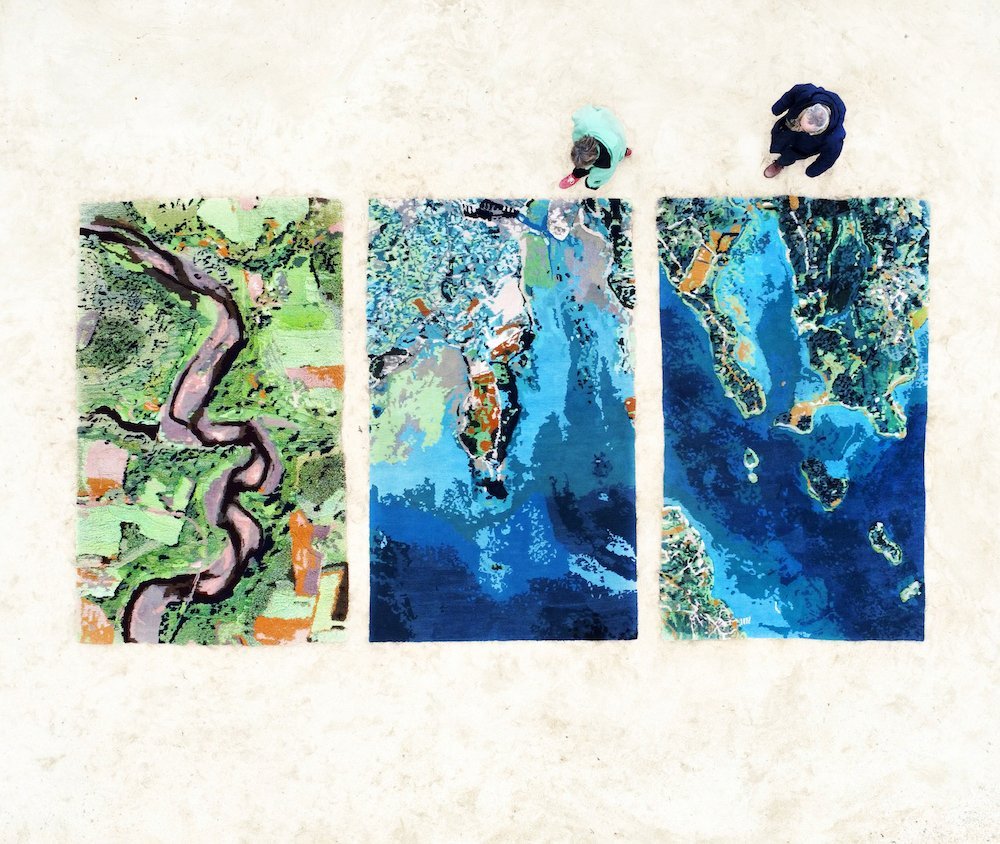
Courtesy of Dorian Étienne.
Residents of all ages learn tufting and plant-dyeing techniques, participating in a shared creation that fosters connection, memory, a deeper understanding of place, and environmental awareness. Thirty years from now, Étienne plans to return to weave a new tapestry, reflecting both ecological and social evolution — a gesture both poetic and hopeful. Pays’Âges reminds us that design can do more than depict the world; it can nurture the bond between people, place, and time.
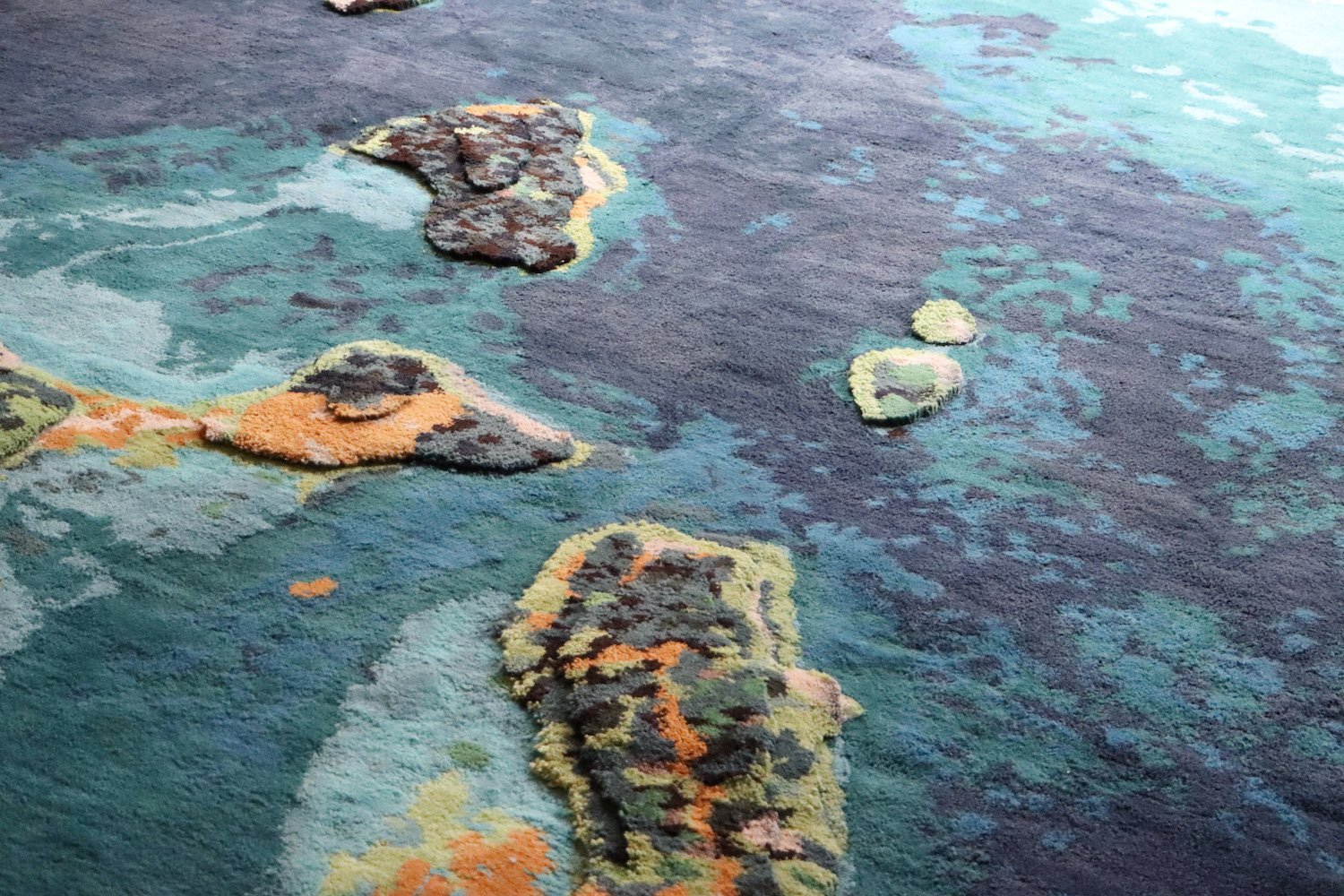
Courtesy of Dorian Étienne.
Meanwhile, Maraj, a Bahrain-based design platform, presented Stories of the Isle and the Inlet at Dubai Design Week, creating a textile installation that reimagines the vanishing landscape of the small island of Nabih Saleh, celebrating the connection between land, water, and community.

Stories of the Isle and the Inlet by Maraj at Dubai Design Week 2025 – Courtesy of Dubai Design Week.
Layered mesh textiles inspired by thob al nashil — traditional Bahraini garments — and crafted with local embroiderers narrate a fragile ecosystem and fading cultural memory. Through pattern, proportion, and ornament, the installation offers a contemplative archive of a disappearing landscape – its flora and fauna. Read more…

Courtesy of Dubai Design Week.
Sustainability and human connection continue to guide Álvaro Catalán de Ocón. For his PET Lamp project, the Spanish designer globe-trots to bring together craft, community, and sustainability. His Gurunsi collection, made with master weavers from the Baba Tree community in northern Ghana, draws inspiration from the branch-like structures of Frafra family rural villages. Each curve and knot tells a story of organic growth, heritage, and human connection, turning recycled materials into luminous narratives.

Gurunsi by Álvaro Catalán de Ocón at EDIT Napoli 2025 – Photo by Eller Studio.
In the Plastic Rivers series for Spanish brand GAN, rugs and tapestries are woven from recycled plastic debris, recreating aerial views of some of the world’s most polluted rivers: Ganges, Yangtze, Indus and Niger. Each rug becomes a critical perspective on plastic contamination, on the global trade of waste from rich to poor countries, and on the health of our vital water systems. Stitch by stitch, pixel by pixel, these rugs transform debris into tactile, thought-provoking works, merging artistry with urgent environmental storytelling.
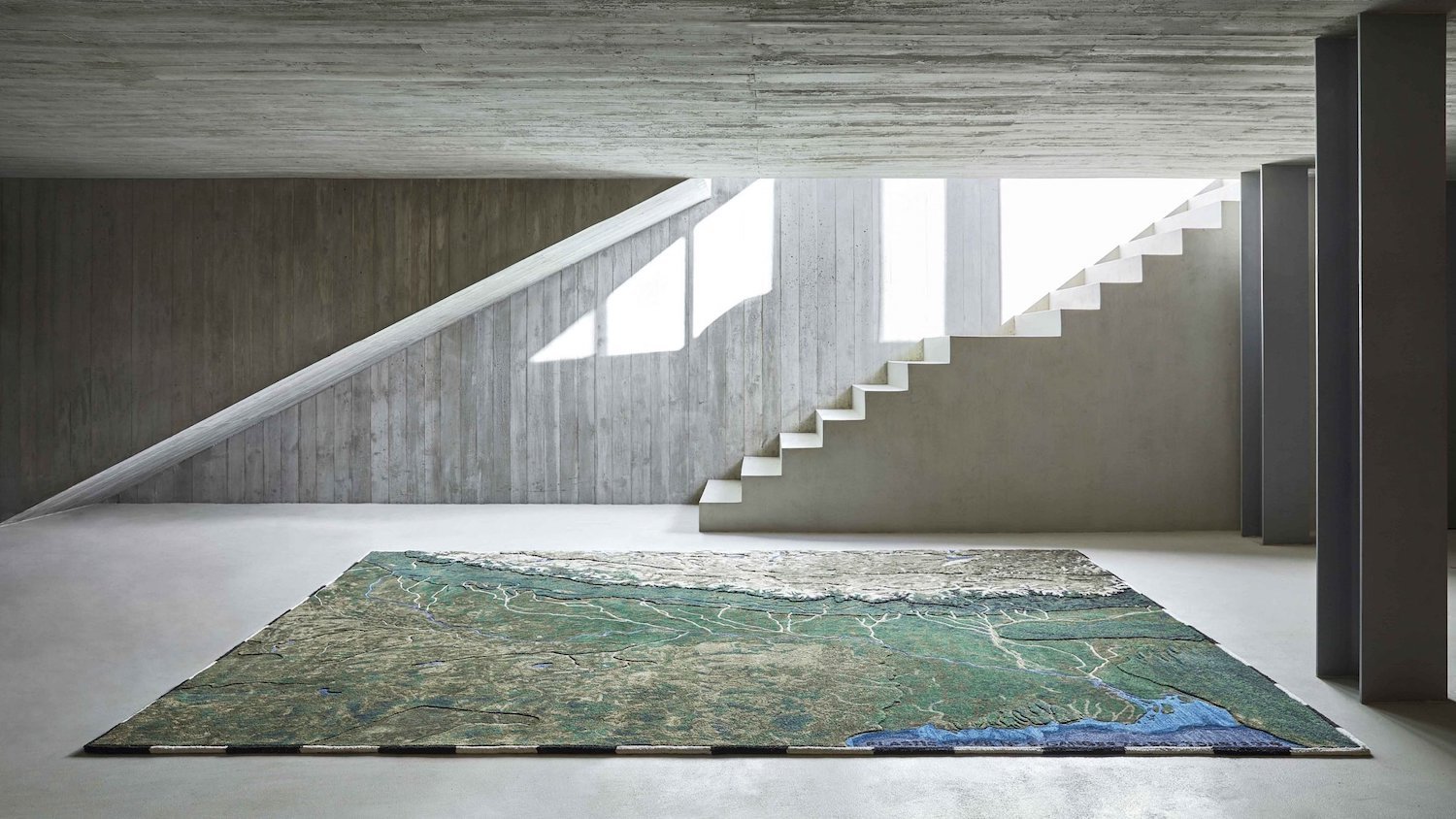
Plastic Rivers, the Ganges, by Álvaro Catalán de Ocón – Photo by the designer.
In Alabama’s Black Belt, quilt murals by the women of Gee’s Bend, a small, mostly African American community, flutter across fields of cotton, forests of longleaf pines, and red earth. These matrilineal textiles, handed down since slavery, embody resilience, memory, and kinship. Each abstract patchwork and vibrant colour is more than decorative; it is weaving the landscape, capturing history, connection, and the poetic rhythm of place.
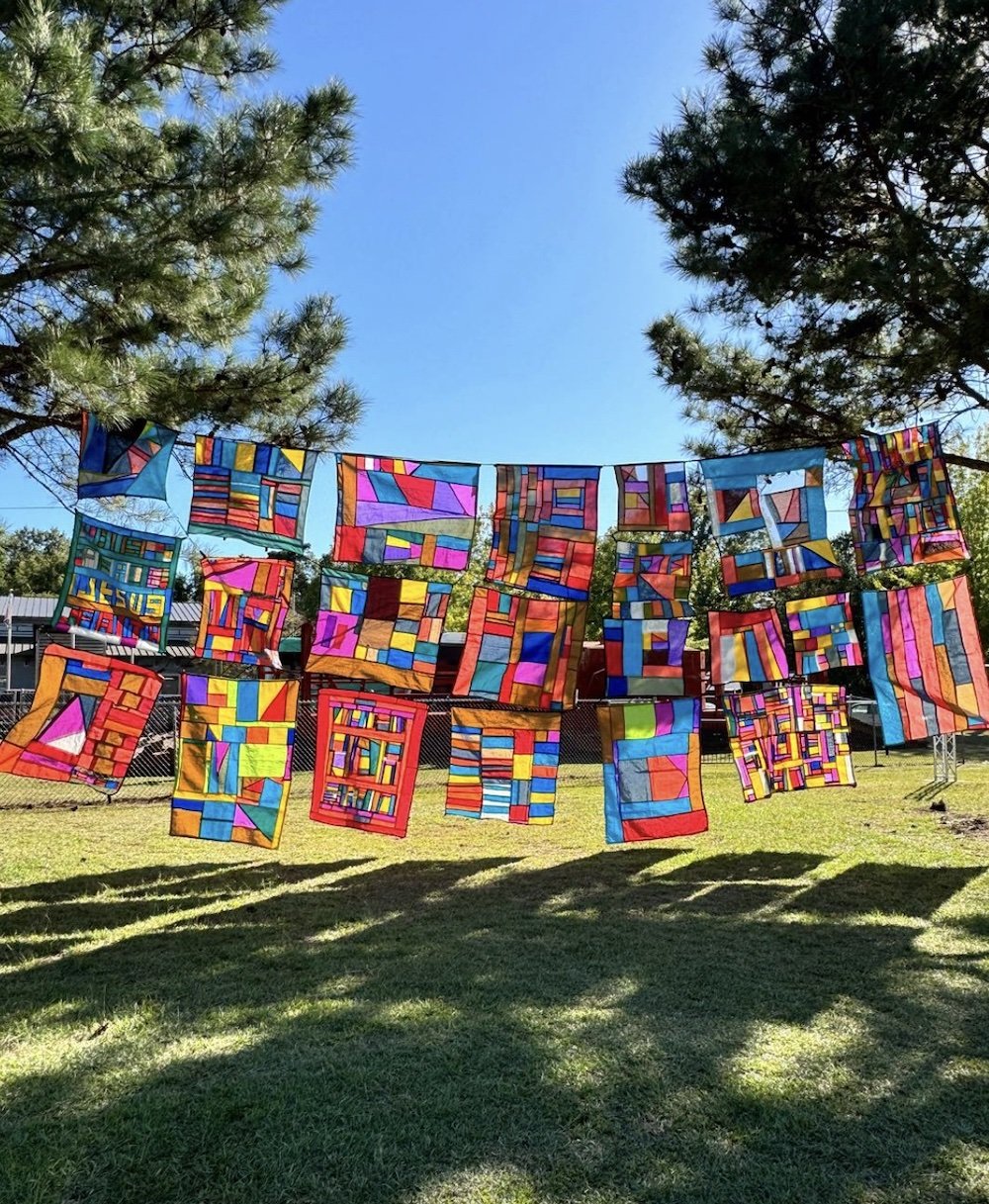
Gee’s Bend at the Airing of the Quilts Festival – Photo by Rachel Hayes.
Finally, Belgian designer Amandine David finds inspiration in water with MAAS RIVER, a handwoven cotton tapestry that captures the ever-shifting flow of the River Meuse—a work that is both meditative and deeply tied to place. Observing the river daily, she translated its ripples, light, and reflections into thread, embracing the gentle loss of detail from photography to weaving. The result is a tactile memory of motion, a meditative record of place, weaving the landscape through texture and rhythm.
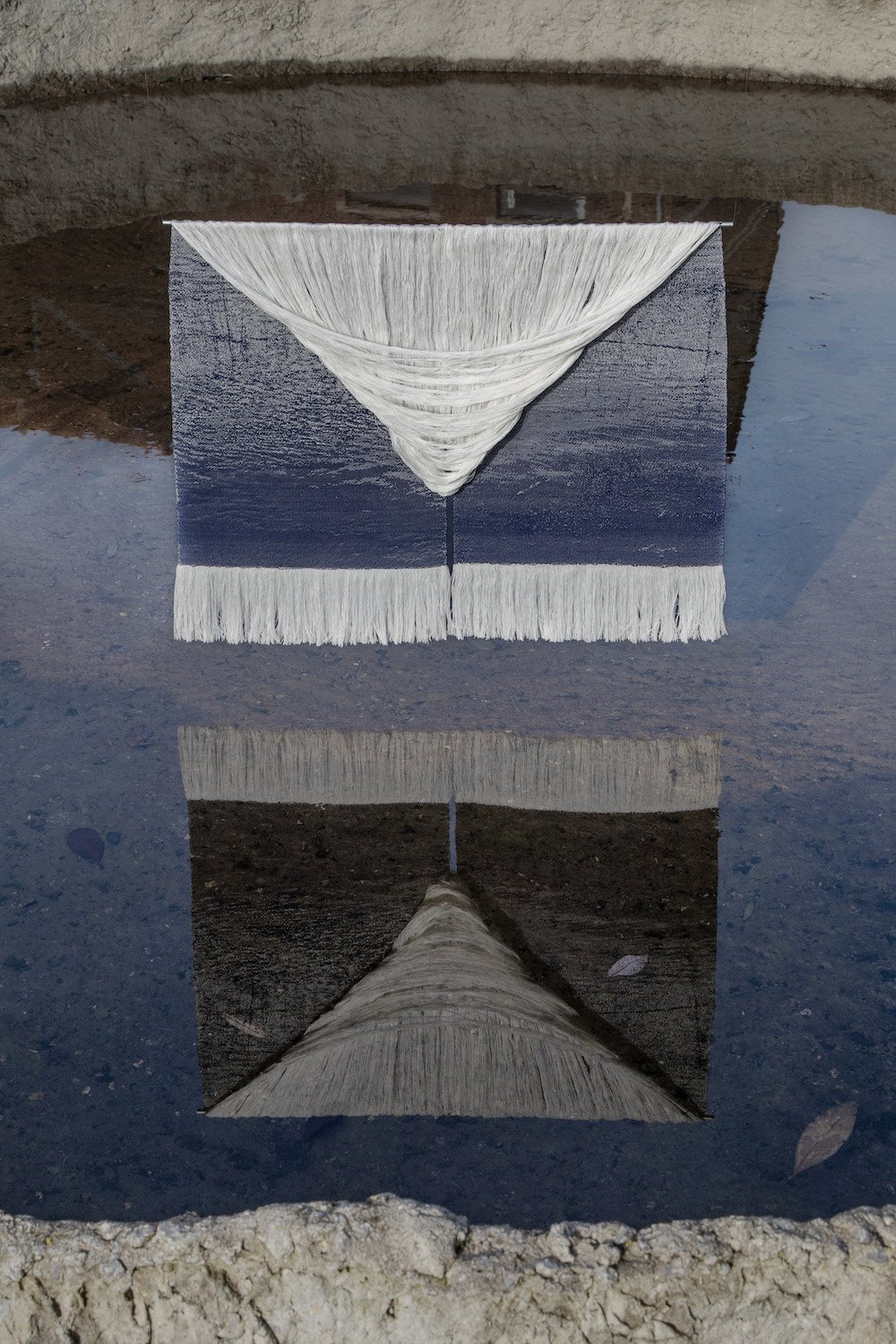
MAAS RIVER by Amandine David – Photo by ©Emile Barret.
Across these diverse projects, one thing becomes clear: whether through thread, dye, or recycled plastic, artists and designers are weaving the landscape — making visible the invisible bonds between humans, nature, and memory, and reminding us that textiles can be at once beautiful, meaningful, and transformative.
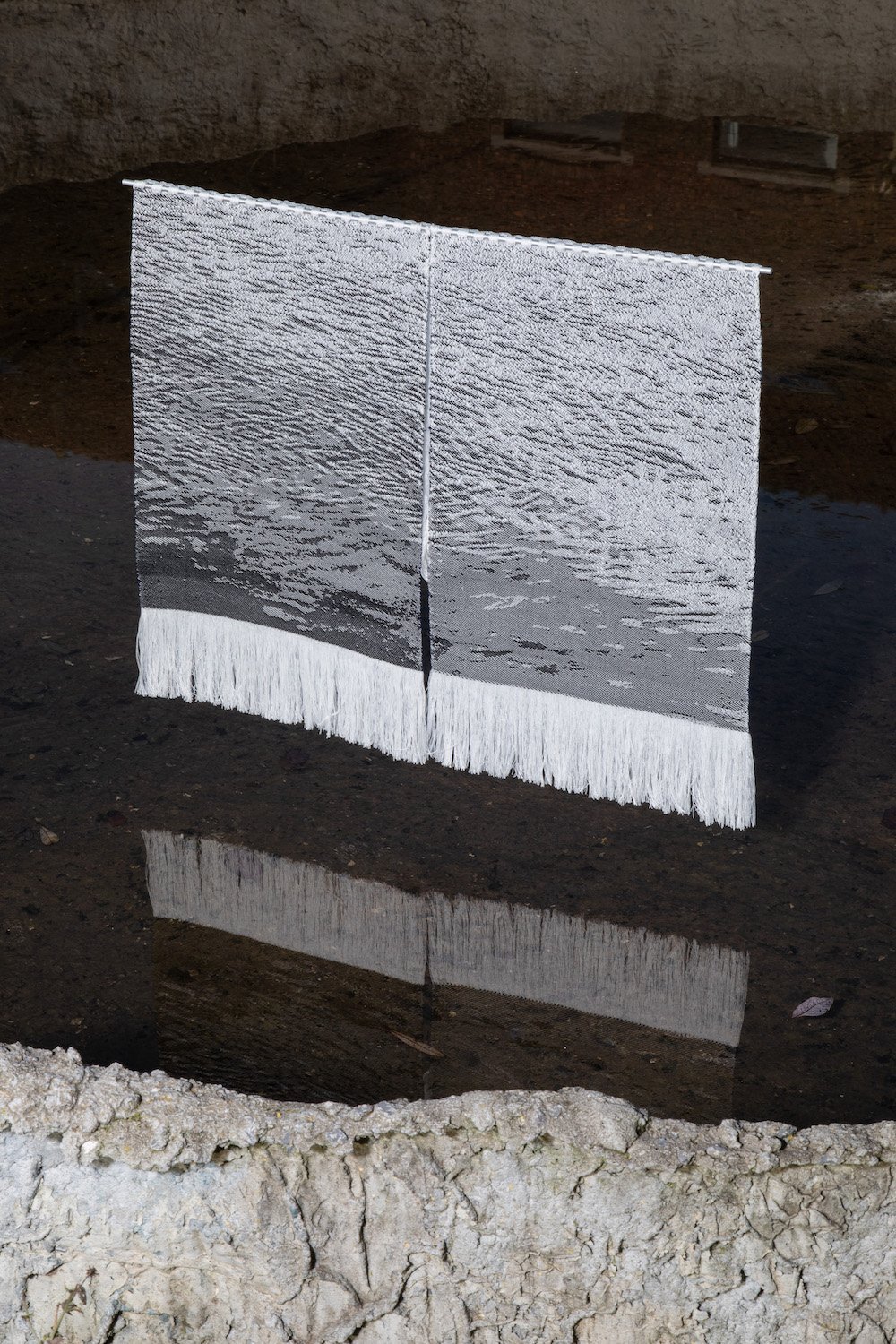
MAAS RIVER tapestry by Amandine David – Photo by ©Emile Barret.
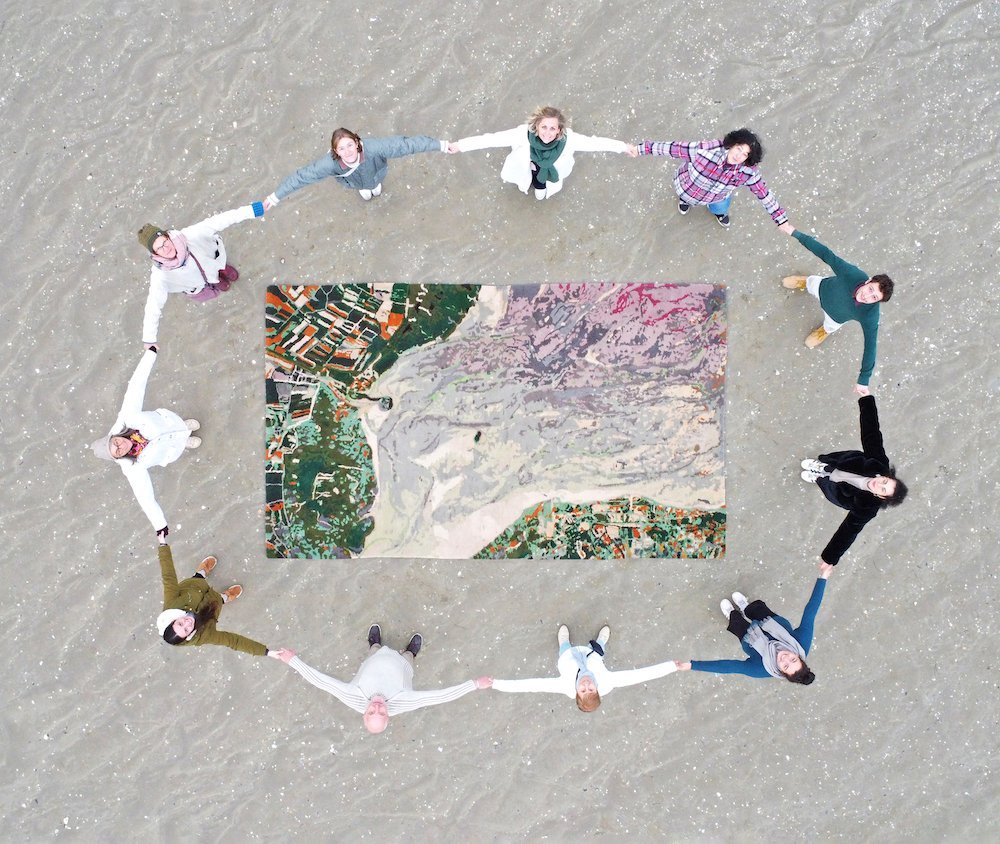
Pays’Âges by Dorian Étienne – Courtesy of the designer.