Haus Otto. Seven German Rising Talents at M&O 2025 – Photos by ©Anne-Emmanuelle Thion, unless indicated otherwise.
Design. The Fall edition of Maison & Objet 2025 shines a spotlight on seven German talents who balance functionality, sustainability, and innovation with ease. Presented in the fair’s brand-new Design District, their work stays rooted in Bauhaus and Werkbund traditions while boldly addressing today’s challenges.
- RELATED STORIES: Read more about Paris 2025 on Archipanic.
Gerlach & Heilig

Kyra and Lenn Heilig of Gerlach & Heilig reinterpret Black Forest heritage through modern techniques. Their CNC-milled furniture connects wooden parts with precision, reviving traditional joinery. The Hammered Stool, formed from a single laser-cut metal sheet, gains surprising strength and lightness through compressed air hammering.
[su_image_carousel source=”media: 45279,45280″ limit=”0″ slides_style=”minimal” crop=”none” columns=”2″ spacing=”no” dots=”no” autoplay=”1″ speed=”immediate”]
Their Hammered wall piece, created with nail gun punches, brings raw industrial energy into design. Completing the collection, a series of contemporary glass vessels pays tribute to antique Black Forest glassware while exploring new materials and technologies. “For us, it is about experimenting with curiosity to see where it leads us.”
Moritz Walter

Berlin designer Moritz Walter presents designs that combine technical ingenuity with a sense of calm. His Hotspot project explores decentralised heating through mobile storage units that can be moved around a room, offering both flexibility and efficiency. The Norm pendant lamp, made from a single aluminium sheet, minimises waste while radiating clean elegance.

He also unveils ergonomic smartworking furniture—a chair and desk designed to balance comfort with productivity. “I think products should be approachable, unobtrusive and offering a certain calmness,” he explains, revealing how his work embodies a reduced yet impactful aesthetic.
Studio Œ

Berlin-based Studio Œ, founded by Lisa Ertel and Anne-Sophie Oberkrome, celebrates design’s ability to bridge cultures and contexts. Their OTO console in vivid blue layers storage across two levels, while the Dopo pink stool for Marazzi brings a bold pop of colour. A light green chaise lounge balances softness and freshness, complemented by an aluminium speaker that merges technology with refined craftsmanship.
[su_image_carousel source=”media: 45293,45292″ limit=”0″ slides_style=”minimal” crop=”none” columns=”2″ spacing=”no” dots=”no” autoplay=”1″ speed=”immediate”]
“Our work is inspired by the unique spirit of a place, navigating the intersection of analogue and digital, culture and nature,” they say. “Each project carries its own distinct influence and story, but what ties them all together is a deep respect for the materials we work with.”
Haus Otto

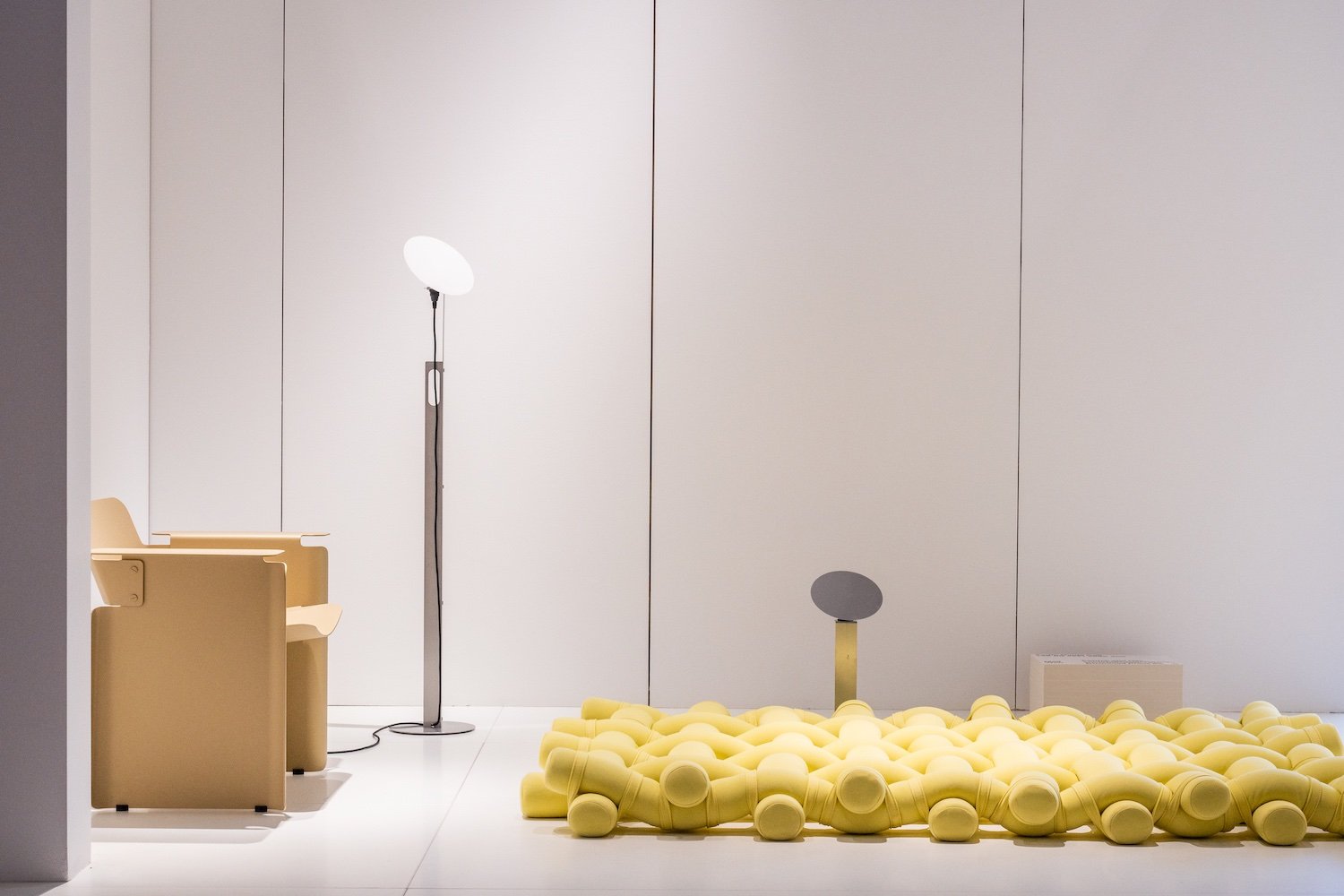
Stuttgart’s Haus Otto, led by Patrick Henry Nagel and Nils Körner, presents designs that merge humour, sustainability, and adaptability. La Dré, a circular lampshade, shifts lighting moods by rotating and tilting, turning illumination into play. Zoom doubles as both a bold woven rug and an inviting daybed, blurring lines between furniture and textile.

AL13, a lounge chair for Dante, is made from laser-cut aluminium sheets and designed for easy disassembly, repair, and recycling. “We believe we must think about products within a much wider context. Not only what they look like, but what materials are used, how they are sourced and what happens to them at the end of life.”
Marie Luise Stein

Marie Luise Stein highlights modularity as a way to keep design flexible and relevant. Her minimalist Thonis chair stacks neatly, making it perfect for spaces that change with time. The Lisel shelving system, mounted elegantly on the wall, offers endless arrangements and adapts to shifting needs. Completing the presentation, the LOVIS hanger uses basic geometric shapes to create surprising multifunctionality.
[su_image_carousel source=”media: 45285,45286″ limit=”0″ slides_style=”minimal” crop=”none” columns=”2″ spacing=”no” dots=”no” autoplay=”1″ speed=”immediate”]
“Contemporary life is rarely static: spaces change, routines shift, and so do the ways we use and relate to objects. A modular approach allows furniture to respond to such changes,” she explains, showcasing design that grows with us.
Friedrich Gerlach

Friedrich Gerlach showcases how design can transform hidden research into tangible objects. His 3D-printed sofa combines sustainability with comfort, offering a glimpse into the future of furniture. Biodegradable cutlery made from repurposed plastic waste, produced through an open-source injection machine, redefines the everyday dining experience. A striking blue side table balances playful aesthetics with practicality.

“Many existing innovations already offer answers to today’s ecological and social challenges, but they often remain hidden in research environments. Through design, I try to make them accessible and relatable – to open new ways of thinking about production and material use.”
Gabriel Tarmassi

Based in Bamberg, Gabriel Tarmassi carves his sculptural works from timber, where art, design, and craft meet. “My pieces are inspired by the formations we find in nature, but the material itself is already telling a story,” he explains. Through the act of making, he reveals layers of growth, letting the grain’s unique expression shape each work.
Seven German Talents in Paris: All photos are by ©Anne-Emmanuelle Thion, courtesy of Maison & Objet. Unless otherwise indicated.