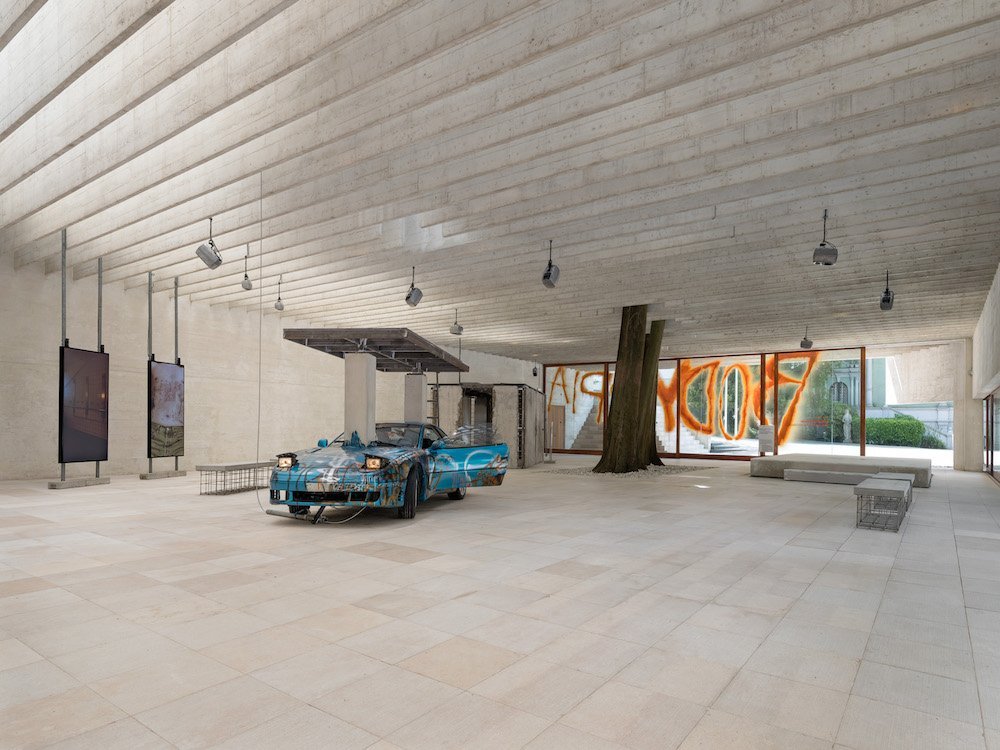
‘Industry Muscle’ exhibition at the Nordic Pavilion, 2025 Venice Architecture Biennale – Photo by ©Ugo Carmeni.
Architecture. The Nordic Pavilion at the 2025 Venice Architecture Biennale presents Industry Muscle: Five Scores for Architecture, an exhibition exploring the trans body as a lens through which to examine the relationship between modernist architecture, the built environment and the ecological collapse due to fossil-fuel systems.
- RELATED STORIES: Read more about the 2025 Venice Architecture Biennale on Archipanic.
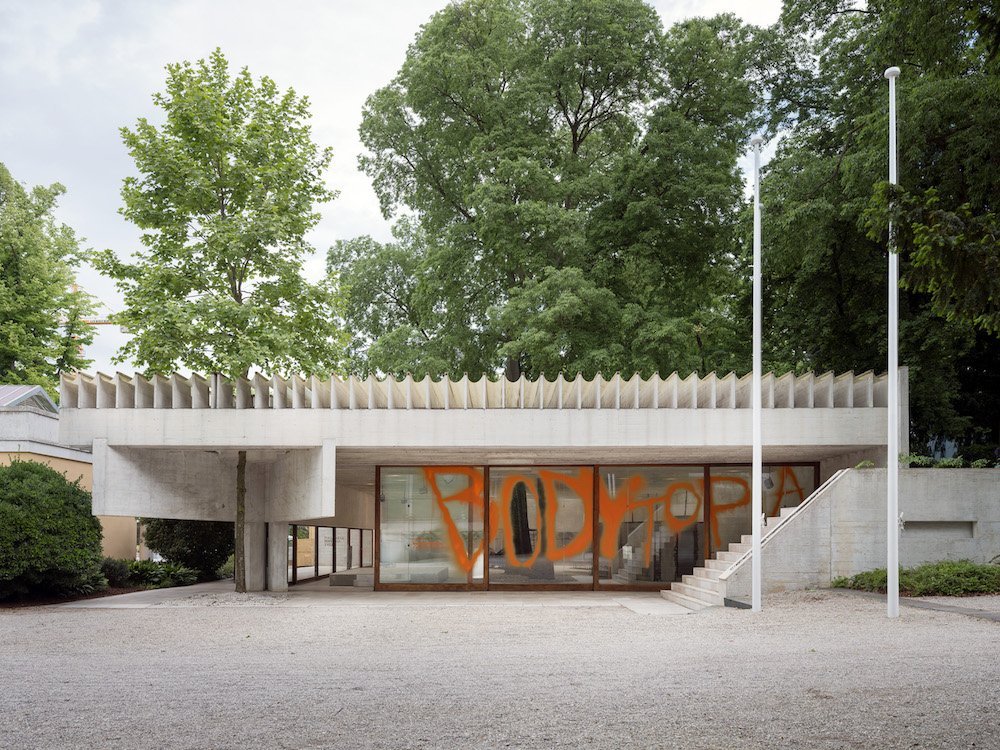
Photo by ©Ugo Carmeni.
Curated by Kaisa Karvinen for the Architecture & Design Museum Helsinki, the exhibition features five installations and performances by Finnish artist Teo Ala-Ruona and his multidisciplinary team, including graphic designers, dramaturges, architects, fashion designers and visual artists.
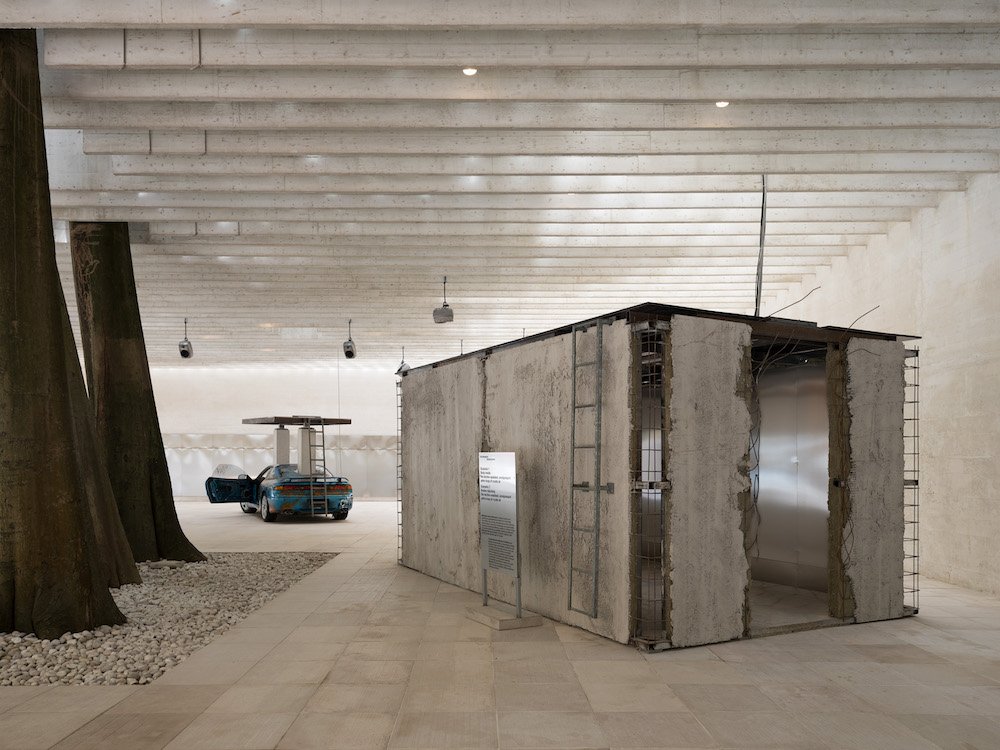
Photo by ©Ugo Carmeni.
The Nordic Pavilion, a modernist masterpiece designed by Sverre Fehn in 1962, becomes the stage for an alternative model for architectural practice that takes the trans body as its starting point. Industry Muscle features artworks such as graffiti on the exterior of the building, a car pierced by concrete columns, and a rough concrete-and-steel shelter. Actors move and dance thoughout the space. The speculative scores serve as critical prompts for future architectural practice.
[su_image_carousel source=”media: 43819,43820″ limit=”0″ slides_style=”minimal” crop=”none” spacing=”no” captions=”yes” dots=”no” autoplay=”1″ speed=”immediate”]
“Modernist architecture shaped cities and living spaces with a binary – man and woman – perspective,” explains curator Kaisa Karvinen. “A trans point of view can unlock new approaches that resist this standardisation, not only related to gender and identity but also to larger cultural frameworks, such as architecture’s deep entanglement with fossil fuel-based systems.”
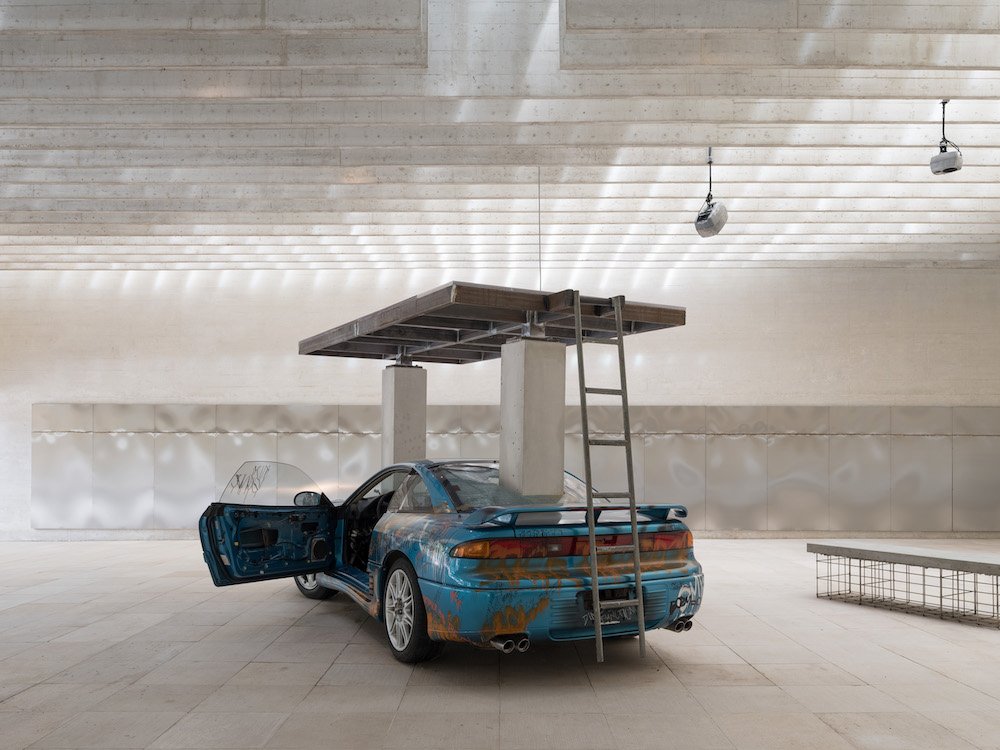
Photo by ©Ugo Carmeni.
“When the systems that have long guided our understanding begin to fail, new forms of thinking are needed,” says Carlo Ratti, curator of the 2025 Venice Biennale. Teo Ala-Ruona says: “The built environment is largely shaped by prevailing cultural norms. These norms play a significant role in how bodies are presented in everyday life, as well as in the ecological burden of the construction industry. Together with my team, I want to spark new conversations and explore how architecture can challenge the status quo.”
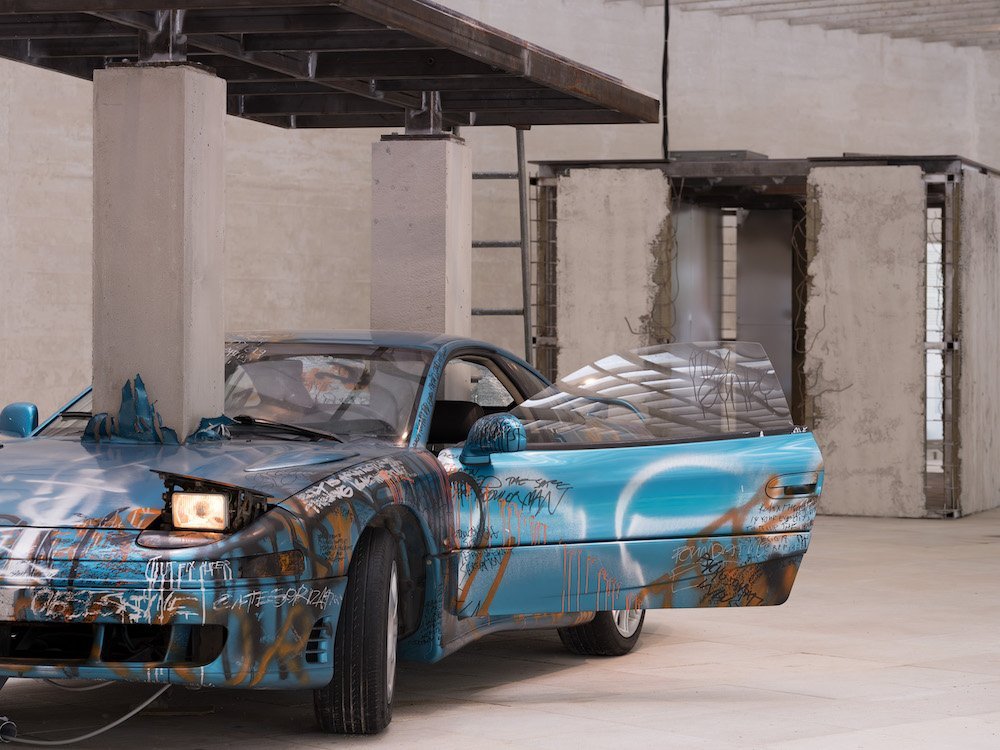
Photo by ©Ugo Carmeni.
All photos are by ©Ugo Carmeni and Venla Helenius, courtesy of the Architecture & Design Museum Helsinki.
- RELATED STORIES: Discover more Nordic architecture and design on Archipanic.
[su_image_carousel source=”media: 43823,43824″ limit=”0″ slides_style=”minimal” crop=”none” spacing=”no” captions=”yes” dots=”no” autoplay=”1″ speed=”immediate”]
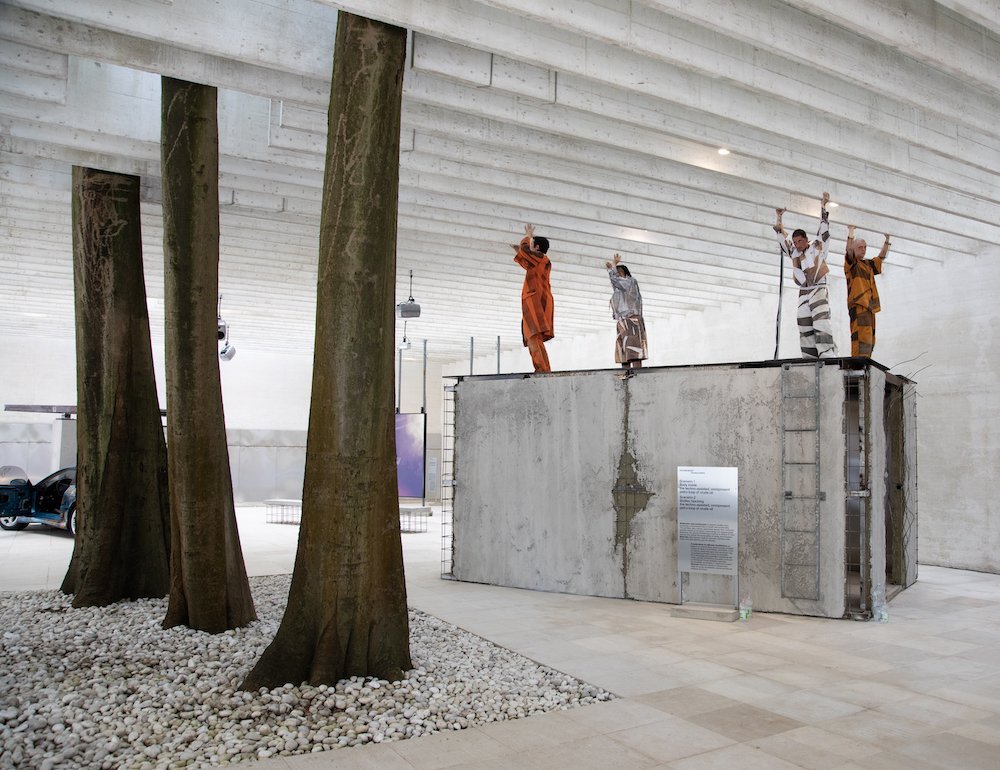
Performance. Photo by Venla Helenius.
[su_image_carousel source=”media: 43825,43826″ limit=”0″ slides_style=”minimal” crop=”none” columns=”2″ spacing=”no” captions=”yes” dots=”no” autoplay=”1″ speed=”immediate”]