FOOD exhibition @ Design Museum Holon, Israel. Knitted in-vitro-grown steak – All photos are courtesy of Design Museum Holon.
Design – Until November 11, the Food exhibition at Design Museum Holon features over 200 works by Naoto Fukasawa, Ron Arad, FormaFantasma, Bompas and Parr, Mischer’Traxler Studio and many other artists and designers from Israel and around the world.
- RELATED STORIES: discover more food-related design and architecture stories on Archipanic.

Photo by Elad Sarig.
“In 2016, we held an exhibition about vision and eyeglasses [read more]. In 2017, the exhibition ‘Sound’ was devoted to hearing [read more]. It seemed only logical that our next exhibition about the senses would be concerned with food.” Explains Maya Dvash, Chief Curator of Design Museum Holon. “The exploration of food and the processes of its design and consumption reveal a range of design-related considerations, emphases, and choices while raising questions about the impact of food on culture, identity, and the emotions that shape our experience.”

Photo by Elad Sarig.
The museum dedicates its entire exhibition space to three distinct exhibitions: Food, Color, and Taste of The Future.
Curated by Liora Rosin and Dana Benshalom, Food examines the elusive relationship between humans, food, and seduction – because, after all, we all are what we eat. In the design world, food is a raw material. Designers today are involved in researching, developing, and designing various stages in the life cycle of food while responding to contemporary consumer culture, at times even critically.

Junk Food Mandala by Einat Arif-Galanti – Photo by Einat Arif-Galanti.
For example, Einat Arif-Galanti created mandalas made of junk food to raise food waste awareness. The Chocolate series by Naoto Fukasawa was inspired by the proverb Nine out of ten people love chocolate; the tenth always lies. The room-sized Cloaca Machine by Wim Delvoye simulates the human digestive system.

Cloaca machine by Wim Delvoye – Photo by Elad Sarig.
“Surprisingly, taste is the last of the five senses to participate in our eating experience. The other four senses are responsible for the sense of desire or repulsion that food awakens in us,” explained the curators. In Bompass & Parr’s quirky project Cake Holes, food is fetishised and becomes a crucial ingredient in sexual gratification.
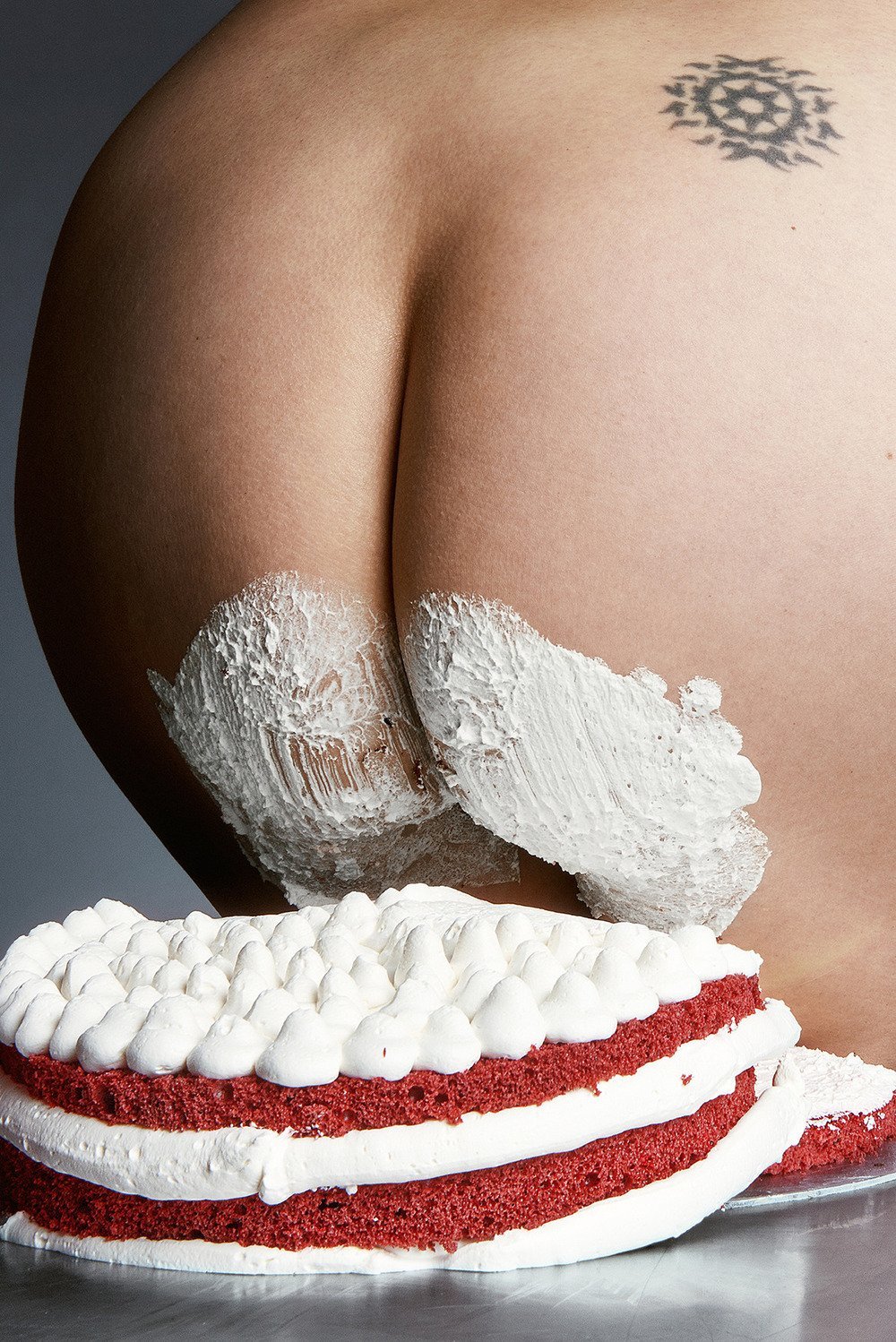
Cake Holes by Bompass & Parr – Photo by JuDuck.
From Ancient Egypt to the Era of Social Media, we have always tinged our food to make it more alluring. Lior Hermoni-Gati, Director of Aharon Feiner Eden Materials Library, curated the Colored exhibition, exploring the role of food colouring and how vision influences our interpretation of the colours of our food.

Photo by Elad Sarig.
The exhibition responds to some important questions. What is the nature of colour today? The growing awareness of the dangers inherent to industrial food products and synthetic food colouring has led to a demand for natural ingredients, requiring food producers and marketing specialists to get creative.
What is the taste of colour? Red is generally identified with sweetness and ripeness, while green is identified with acidity and freshness, and so on. Ranging from food stripped of its original colour to foods with impossible colours, and vibrant packaging, the exhibition focuses on the ability of our sense of sight to read, interpret, and analyse the colour, flavour, and cultural meanings of different foods.

Photo by Elad Sarig.
The Design Laboratory hosts A Taste of The Future, an interactive, AI-powered sensory installation curated by Talia Janover that examines the future of food. What will be the role of insects, mushrooms, and seaweed in our nutrition? What techniques will we use to prepare the foods of the future, and what will they be made of? Bistro in Vitro presents a knitted steak knitted with in-vitro-grown meat. Krill Design devised a technology to 3D-print food waste like orange peels and coffee.

Photo by Elad Sarig.
How can we enrich the sensory experience of eating by means of other senses? And how can heirloom seeds participate in restoring the delicate ecological balance for future generations? The exhibition also encourages visitors to explore the relationship between scent and memory while appreciating the beauty of imperfection.
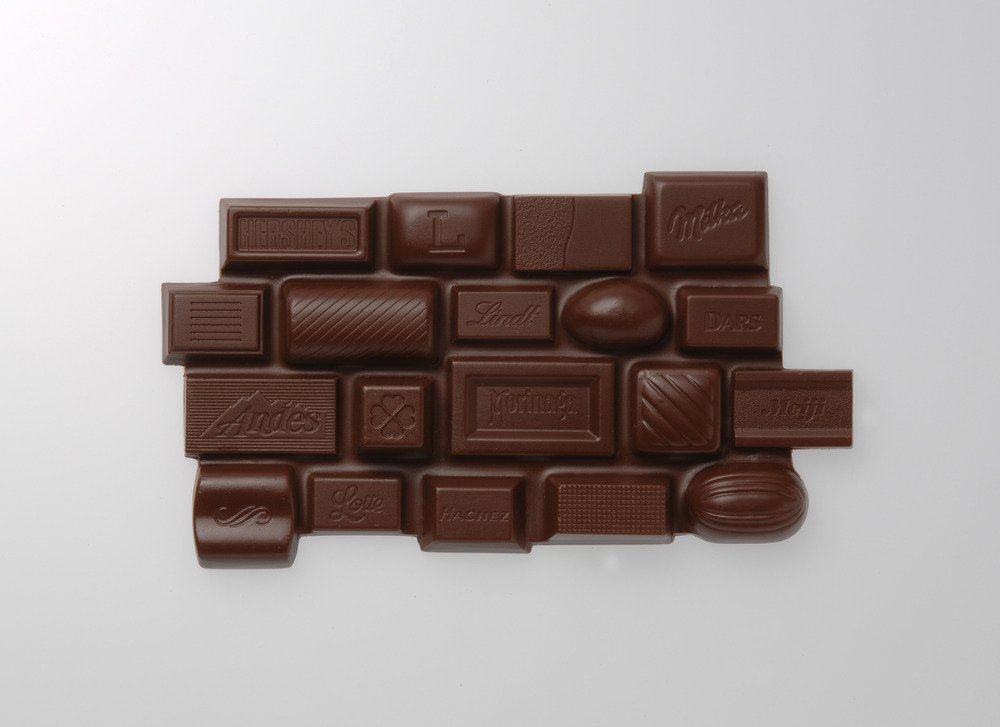
Chocolate series by Naoto Fukasawa – Photo by Hidetoyo Sasaki.
- All photos are courtesy of Design Museum Holon.