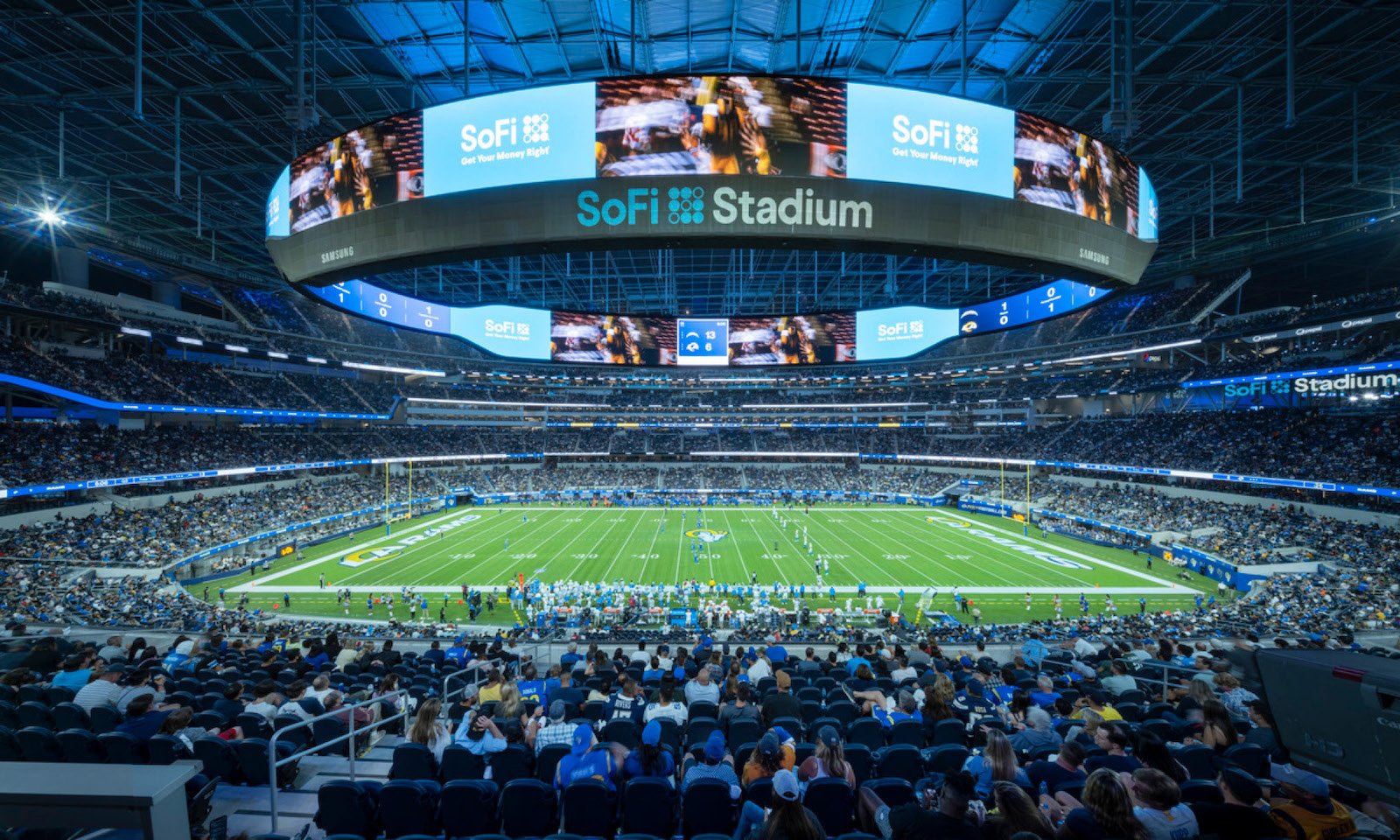
Best architecture of FIFA World Cup 2026. Above: SoFi Stadium by HKS Architects – © Nic Lehoux.
Architecture. The FIFA World Cup 2026 is well underway, transforming North America into football’s biggest stage. For the first time, three host nations — Canada, Mexico and the USA — come together, with matches running until 19 July. Beyond the pitch, the venues themselves are worth a closer look: a mix of storied arenas steeped in football history and cutting-edge stadiums flexing serious architectural muscle.
- RELATED STORIES: Read more about the architecture and design of the FIFA World Cup 2026.
SoFi Stadium
Los Angeles, USA — 70,000 capacity.
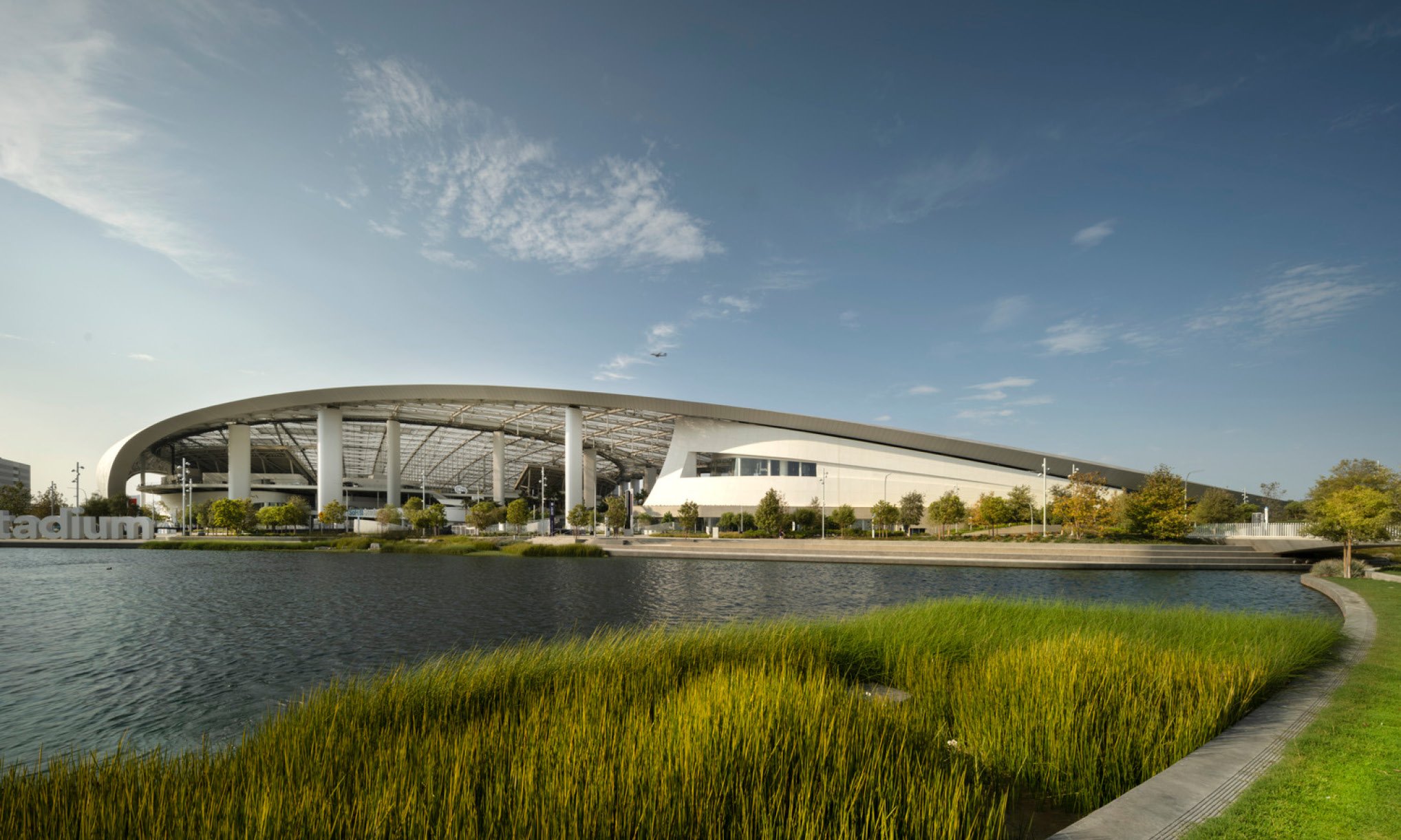
© Nic Lehoux.
Completed in 2020 for a reported $5.5 billion [reportedly the most expensive stadium ever built], SoFi Stadium by HKS Architects is home to the LA Chargers and LA Rams. Its striking roof, woven from ultra-lightweight ETFE, stretches across more than a million square feet, extending well beyond the bowl itself. HKS Architects describe the arena as one that “reinterprets the concept of the ancient amphitheatre in a contemporary form.” Add a colossal LED video board and it’s easily one of the most tech-forward venues on the FIFA World Cup 2026 roster.
Mercedes-Benz Stadium
Atlanta, USA — 75,000 capacity.
Mercedes-Benz Stadium by HOK Studio is best known for its retractable roof and ring-shaped video board, offering near-seamless sightlines from every seat. The design nods to the oculus at Rome’s Pantheon. Its facade mirrors the roof’s angular geometry, alternating insulated metal panels with ETFE, all loosely inspired by a falcon’s wing. It’s a fitting stage for the FIFA World Cup 2026, combining ancient reference points with distinctly modern flair.
Estadio BBVA
Guadalupe, Mexico — 53,300 capacity.
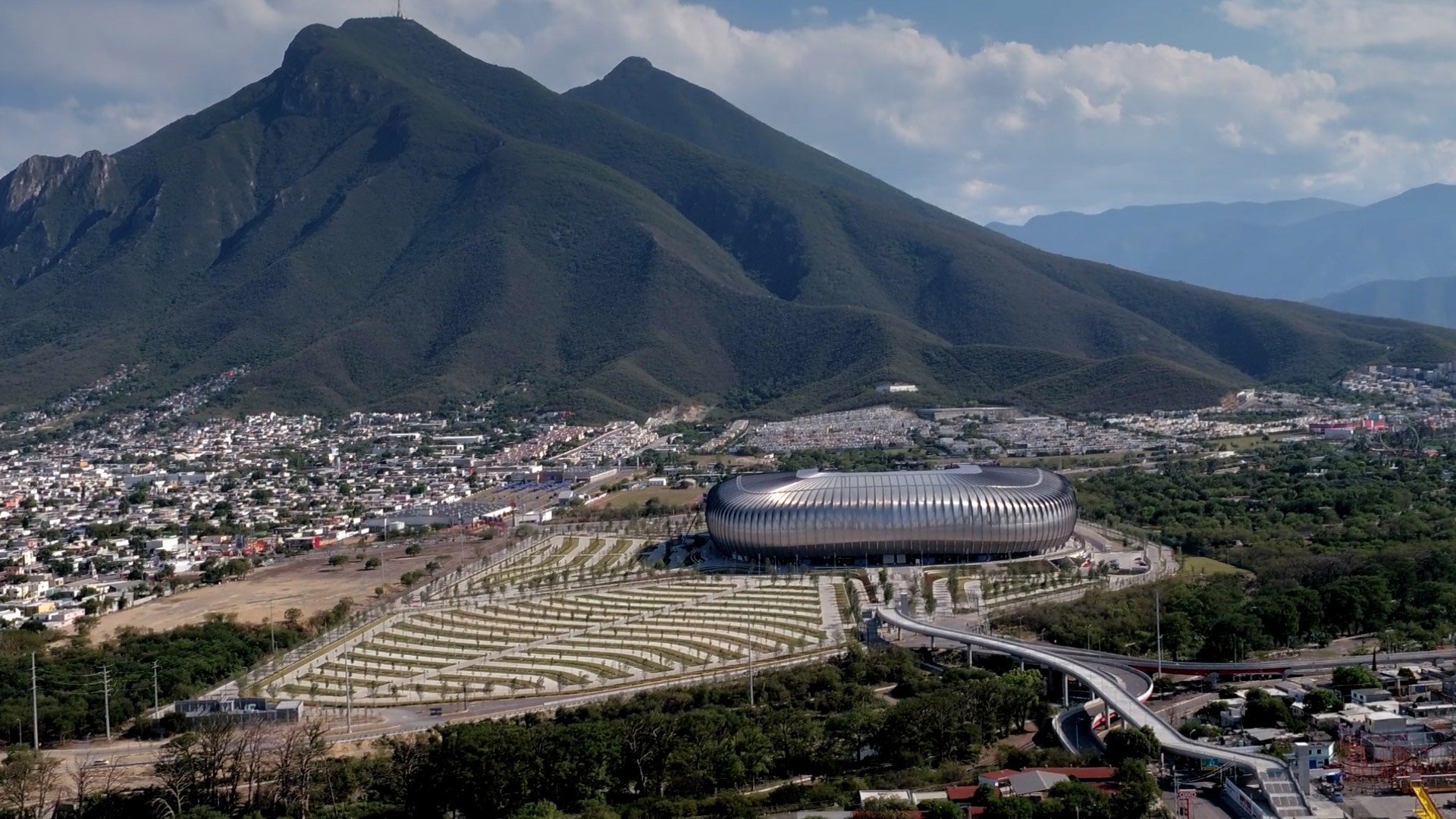
Photo by Populous.
Designed by Populous alongside Mexico-based VFO Arquitectos, Estadio BBVA has earned the nickname The Steel Giant thanks to its bold metal cladding and generous transparent openings that let in natural light and airflow. Its asymmetrical, cantilevered roof frames sweeping views of the Cerro de la Silla mountains, folding the surrounding landscape into the matchday experience. It also holds the distinction of being Latin America’s first major LEED-certified stadium.
AT&T Stadium
Arlington, Texas, USA — 94,000 capacity.
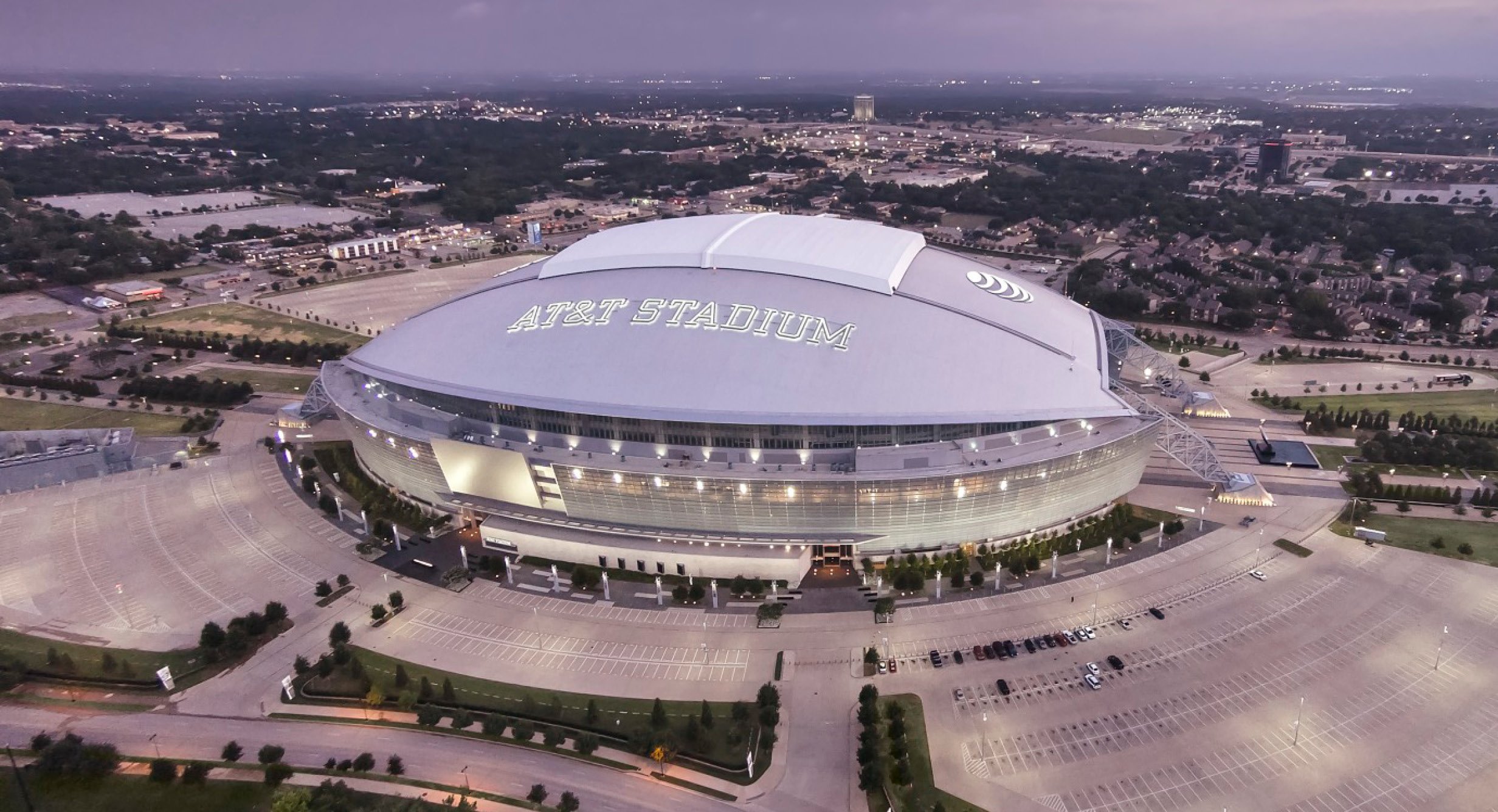
© HKS.
Home to the Dallas Cowboys, HKS Architects‘ AT&T Stadium is topped with a retractable roof held up by a pair of 91-metre arches. Steel and glass combine to create an interior built for atmosphere, complete with one of the largest high-definition screens in sport. Despite being relatively young by football-stadium standards, it’s already hosted NFL playoffs, college championships and major concerts. For the FIFA World Cup 2026, it takes on nine matches, including a semi-final — more than any other venue.
Estadio Azteca
Mexico City, Mexico — 83,000 capacity.
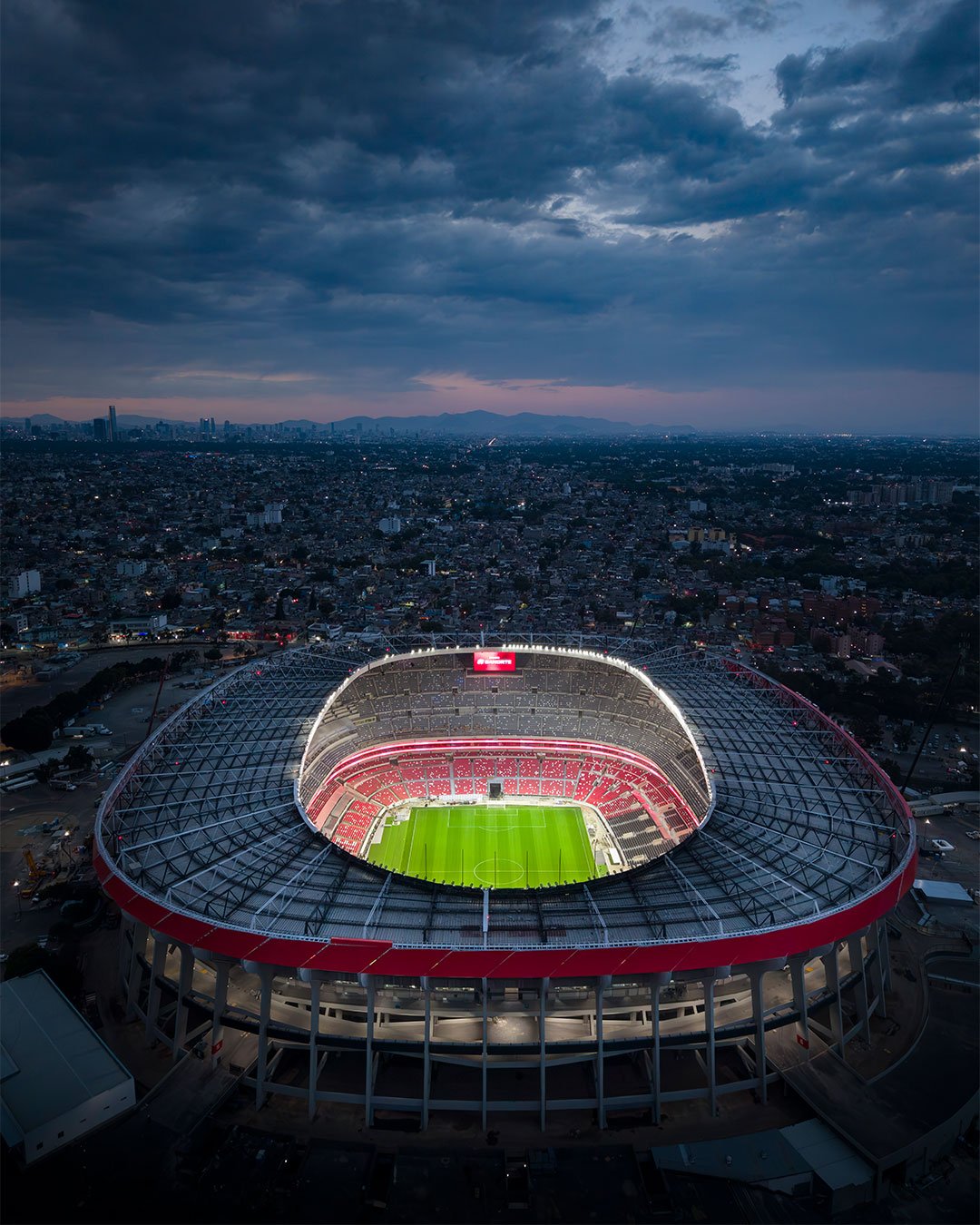
Photo by VisitMexico.
Designed in 1966 by Mexican modernist Pedro Ramírez Vázquez, the legendary Estadio Azteca is the only stadium to have hosted matches across three separate World Cups, having witnessed goals from both Pelé and Diego Maradona. Built directly into volcanic terrain, it allows spectators to enter at mid-bowl level, subtly disguising the sheer scale of the structure. Recent renovations by Populous have focused on hospitality, circulation and technology, while keeping its iconic concrete bowl intact.
Lumen Field
Seattle, USA — 69,000 capacity.
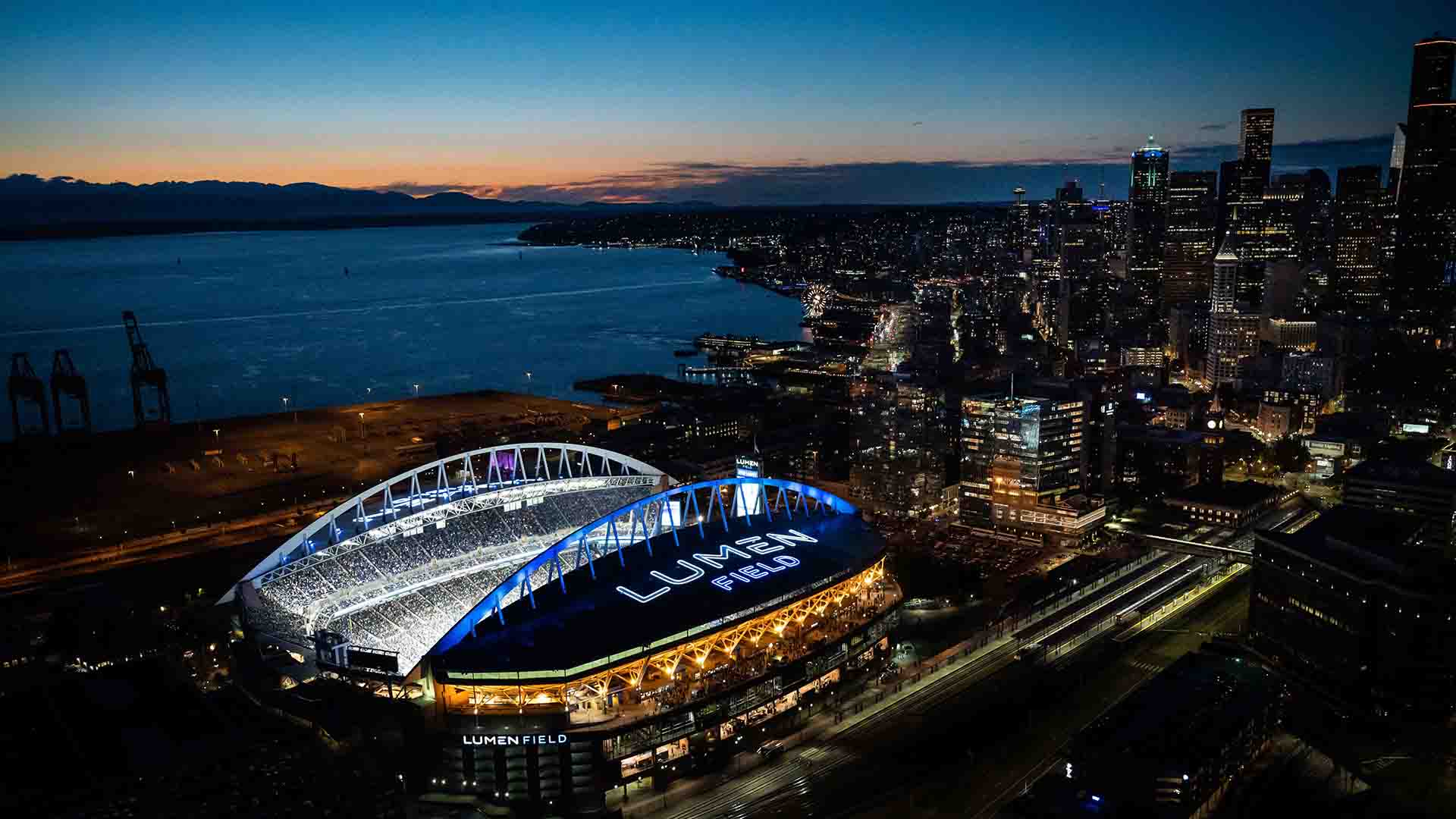
Photo by Lumen Field.
Shared by the Seattle Seahawks and Seattle Sounders FC, Lumen Field was designed by Ellerbe Becket and LMN Architects. Two large arches support stacked, cantilevered canopies over the stands — a clever workaround for the site’s tight footprint. Its Pacific Northwest backdrop brings a distinctly scenic energy to the tournament, making it one of the more atmospheric stops on the FIFA World Cup 2026 map.
Estadio Akron
Guadalajara, Mexico – 48,000 capacity.
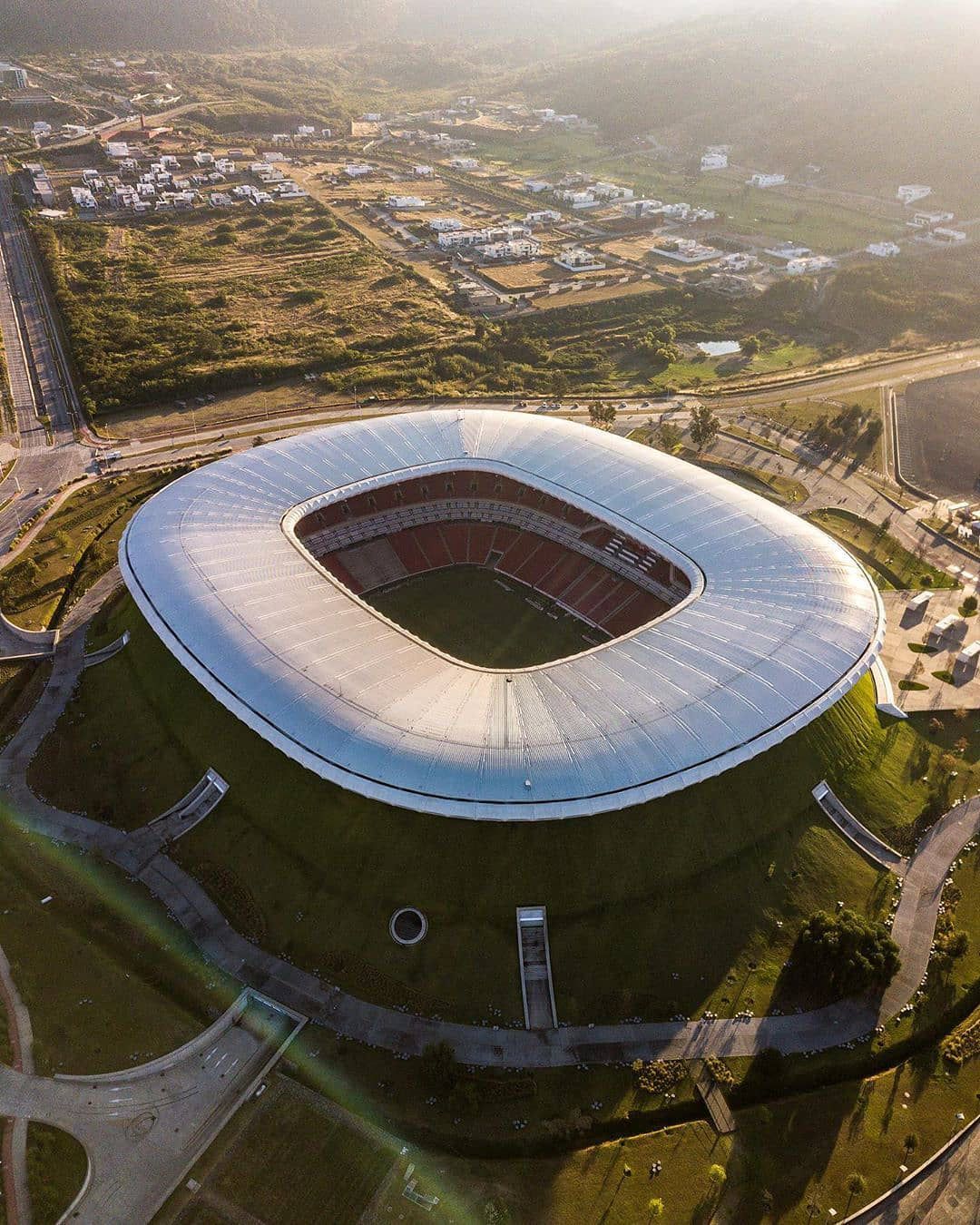
Photo by VisitMexico.
Estadio Akron stands out as one of the tournament’s most architecturally striking venues. Rather than designing a conventional building, French architect Jean-Marie Massaud approached the stadium as a landform, sinking much of its structure into the surrounding terrain and wrapping it beneath a sweeping, continuous roof. The outcome is a fluid, organic silhouette, evoking a volcanic hill emerging from the landscape, deliberately softening the venue’s visual impact.
Hard Rock Stadium
Miami, USA — 65,000 capacity.
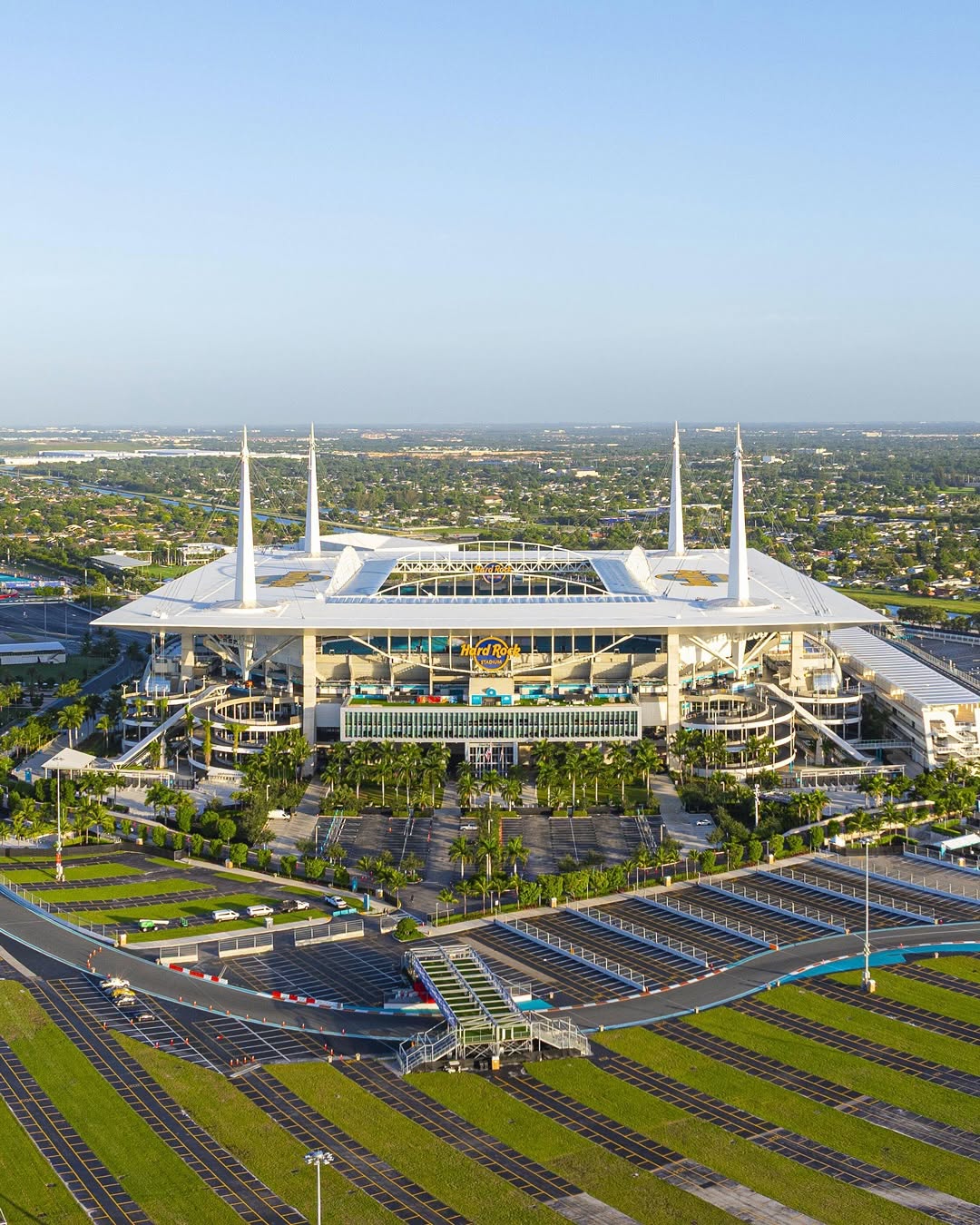
Photo via FB by HOK.
HOK’s Hard Rock Stadium is instantly recognisable for its oversized rectangular canopy, suspended from four white masts at each corner of the building. It shades the crowd while leaving the pitch bathed in natural light. The venue will host a run of group and knockout fixtures, including the third-place playoff, and its flexible design means it can pivot easily between sports and entertainment. Recent renovations have sharpened hospitality, sightlines and player facilities ahead of the FIFA World Cup 2026.
BMO Field
Toronto, Canada — 45,000 capacity.
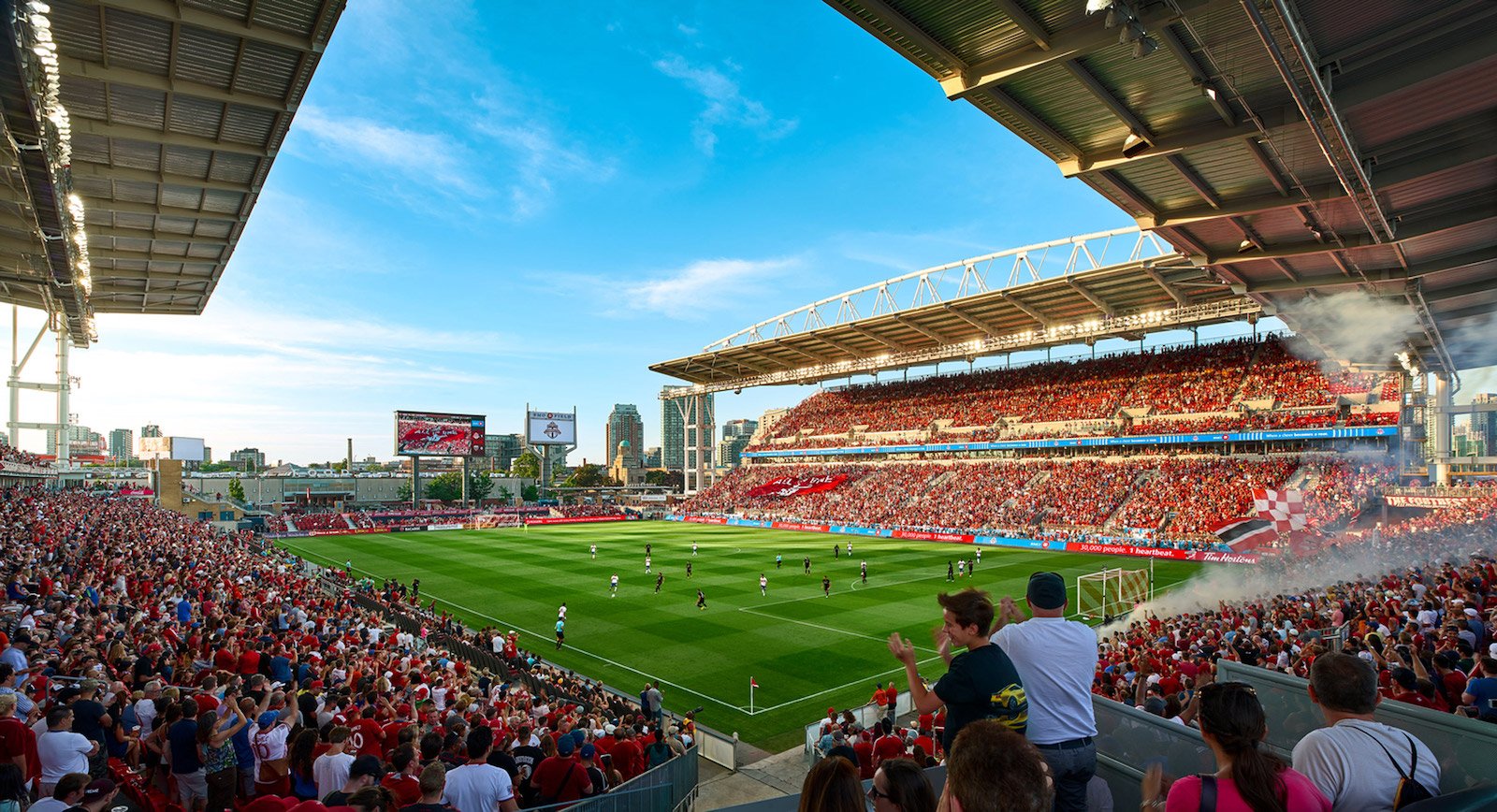
Photo by Ryan Gobuty.
BMO Field, designed by Brisbin Brooks Beynon Architects, holds the title of Canada’s first purpose-built soccer stadium and is home to Toronto FC and the CFL’s Toronto Argonauts. Expanded ahead of the tournament, it brings a distinctly urban energy to group-stage matches. Cantilevered roof canopies shelter the fixed seating, while advanced hybrid turf keeps the pitch in top form throughout the FIFA World Cup 2026.
MetLife Stadium
New Jersey, USA — 82,500 capacity.
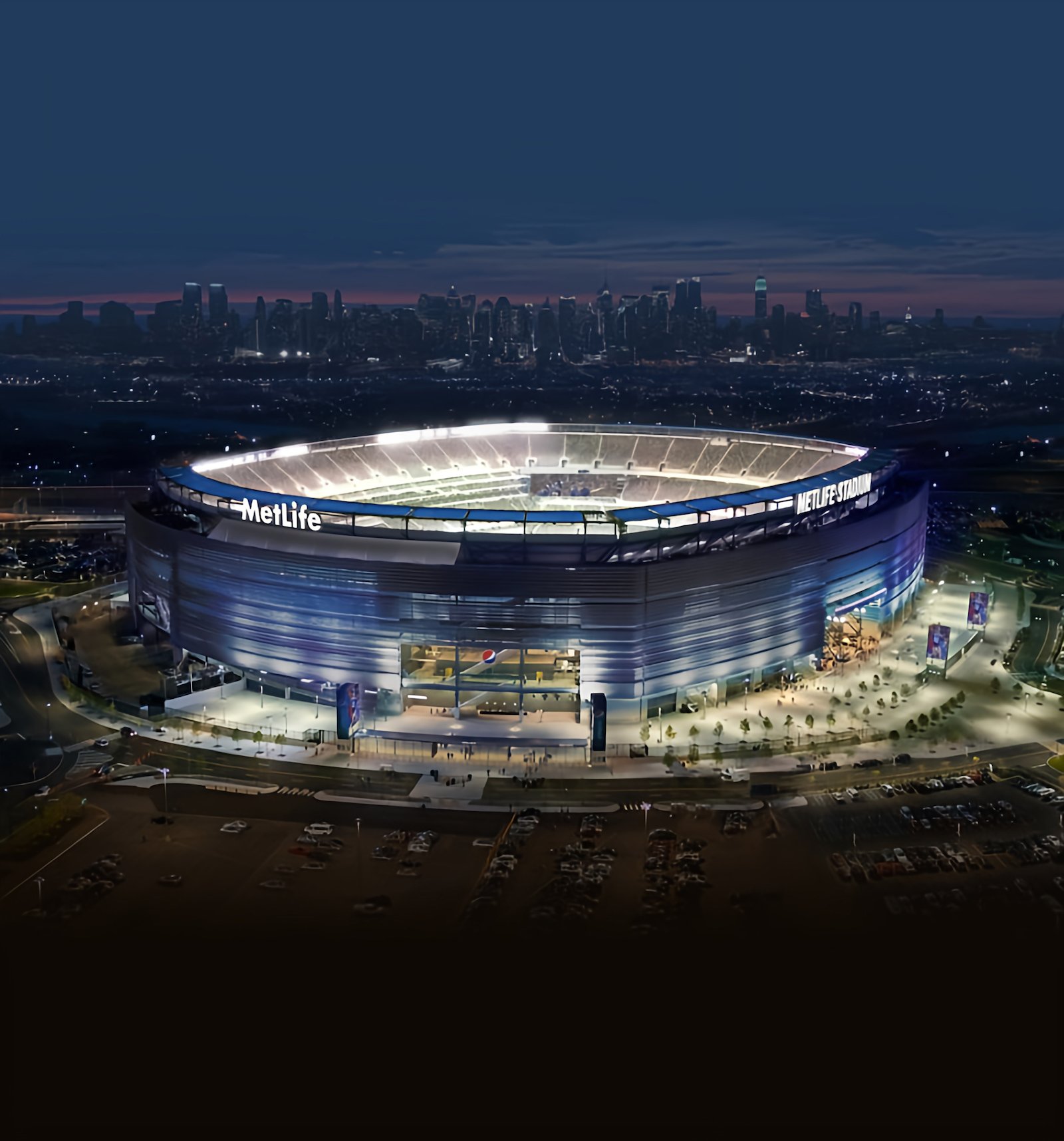
Courtesy of Giants.
Just outside New York City in East Rutherford, MetLife Stadium will host this year’s final. Designed by HOK, Bruce Mau and Rockwell Group, it’s shared by the New York Giants and New York Jets — a challenge the architects met with a “chameleon” design. Its facade, wrapped in over 50,000 linear feet of aluminium louvres and LED lighting, glows blue for Giants games and green for Jets games. It’s also been named the NFL’s “Greenest Stadium” by the U.S. Environmental Protection Agency, with repeated recognition from the Green Sports Alliance for its sustainability credentials.
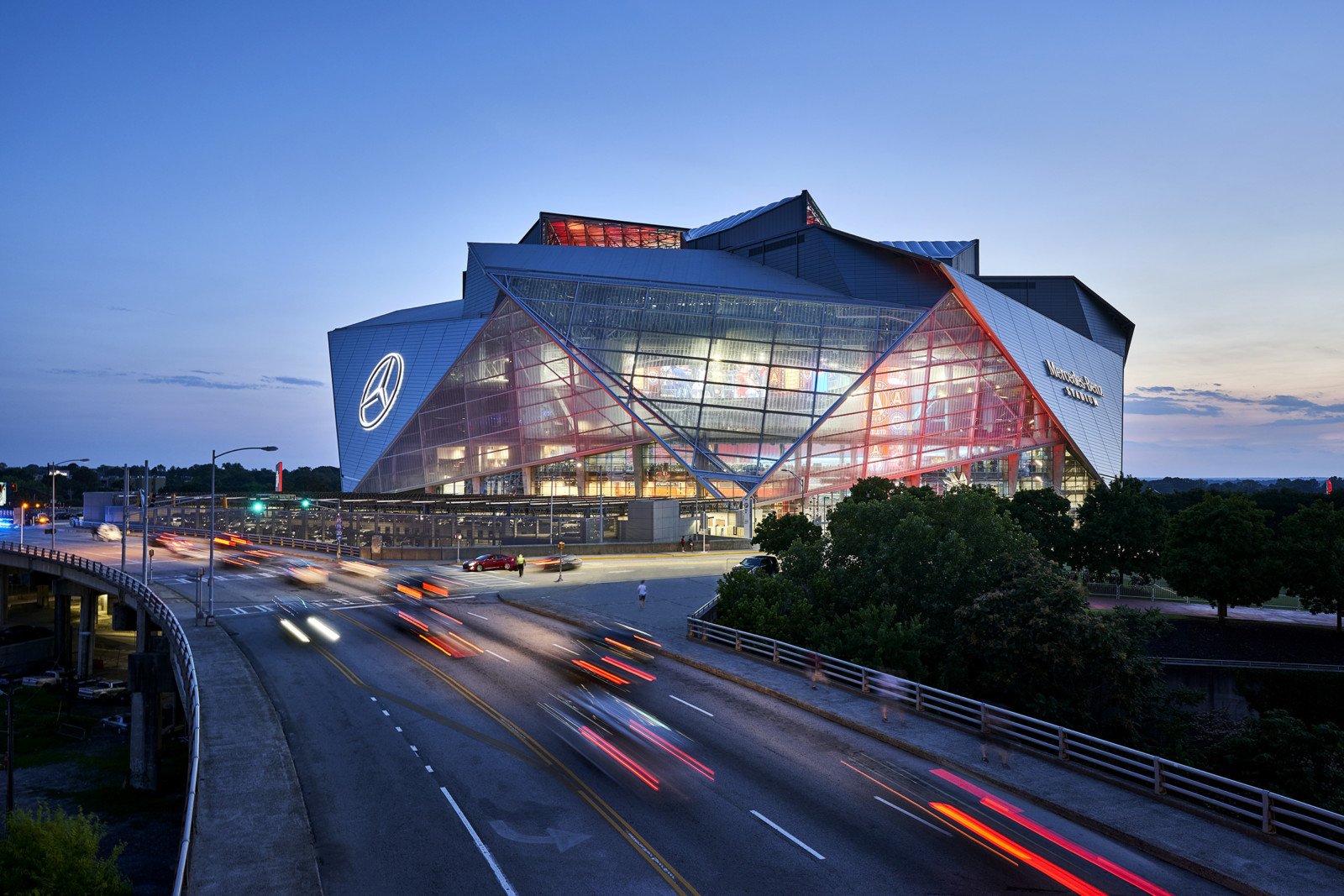
Mercedes-Benz Stadium by HOK – Photo by HOK.