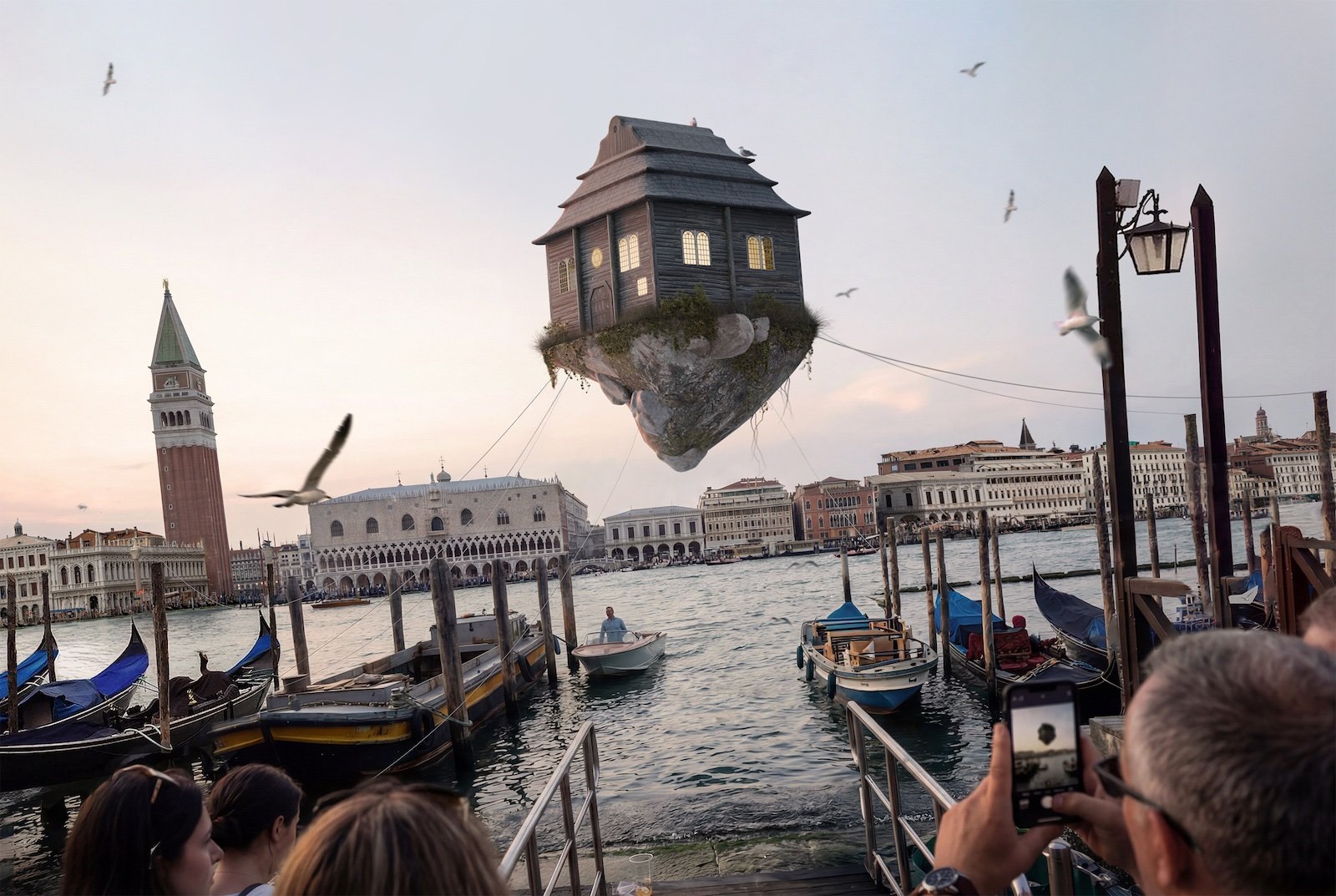
Nabatele. A Floating Synagogue in Venice by Anna Kamyshan – Image by the artist.
Art, Architecture. “Nabatele is a very personal project, created while I was in search of my personal identity”, says Anna Kamyshan, a London-based Ukrainian artist and architect with Jewish and Russian origins. She never felt a sense of belonging as she was too Russian for Ukrainians and too Ukrainian for Moscowites. Always too Jewish for non-Jewish people and not Jewish enough in Israel.
At the same time, the artwork incarnates the diasporic nature of Yiddishland: a non-existing country defined not by borders or territory, but by its people, their language, and the culture they carry with them. In the current climate, marked by conflict and fragmentation, that kind of wandering and displacement feels less like a metaphor and more like a lived experience [16 July–16 September, Arsenale Nord].
- RELATED STORIES: Read more about Venice Art Biennale on Archipanic.

Image by the artist.
“Nabatele explores the tension between gravity and buoyancy, the gentle effort of existing uprooted. Whether the structure ever had roots or a foundation, or instead always floated freely above the ground; whether it seeks a place to land or prefers its airy autonomy…these questions remain a mystery. The constant light from the synagogue windows symbolises for me that inner flame that is not extinguished by any turbulence, and that persists in instability.”

Anna Kamyshan – Portrait by Tea Monselesan and Fanni Baranyi.
Technically, the work is a double-membrane, helium-filled balloon rising to twenty-five metres. The upper portion — the synagogue — is rendered with enough architectural conviction to read as a genuine place of worship, simply transposed skyward. Below it, the rock carries fragments of stone and earth: the simulacra of a homeland, suspended just out of reach.
The precedent that comes to mind is Magritte’s The Castle in the Pyrenees (1959), in which a colossal stone castle and all levitate above turbulent seas. The painting has long been read as an image of unmoored hope, of safety perpetually deferred.

Magritte’s The Castle of the Pyrenees, 1959.
The title itself rewards attention. Nabatele fuses the Slavic Nabat — meaning alarm or danger — with the Yiddish diminutive suffix -ele, softening the urgency into something more tender. The project is organised by the Montreal Jewish Museum and curated by Maria Veits and Yevgeniy Fiks.
There is one further detail worth noting. 16th-century Venetian synagogues were deliberately hidden and confined to upper floors. This installation, too, inhabits elevated ground. But where those houses of worship once kept themselves from view, this temple shines proudly for all to see.
View this post on Instagram