[su_slider source=”media: 4638,4639,4640,4641,4642,4643,4644,4645,4646″ link=”custom” target=”blank” width=”900″ height=”500″ title=”no” mousewheel=”no” autoplay=”4000″ speed=”1000″][su_slider source=”media: 3552,3555,3556,3554,3557,3553″ link=”custom” target=”blank” width=”900″ height=”400″ title=”no” mousewheel=”no” autoplay=”3000″ speed=”1000″][/su_slider]
At the National Arboretum garden by Landscape architecture firm Taylor Cullity Lethlean, 100 forests of the world’s most endangered tree species join branches in a 250 hectare former fire ravaged site in the centre of Canberra, Austalia.
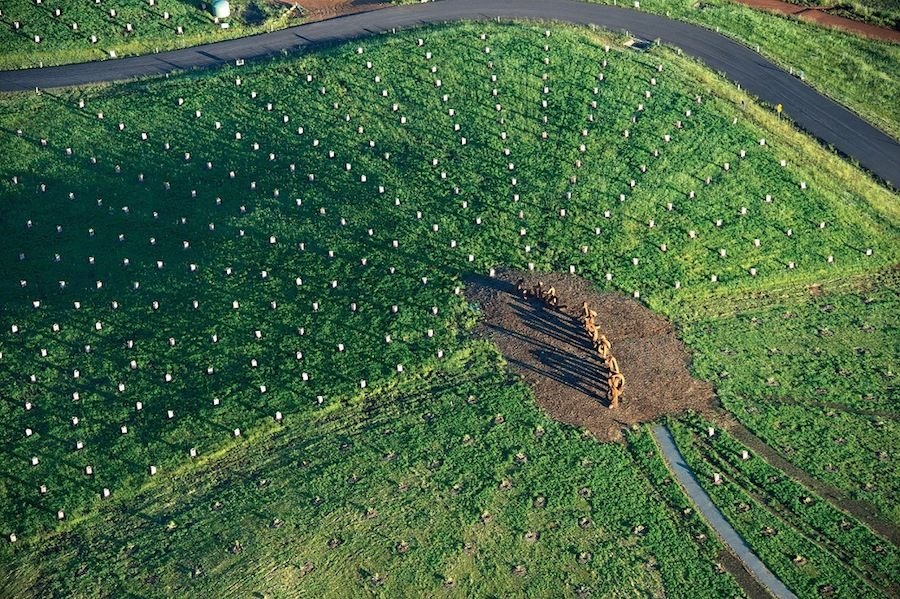
The National Arboretum by TCL in Canberra, Australia. Photograph by John Gollings.
With this project, TCL has once scooped again the prestigious Landscape of the Year Award at the World Architecture Festival in Singapore with Tonkin Zulaikha Greer.
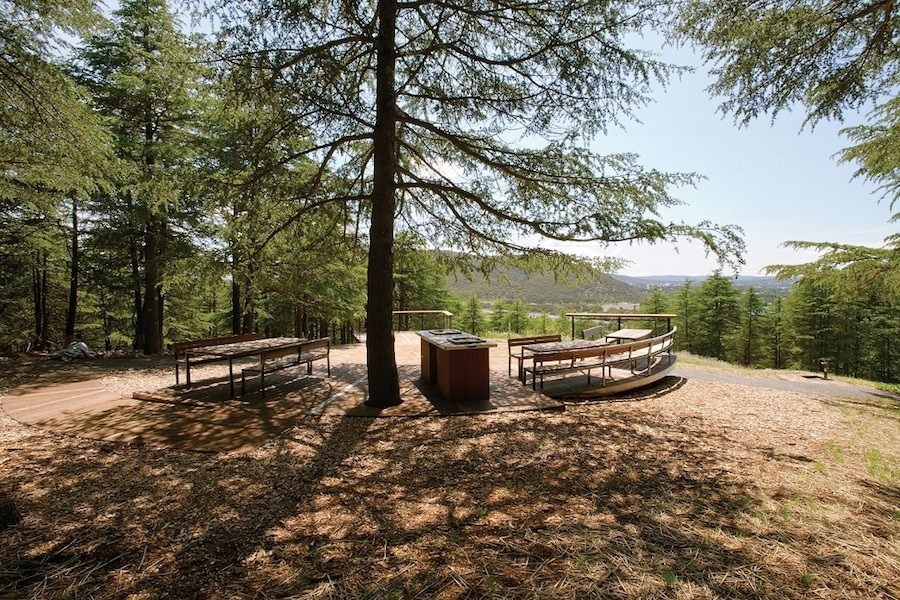
The National Arboretum by TCL in Canberra, Australia. Photograph by John Gollings.
100 Forests redefines the meaning of public garden in the 21st century. Growing out of very real issues of sustainability, biodiversity, and public environmental concern. Indeed, each of the 2-3 hectares forests provides more importantly a seed bank for the future.

The National Arboretum by TCL in Canberra, Australia. The layouts of the trees are distinct for each forest and are designed based on their botanical or cultural qualities. Photograph by John Gollings.
TCL Director, Perry Lethlean says: “Rather than a collection of individual trees as specimens, we wanted to create grand forests that offer unique and contrasting visitor experiences and hold a viable population to preserve vulnerable and endangered species. It is a strategy, a program and an ongoing event, not a design based chiefly on aesthetics”.
RELATED STORY: The Australian Garden. TCL 2014 award follows last year’s WAF success. The park offers an experience and a metaphorical journey of water through the Australian landscape, from the desert to the coastal fringe.

The National Arboretum by TCL in Canberra, Australia. Large terraced earth sculptures form the major arrival sequence into the Arboretum. At the base, a carefully designed irrigation system directs water to the dam to redistribute back into the Arboretum. Photograph by John Gollings.
Beautiful architectural and event spaces engage the visitor to connect with the setting, creating a heart to the project which can grow over time, expanding as the Arboretum and Canberra expand.

The National Arboretum by TCL in Canberra, Australia. The sculptured landforms of the Central Clearing form part of the visitor arrival sequence. Photograph by John Gollings.
RELATED STORY: Tuning Architecture with Nature. “Not a single pine will be torn down”. NietoSobejano Arquitectos designed a new home for the Arvo Pärt Centre near Talinn. Inspired by the Estonian composer’s symphonies, the new cultural hub will dialogues respectfully with the surrounding landscape.
[su_slider source=”media: 4273,4272,4271″ link=”custom” target=”blank” width=”900″ height=”500″ title=”no” mousewheel=”no” autoplay=”4000″ speed=”1000″][su_slider source=”media: 3552,3555,3556,3554,3557,3553″ link=”custom” target=”blank” width=”900″ height=”400″ title=”no” mousewheel=”no” autoplay=”3000″ speed=”1000″][/su_slider]
100 Forests is located above the shores of Lake Burley Griffin in Canberra. The site with its rolling, elevated topography, panoramic city views and two stands of individual exotic tree species planted under the direction of the city’s Masterplan designers Walter and Marion Burley-Griffin, provided the canvas and catalyst for the design.
RELATED STORY: Walking to Mont San Michel. Mont Saint Michel returns to its true island’s status: the new jetty and causeway by Dietmar Feichtinger Architectes blend into the landscape until disappearing and give the impression to walk on water during high tide.
[su_slider source=”media: 4337,4340,4333,4338″ link=”custom” target=”blank” width=”900″ height=”500″ title=”no” mousewheel=”no” autoplay=”4000″ speed=”1000″][su_slider source=”media: 3552,3555,3556,3554,3557,3553″ link=”custom” target=”blank” width=”900″ height=”400″ title=”no” mousewheel=”no” autoplay=”3000″ speed=”1000″][/su_slider]
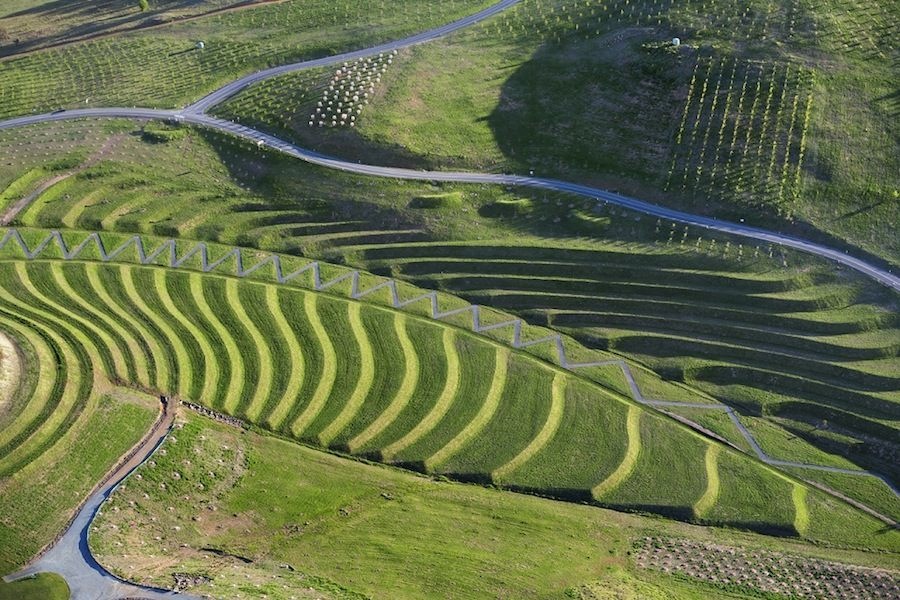
The National Arboretum by TCL in Canberra, Australia. Photograph by John Gollings.
The forests, are arranged via a grid across the undulating topography, which are orientated to align with a civic axis created by the Burley-Griffins. This patchwork of forests, with their varying colour, form and textures, provide a striking backdrop the city and engages at an urban scale with the developing City.

The National Arboretum by TCL in Canberra, Australia. View from the bottom of the central valley toward the Visitors Centre. Visitors Centre by TZG Architects. Photograph by John Gollings.
Photos: courtesy of TCL, Taylor Cullity Lethlean.
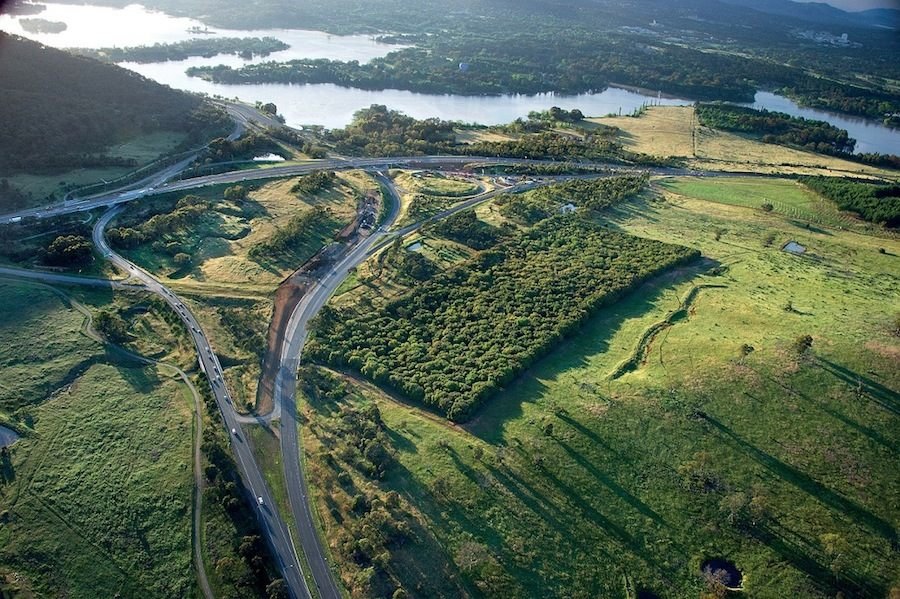
The National Arboretum by TCL in Canberra, Australia. Cork Plantation that survived the 2003 Canberra Fires. Photograph by John Gollings.
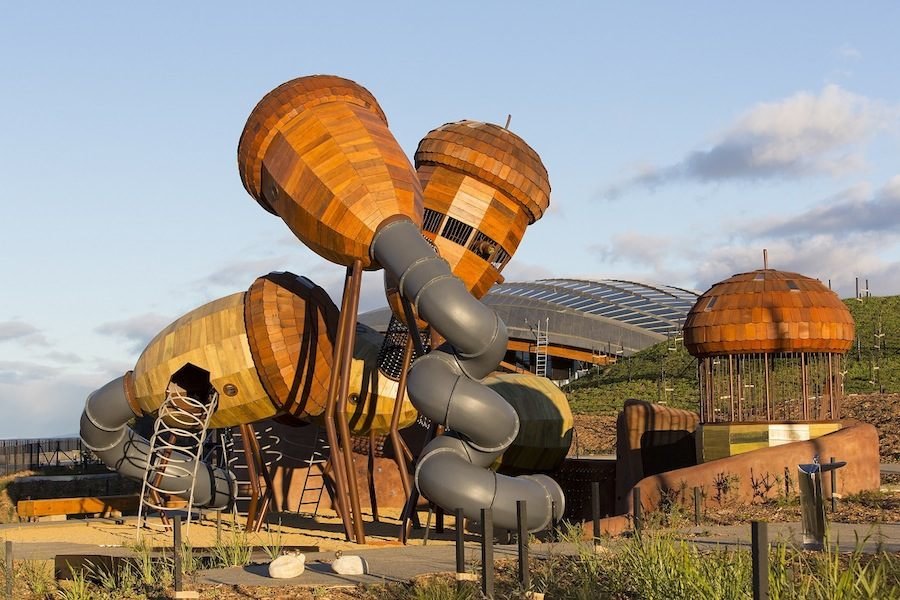
The National Arboretum by TCL in Canberra, Australia. The Pod Playground consists of a toddler play area (Banksias), swing set area, older children area (Acorns) and net play to the left of the Acorns. The Acorn area consists of six Acorn