The Netherlands Pavilion at Expo 2025 Osaka – ©Plomp.
Architecture. Kengo Kuma, Norman Foster, Shigeru Ban, Carlo Ratti, Lina Ghotmeh, and others have designed striking pavilions for Expo 2025 Osaka. The international exhibition opens its doors on April 13 and will host 150 countries. Despite global instability and climate change, the challenging overarching theme, Designing Future Society For Our Lives, encourages sharing knowledge, culture, and technology. Check out these twenty pavilions we are looking forward to exploring.
- RELATED STORIES: Read more about Expo 2025 Osaka on archipanic.com.
Japan Pavilion

Courtesy of Nendo.
The Japanese Pavilion, designed by Nikken Sekkei and Nendo founder Oki Sato, poetically explores the interconnectedness of all lives—humans, societies, as well as animals, and plants (because “we are not alone”)–as part of one singular cycle with no beginning nor end. Made from cross-laminated timber, the pavilion consists of a large circular arrangement of wooden planks that allows visitors to see interior and exterior spaces, representing the transitions between various states of life.
Uzbekistan Pavilion
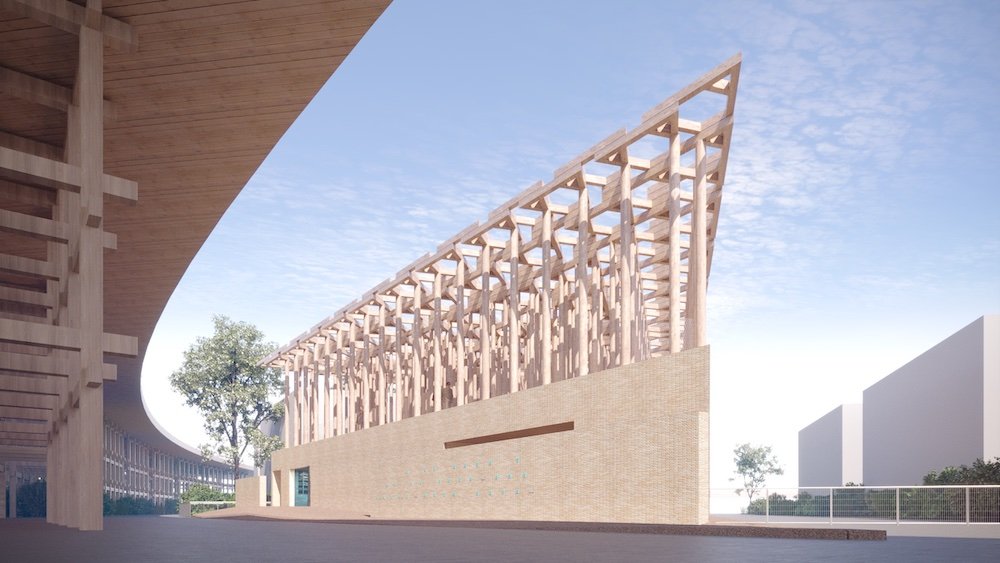
Photo by ATELIER BRÜCKNER.
Named Garden of Knowledge, the Uzbek Pavilion by German studio ATELIER BRÜCKNER symbolises a new era for the Central Asian country’s transition to a green economy through renewable energy projects, green transportation and energy-efficient housing. The triangular structure, a nod to Uzbek traditional amulets, features a moving platform for a 360° experience and a terrace with a timber forest with a dynamic interplay of light and shadow.
The Netherlands Pavilion
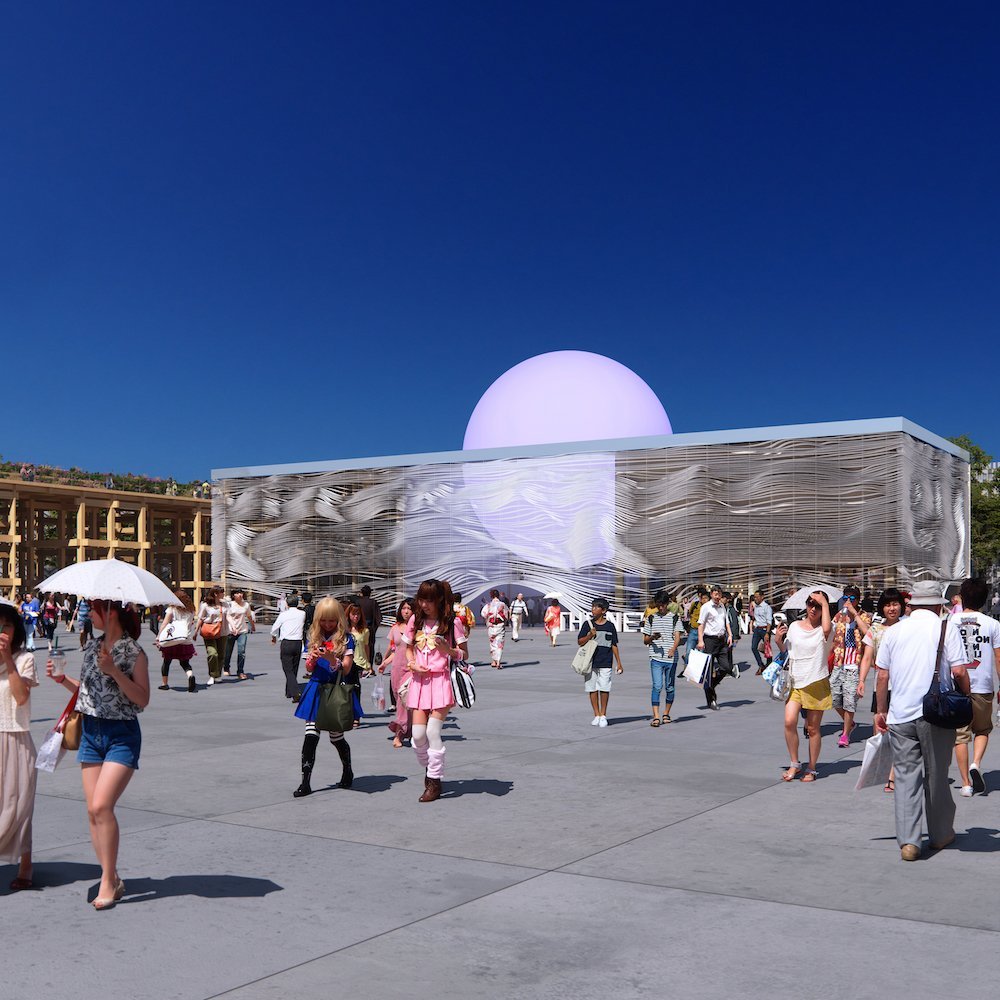
©Plomp.
A rising sun glows behind a rippled, water-like, ethereal façade of lamellas. Themed A New Dawn and designed by Amsterdam-based studio RAU Architects, the 100% circular Dutch Pavilion invites you to discover new, innovative solutions in energy transition. It also doubles as a material depot: each element is identified and catalogued to become available again after the Expo.
Portugal Pavilion
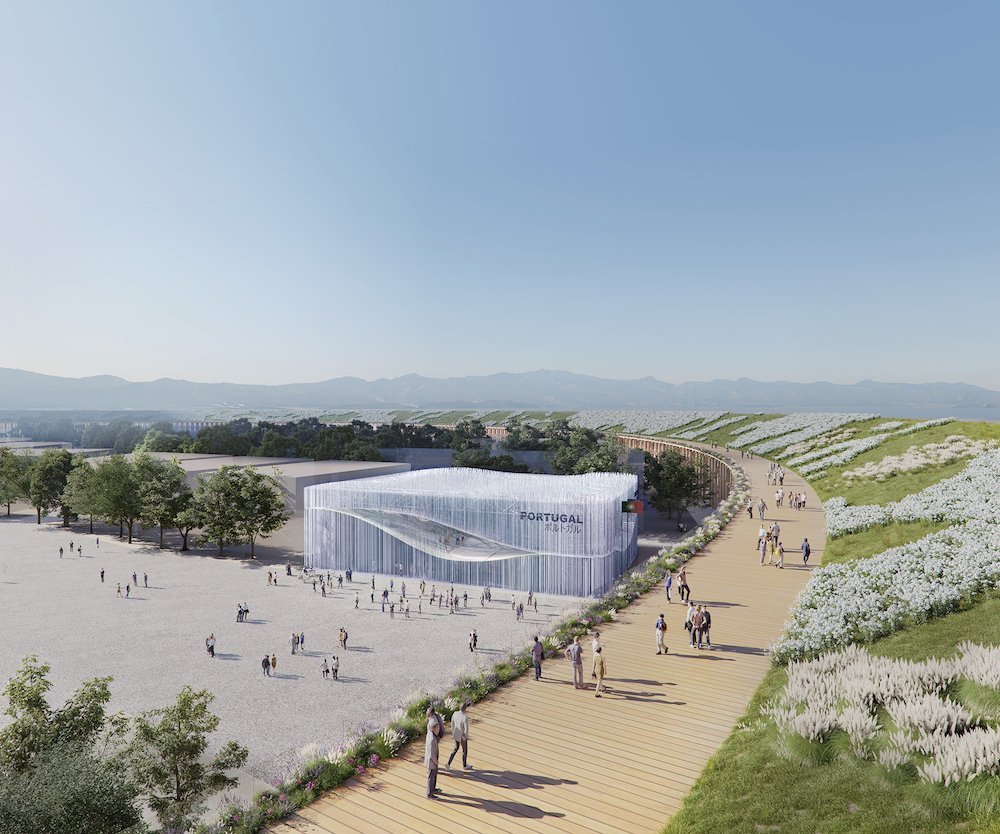
© AICEP, E.P.E.
The Ocean as a medium for dialogue. This is the concept behind the Portuguese Pavilion designed by Kengo Kuma & Associates. Its facade features an intricate and gently fluctuating interplay of suspended ropes and recycled nets, evoking the fluid motion of waves. Inside, the pavilion offers a unique and interactive multimedia experience that invites visitors to explore the ocean as a life-giving resource.
Italy Pavilion

Visual by MCA.
Mario Cucinella Architects has imagined the Italian Pavilion as a warehouse of the country’s know-how. Inspired by the visionary Renaissance’s vision for the Ideal City, the pavilion welcomes visitors with an open portico with giant columns, offering a view into a large atrium and framing the architecture of the internal visitor route. Inside, they will be fully immersed in the colours of the Renaissance paintings, the proportions of the urban spaces, and the verdant geometry of its Italian garden on the roof.
Saudi Arabia Pavilion
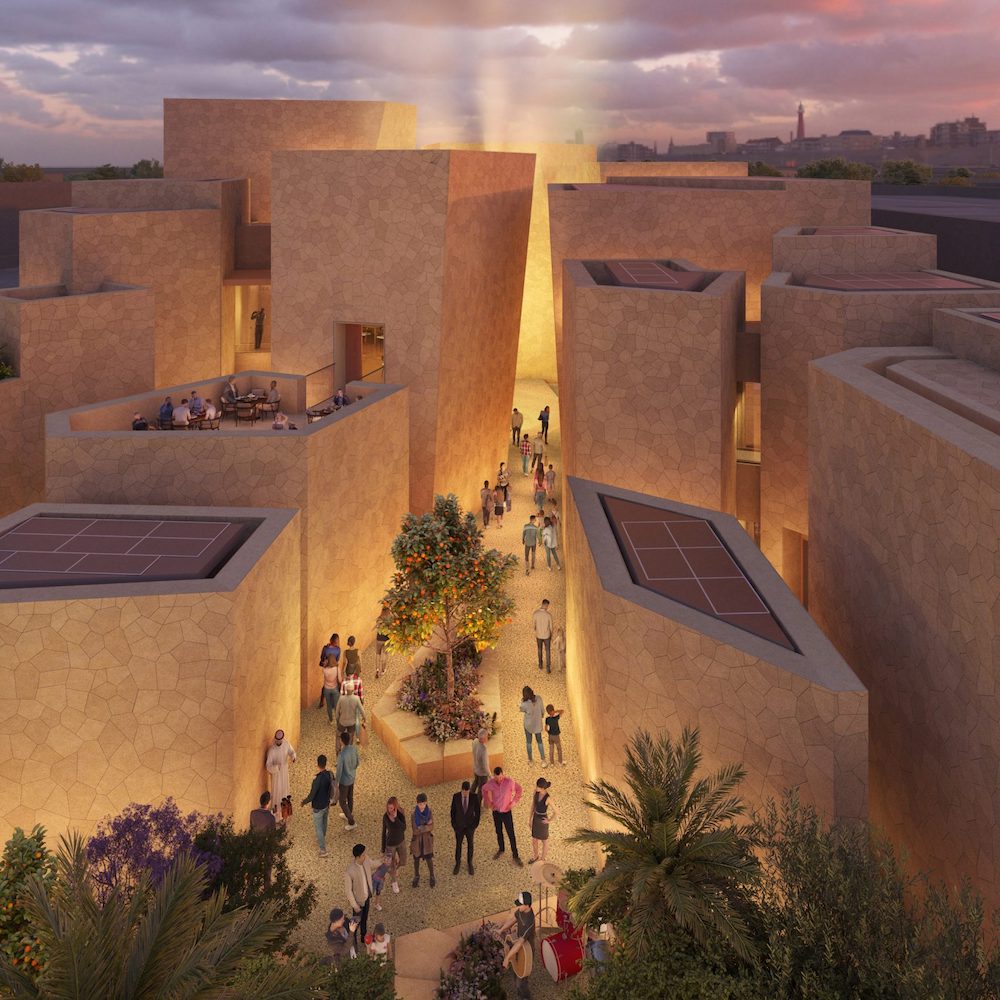
© Foster + Partners.
Foster + Partners’ Saudi Pavilion immerses visitors in a market-like experience. The design is inspired by the traditional Arabian mudbrick architecture of villages and towns across the country. During the hottest months, winds flow through its streets, cooling the pavilion’s organic angular volumes. At its core, a planted courtyard creates a calming oasis.
Qatar Pavilion
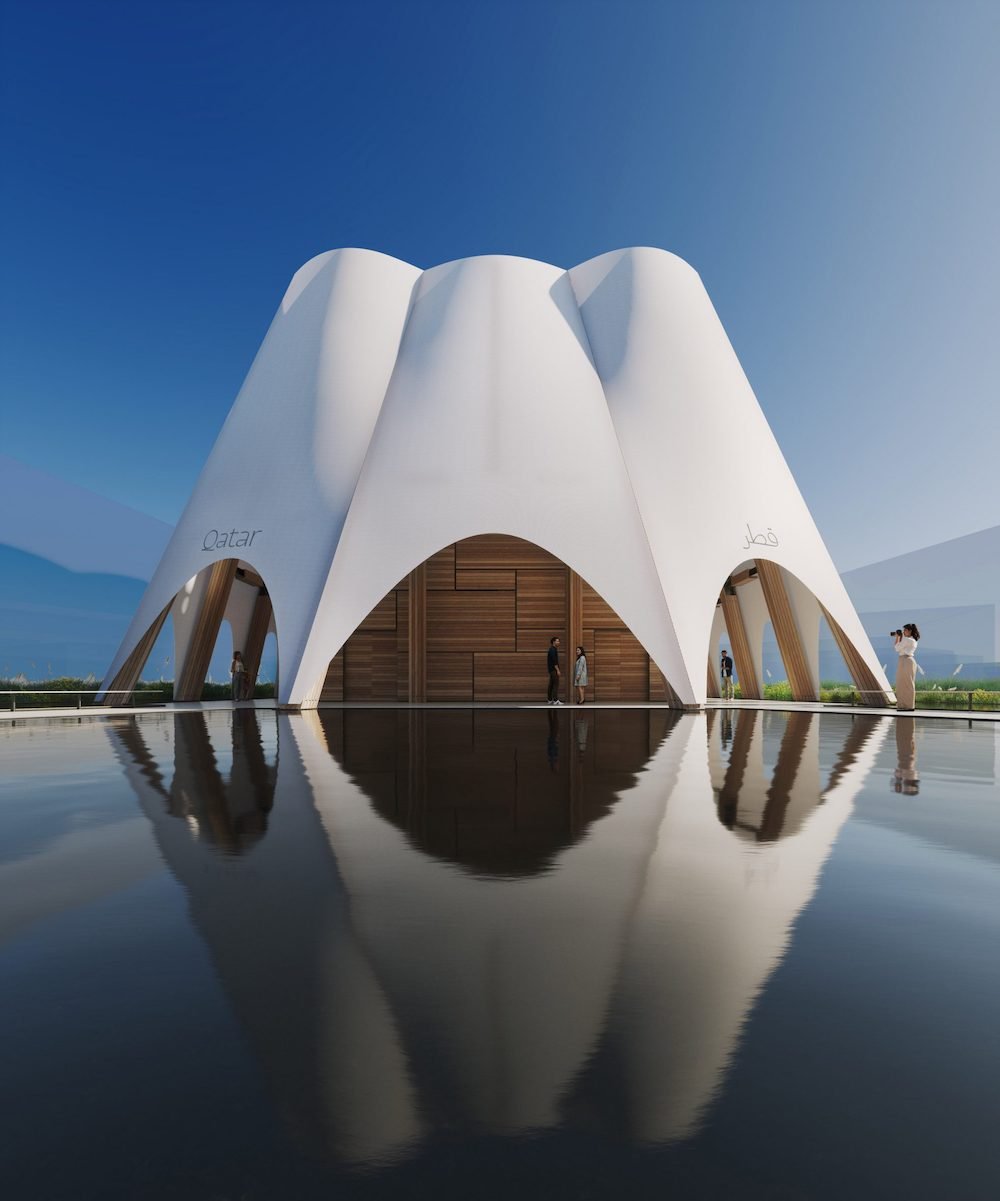
Courtesy of Kengo Kuma & Associates.
The Qatari Pavilion, designed by Kengo Kuma & Associates in collaboration with Qatar Museums, draws inspiration from traditional dhow boat construction techniques and Japan’s wood joinery heritage while highlighting the two countries’ connection to the sea. The structure consists of a complex timber sculpture covered in a veil of white fabric.
Bahrain Pavilion

©Lina Ghotmeh Architecture.
For the Bahrain Pavilion, London-based architect Lina Ghotmeh drew inspiration from traditional dhow boats, reinterpreting millennial boat-building techniques that showcase the country’s rich craftsmanship and manufacturing heritage.
Czechia Pavilion

Courtesy of the Office of the Czech Commissioner General.
Inspired by the eastern European country’s vitality and creativity, Apropros Architects has designed a spiralling pavilion made of cross-laminated timber panels and covered with artistic Bohemian Crystal. Visitors are invited to a journey through Czechia’s heritage; a gentle ramp and exhibition culminate with a spacious viewing terrace with a restaurant and bar. Here, Visitors can walk down through a vertical auditorium hosting artistic performances.
United States Pavilion
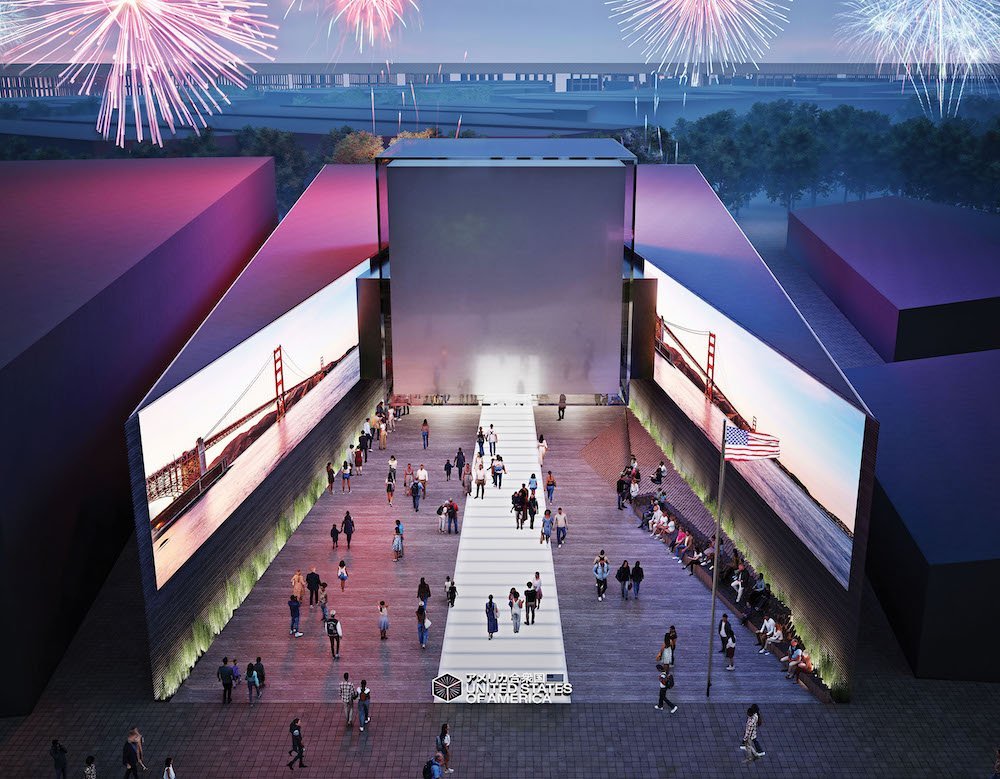
Image by Trahan Architects.
New Orleans-based studio Trahan Architects has imagined the USA Pavilion as an expansive plaza framed by panoramic LED screens depicting dynamic images of iconic American urban and natural landscapes. The pavilion will also feature exhibitions that explore sustainability, space exploration, education, and entrepreneurship. The two wedge-shaped structures, outfitted with large LED screens along their length, form a communal area at the centre. Above visitors’ heads, a suspended translucent cube interacts with these two structures as people walk by underneath.
Austria Pavilion
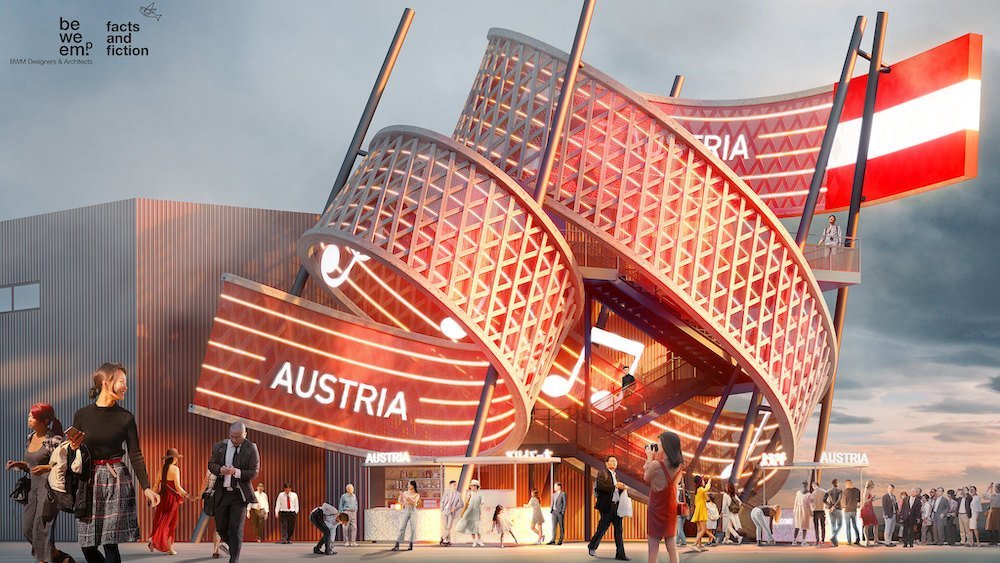
© BWM Designers & Architects.
At the Austrian Pavilion by BWM Architects, music becomes a metaphor for the harmony between humanity, nature, and technology. Its facade features a spiralling wooden sculpture resembling a musical staff, a nod to the country’s classical music heritage. The experience culminates with the Cathedral of the Future, where visitors can shape AI-driven audiovisual shows.
Switzerland Pavilion

Courtesy of the pavilion.
The Swiss Pavilion blends elements of nature and culture, symbolising Switzerland’s commitment to ecological responsibility and its spirit of innovation. Designed by Manuel Herz Architects, it features a cluster of four interconnected spheres constructed from a lightweight, recyclable ETFE pneumatic membrane supported by a steel frame. Locally grown plants adorn each bubble, contributing to carbon offset initiatives.
Indonesia Pavilion
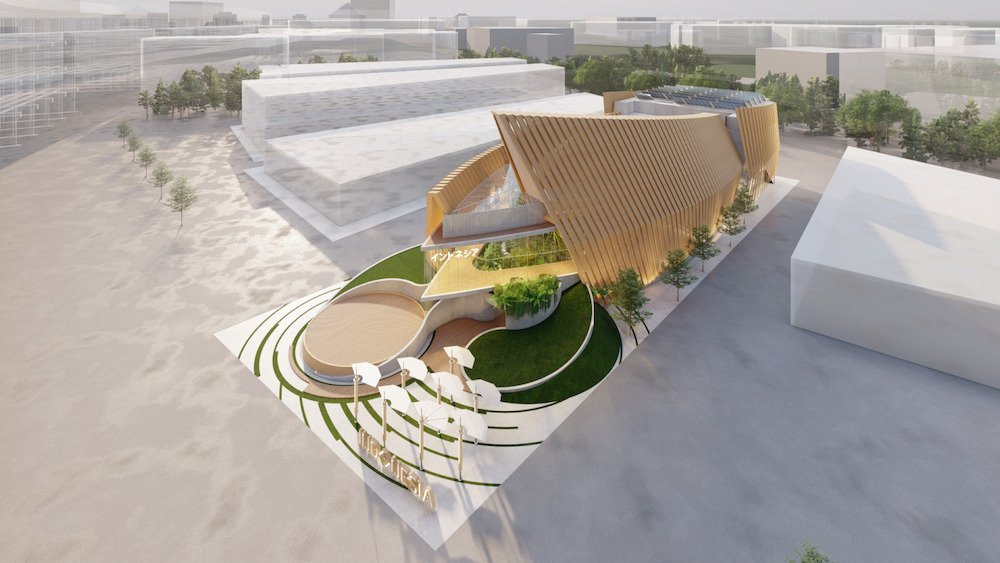
Courtesy of the pavilion.
In the world’s largest archipelago, the presence of boats is as old as human presence. From here, the Indonesian Pavilion is shaped like a stylised ship’s hull rising high as a symbol of the country’s optimism, forward-thinking and sustainability-driven approach. The pavilion invites visitors aboard for a journey through luxurious nature, biodiversity, crafts and innovative technology.
Philippines Pavilion

Image by Carlo Calma Consultancy, Inc.
Titled Woven, the Philippines Pavilion explores human and natural interconnectedness by elevating traditional weaving into an architectural scale. Designed by Carlo Calma Consultancy, it is constructed with over 1,000 rattan threads and features 212 handwoven panels. As a tribute to the country’s indigenous culture, over 200 woven textiles provide a vibrant touch of colour to the pavilion’s earthy-hued façade.
Germany Pavilion
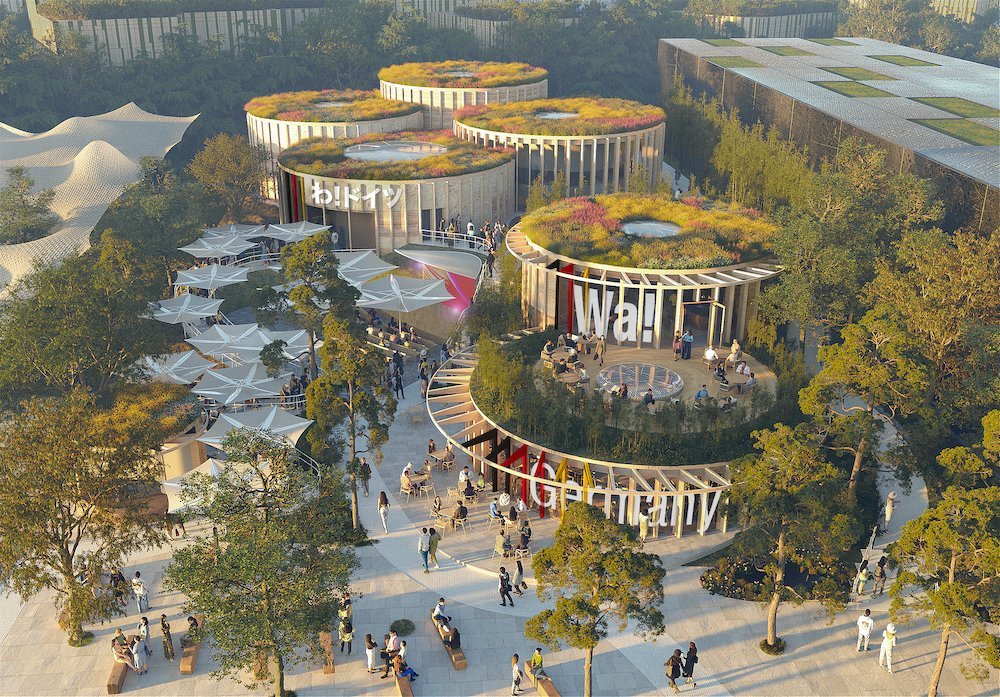
© MIR, LAVA.
Designed by LAVA (Laboratory for Visionary Architecture, the garden-like German Pavilion explores the impact that architecture and urban development can have on sustainability and circularity. Two clusters of cylindrical structures made with reusable or recyclable materials provide space for the exhibition and catering areas. A freely accessible green park invites visitors to linger and explore beyond the exhibition.
Australia Pavilion

Design by Buchan Holdings Pty Ltd, Render by FloorSlicer.
Chase the Sun is the theme of the Australian Pavilion, designed by global architecture firm Buchan in collaboration with Indigenous cultural advisors. Its curving shape was inspired by eucalyptus gumnut fruits. The pavilion showcases the country’s diversity and resilience, incorporating Indigenous perspectives and emphasising connections to land and water.
France Pavilion
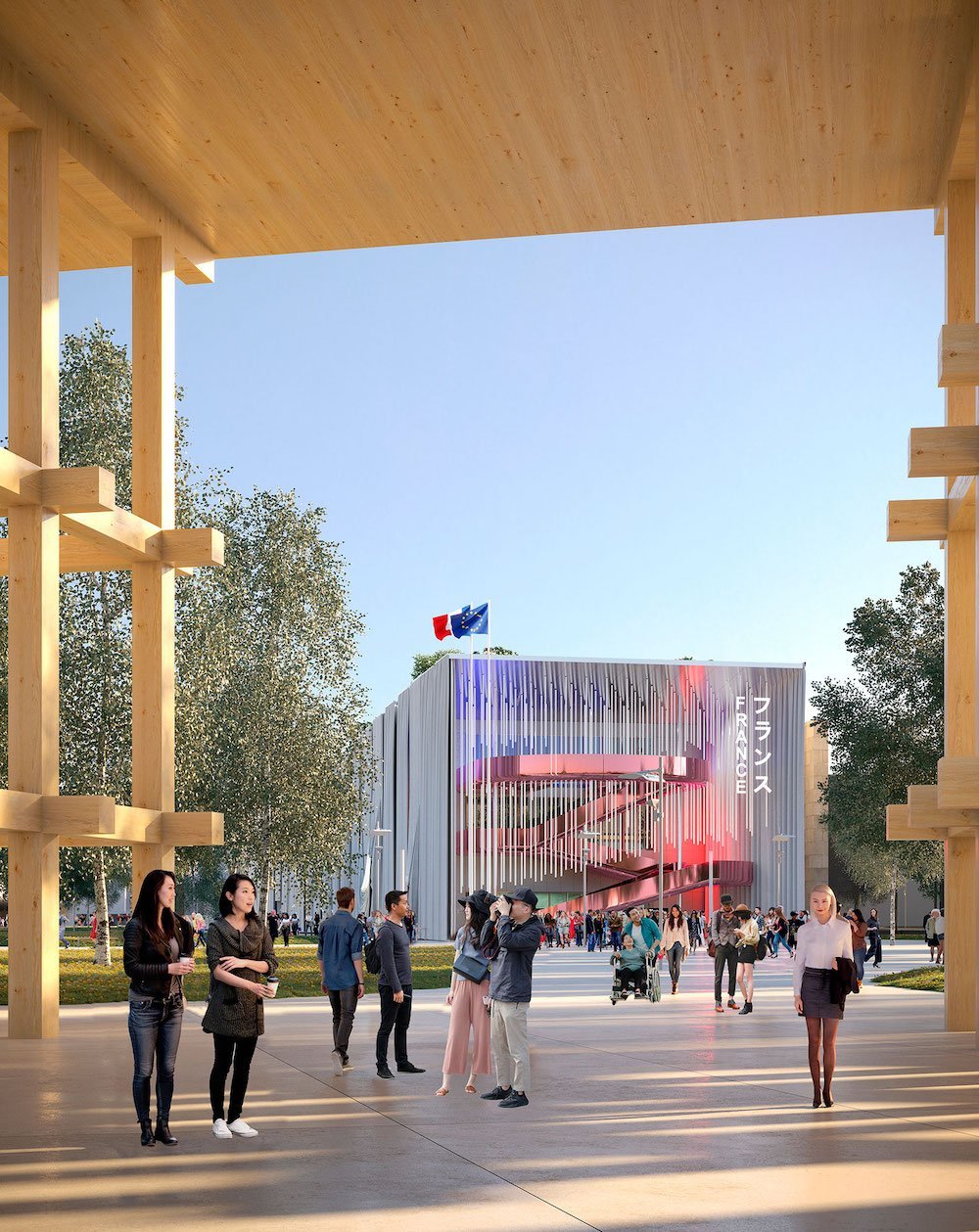
Courtesy of the pavilion.
Conceived like a stage where the natural and artificial worlds encounter, the French Pavilion is designed by Coldefy in collaboration with CRA-Carlo Ratti Associati. Its façade is enveloped by floor-to-ceiling draperies, whose slow movements recall water swaying in the wind. A curvy access ramp, clad in reflective pinkish copper, creates a play of warm glints, emerging from the middle of the façade. The Miraculous Garden, part of the permanent exhibition, is located at the rear of the building.
Corporate Pavilions

Ocean Dome Pavilion – Image by Zeri Group.
Numerous companies will also feature their own pavilions. Shigeru Ban’s Ocean Dome for Zeri Group raises awareness of the ocean’s sustainable use. Built from paper tubes, bamboo, and carbon-fibre-reinforced plastic, the pavilion has a sinuous shape with a large domed central pavilion flanked by two smaller domes.

Pasona Group Pavilion – Photo by Pasona Group.
Astro Boy will guide visitors to the Pasona Group Pavilion, designed by Japanese architect Satoshi Itasaka and inspired by coiled fossil shells. Mitsubishi Disho Design created a demountable pavilion hovering just above the ground.
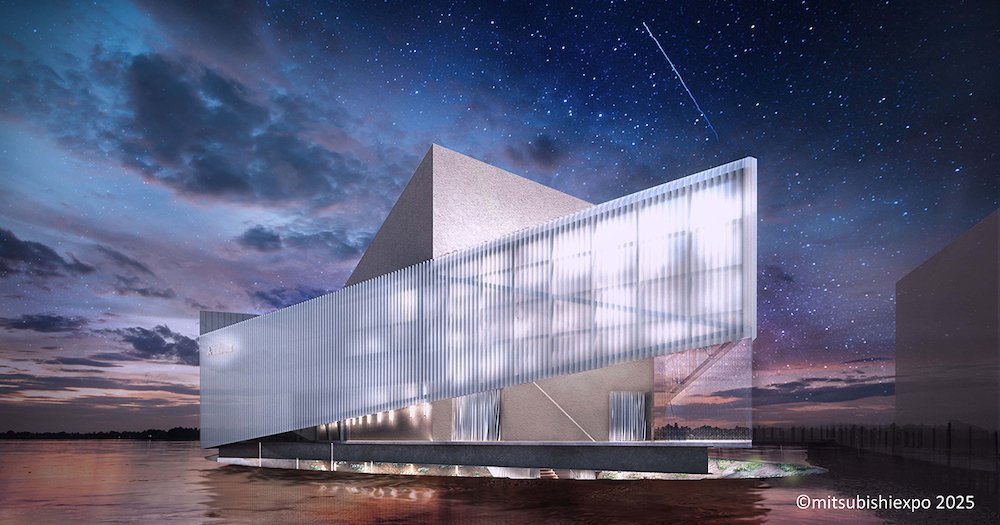
Mitsubishi Pavilion – ©Mitsubishiexpo 2025.