Southern Guild’s exhibition focuses on African ceramic art and design – Photo by Studio Abruzzese and the gallery.
Design. “Ceramic has absorbed all the knowledge of the world and from humanity. Each vibration through time. Everything that has happened, each conversation is encapsulated in clay. It’s the ideal source to search for answers for who I am,” explains Franco-Beninese ceramic artist King Houndekpinkou. Ceramics are among Africa’s most enduring and relevant forms of material culture. Across the continent, they offer a tangible link to precolonial culture and its underrepresented narratives. That is why some of the most cutting-edge artists and designers choose this medium to blend ancestral roots and techniques with contemporary aesthetics, domestic life, history, and society. Cape Town and LA-based gallery Southern Guild presented an exhibition showcasing the status of the art of contemporary African ceramic at Design Miami.
- RELATED STORIES: Read more about Miami 2024 on Archipanic.
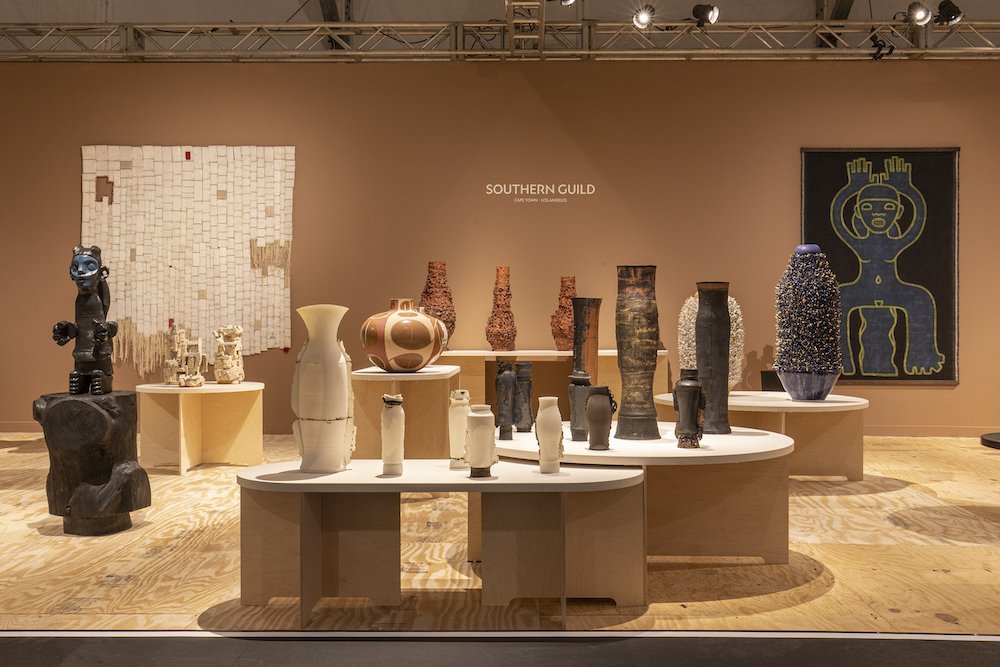
Southern Guild’s booth at Design Miami 2024 – Photo by Studio Abruzzese and the gallery.
For Andile Dyalvane, “clay is an indelible portal to a spiritual realm.” At Design Miami, he revealed three ceramic sculptures illustrating the various stages of transforming into a spiritual healer, all rooted in the designer’s traditional Xhosa heritage culture. Madoda Fani showcased hand-coiled, polished, and smoke-fired ceramics representing a modern evolution of traditional Southern African pottery. Through those works, he aimed to deconstruct reductive and harmful cliches of Black masculinity, re-fashioning them with masterful skill and attention to craft.

From left: vessels by Ben Orkin, table by Chuma Maweni, concrete seat by Rich Mnisi, tapestry by Ange Dakouo, sculptures by Andile Dyalvane and vessel by Zizipho Poswa – Photo by Kris Tamburello.
Ben Orkin brought to Miami all-white, organic-shaped sculptures that reflect the hidden codes and marginalised experiences of queer men within a heteronormative society. The Cape Town sculptor also crafted Wipe Out the Past, which is part of a series examining sex, safety, and community in the context of the AIDS epidemic and its lingering effects.
Among the highlights were striking ceramic lamps created for Loewe by Zizipho Poswa, celebrated for her profound tribute to African womanhood. Her work reflects a personal journey and honours her Xhosa culture’s spiritual traditions and matriarchal heritage.

Sculpture by Ben Orkin, stool by Madoda Fani and vessel by Zizipho Poswa – Photo by Kris Tamburello.
Franco-Beninese ceramic artist King Houndekpinkou presented vibrant ceramic sculptures blending Japanese crafts, African heritage and pop culture. As part of the Six Prayers series, the vessels are ritualistic objects for a new mythological narrative.
Master ceramicist Chuma Maweni handcrafted a table made from individually cut clay tiles. Crafted from clay slabs, etched with geometric motifs and cut into positive and negative shapes, each tile dries for weeks, is fired, and then reassembled before attaching to the tabletop in its original configuration.
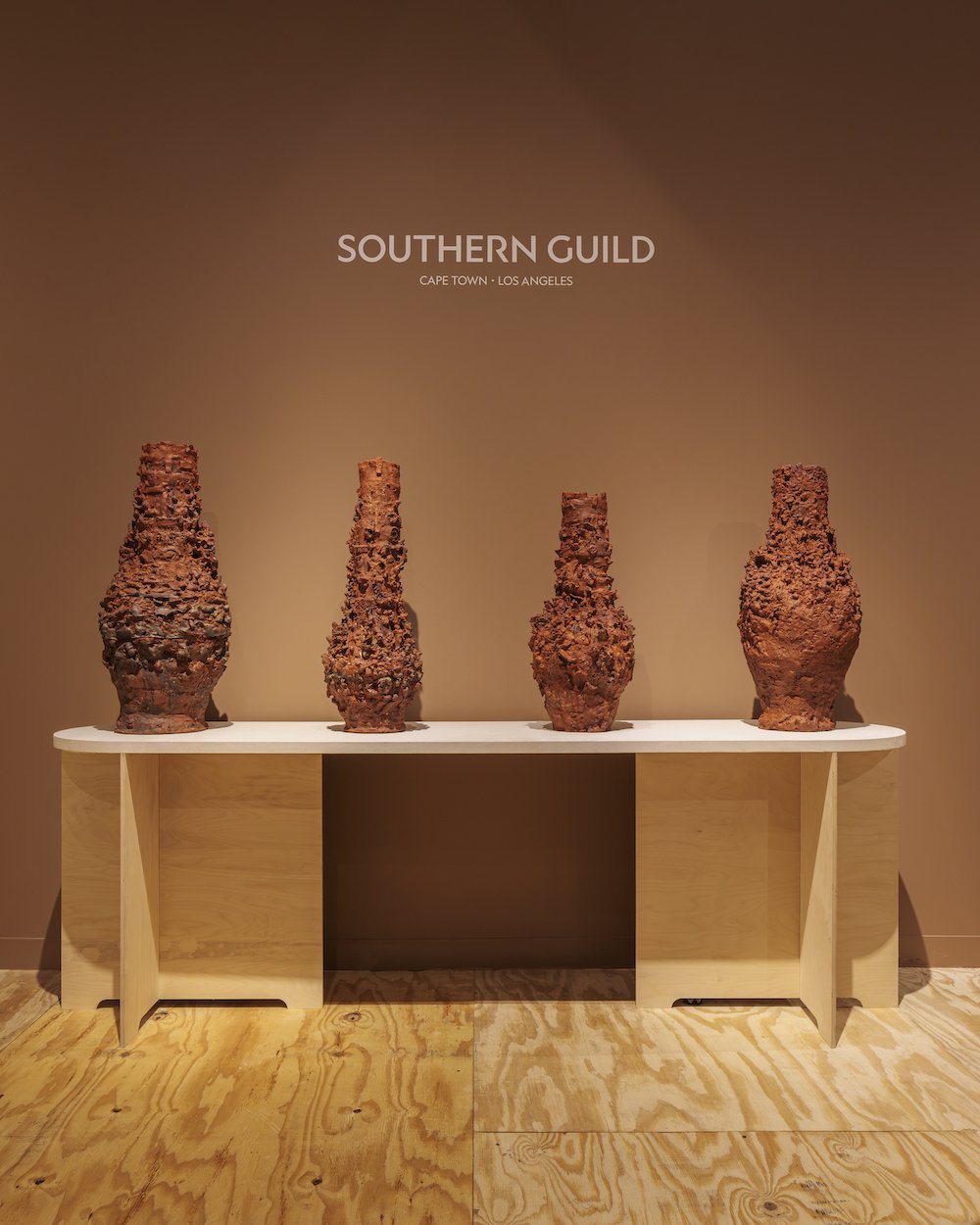
Vases by Belinda Blignaut – Photo by Kris Tamburello.
South African artist Belinda Blignaut seeks complex surfaces, unpredictable texture and error. In Miami, she introduced her first few wild clay vases, incorporating unprocessed materials such as snake skins, bones, plant matter and stones she found in riverbeds.
Katherine Glenday used the vessel form as an iconic and ubiquitous language, exaggerating the joins and seams to invoke the fragility of our constructed world. Master ceramist Cape Town-based sculptor Justine Mahoney showcased a bronze and ceramic hybrid creature and a dark tapestry to present an alternative mythology for our times.

Designs by Justine Mahoney – Photo by Kris Tamburello.
Ian Garrett presented hearty-hued vases decorated with historical and modern polyrhythmic patterns that mirror one another. Curvilinear surface designs contrast glossy burnished areas against matt-textured motifs. Jabulile Nala crafted dark, smoke-fired vessels embellished with geometric motifs, studded patterns and delicate incisions that have defined traditional Zulu ceramics for generations.
Polish-born artist and architect Michal Korycki created sculptures constructed from cut slabs and blocks. The pieces encourage viewers to participate in the rewarding journey of decoding, prompting them to explore and untangle the complex elements that make up the whole.
[su_image_carousel source=”media: 41883,41882″ limit=”0″ slides_style=”minimal” crop=”none” columns=”2″ spacing=”no” captions=”yes” dots=”no” autoplay=”2″ speed=”immediate”]
Additional non-ceramic works were also on show. Rich Minisi’s concrete sofa dialogued with the surrounding objects. Ange Dakouo drew inspiration from Donso hunter suits, iconic in Malian culture. He recreated traditional amulets using folded newspaper sheets, skillfully entwined in threads, to compose large-scale wall tapestries. Contemplation Point, by South African sculptor and designer Jesse Ede, is a place to sit, observe, and discover the meaning of it all through mindfulness meditation.
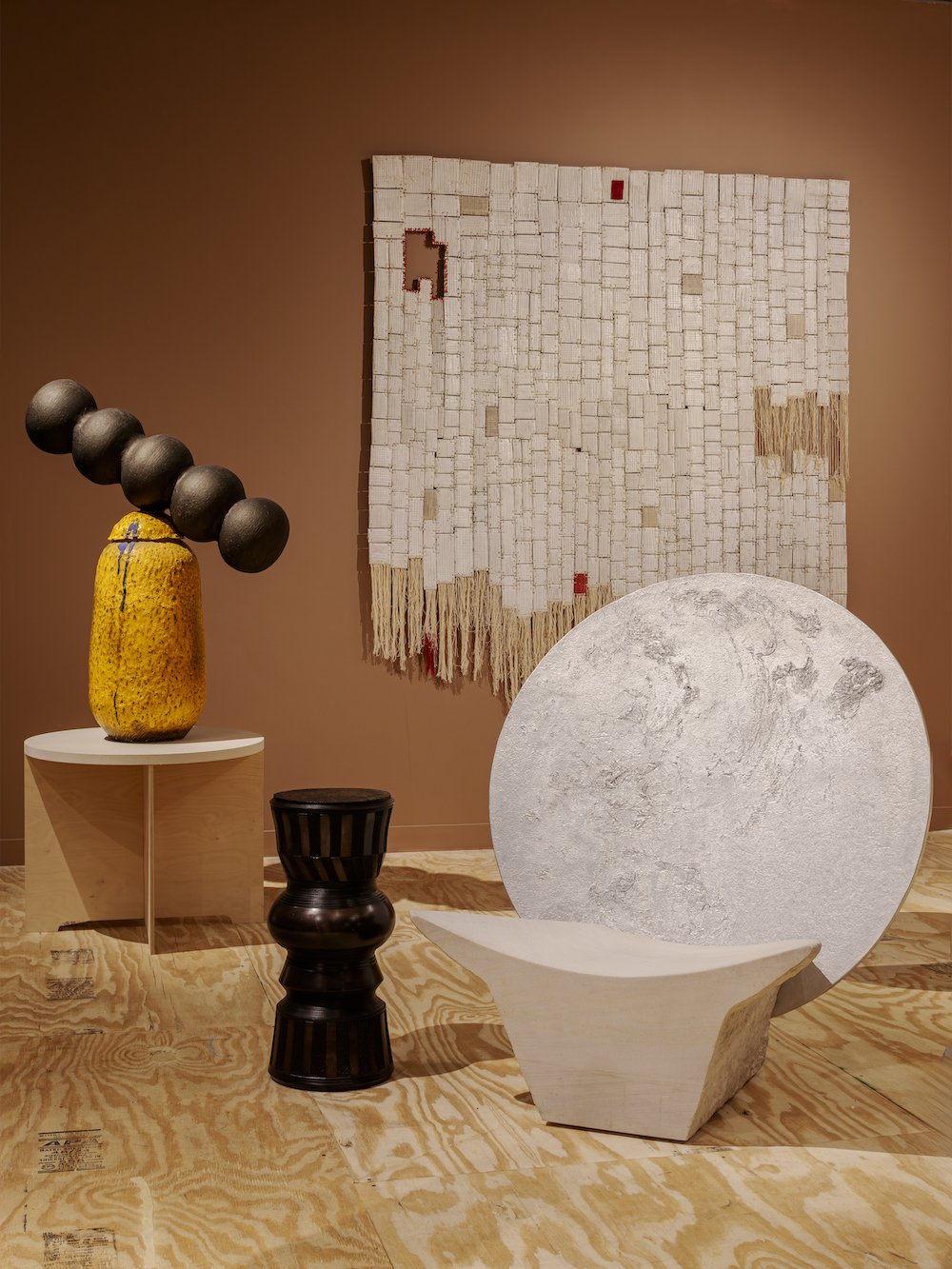
From left: vessel by Zizipho Poswa, stool by Madoda Fani, tapestry by Ange Dakouo, seat by Jesse Ede – Photo by Kris Tamburello.

African ceramic art and design at Southern Guild’s exhibition at Design Miami 2024 – Photo by Kris Tamburello.